Zoe Yu
 Retail tote bag reorder planning for private label brands should protect SKU continuity, packaging repeatability, barcode accuracy and delivery timing. A reorder is not always a simple repeat purchase. If the color, label, material route, packaging sleeve, carton mark, warehouse date or store allocation changes, the buyer should treat the reorder as a controlled production update.

Buyer Summary
- Best for: private label retail buyers, museum stores, resort boutiques, beauty retailers and brand teams planning repeat orders for custom tote bag SKUs from 500 pcs per style.
- Main decision: confirm whether the reorder is exact repeat, revised SKU, color refresh, packaging update, barcode change or store allocation update.
- Factory-side note: previous order photos are not enough; buyers should keep approved sample records, material route, label files, carton marks and delivery instructions.
- What to prepare: previous PO, SKU table, quantity split, material, artwork, barcode file, packaging method, carton mark, destination split, delivery window and document requirements.
What is the quick answer for retail tote bag reorder planning?
Retail tote bag reorders should be planned from the approved production record, SKU split, barcode file, packaging method, carton marks, sample change points, MOQ and delivery window. The buyer should clearly state what repeats and what changed before requesting the next quote.
A reorder can be efficient when the first order file is clean. But if the buyer changes color, label, packaging, material, destination split or retail receiving rules, the supplier still needs a sample or proofing check. The goal is to avoid turning every replenishment into a new sourcing project while still controlling changes that affect retail operations.
Best fit for this retail tote bag reorder guide
This guide is best for buyers who already produced a private label tote bag and now need to reorder, revise, refresh or split the next production run without losing SKU consistency.
It fits projects where retail labels, barcodes, packaging sleeves, carton marks, store allocation and repeat-order quality matter. It is especially useful when sourcing, merchandising, warehouse, finance and store operations all need the reorder file to match the same approved production standard.
How is this guide different from seasonal reorder planning?
Seasonal planning focuses on launch windows, holiday artwork and campaign timing. Retail reorder planning focuses on SKU continuity, barcode files, packaging repeatability, warehouse receiving, store allocation and PO cycles. This guide helps private label buyers decide whether the next order is an exact repeat or a controlled change.
Which reorder records should be kept after the first bulk run?
The buyer should keep the approved sample, final artwork, material route, fabric color, logo process, packaging file, barcode file, carton mark, inspection notes, shipping carton data, PO number and any approved change record.
| Record | Why it matters | Reorder action |
|---|---|---|
| Approved sample | Controls size, material, logo, stitching and finish. | Compare the next sample or bulk reference against it. |
| SKU and barcode file | Protects retail receiving and inventory accuracy. | Confirm whether barcode or SKU changed. |
| Packaging file | Controls sleeve, hangtag, label and presentation. | Check if retailer wording or label layout changed. |
| Carton marks | Supports warehouse receiving and store allocation. | Update destination, PO and carton label details. |
| Material route | Controls handfeel, color and claim wording. | Confirm fabric availability before repeating claims. |

How should SKU split and store allocation affect MOQ?
MOQ should be reviewed by SKU, color, packaging version and destination, not only by the total reorder quantity. A 3,000-piece reorder can behave like several smaller orders if it includes multiple SKUs or store allocations.
If the reorder includes two colors, three barcode versions and four warehouse destinations, the supplier needs a clear matrix before quoting. A total quantity alone can hide setup work, label changes, carton mark changes and packing labor. Buyers should show quantity per SKU and per destination before confirming MOQ and lead time.
| Reorder type | What changes | Buyer check |
|---|---|---|
| Exact repeat | Same material, logo, label, carton and destination. | Confirm previous records are still valid. |
| Color refresh | Fabric color, logo contrast or packaging image. | Approve color sample or lab dip before bulk. |
| SKU expansion | New barcode, label, size or version. | Update SKU table and sample approval record. |
| Store allocation | Different carton marks or destination split. | Share warehouse and store allocation file. |
How should barcode, label and packaging continuity be checked?
Barcode, label and packaging continuity should be checked before sample approval because a small file change can affect retail receiving, product display, carton marks and warehouse matching.
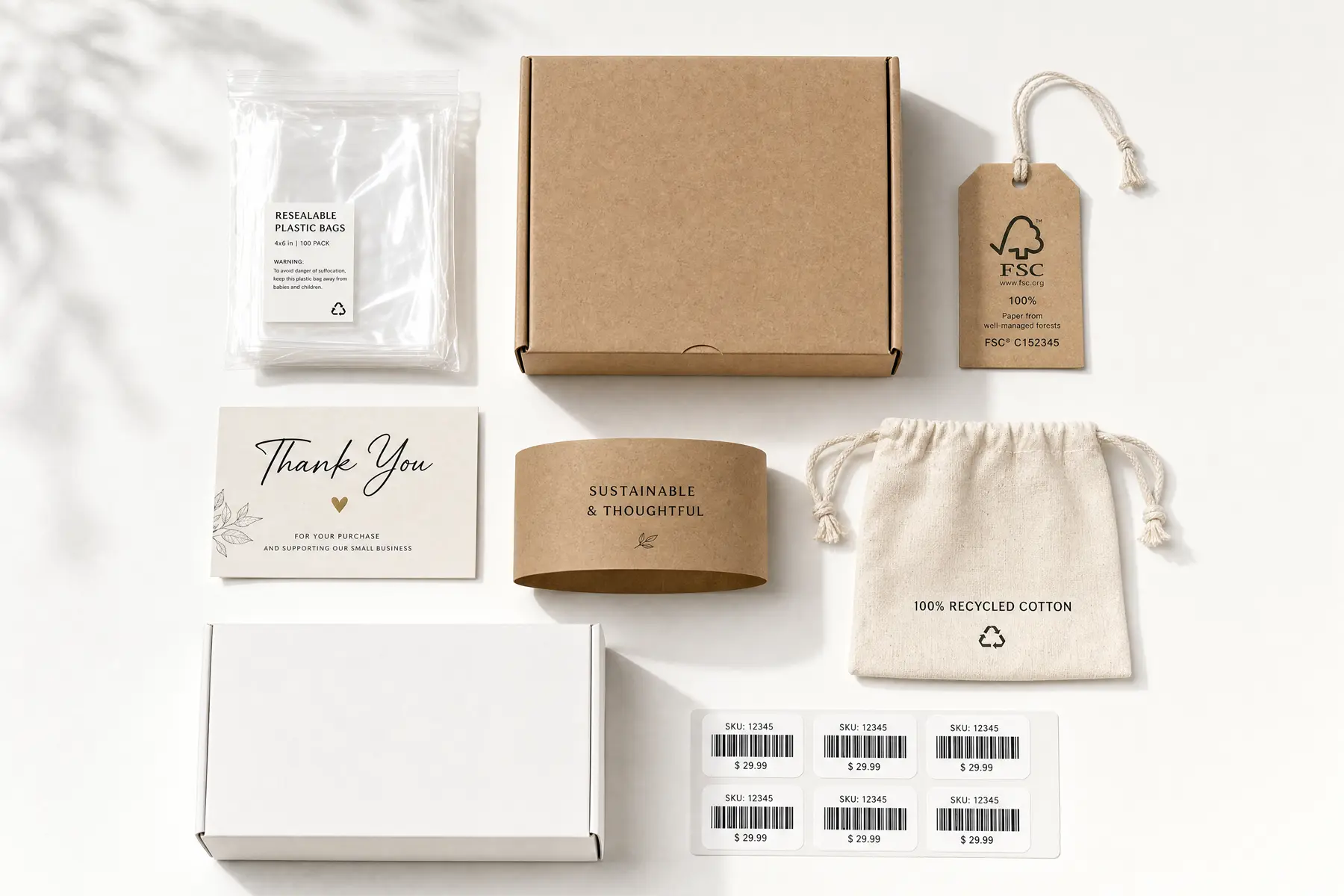
Buyers should confirm barcode number, SKU name, hangtag, paper sleeve, sticker position, carton label, country wording and retailer requirements. Barcode files may need to follow the buyer's retail data system or broader standards such as GS1 barcode standards1. Paper packaging claims should also be checked separately from fabric claims, using references such as FSC2 when relevant.
How should material continuity be checked before a reorder?
Material continuity should be checked when the reorder depends on the same handfeel, color, fabric weight, recycled-content claim, organic route or retail price point. A repeated SKU should not assume fabric is identical unless the route has been confirmed.
Fabric availability, dye lot, supplier route and document scope can change between orders. If the product uses recycled-content or environmental wording, the buyer should confirm whether the reorder still matches the claim support. Recycled material discussions may involve standards such as Textile Exchange recycled standards3. Environmental marketing wording should stay qualified and project-specific, with guidance such as the FTC Green Guides4.

How should reorder samples and sample fees be planned?
Reorder samples should focus on the changed details. If the reorder is an exact repeat, a photo or retained reference may be enough for planning. If color, logo, packaging, label, material or destination split changed, a sample or proofing file should be reviewed.
Sample timing is confirmed after the material, construction, logo method, artwork, packaging and approval scope are clear; the working schedule also depends on revision speed and current capacity. Sample fees depend on material, logo process, custom trims and packaging complexity. For qualified bulk orders, standard sample fees can typically be credited or refunded after project confirmation, while special tooling or unusual trims may need separate handling.

What should the purchase order cycle include?
The purchase order cycle should connect the previous order record, revised SKU table, sample approval, production timing, packaging files, carton marks, destination split, inspection notes and warehouse receiving date.
A reorder can move faster than a first order when the file is clean, but it still needs a locked PO scope. The buyer should confirm whether the order ships to one warehouse, multiple warehouses, store groups or a third-party logistics provider. Delivery timing should include production lead time, packing labor, carton labeling and transport responsibilities.

Which certification and factory evidence should buyers request?
Document needs depend on the product claim, material route, destination market, retailer checklist and supplier approval file. Buyers should confirm whether the previous documents still apply when fabric, color, supplier route or packaging changes.
Textile safety or restricted-substance discussions may involve references such as OEKO-TEX STANDARD 1005. Social-compliance review may involve supplier audit references such as amfori BSCI6 or the buyer's own audit file. The key is to match documents to the actual reorder scope.
How should buyers write a reorder RFQ?
A reorder RFQ should state whether the request is an exact repeat, revised SKU, color refresh, packaging update, label change, barcode change or destination split. It should also attach the previous order reference and approved files.
Send previous PO number, quantity by SKU, material route, color split, artwork, barcode file, packaging file, carton mark, destination split, delivery window, sample deadline and document requirements. If the buyer only has an old item name, the first step should be rebuilding the reorder file before asking for final price.
What can this guide estimate, and what still needs RFQ confirmation?
This guide can explain reorder planning logic, but final MOQ, price and lead time still depend on the approved SKU split, material availability, changed files, packaging, barcode labels, carton marks, document needs and destination allocation.
Retail reorders are detail-sensitive. The public planning range is useful for preparation, but the final production scope should be confirmed in writing before deposit and bulk scheduling. This is especially important when a buyer changes packaging, retail label, destination split or material route.
How does factory coordination reduce reorder risk?
Factory coordination reduces reorder risk by keeping the approved sample, material route, artwork, packaging file, carton mark, inspection note and delivery instruction connected through the next purchase order.
For Dongguan production coordination, reorder risk often appears in small changes: fabric availability, label file revision, barcode update, carton mark change or destination split. A clear reorder matrix lets the factory confirm what repeats and what needs new approval before cutting material or printing packaging.
Less suitable fit for retail tote bag reorder projects
A reorder planning route is less suitable when the buyer cannot provide a previous order record, SKU file, artwork, packaging reference, quantity split or delivery requirement. In that case, the project should be treated as a new product development brief.
FAQ: Retail tote bag reorder planning
What MOQ can buyers expect for retail tote bag reorders?
A practical baseline is often 500 pcs per style when material, color, logo and packing stay workable. Multiple SKU splits, color refreshes, barcode versions, custom packaging or strict document scope can raise the practical MOQ. Buyers should show the quantity per SKU and per destination before quoting, because one total quantity can hide several smaller production paths.
How long do reorder samples take, and are there sample fees?
Sample timing is confirmed after the material, construction, logo method, artwork, packaging and approval scope are clear; the working schedule also depends on revision speed and current capacity. Sample fees depend on material, structure, logo method and packing complexity. For qualified bulk orders, standard sample fees can usually be credited or refunded after project confirmation, while unusual tooling or special trims may be handled separately.
What lead time should retail teams plan for bulk reorders?
Sample timing is confirmed after the material, construction, logo method, artwork, packaging and approval scope are clear; the working schedule also depends on revision speed and current capacity. Bulk production timing is confirmed after sample approval, based on material availability, process complexity, quantity, packaging, delivery plan and current capacity. Custom color, barcode changes, retail packaging, split delivery or document checks can extend lead time on specific reorder projects. A clean reorder file can shorten decision time, but changed SKU details still need review before cutting and sewing begin.
How is retail reorder planning different from seasonal planning?
Seasonal planning focuses on campaign timing, holiday launches and short promotional windows. Retail reorder planning focuses on SKU continuity, store inventory, barcode files, pack-out repeatability, PO cycles and warehouse allocation. The reorder file should prove what is being repeated and what changed, while seasonal planning may accept more campaign-specific variation.
What should be included in a reorder RFQ?
Send previous order reference, SKU table, material, quantity, color split, logo artwork, barcode file, packing method, carton mark, destination split, delivery window, document requirements and sample deadline. Also state whether the request is an exact reorder, revised SKU, color refresh or packaging update, because each path needs a different sample review.
Which certification documents matter for reorders?
Relevant documents depend on material route, claim wording, destination market, retailer checklist and supplier approval needs. Recycled-content, organic, textile safety, paper packaging and factory audit files should match the actual reorder scope. If fabric, supplier, color or finishing changes, the buyer should confirm whether previous claim wording and supporting documents still apply.
When should buyers contact Ecoicolortote?
Contact Ecoicolortote when the reorder status, SKU split, quantity range, material direction, barcode file and artwork are clear enough for sample planning and quote-scope review. If the buyer only knows the previous item name, the first step should be rebuilding the reorder file before asking for final price or lead time.
Share previous order reference, SKU table, barcode file, artwork, packaging, quantity split, delivery destination and document needs. Ecoicolortote can help confirm what repeats, what changed and what needs sample approval before bulk production. Start a retail tote reorder review.