

 Zoe Yu
 Quick Summary
Brand buyers should not choose an rPET tote bag factory by material name alone. A useful factory brief checks recycled-document scope, fabric handfeel, logo method, MOQ 500+, sample approval, packaging needs, lead time and QC before price comparison. Use this checklist when the tote will support a beauty GWP, retail launch, hotel amenity, event kit or private label program where claim wording and sample approval matter.
Check material route, logo method, document scope and sample approval before quotation.

Table of contents
How this rPET factory checklist differs from the rPET product page
The rPET recycled totes product page explains the product route and buyer fit. This checklist is narrower: it helps a sourcing team decide whether a factory brief is complete enough for quotation, sampling and document review. For material background, use the recycled PET material page; for broader private label planning, use private label totes.
The goal is qualified RFQ clarity, not generic recycled-material traffic. A buyer who sends quantity, artwork, delivery market, packaging and launch window gives the factory enough context to review route risk before sample cost and production lead time are discussed.
Factory checkpoints before an rPET tote quote

| Checkpoint | What the buyer should ask | Why it affects the quote |
|---|---|---|
| Material route | Which rPET fabric, weight, texture and color route can be sampled? | Controls handfeel, price, logo suitability and lead time. |
| Document scope | What recycled-material document support is available for this order? | Prevents unsupported hangtag, website or retail claims. |
| Logo method | Which printing, label or patch method fits the fabric surface? | Controls sample accuracy and bulk consistency. |
| MOQ | Can the project start from MOQ 500+, or does the route need more? | Separates qualified B2B projects from low-fit small orders. |
| Packaging | Does the order need polybag, hangtag, barcode, carton mark or retail pack-out? | Packaging can affect production calendar and QC checks. |
Document scope and claim wording
Textile Exchange standards provide recycled-material chain-of-custody and claim framework context1. For buyer-facing tote projects, the practical question is not simply whether a material is called recycled. The question is whether the selected material, supplier file and order scope support the wording the buyer wants to use.
ISO 14021 provides context for self-declared environmental claims3. Ecoicolortote should review claim wording before printing hangtags, inserts or packaging. Safer wording is often specific, document-scoped and tied to the chosen material route.

Logo method and sample approval for rPET totes
Screen print
Useful for simple brand marks and campaign graphics. Check ink edge, fabric texture and color tolerance during sample review.
Heat transfer
Works when the buyer needs sharper artwork. Confirm handfeel, durability expectation and placement before bulk.
Woven label
Good for retail or private label programs where a sewn brand detail feels cleaner than a large print.
Patch
Useful for premium or outdoor-style rPET totes. Check stitch edge, patch thickness and packed shape.
OEKO-TEX STANDARD 100 gives textile chemical-safety testing context2. If the buyer needs chemical-safety document support, confirm scope before finalizing the sample label or product claim.
Best fit for this checklist
This checklist fits beauty GWP teams, retail campaign buyers, hotel or event operators and private label brands planning MOQ 500+ rPET tote bags with real artwork, timeline and delivery-market needs. It is strongest when the buyer wants to compare factories by route clarity, not only by the lowest unit price.
Less suitable fit
This route is less suitable for single-piece gifts, personal-use tote requests, no-brand consumer orders or cheap-only sourcing with no sample review. It is also a poor fit when the buyer wants recycled wording printed before confirming document scope and material route.
Verified order case: quilt-grid control before panel cutting
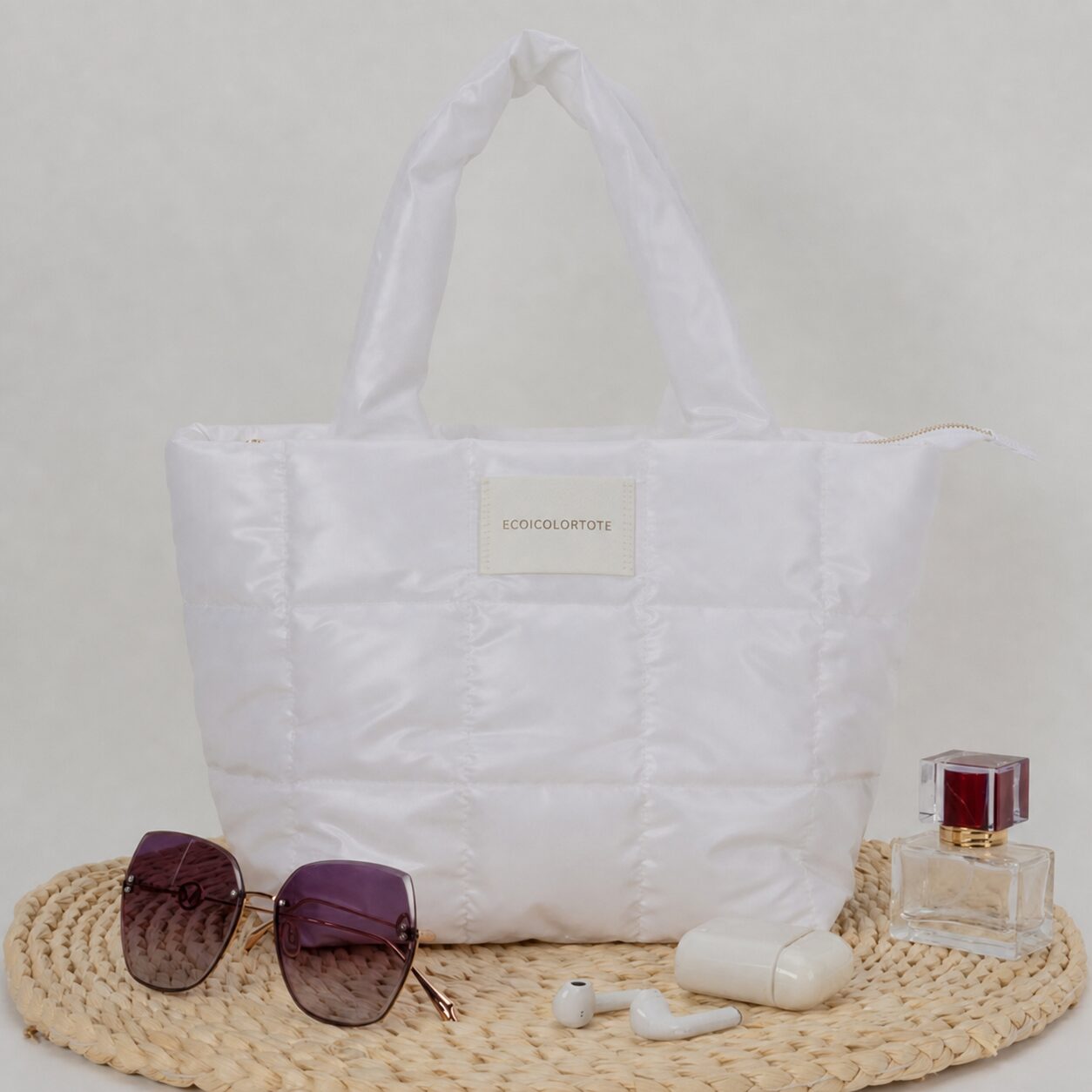
Project record: In September 2025, a German brand buyer approved a 1,000-piece order for one SKU of white, 100% recycled-polyester quilted totes with zipper closures and front PU patch labels.
Production risk: Piece-cutting before quilting made the final grid position difficult to control. The grid could shift across the front panel, changing the visual balance of the zipper and patch.
Correction: Ecoicolortote positioned the quilting from the finished-bag view first, then locked panel cutting, zipper alignment and PU-patch placement against that layout. The sample was approved and the order was placed.
Document boundary: A GRS scope certificate was relevant to the supplier and material route. It was not treated as proof of a specific transaction; TC evidence belongs to a completed transaction and its actual records.
FAQ: rPET tote bag factory sourcing
What should buyers check before choosing an rPET tote bag factory?
Buyers should check material availability, recycled-document scope, MOQ 500+, logo method, sample timing, packaging route, QC points and delivery market before comparing price. The factory should be able to explain which parts are order-specific and which claims need document review. Add quantity range, artwork status, delivery market and launch timing so the factory can connect the answer to a real RFQ instead of a generic material question.
Does every rPET tote order automatically include recycled certification documents?
No. Recycled-document support depends on the selected material, supplier document chain, order scope and claim wording. Buyers should ask for the available document route before sampling and avoid printing unsupported recycled claims on hangtags, packaging or product pages, especially when retail teams will reuse the wording publicly. This should be checked before hangtag or packaging text is approved, because public claim wording is harder to correct after bulk production starts.
What MOQ should brand buyers plan for rPET tote bags?
Ecoicolortote positions B2B custom tote projects around MOQ 500+. Some material, color, logo or packaging routes may need higher planning quantities, so buyers should send quantity range, artwork and target delivery market before assuming one universal MOQ for every rPET route. If the buyer has a reorder plan or several delivery markets, that context should be shared early because it can change material booking and production planning.
Which logo methods work for rPET tote bags?
Common options include screen print, heat transfer, woven label, patch, embroidery on suitable structures and sublimation for selected fabric routes. The right choice depends on fabric surface, logo detail, color count, wash expectation and whether the buyer wants a soft retail finish or a sharper campaign mark. Buyers should include the logo file and expected placement with the sample request, because logo route can change both sample cost and approval timing.
How should buyers compare rPET tote bag samples?
Compare handfeel, fabric weight, stitching, handle comfort, logo edge quality, color tolerance, packed shape and packaging fit. A useful sample review should also check whether the material and label wording still match the buyer claim and delivery-market expectation before bulk approval. A sample photo alone is not enough; the buyer should keep one approved physical sample or signed sample record as the bulk-production reference.
Who is this rPET tote factory checklist best suited for?
It is best suited for beauty, wellness, DTC, retail, hotel, event and private label buyers planning MOQ 500+ rPET tote projects. It is less useful for one-piece gifts, personal shopping, cheap-only requests or buyers who do not want sample approval before bulk production. The inquiry should include the intended use case, quantity, artwork and deadline so Ecoicolortote can filter serious B2B projects from low-fit consumer requests.
What should buyers send in an rPET tote RFQ?
Buyers should send quantity range, target MOQ, use case, delivery country, launch window, material preference, logo file, packaging needs and any recycled-document expectation. If the buyer already has a retail hangtag or claim wording, include it before sampling so Ecoicolortote can check whether the wording fits the selected material route and order scope.
 | Zoe Yu is Sales Manager at Ecoicolortote, supporting B2B buyers with custom tote bag quotation, sample coordination, logo file review, packaging details, carton mark review and delivery preparation. She helps brand, retail and hospitality buyers turn material and sampling questions into factory-readable briefs before bulk production. |
Trademark and certification note
Textile Exchange, OEKO-TEX, GOTS, ISO and other standard, certification or testing names belong to their respective organizations. This buyer-side sourcing article does not claim that every material, component, tote bag, order or shipment automatically carries every listed document. Buyers should confirm current certificate validity, document scope, material coverage, label wording, test method and order-specific claim language before quotation, sampling or bulk production.
Sources
- Textile Exchange standards provide recycled-material chain-of-custody and claim framework context. ↩
- OEKO-TEX STANDARD 100 provides textile chemical-safety testing context for finished materials and components. ↩
- ISO 14021 provides environmental labels and declarations context for self-declared environmental claims. ↩