

 Zoe Yu
 A 5000+ custom tote order can fail warehouse receiving even when the tote itself is approved. Master carton labels, SKU names, version split, location count, packing ratio and delivery files need to match before cartons are sealed.
Review Carton and SKU SplitView Packaging Route
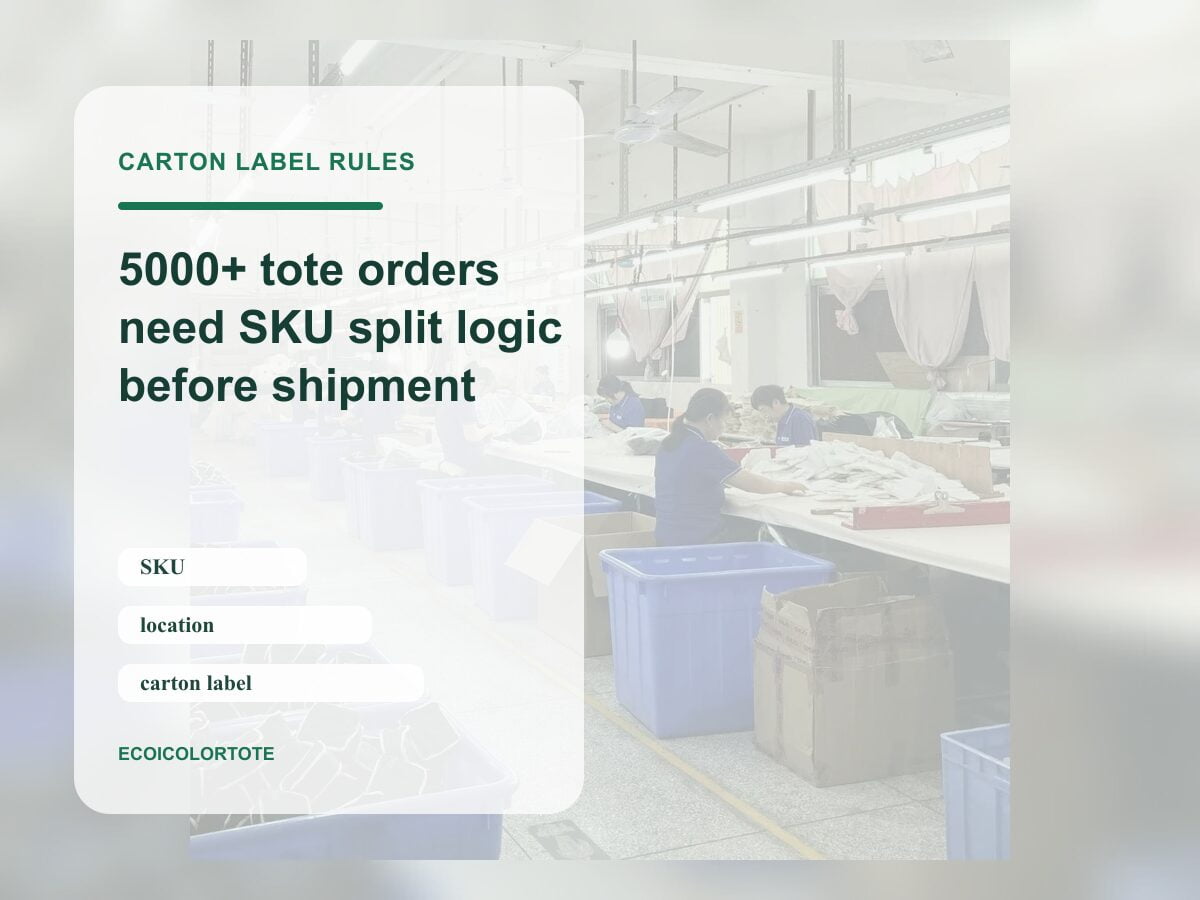
For 5000+ tote orders, carton labels carry more than quantity. They can control SKU version, color, location, receiving route and warehouse handoff.
Quick Summary
This guide helps brand, retail, event and DTC buyers prepare master carton labeling and SKU split rules for large tote orders. It supports the packaging route by turning carton marks into a buyer-side receiving checklist rather than a final shipping afterthought.
Before cartons are printed or sealed, confirm SKU or version names, color or logo split, destination count, pieces per carton, carton numbering, gross weight, carton dimensions, packing list fields and whether the buyer warehouse needs barcode, PO, store or location information on the outer label.
SKU split decisions that belong before carton artwork
| Decision area | What to prepare | Why it matters |
|---|---|---|
| SKU or version name | Buyer-side item name, color, logo version, campaign or PO reference. | Warehouse receiving needs the same name on documents and labels. |
| Location split | One warehouse, multiple stores, event venue or distributor route. | Location count changes label fields and packing list rows. |
| Carton quantity | Pieces per carton, carton dimensions, gross weight and carton numbering. | Freight and receiving teams need carton-level data. |
| Receiving field | PO, SKU, barcode, store code, carton number or handling note. | The outer carton should show what the buyer team actually scans or checks. |
SKU and barcode file planning should connect with the buyer-side receiving structure. GS1 US barcode planning guidance [1] is useful context for why item identification should be controlled before carton labels are printed.
The most useful carton label is not the most crowded label. It is the label that lets receiving staff connect the carton to the purchase order, SKU version, color or store without opening every carton.
If one order has multiple colors, logos or locations, carton marks and packing list fields need the same structure before shipment.
- SKU version
- location split
- carton number

Where 5000+ tote orders create receiving risk
Version names change late
The buyer changes color or campaign names after the carton mark file is approved.
Packing list uses different wording
The packing list says one version name, but the carton label uses another.
Location split arrives after packing
The supplier packs total quantity first, then receives store or warehouse split rules too late.
Check Master Carton Label FieldsView Packaging Route
What carton label fields reduce warehouse confusion
Delivery responsibility should be clear before large order documents are compared. ICC Incoterms rules [2] are useful context for why delivery basis and responsibility should be stated before the buyer compares quote and shipment assumptions.
Export documentation context matters when goods cross borders. CBP importer and exporter tips [3] is useful background for why commercial invoice, packing list and shipment details need consistent descriptions.
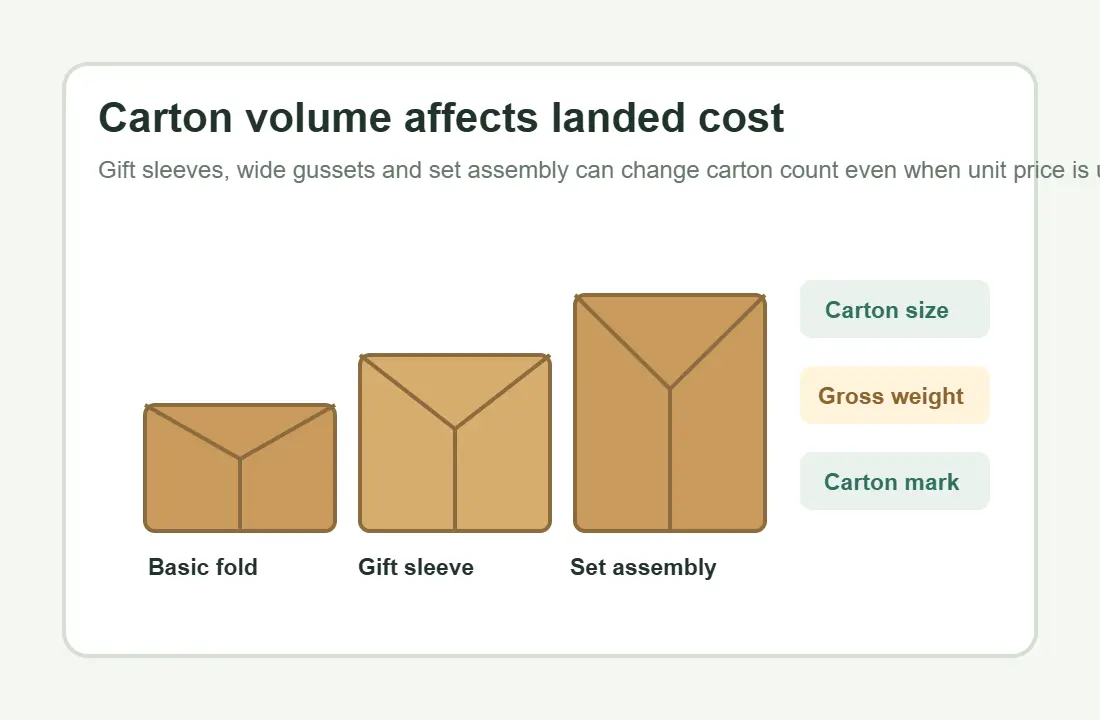
Useful outer-carton fields often include buyer PO, item or SKU name, color, logo version, carton number, pieces per carton, gross weight, carton size and destination. If the receiving team uses a specific warehouse label, that template should be shared before bulk packing.
A carton can be correctly packed but still create receiving friction if the packing list, carton label and buyer SKU names do not match.
- packing ratio
- gross weight
- SKU name

Best use case and limit for this carton rule
Best fit: retail, event, DTC, private-label and GWP buyers planning 5000+ custom tote orders with multiple colors, SKU names, logos, destinations, carton labels or warehouse receiving requirements.
Less suitable: small single-version orders, simple bulk cartons with no receiving labels, personal gifts or buyers that cannot provide destination, SKU, PO, carton mark or warehouse receiving fields.
Large-order carton note
A recent US high-volume tote request asked for 75,000 dark blue totes with one or two delivery locations and an early September need date. Before the material route was final, location count and carton labeling were already quote inputs because one-location and two-location receiving can create different carton mark, packing list and dispatch rules.
Related route handoff
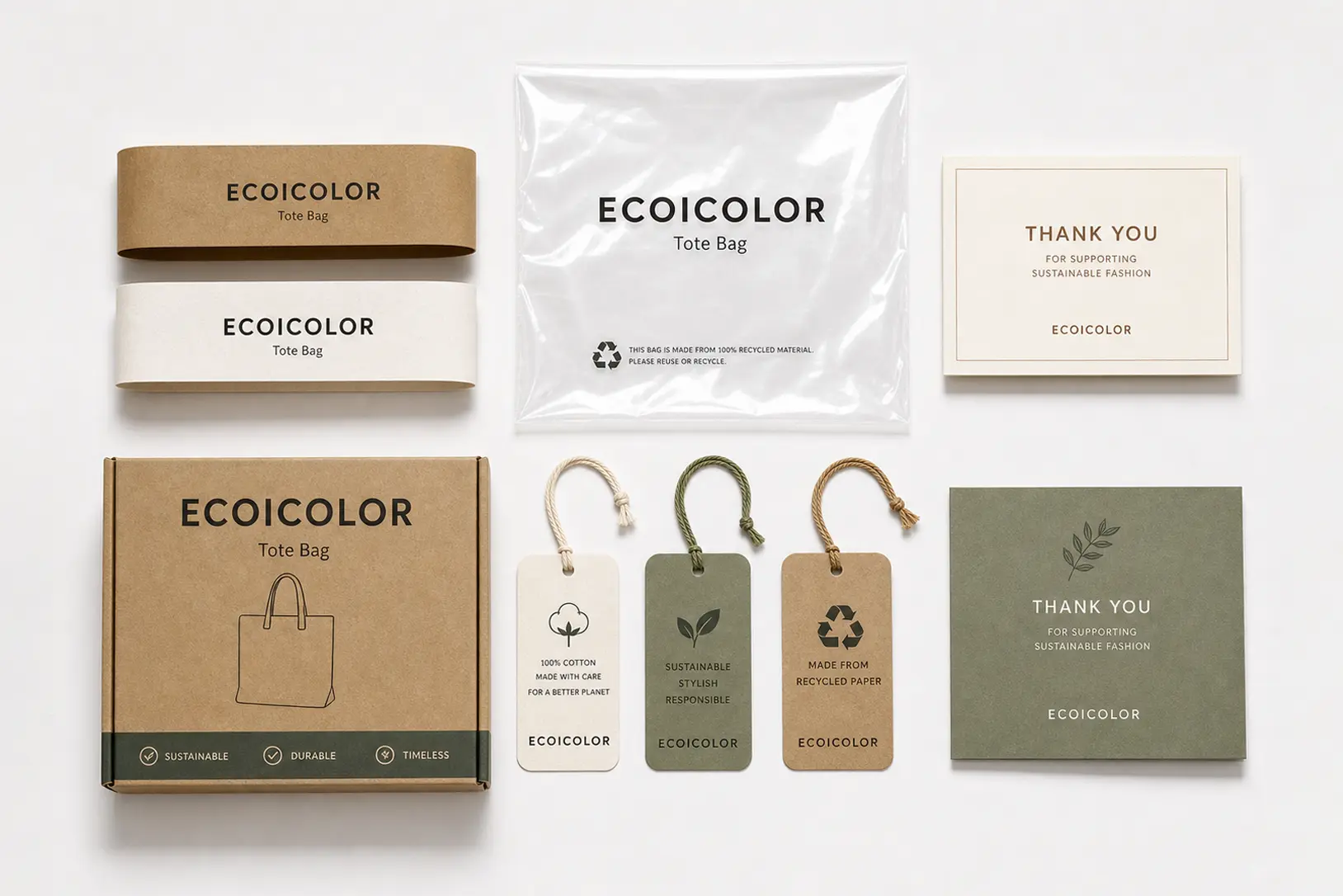
Use this guide with the retail-ready barcode and hangtag checklist when SKU files also affect inner packing, and with the rush air freight threshold guide when carton count changes shipment timing. The owner route remains Custom Tote Bag Packaging Options.
FAQ
What is the most important carton label field for a 5000+ tote order?
The most important field is the one the buyer warehouse actually uses to receive goods: SKU name, PO number, item version, store code, color, carton number or barcode reference. A label with many fields can still fail if it does not match the buyer-side receiving process and packing list wording.
When should SKU split be confirmed?
SKU split should be confirmed before carton label artwork, packing list structure and bulk packing. If the buyer changes version names, location split or color labels after cartons are sealed, the supplier may need to relabel cartons or rewrite shipment documents, which adds time and creates avoidable receiving risk.
Does every 5000+ order need a complicated carton label?
No. A simple one-version order may only need item name, quantity, carton number and destination. Complexity appears when the order has multiple colors, logos, stores, POs, versions or warehouses. The carton label should match the receiving problem, not become complicated for its own sake or harder to scan.
How does carton labeling connect to freight cost?
Carton labeling itself does not decide freight cost, but packing ratio, carton size, gross weight and carton count do. Those fields often sit beside label planning because the buyer needs the same carton data for quotation, shipment booking, warehouse receiving and pre-shipment document review before release.
Can the factory provide a carton label template?
The factory can propose a simple carton label layout, but the buyer needs to confirm required fields if a warehouse, retailer or event venue has its own receiving rules. The safest route is to share one sample label and packing list row before the supplier prints labels for all cartons.
How is this different from a carton mark shipping label guide?
A general carton mark guide explains what usually appears on shipping cartons. This article is narrower: it focuses on 5000+ custom tote orders where SKU split, color versions, location count and buyer warehouse fields need to be aligned before carton labels and packing lists are released.
Who should use this guide?
Use this guide if you are a retail, event, DTC, private-label or GWP buyer planning a large custom tote order with 5000+ pieces, multiple versions, destinations or warehouse receiving needs. It is not necessary for simple no-label bulk cartons, single-version orders or personal gift orders.
Sources
About the Author
 | Zoe Yu is B2B Sales Manager at Ecoicolortote, supporting overseas brand buyers with custom tote bag RFQs, material route review, logo execution, sampling, packing and bulk production coordination. |
Plan Warehouse Receiving PackoutView Packaging Route