Zoe Yu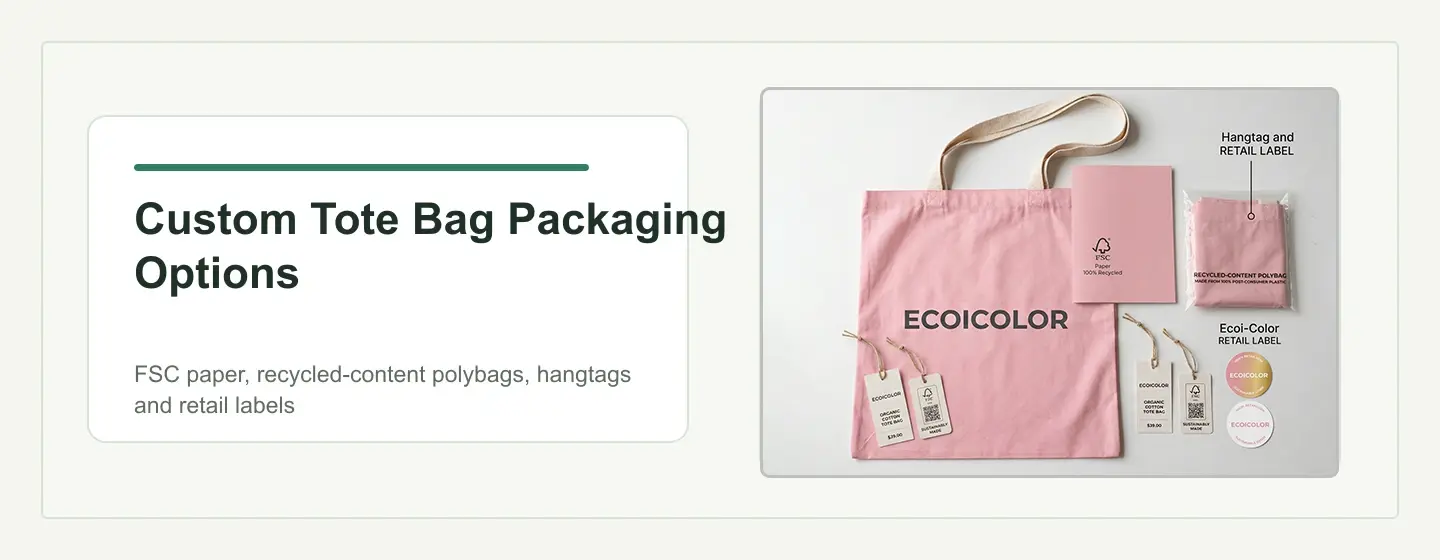
For custom tote bag projects, packaging is not just “put the bag into something.” It affects brand presentation, cost, lead time, label accuracy, warehouse handling, retail readiness and how the buyer’s team reviews the finished goods.
Quick Summary: Custom tote bag packaging should be planned before bulk packing, not added at the last minute. Buyers should confirm use case, folded size, packing method, hangtags, barcode or SKU labels, carton marks, sustainability wording, warehouse rules and launch timing before final quotation or sample approval. The right packaging depends on whether the tote is for beauty GWP, private label retail, Amazon/FBA, hotel welcome gifts, events or bulk shipment.
From our factory side, packaging should be confirmed before bulk packing starts, and preferably before material arrives. For brand buyers, the right packaging plan depends on the use case: beauty GWP, retail SKU, private label tote, hotel welcome bag or a lightweight amenity-style project.
Ecoicolortote works with brand buyers from 500 pcs per style. We can support common options such as individual polybags, recycled-content polybags, FSC paper hangtags, paper cards, belly bands, barcode stickers, wash labels, composition labels, origin labels, dust bags and carton marks.
Buyer Summary
- Best for: beauty GWP buyers, DTC and private label brands, retail chains, Amazon/FBA sellers, hotel welcome gift teams and event buyers planning custom tote packaging from 500 pcs per style.
- Main decision: choose packaging by sales channel, brand presentation, label requirements, sustainability claim and packing workflow, not only by unit cost.
- Factory-side note: late barcode files, hangtag artwork, carton marks, FSC paper requirements or recycled-content packaging claims can delay packing even when the tote bags are finished.
- What to prepare: packaging type, folded size, hangtag or label files, barcode/SKU data, carton mark, sustainability wording, destination, warehouse rules and launch date.
How should buyers use this tote bag packaging guide before RFQ?
If the question is tote bag packaging for a branded order, separate the brief into three parts: individual bag presentation, retail or warehouse labels, and export carton handling. This keeps the quote practical and prevents late changes after samples are approved.
- Individual branded shipments: confirm folded size, insert card, tissue, sleeve, polybag or paper wrap before pricing.
- Retail-ready programs: prepare barcode, hangtag, care label, sticker and carton mark files together with the artwork brief.
- Bulk branded bag shipments: confirm units per carton, carton mark format, delivery country and whether photos or video checks are needed before shipment.
For beauty GWP tote and pouch programs: connect the packaging route with the Beauty GWP Tote Bags brief, so insert cards, product fit, pouch add-ons, carton marks and launch timing are reviewed before quote or sample approval.
Best fit for this packaging options guide
This guide is best for beauty GWP buyers, DTC brands, private label teams, retail chains, Amazon/FBA sellers, hotel welcome gift teams and event buyers planning custom tote packaging from MOQ 500 pcs per style. It is especially useful when the tote needs hangtags, barcode stickers, SKU labels, FSC paper cards, recycled-content polybags, carton marks, dust bags, belly bands or warehouse-specific packing rules. The strongest fit is a buyer who can share the tote size, folded size, quantity, color split, label files, barcode data, sustainability wording, destination market and launch date before final packing decisions are made. It also helps prevent late repacking work.
How is this packaging options guide different from pack-out, barcode and retail-ready pages?
This guide compares packaging choices for custom tote bags before packing starts. A pack-out page should focus on assembly sequence, a barcode page should focus on data and label control, and a retail-ready page should focus on shelf or warehouse requirements.
Those topics overlap, but they should not answer the same buyer question. Packaging options help the buyer choose between polybags, paper cards, hangtags, belly bands, dust bags, carton marks and inner packs. Pack-out planning explains how those items are assembled with products or gift sets. Barcode and retail-ready guides should go deeper into SKU data, GS1 logic, label placement, retailer receiving rules and carton identification. Keeping these boundaries clear helps buyers move from broad packaging direction to execution details without mixing every requirement into one late-stage packing request.
Why Should Packaging Be Planned Before Bulk Production?
Packaging should be planned before bulk production because it affects brand experience, carton planning, label accuracy, packing speed, cost and delivery timing. Late packaging changes can delay shipment even when the tote bags are already finished.
For GWP projects, packaging helps the bag feel like a brand gift instead of a loose promotional item. For retail projects, packaging affects barcode control, shelf presentation and SKU handling. For hotel welcome totes, packaging may affect whether the bag is shipped empty, folded, or assembled with welcome items.
The practical rule is simple: confirm the packaging route before the factory starts final packing. If packaging requires printed hangtags, barcode stickers, paper cards, waist bands or custom carton marks, those files should be checked early enough to avoid rushing the last stage.
What Packaging Options Are Common for Custom Tote Bags?
The most common tote bag packaging options are individual polybags, bulk carton packing, FSC kraft hangtags, paper cards, belly bands, dust bags, paper boxes and barcode or SKU labels. The right choice depends on use case, budget and brand positioning.
Compare tote packaging options for your order
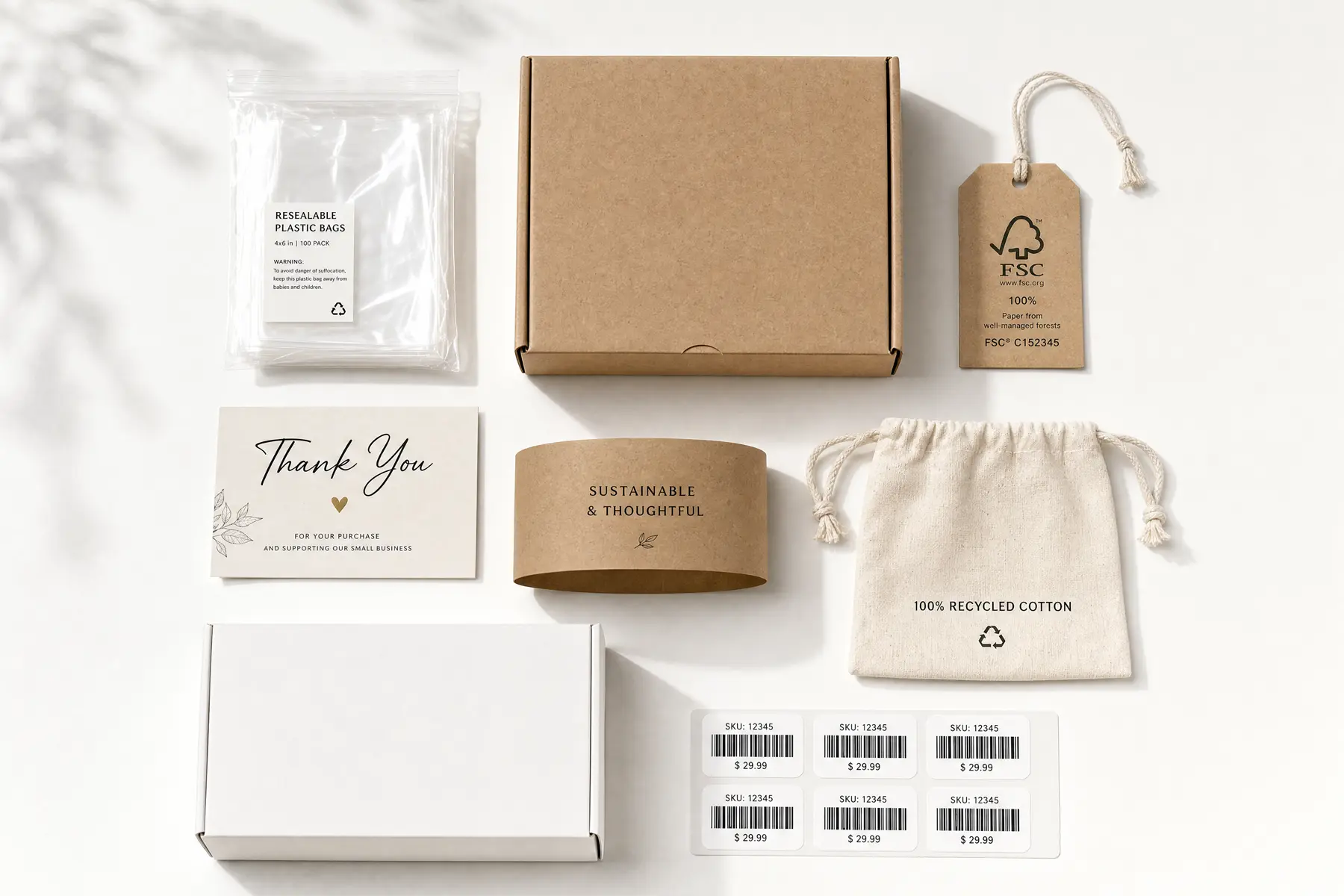
| Packaging option | Common use | Factory-side note |
|---|---|---|
| Individual polybag | Dust protection, shipping, friction control | Most common for bulk export packing |
| Bulk carton packing | Simple shipment and warehouse handling | Can be combined with folded packing |
| FSC kraft hangtag / paper card1 | Brand story, material note, retail information | FSC applies to paper packaging, not tote fabric |
| Belly band / paper sleeve | Reduced-plastic retail presentation | Works well when the tote folds neatly |
| Dust bag | Premium private label or giftable projects | Adds perceived value and cost |
| Paper box / gift box | Gift sets, premium gifting, retail bundles | Less common for basic tote projects |
| Barcode / SKU sticker | Retail SKU and warehouse identification | Barcode content should come from the buyer |
In daily communication, many buyers say “polybag” when they mean a simple clear protective bag. If the buyer wants recycled-content plastic packaging, the wording should be clarified. “Recycled-content polybag,” “PCR PE polybag,” or “recycled PE polybag” may be more accurate than using one recycled-plastic packaging term for every material structure.
Which Packaging Works for GWP, Retail and Hotel Tote Projects?
Beauty GWP projects usually use simple protective packing plus a small brand detail. Retail totes often need hangtags, barcode stickers, paper cards or dust bags. Hotel welcome totes usually use bulk packing or individual packing depending on whether items are pre-assembled.
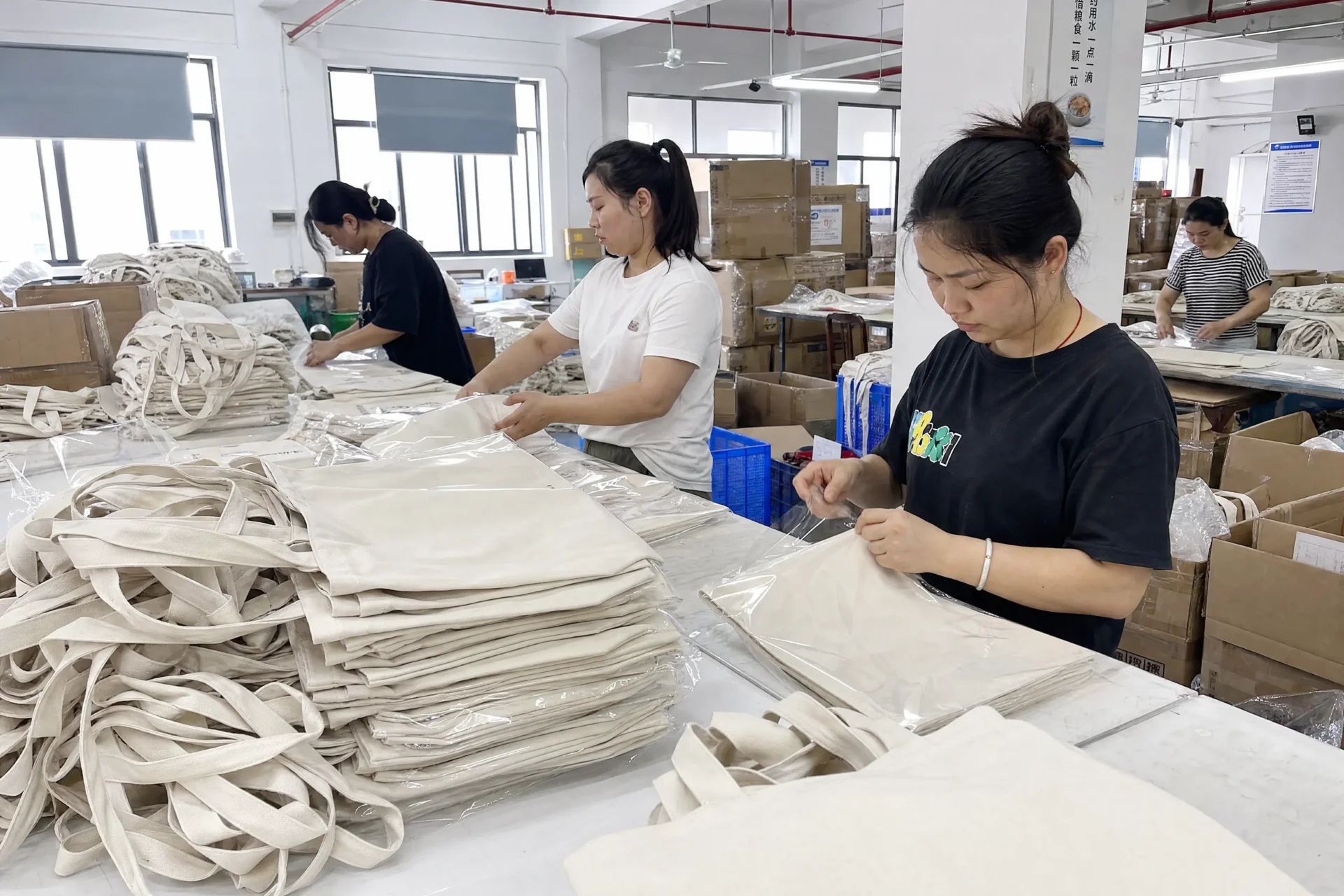
For beauty GWP totes, the common route is individual polybag, paper card, belly band or FSC kraft hangtag. GWP packaging usually needs to balance cost, neat presentation, fast packing and brand exposure. A small packaging upgrade can make the gift feel more intentional without turning the project into a heavy retail package.
For private label and retail totes, packaging is closer to product merchandising. Buyers often need hangtags, barcode stickers, care labels, material composition labels, origin labels, paper inserts, belly bands, dust bags or gift boxes. These details help the tote feel like a saleable SKU, not just a giveaway bag.
For hotel welcome totes, packaging is usually more practical. Bulk packing and individual polybag packing are common. If the tote will be pre-filled with welcome items, the assembly method should be discussed early because it changes packing labor, carton planning and shipment volume.
For airline amenity-style tote projects, we would describe this as product capability and development approach, not direct case experience. The packaging logic is usually lightweight construction, compact packing, clean presentation, compliance-oriented material selection and efficient bulk shipment.
How Should Buyers Choose Packaging by Sales Channel?
Packaging should follow the channel where the tote will be used: GWP packaging should be neat and fast to pack, retail packaging should support SKU control, private label packaging should feel product-ready, and hotel or event packaging should protect delivery and sorting.
| Use case | Packaging priority | Best-fit direction |
|---|---|---|
| Beauty GWP campaign | Gift feeling, launch timing, budget control | Individual polybag, paper card, FSC kraft hangtag or belly band |
| DTC / private label tote | Product identity, label consistency, repeatability | Hangtag, woven/care label, barcode sticker, dust bag or retail band |
| Retail chain or Amazon/FBA | SKU separation, barcode accuracy, warehouse receiving | Barcode/SKU sticker, carton marks, individual packing and colorway sorting |
| Hotel welcome tote | Presentation, room-ready handling, delivery batch control | Bulk packing, individual packing or pre-assembly support |
| Conference or event tote | Deadline, sponsor versions, venue delivery | Simple folded packing, carton marks by location or sponsor version |
Which Packaging Details Matter by Buyer Type?
Different buyers need different packaging controls. Beauty GWP buyers care about gift presentation and launch timing, DTC and retail buyers care about labels and barcodes, hotels care about welcome-gift handling, and Amazon/FBA sellers care about SKU separation and carton logic.
| Buyer type | Recommended packaging direction | Details to confirm early |
|---|---|---|
| Beauty / skincare / wellness GWP | Individual protective packing, FSC kraft hangtag, paper card, belly band or simple branded insert | Campaign launch date, brand card artwork, GWP set size, recycled or FSC wording |
| DTC / private label brand | Hangtag, barcode sticker, care label, material label, dust bag or retail-ready paper band | SKU data, label copy, colorway split, retail photography and warehouse needs |
| Retail chain / Amazon seller | Barcode/SKU sticker, carton mark, individual packing, strict sorting by color or style | Barcode file, FBA or warehouse rules, carton quantity, master carton mark and SKU separation |
| Hotel / resort welcome gift | Bulk packing, individual packing or pre-assembly support depending on the welcome kit | Whether items are packed inside, room-ready presentation, delivery batch and carton handling |
| Conference / event buyer | Simple bulk packing, folded packing, carton marks by event location or sponsor version | Event date, venue delivery rules, sponsor logo versions and carton sorting |
How Should Buyers Choose Sustainable Packaging?
Sustainable packaging should match the actual material and document scope. FSC paper packaging, recycled-content polybags, reduced plastic filling and paper bands can all be discussed, but environmental claims should not be stronger than the supporting documents.
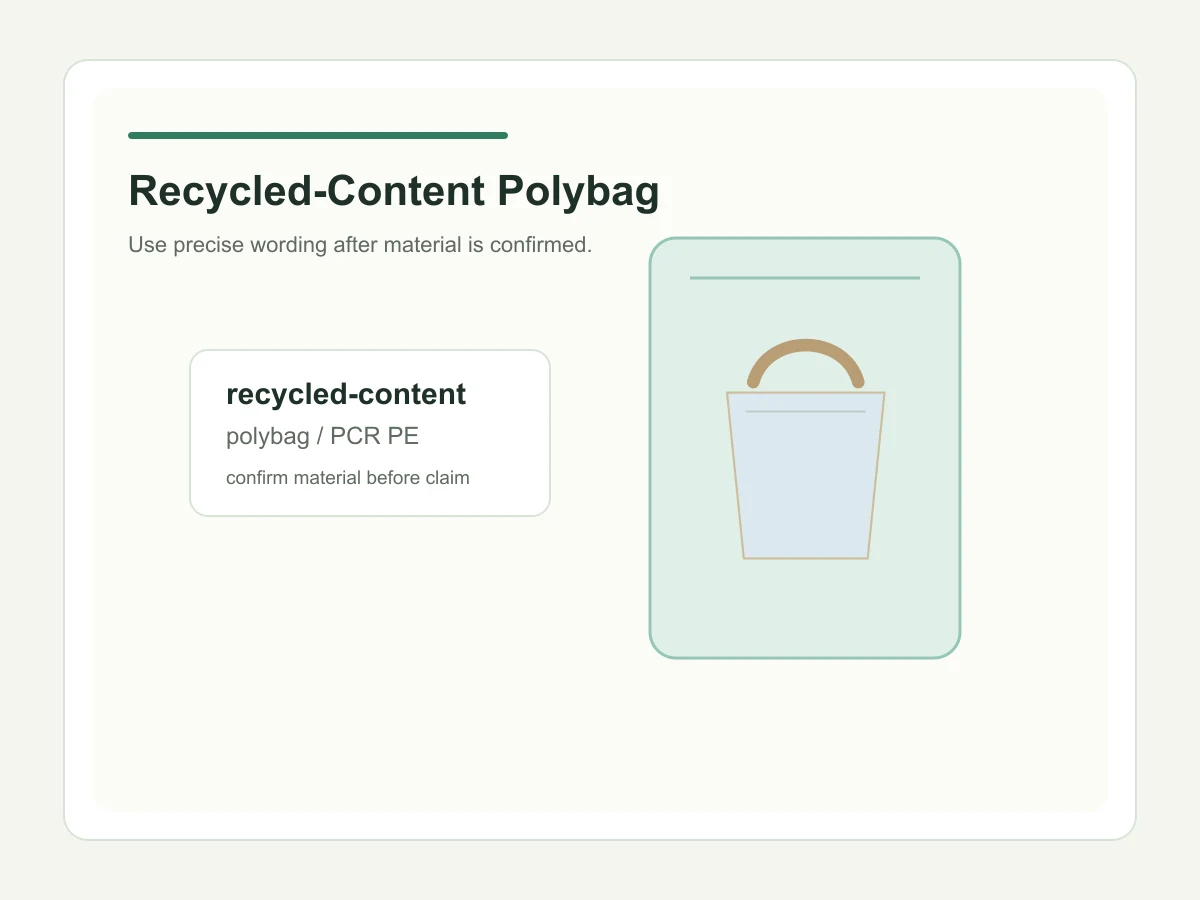
FSC can be relevant for paper packaging such as kraft hangtags, paper cards, paper sleeves and cartons. It should not be mixed with textile material certification. For recycled plastic packaging, buyers should confirm whether the supplier is offering recycled-content PE, PCR PE, PET-based film or another structure.
This matters because packaging claims are part of environmental marketing. The FTC Green Guides summary2 reminds marketers that environmental claims should be clear and supported. In practical B2B sourcing, this means the buyer should decide the claim first, then ask which document can support it.
For self-declared environmental wording such as recycled-content packaging, buyers can also use ISO 14021 environmental labels and declarations6 as a reference when checking whether packaging language is specific enough for internal review.
If the packaging or tote material uses recycled content, the buyer should also confirm whether the claim needs general material support or an order-specific document. Global Recycled Standard - Textile Standards3 is a useful reference when the project involves recycled material claims.
If a buyer wants sustainable packaging but has a limited budget, we usually simplify the structure first: use a clean belly band, a kraft hangtag, bulk packing with good carton control, or a recycled-content protective bag when appropriate. Not every project needs a box, dust bag and paper insert.
Which Retail Labels and Barcode Details Should Be Confirmed?
Retail tote projects may need hangtags, barcode stickers, wash labels, material composition labels, country-of-origin labels, SKU stickers, price stickers and carton marks. Barcode and label content should be confirmed before bulk packing.
Review barcode, hangtag and label files
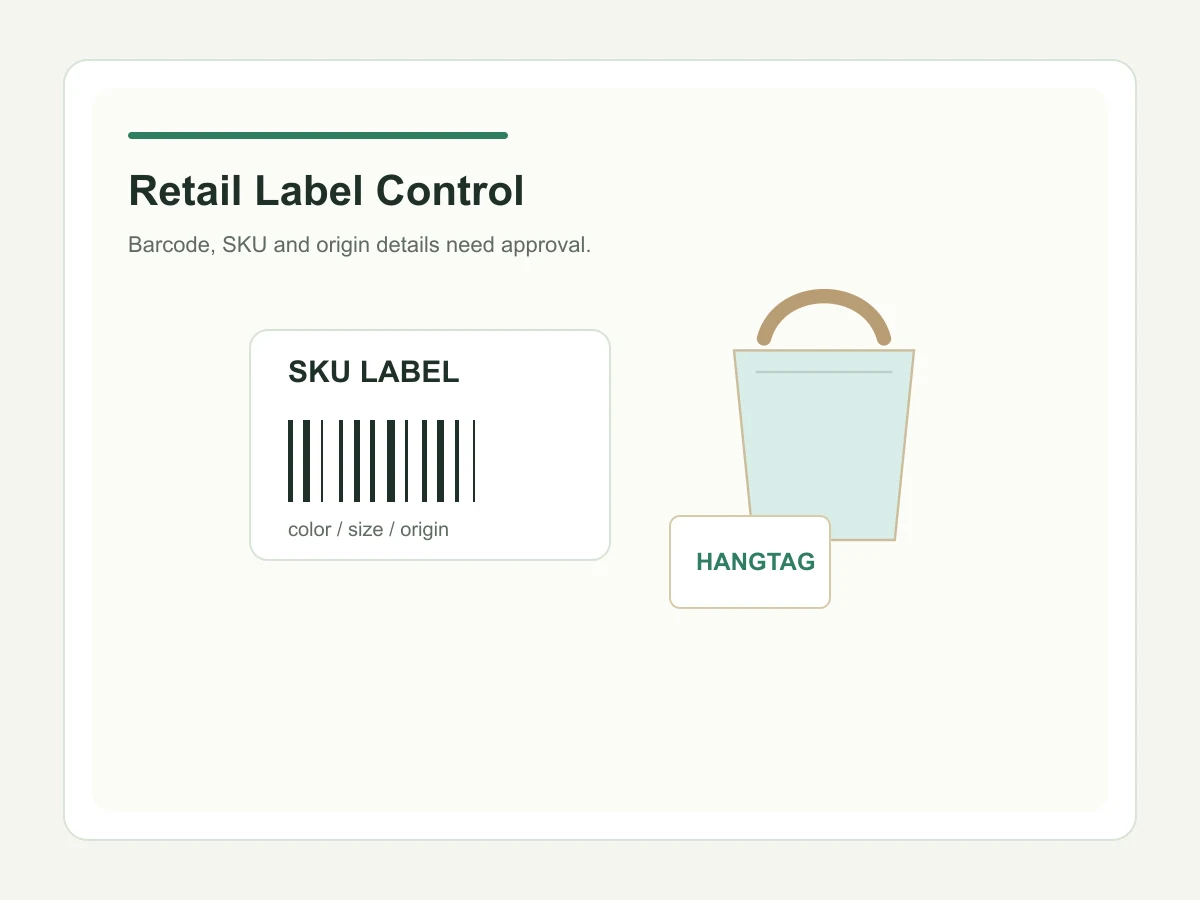
We can help with hangtag, barcode sticker, wash label, composition label and origin label production. The buyer usually provides barcode data, legal text, SKU information and label content. Our team can help with layout and production coordination after the content is confirmed.
The highest-risk detail is often not the bag itself. It is the barcode or label information. A wrong barcode, wrong SKU, wrong origin label or wrong carton mark can create warehouse and retail problems even if the tote bag quality is good.
If the tote is a private label retail product, label files should be checked as carefully as artwork. Buyers using retail barcodes should make sure their barcode data and placement are correct before printing. GS1 barcode standards5 are a useful reference when retail barcode structure and identification rules need to be checked before label production.
What Packaging Choices Affect Cost and Lead Time?
Packaging cost is affected by material, size, print color, paper weight, quantity, machine printing setup, barcode stickers, individual packing and assembly requirements. Small-quantity paper cards or hangtags can be expensive because machine setup cost is spread over fewer pieces.
For low-budget GWP projects, simple polybag packing, bulk packing, kraft hangtags or paper bands are usually more practical than a box or dust bag. For mid-to-high-end retail or wellness brands, a hangtag, belly band, individual packing or dust bag can support a better product experience.
The cost question should be asked together with brand positioning. A tote that will be sold as a retail SKU may need stronger packaging investment than a giveaway item. But even a GWP tote can use a small detail, such as a neat paper band or hangtag, to feel more giftable.
| Cost driver | Why it matters |
|---|---|
| Material | Paper, recycled-content plastic, dust bag fabric and boxes price differently |
| Size | Larger packaging uses more material and affects carton volume |
| Print colors | More colors can increase setup and printing cost |
| Quantity | Small quantities carry higher setup cost per piece |
| Individual packing | Adds labor and packing time |
| Barcode / SKU variation | Multiple SKUs require stricter sorting and label control |
When Should Packaging Be Confirmed in the Production Process?
Packaging should be confirmed before bulk packing and ideally before materials arrive. The factory should use a packing list, artwork files, barcode files, carton marks and first-piece packing confirmation to control the final stage.
Check packaging timing before bulk packing
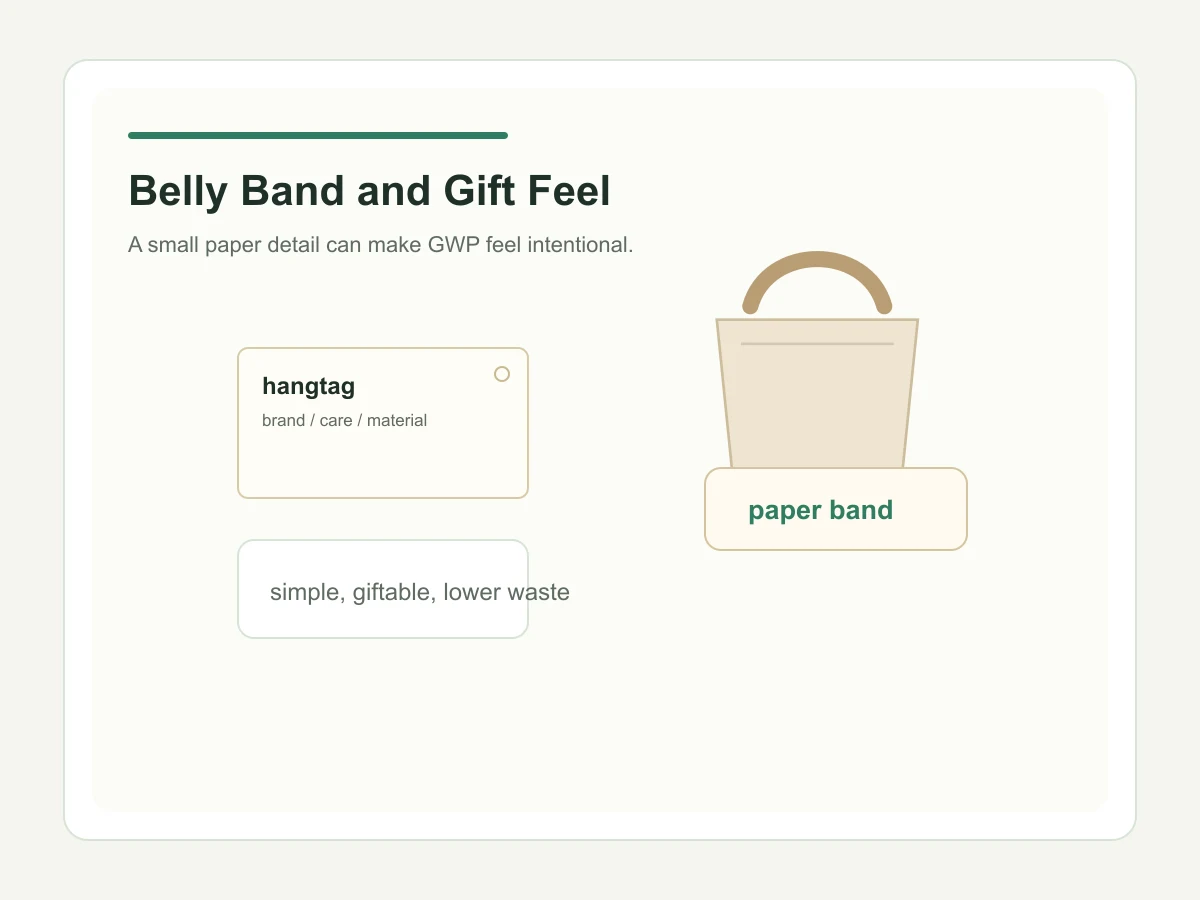
Packaging does not always need to be finalized at the first sample stage, but it should not be left until the last minute. If printed paper cards, hangtags or barcode stickers are needed, they require artwork review, printing time and internal checking.
After packaging is confirmed, our internal control usually includes a process sheet, packaging list, photo confirmation, first-piece packing check and packing video before shipment when needed. Carton marks, carton quantity and carton size should also be confirmed before export.
What Packaging Mistakes Should Brand Buyers Avoid?
The most common packaging mistakes are confirming packaging too late, giving wrong barcode data, changing paper cards after printing, choosing packaging that does not fit the folded tote, or forgetting carton marks and SKU separation.
- Do not wait until finished goods are ready before adding hangtags or paper cards.
- Do not send barcode files without checking SKU, size, color and retail data.
- Do not use FSC or recycled packaging claims unless documents support the actual material.
- Do not choose a packaging size before confirming how the tote folds.
- Do not forget carton marks, carton quantity and sorting rules for multiple SKUs.
Barcode mistakes are especially painful because they can cause retail receiving problems. From the factory side, we can help print and apply the label, but the buyer should confirm the barcode data and label content carefully before production.
What Should Buyers Include in a Packaging Brief?
A packaging brief should include tote size, folding method, packing style, label files, barcode data, hangtag artwork, material preference, environmental claim wording, carton mark requirements, delivery destination and whether the tote will be shipped empty or assembled.
| Brief item | What to confirm |
|---|---|
| Packaging type | Individual polybag, bulk packing, belly band, hangtag, dust bag or box |
| Label content | Barcode, SKU, material, origin, care label and price sticker if needed |
| Artwork files | Hangtag, paper card, insert, belly band and carton mark files |
| Environmental claim | FSC paper, recycled-content polybag or reduced-plastic wording with document support |
| Packing method | Folded size, individual packing, assembled packing or bulk carton packing |
| Shipping details | Carton mark, carton quantity, destination and warehouse requirements |
What Should Be in a Packaging Brief?
Before asking for packaging advice or a quote, buyers should prepare the tote use case, quantity, folded size, packing type, label files, barcode/SKU data, carton mark, sustainability requirements, destination and launch date.
- Use case: beauty GWP, private label retail, hotel welcome gift, Amazon/FBA, event giveaway or seasonal campaign.
- Quantity and colorway split: total order quantity, styles, colors and SKU count.
- Tote details: size, material, handle style, folded size and whether the tote needs to hold products.
- Packaging direction: individual polybag, recycled-content polybag, hangtag, belly band, dust bag, box or bulk carton packing.
- Label files: barcode, SKU sticker, hangtag, care label, material label, origin label and price sticker if needed.
- Sustainability requirement: FSC paper, recycled-content packaging, reduced-plastic presentation or claim wording that needs document support.
- Shipment details: destination, warehouse rule, carton mark, carton sorting method and launch or event date.
Packaging also connects with other sourcing decisions. If your project needs document support, review our sustainable tote bag documents checklist. If the tote is a retail product, start from our private label tote bag planning guide. If textile safety is part of the packaging or product approval workflow, buyers may also check OEKO-TEX STANDARD 1004 scope before using safety language in product files.
For premium gift presentation where packaging is part of the commercial tote program, return to Luxury Branded Totes before locking the pack-out brief.
Verified packing case: a side-gusset structure changed freight cost
In a verified tote project, adding side gussets and hard bottom support changed the packing route even though the carton size stayed at 52 × 40 × 40 cm. Loading fell from 25 bags to 15 bags per carton, which added 13 cartons, about 1.04 CBM and approximately USD 1,600 in freight.
What changed after structure approval
The revised tote needed a more dimensional shape. Once the side gussets and hard support were added, the finished bags could no longer be compressed into the original flat packing plan.
Why unit price alone was misleading
The structural change had a relatively small effect on the bag unit price, but it had a much larger effect on carton loading and transportation cost. The same 52 × 40 × 40 cm carton held 25 bags before the change and 15 bags after it.
Factory-side lesson
Buyers should lock the intended structure, filled shape, folding method and carton loading before comparing landed cost. A quote that omits packing density can look competitive while understating the real delivery budget.
Related buyer routes: Review structural corrections in the sample evaluation guide, or check whether the project belongs in the specialty tote route.
Send the structure, quantity, carton target and delivery market for packing-cost review.
Less suitable fit for this packaging route
This packaging route is less suitable for buyers who cannot confirm use case, folded size, label files, barcode data, sustainability wording, carton marks or destination requirements before packing decisions are needed.
It may also be less suitable for very small personal orders below MOQ, projects that want premium boxes or dust bags while keeping basic giveaway pricing, or retail programs that add barcode and carton rules only after bulk goods are ready. Ecoicolortote is a stronger fit for MOQ 500+ brand projects where packaging supports GWP presentation, retail readiness, FBA receiving, hotel welcome handling or event delivery. The better the buyer’s packaging brief, the easier it is to control cost, schedule and final receiving accuracy.
Planning packaging for a custom tote project?
Send us your tote size, quantity, folding method, label files, barcode needs, packaging direction and launch date. We can help check which option fits your budget, brand position and shipment timeline.
Most useful when you include: use case (GWP / retail / hotel / FBA / event), folded size, hangtag and label files, barcode data and sustainability claim wording. Send your packaging brief →
Prepare the packaging brief before quotation
Use these guides when your team still needs to lock retail labels, carton allocation or a rush freight decision before requesting a final quote.
- Retail labels and pack-out: use the retail-ready barcode, hangtag and polybag checklist to confirm SKU data, label files and packing presentation.
- Carton and SKU allocation: use the master-carton labeling and SKU-split rules when an order has store, region or version splits.
- Rush delivery decision: use the rush air-freight threshold brief when the launch window may not fit a sea-freight route.
Ready for quote review? Send quantity, delivery market, launch window, SKU split and packaging requirements through the packaging brief form.
FAQ
What is the MOQ for custom tote bag packaging?
Ecoicolortote custom tote projects start from 500 pcs per style. Packaging options depend on quantity, material, printing setup, label needs and packing method. Small-quantity paper cards, hangtags or boxes can carry higher setup cost, so buyers should confirm packaging scope together with the tote specification before comparing prices.
Can you provide FSC paper hangtags or paper cards?
Yes. FSC kraft hangtags, paper cards and paper packaging can be discussed when the paper material and document scope support the requirement. Buyers should remember that FSC paper packaging applies to paper items such as hangtags, cards, sleeves or cartons, not automatically to the tote fabric itself.
Can you provide recycled-content polybags?
Yes. Recycled-content plastic packaging options can be discussed. The exact wording should match the material structure, such as recycled-content polybag, PCR PE polybag or another confirmed packaging material. If the packaging claim will appear in marketing or retail files, the buyer should confirm document scope before printing.
When should barcode labels be confirmed?
Barcode labels should be confirmed before printing and before packing starts. The buyer should check SKU, barcode data, color, size, origin and retail information carefully. A wrong barcode or carton mark can create warehouse receiving problems even when the tote bag quality and logo work are correct.
Do you send packaging photos or videos before shipment?
Yes. Packaging photos or videos can be shared before shipment so the buyer can confirm folding, labels, carton marks and final packing condition. For projects with multiple SKUs, store allocations or special carton requirements, photo or video confirmation helps both sides catch label and sorting issues before goods leave the factory.
What should buyers include in a packaging brief?
Buyers should include tote size, folded size, quantity, packaging type, label files, barcode data, carton mark requirements, destination, launch date and any FSC or recycled-content claim wording. It also helps to share whether the tote is for GWP, retail, FBA, hotel welcome gifts, events or bulk internal distribution.
What packaging mistake causes the most rework?
The most common mistake is confirming packaging too late. Late hangtag, barcode, carton mark, paper card or packing method changes can affect cost, lead time and final delivery control. Packaging should be reviewed before bulk packing because finished bags can still be delayed if label files, carton rules or claim wording are not approved.
Trademark and certification note
BSCI, Sedex, SMETA, GRS, OEKO-TEX, ISO, FSC and other certification or audit names belong to their respective organizations. This article is a buyer-side sourcing guide and does not claim that every product, material, order or shipment automatically carries every listed certification. Buyers should confirm current document validity, certificate scope, material coverage and market requirements before finalizing quotation or bulk production.
Sources
About the Author
Zoe Yu is a Sales Manager at Ecoicolortote, working with beauty, wellness, retail, hotel and event buyers on custom tote bag projects from MOQ 500 pcs per style. She helps buyers connect tote material, logo process, packaging route, label files, barcode details, carton marks, sample approval and production timing before bulk packing starts. Her factory-side work focuses on making packaging choices practical, documented, supplier-ready and clear enough for final buyer-side shipment review across GWP, retail, FBA, event and hotel programs.