

 Zoe Yu
 A rush custom tote launch needs a freight threshold before the buyer compares quotes. Carton size, carton quantity, final destination, sample timing and packout changes decide whether sea freight still works, whether air freight is needed, or whether a split shipment is the better route.
Review Rush Freight ThresholdView Packaging Route
When a custom tote order has a fixed event, retail drop or seasonal launch, freight mode needs to be tested against timing, carton data and packout route.
Quick Summary
This brief helps B2B buyers decide when to ask for an air-freight quote, when to stay with sea freight and when to split shipment. It supports the packaging route by connecting carton data, launch date and packout changes before the supplier prepares the final quote.
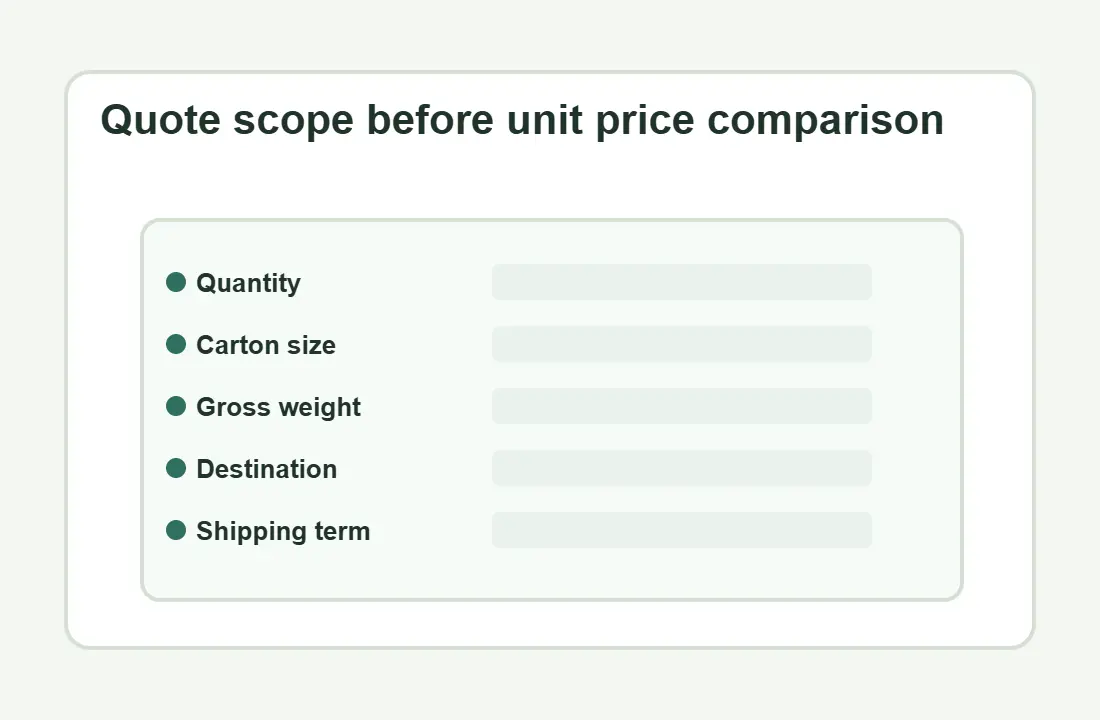
Send the arrival deadline, delivery country, final destination, carton dimensions, carton quantity, pieces per carton, gross weight, product packout and sample approval date. If packing may change, ask for a sea route, air route and partial-air option before the quote is treated as final.
When rush air freight becomes a quote decision
| Decision area | What to prepare | Why it matters |
|---|---|---|
| Fixed launch date | Event, seasonal drop, store launch, hotel opening or retail handoff date. | Freight mode must protect the real arrival need. |
| Carton data | Carton size, carton count, gross weight and pieces per carton. | Air and sea quotes cannot be compared without carton data. |
| Packout change | Added paper box, insert, sleeve, pouch or individual packing route. | New packing can increase carton count and freight cost. |
| Approval timing | Sample approval date, production finish date and shipment-ready week. | Late approval can remove the sea-freight option. |
Air freight is a logistics route with its own planning constraints. IATA cargo program overview [1] is useful context when buyers discuss air-cargo timing and shipment mode with a supplier.
The threshold is not a fixed number. It depends on launch date, destination, carton count, final packing route and whether the buyer can accept a partial shipment. A good RFQ asks for options before the launch window becomes impossible.
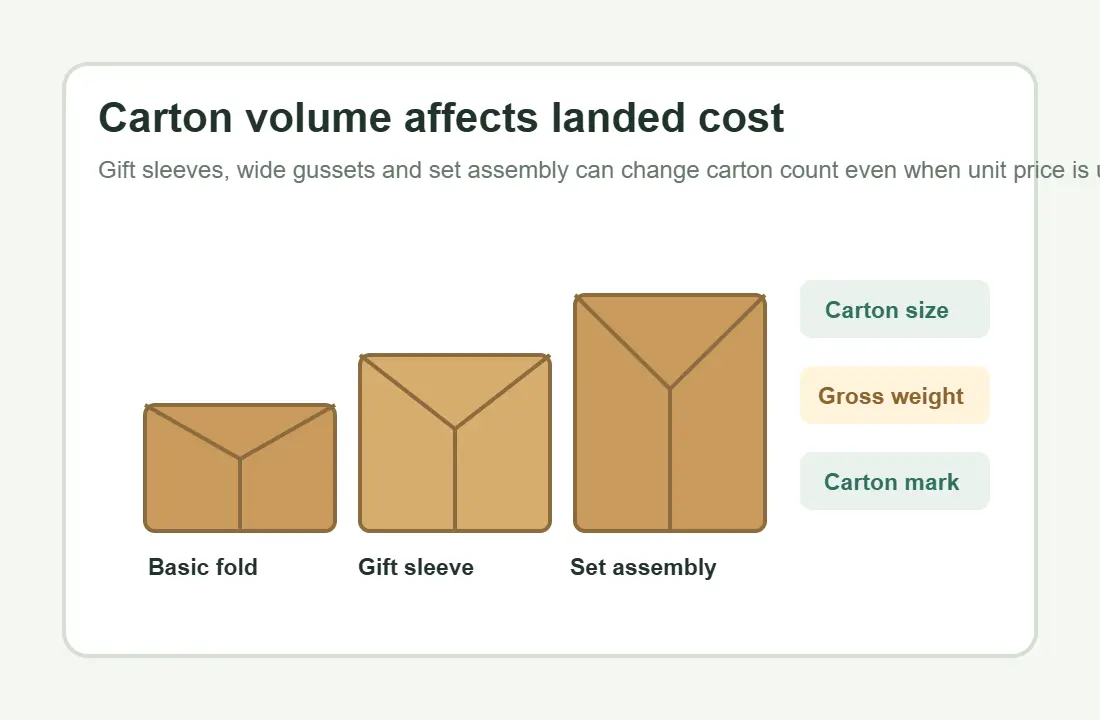
A quote can change when final packing adds boxes, inserts or a different pieces-per-carton rule.
- carton size
- carton count
- destination
Cost trade-offs when sea freight no longer fits
All-air shipment
Fastest route, but usually the highest freight cost for bulky tote orders.
Partial air plus sea balance
Protects the first launch date while the rest moves by sea freight.
Sea freight with earlier approval
Best when sample and bulk approval leave enough calendar space.
Compare Air and Sea TimingView Packaging Route
How to keep launch timing honest in the RFQ
Delivery terms need consistent wording before freight options are compared. ICC Incoterms rules [2] are useful context for why EXW, FOB, CIF and DDP-style assumptions cannot be compared as the same landed-cost basis.
Shipment documents should match final carton and destination details. CBP importer and exporter tips [3] is useful background when buyers prepare cross-border shipment information and packing-list data.
Ask the supplier to separate production lead time from transit time. A tote project can look feasible if only bulk production is counted, then fail once carton packing, document handoff, booking time, customs and final delivery route are added to the launch calendar.
Some buyers move all goods to air freight, but a partial air shipment plus sea balance may protect the launch while controlling total cost.
- air portion
- sea balance
- arrival week
When this rush route fits
Best fit: beauty, retail, event, hotel, DTC and private-label buyers planning MOQ 500+ custom tote projects with a fixed arrival date, final destination, packout route and carton data that may affect freight mode.
Less suitable: projects without a real delivery deadline, buyers comparing only unit price, personal gifts, no-brand orders or RFQs that cannot provide carton size, quantity, destination, approval timing or packing route.
Rush shipment lesson
For sea freight quotes, the useful numbers are accurate carton size, carton quantity and destination. A factory-side lesson is that adding paper boxes can increase carton count a lot after the first estimate, which changes the shipment route discussion. When a buyer is urgent, the practical option is often air freight for the first batch or a partial air shipment, not pretending the original sea-freight plan still fits.
Packaging route links for launch teams
Use this guide with the retail-ready barcode and polybag checklist when inner packing affects carton volume, and with the master carton and SKU split guide when label rules change carton data. The owner route remains Custom Tote Bag Packaging Options.
FAQ
When should a buyer ask for an air-freight quote?
Ask for an air-freight quote when the launch date, sample approval date, production finish date or final delivery window makes sea freight risky. The request should include carton size, carton count, gross weight, destination and packing route. Without those details, the air quote may be only a rough estimate.
Does air freight make sense for custom tote bags?
It can make sense for urgent launches, partial shipments or high-value campaigns, but tote bags are bulky compared with small accessories. Air freight is better treated as a timing decision, not a default route. Launch teams often compare all-air shipment with partial-air and sea-balance options before final approval.
How can adding paper boxes change freight planning?
A paper box, sleeve, insert or individual pack can increase carton size or reduce pieces per carton. That raises carton count and can change both sea freight and air freight quotes. If the packing route may change, freight estimates should stay conditional until final carton data is confirmed.
What carton data is needed for a rush freight review?
Useful data includes carton dimensions, pieces per carton, gross weight, total carton count, final destination, delivery deadline, shipment-ready date and whether the order has multiple versions or locations. These details let the supplier compare sea, air and partial shipment with the same assumptions and a realistic calendar.
Can a buyer use partial air shipment?
Yes, if the project allows part of the order to arrive first. A buyer may air ship launch or event quantity and move the remaining balance by sea. This route needs clear quantity split, carton labels and receiving instructions so the first batch and balance shipment do not confuse the receiving team.
How is this different from a sea freight carton data guide?
A sea freight carton data guide explains which carton numbers are needed for sea quotes. This article is narrower: it helps buyers decide when sea freight no longer fits the launch window, whether air freight is worth reviewing, and how a partial shipment can protect timing.
Who should use this brief?
Use this brief if you are a beauty, retail, event, hotel, DTC or private-label buyer planning an MOQ 500+ custom tote launch with a real arrival date. It is not useful for personal gifts, no-deadline browsing, or RFQs without destination, carton data, packing route and sample timing.
Sources
About the Author
 | Zoe Yu is B2B Sales Manager at Ecoicolortote, supporting overseas brand buyers with custom tote bag RFQs, material route review, logo execution, sampling, packing and bulk production coordination. |
Send Carton Data for Shipping BriefView Packaging Route