

 Zoe Yu
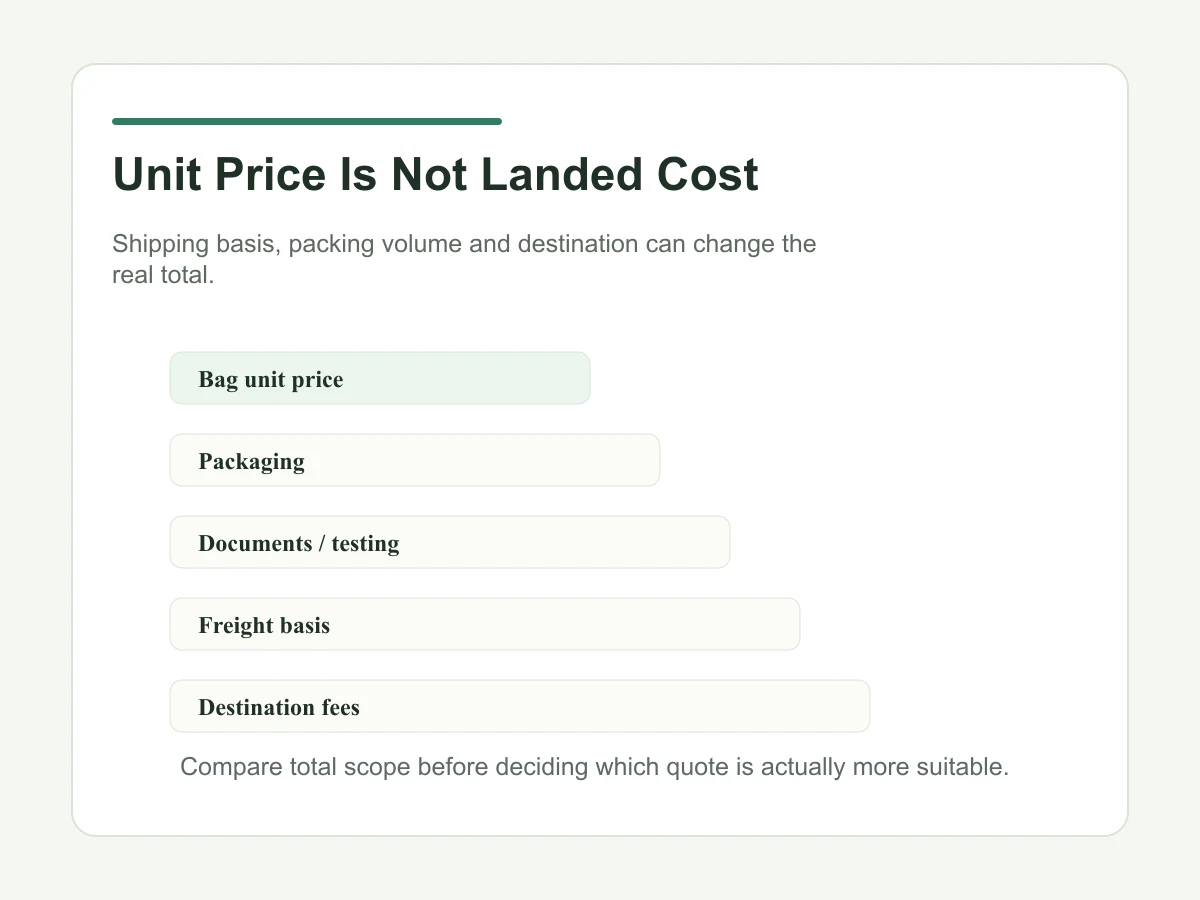
 When a buyer asks whether a custom tote order can ship by sea instead of air, the supplier needs carton data before the freight discussion becomes useful. Sea freight carton data connects unit price, packing ratio, carton size, gross weight, delivery country and shipping term into one quote scope.
A buyer asking for sea freight should help the supplier estimate carton size, packing ratio, weight, delivery market and shipping basis.
Quick Summary
This guide helps B2B buyers prepare carton and packing information for sea freight quotes on MOQ 500+ custom tote projects. It explains which data the supplier needs, why carton volume can matter more than bag weight, and how to avoid comparing a production unit price against an incomplete freight assumption.
For sea freight review, send quantity, bag size, packing method, carton size if known, expected pieces per carton, gross weight, destination country, target arrival window and preferred delivery term. If carton data is not final, ask the supplier to quote with a stated estimate and update it after sample or packing confirmation.
Send Sea Freight Carton DataView Related Buyer Guide
What carton data belongs in a sea freight quote request?
| Decision area | What to prepare | Why it matters |
|---|---|---|
| Carton size | Length, width and height, or an estimated carton route if final packing is not approved yet. | Carton volume can drive freight planning for bulky textile goods. |
| Packing ratio | Pieces per carton, set packing, individual packing, pouch insert or bulk packing. | Different packing routes change carton count and total volume. |
| Weight data | Net weight, gross weight and whether hangtag, insert or pouch is included. | Weight matters, but volume can still be the stronger cost driver. |
| Delivery basis | Destination country, port or address level, sea freight preference and delivery term. | Freight responsibility must be clear before comparing total cost. |
Delivery responsibility should be clear when a buyer asks for sea freight. ICC Incoterms rules [1] are useful context for how delivery terms affect which side handles freight, risk and cost responsibilities.
Import documentation and cargo filing requirements vary by market. U.S. Customs and Border Protection Importer Security Filing [2] is useful context for why destination and importer responsibility should be discussed early for U.S. shipments.
Supplier-side field note: For sea freight quotes, accurate carton size, quantity and destination port are the most important inputs. Early factory budget estimates can still have variance, so carton data should be reconfirmed with production before shipment. When a buyer later adds paper boxes or extra retail packing, carton count can increase significantly and freight needs to be recalculated; urgent projects often shift part or all of the shipment to air freight.
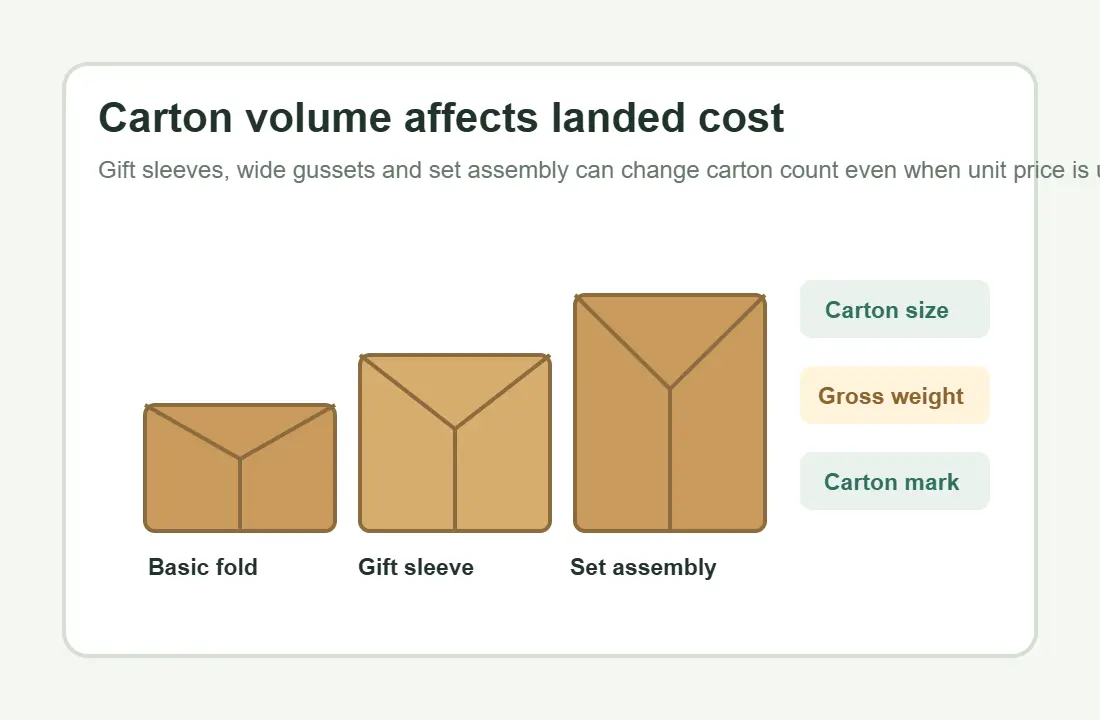
The same unit price can create different landed cost if carton count, folded size and packing method change.
- carton size
- packing ratio
- gross weight
Why can carton data change the buyer decision?
Volume can outweigh weight
Tote bags are often light but bulky, especially with gusset, structured canvas or individual packing.
Packing route changes cartons
A folded bulk pack, pouch set, retail sleeve or individual polybag can create different carton counts.
Delivery basis changes comparison
EXW, FOB, CIF, DDP or courier-style delivery are not the same quote basis.
Review Carton Ratio for QuoteView Related Buyer Guide
When should carton data be final and when can it be estimated?
Final carton data should follow sample or packing confirmation when the project is sensitive to volume. ISO 2859-1 sampling procedures [3] is useful background when buyers also need pre-shipment inspection or packing check language.
Early quotation can use an estimated carton route, but the supplier should label it clearly. Final carton data should be reviewed after sample approval, packing method confirmation and carton mark planning. This is especially important when the buyer compares sea freight against air freight or needs Christmas, launch or retail delivery timing.
Individual packing, bulk packing, set packing and pouch insert packing can change volume before the buyer notices it in freight cost.
- bulk packing
- individual bag
- set packing

When this sea freight data guide fits
Best fit: B2B brand, retail, beauty, hotel, event and private-label buyers planning MOQ 500+ custom tote projects where sea freight, carton count, packing ratio and delivery country affect quote decisions.
Less suitable: personal orders, urgent no-sample orders, single-piece gifts, or projects where the buyer only wants a unit price and does not want to discuss delivery basis, packing or carton data.
Real sea-freight quote note
For sea freight quotes, carton size, quantity and destination port need to be accurate before the freight basis is trusted. Early factory budget estimates can have variance, so carton data should be reconfirmed with production before shipment. If the buyer later adds paper boxes or extra retail packing, carton count can increase significantly and the freight basis needs to be recalculated; urgent projects may need to shift to air freight.

Related shipping planning note
This article supports the sea-vs-air and shipping-terms guides. Its purpose is only to help buyers prepare carton data for sea freight quote review, not to replace broader shipping decision or Incoterms guidance.
FAQ
What carton data should I send for a custom tote sea freight quote?
Send carton size if known, pieces per carton, packing method, gross weight, net weight, destination country, preferred delivery term and whether the order includes pouch, hangtag, sleeve, insert or individual packing. If final carton size is not known, ask the supplier to label the estimate clearly.
Why does carton volume matter for tote bags?
Tote bags are often light but can be bulky, especially when they have gussets, structure, thick canvas, individual packing or set components. Sea freight planning may depend on total carton volume as much as item weight. A quote without carton assumptions can make freight look simpler than it really is.
Can I compare sea freight and air freight before samples are approved?
You can compare early directions, but the numbers should be treated as estimates if packing and carton data are not final. Air freight may be useful for urgent samples or partial shipments, while sea freight usually needs better carton planning and a clearer arrival window.
Does MOQ 500+ affect sea freight planning?
MOQ 500+ is the normal B2B planning point, but carton data still depends on size, material, gusset, packing and whether a pouch or retail set is included. A smaller order may still have fixed packing and freight handling work, while a larger order may make sea freight more practical.
Should carton marks be prepared before freight quotation?
Basic carton mark direction should be discussed early when the buyer has retail, warehouse or delivery requirements. Final carton marks can be confirmed later, but the quote should know whether carton labeling, SKU split, destination marks or special handling information are part of the order.
How is this different from a sea vs air shipping guide?
The sea-vs-air guide explains the broader shipping decision. This article is narrower: it explains what carton and packing data belongs in a sea freight quote request. It supports the shipping planning guides rather than competing with them or repeating the same sea-vs-air comparison for a buyer who only needs carton-scope preparation.
Who should use this guide?
Use this guide if you are a B2B buyer planning MOQ 500+ custom tote bags and want a sea freight quote that reflects carton count, packing ratio and destination. It is not intended for personal orders, one-piece gifts or buyers who only want a production unit price.
Sources
About the Author
 | Zoe Yu is B2B Sales Manager at Ecoicolortote, supporting overseas brand buyers with custom tote bag RFQs, material route review, logo execution, sampling, packing and bulk production coordination. |
Confirm Delivery Country ScopeView Related Buyer Guide