

 Zoe Yu
 A 500-piece custom canvas tote inquiry with several registered logos is not one production version. The RFQ needs a clear logo-by-logo quantity and approval table before the supplier can quote reliably.
Send Multi-Logo RFQView Custom Logo Tote Route
List every logo as a separate version before quoting. The factory needs the artwork file, finished size, placement, color/process and quantity for each version.
- logo authorization and file name
- quantity split by version
- sample and delivery plan
Quick answer
List every logo version with the authorized artwork file, finished size, placement, color/process, quantity and sample status. Add the tote specification, use case, delivery city and required date. This turns a vague 500-piece request into a quote-ready first-order brief.
A recent 500-piece inquiry showed exactly what the first message could not answer
A recent U.S.-based Chinese-speaking buyer contacted Ecoicolortote through WhatsApp and asked for a first batch of 500 simple canvas totes using several registered logos. The message gave the product category and total quantity, but it did not yet identify the company or use case, tote size/GSM, quantity per logo, delivery city/date or sample route.
This is useful commercial evidence because it shows where sales work begins: not with more generic product pictures, but with a short version table and the few missing fields needed to select material, logo and timing routes. The inquiry is still a sales lead; no order result is claimed.
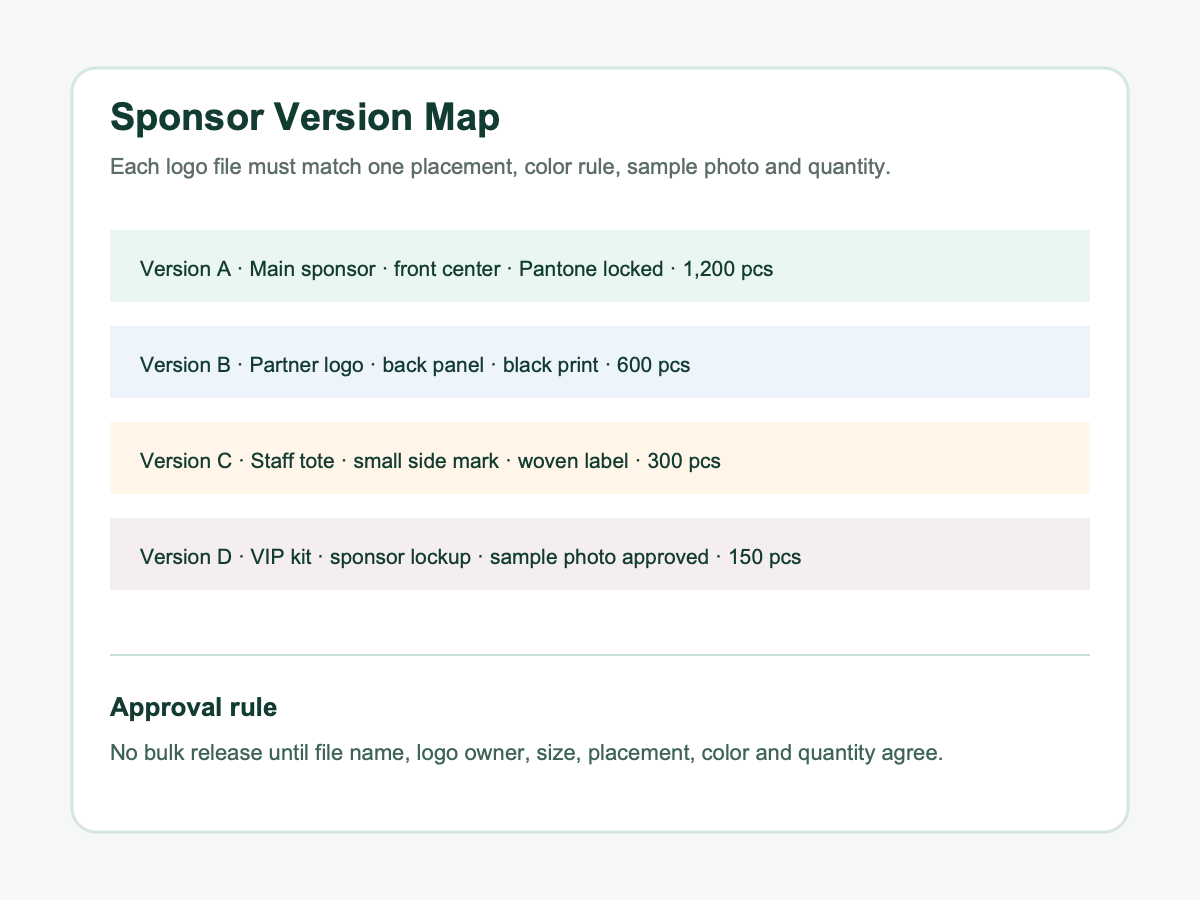
Use one row per logo version and keep the file name identical across RFQ, sample and production records.
- one row per registered logo
- file name and revision
- quantity and sample status
The version table is the center of a stable quotation
| Field | What to write | Why the factory needs it |
|---|---|---|
| Logo authorization | Owner or permission reference for each mark. | Avoids reproducing a logo without clear buyer authority. |
| Artwork file | Exact file name and revision date. | Prevents sample and bulk teams from using different versions. |
| Finished logo | Width/height, placement and color/process. | Controls setup, readability and panel fit. |
| Version quantity | Pieces per logo, not only total 500. | Determines production feasibility, packing and QC. |
| Approval | Strike-off, shared sample or separate bag sample. | Defines cost, risk and calendar before bulk. |
WIPO trademark information [1] provides the official trademark context. The ordering party remains responsible for confirming its right to reproduce each mark and any brand-use restrictions.
Provide vector files, color references and finished dimensions for every version.
- vector paths and fonts
- color references
- finished logo dimensions
One tote specification can still create different setup costs
Using the same canvas bag does not make every logo version operationally identical. One-color screen print, multi-color print, embroidery and heat transfer have different setup and sample needs. A large simple mark may share one process route, while a small detailed logo may need another. Quote the shared bag construction once, then separate logo-specific setup, sample and production scope.
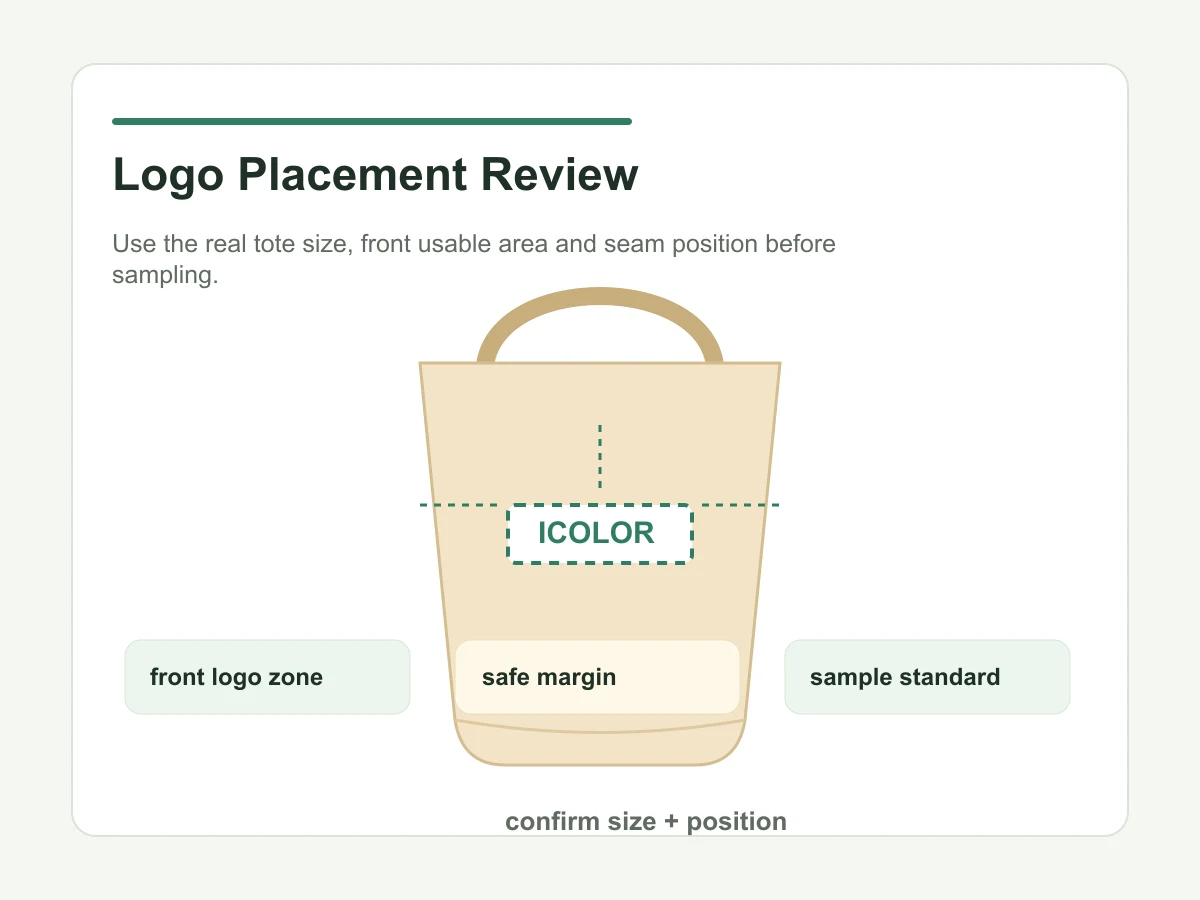
Mark distances from seams, handles and edges rather than writing only front-center.
- distance from seams and handles
- actual logo width
- normal viewing distance
Decide how much physical proof each version needs
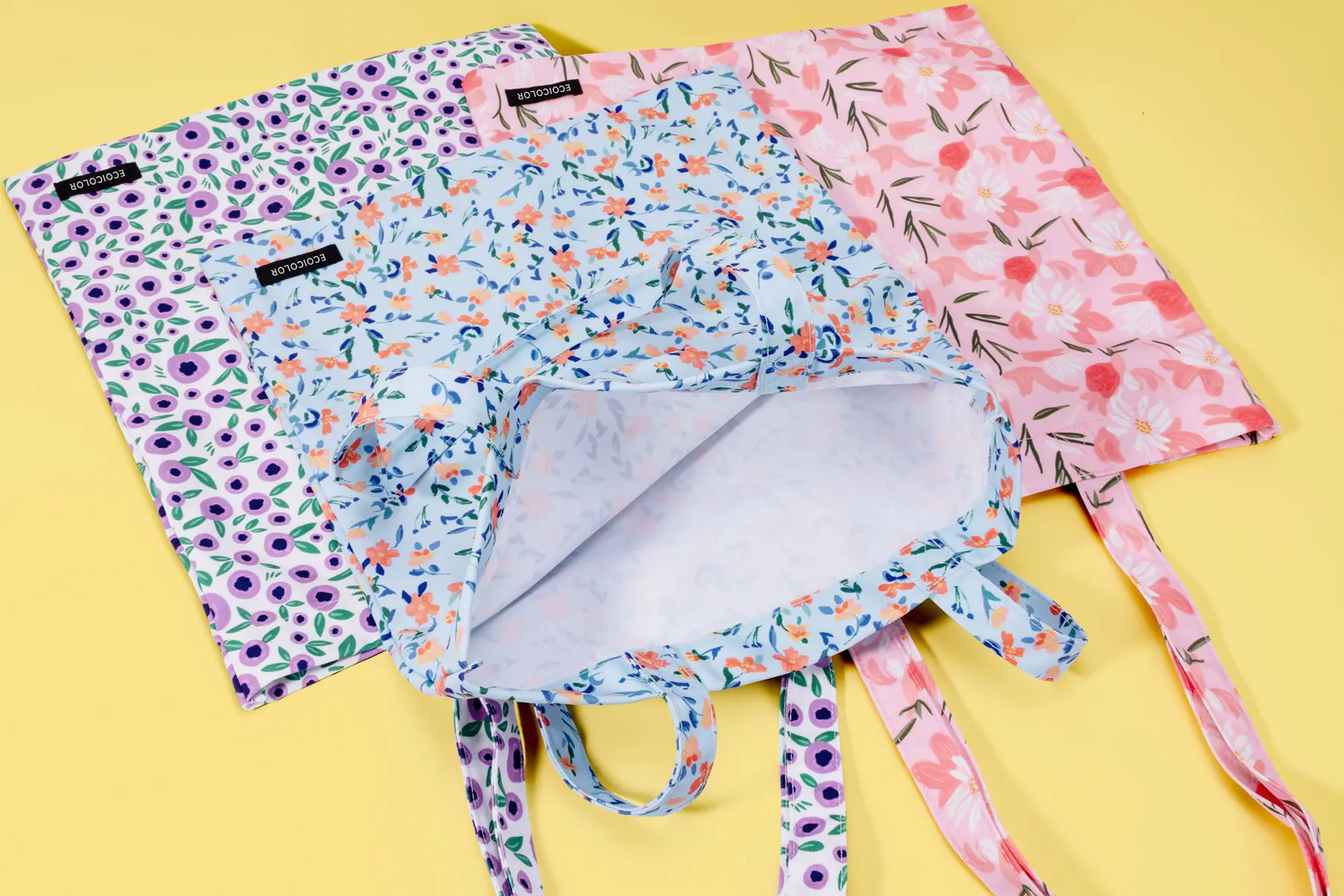
Shared construction
One full bag sample can establish size, canvas, handles and stitching.
Version strike-offs
Separate logo tests can verify print color, clarity and scale.
Separate bag samples
Use when placement, process or artwork risk differs materially.
Do not force every version into the same approval route merely to make the sample list shorter. The approval plan should reflect visible risk and buyer priorities, then record which physical proof controls each bulk version.
Record which versions share one method and which require separate setup or color approval.
- sample ID per version
- approved method and color
- signed result or photo record
Delivery and packing fields prevent a second quotation cycle
The first message also needs delivery city, target arrival date and packing expectations. These fields affect whether the project can use standard export packing, version-separated cartons or another handoff. If multiple stores, teams or brands receive separate quantities, put that split in the RFQ before the logistics quote.
Bulk inspection reconciles version quality and version count
QC needs the approved artwork/sample and the ordered quantity for each version. ISO 2859-1 sampling inspection [2] provides a framework for lot sampling when the project adopts a formal inspection plan, but the order still must define visible defects and version-specific tolerances. Carton identification should support the intended split rather than hiding all versions under one total.
The final count must match the version table, not only the total order quantity.
- logo version
- packed pieces
- carton identification
Who this RFQ route is designed for
Best fit: brand groups, agencies, organizations and retail/event buyers ordering MOQ 500+ canvas totes with several authorized logo versions.
Less suitable: personal one-piece requests, unknown logo ownership, or buyers unwilling to provide artwork and approve the physical result.
Pantone color system overview [3] explains why Pantone references help communicate color. The physical print on the selected canvas still needs project approval.
Choose a focused review: Review Logo Files or Request Quote Scope Review.
FAQ
Can 500 canvas totes use several different registered logos?
The project can be reviewed when the total and version split are clear. Each logo may create a separate artwork, setup, sample, color and packing version. Send the quantity per logo before quotation so the supplier can confirm whether the planned split fits the material and printing route rather than treating 500 pieces as one identical production version.
What belongs in a multi-logo tote RFQ table?
Use one row per version with logo owner or authorization reference, artwork file name, revision date, finished logo size, placement, print or embroidery method, colors, bag specification, quantity and sample status. Add delivery city, required arrival date and packing split so the quote covers production and handoff rather than only the unit price.
Do registered logos still need an authorization check?
Yes. Registration and production authorization are different records. The ordering team needs to confirm that the company is permitted to reproduce every mark and identify any brand-use restrictions. The supplier needs the approved production file and written authorization context; it should not infer rights from an image sent through WhatsApp.
Can all logo versions share one physical sample?
Only when the buyer accepts a risk-based route and the artwork differences are limited. Small text, different color counts, different logo sizes or different methods may require separate strike-offs or bag samples. Write which versions share the same construction and which need individual approval before bulk production begins.
What information prevents repeated quotation revisions?
Provide the company/use case, tote dimensions and structure, canvas type or GSM direction, total quantity, per-logo quantity, artwork, finished logo size, color/process, packing, delivery city and required date. A first message containing only product type and total quantity can start a discussion, but it cannot support a stable landed-scope quotation.
How should multi-logo versions be checked before shipment?
QC should compare the physical bags with the approved version table and samples, then reconcile packed quantity by version. Carton marks or inner labels should identify the split when required. A formal sampling plan can support inspection, but every version still needs clear visual defects, tolerances and quantity reconciliation rules in the order file.
Sources
About the Author
 |
Zoe Yu is B2B Sales Manager at Ecoicolortote, supporting overseas brand buyers with custom tote RFQs, material and logo review, sampling, packing and bulk production coordination. |
Plan Sample ApprovalView Custom Logo Tote Route