

 Zoe Yu
 A custom tote reorder is not controlled by the previous PO number alone. The strongest reference set combines the signed approval sample, a retained sample from actual bulk production and the current material options.
Send Reorder BriefView Private Label Tote Route
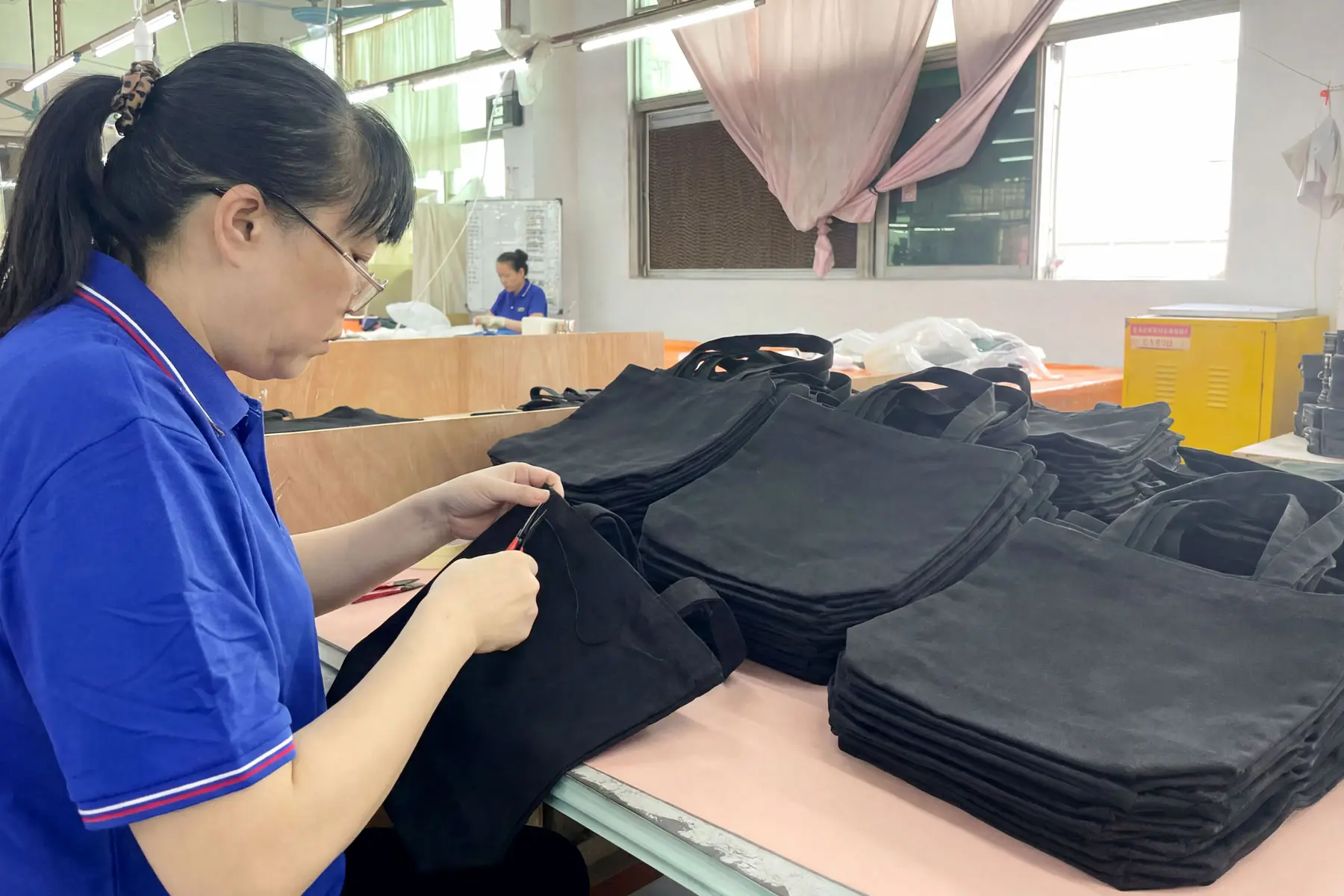
Keep the signed approval sample, retained bulk sample and specification record together. For small stock-material runs, review available shade options before confirming the repeat.
- signed sample
- retained bulk sample
- A/B/C/D stock shade choice
Reorder match decision
Retrieve the signed sample and retained bulk sample before checking current material. For a small stock-material repeat, exact lot continuity can be difficult; compare labeled A/B/C/D shade options. For a larger customized repeat, lock the current material and approve any intended change as a new version.
Ecoicolortote keeps two different physical references for a repeat order
Jolian confirmed the factory workflow: after every bulk shipment, Ecoicolortote retains a bulk-production sample. The signed approval sample and the retained bulk sample then become the standard for repeat-order review.
The two references answer different questions. The signed sample shows what the buyer approved; the retained bulk sample shows what the first production actually delivered. A reorder review should compare both before anyone writes “same as last order.”
Check dimensions, material, color, logo, construction, labels and packing against this reference.
- buyer-approved construction
- material and color
- logo, labels and packing
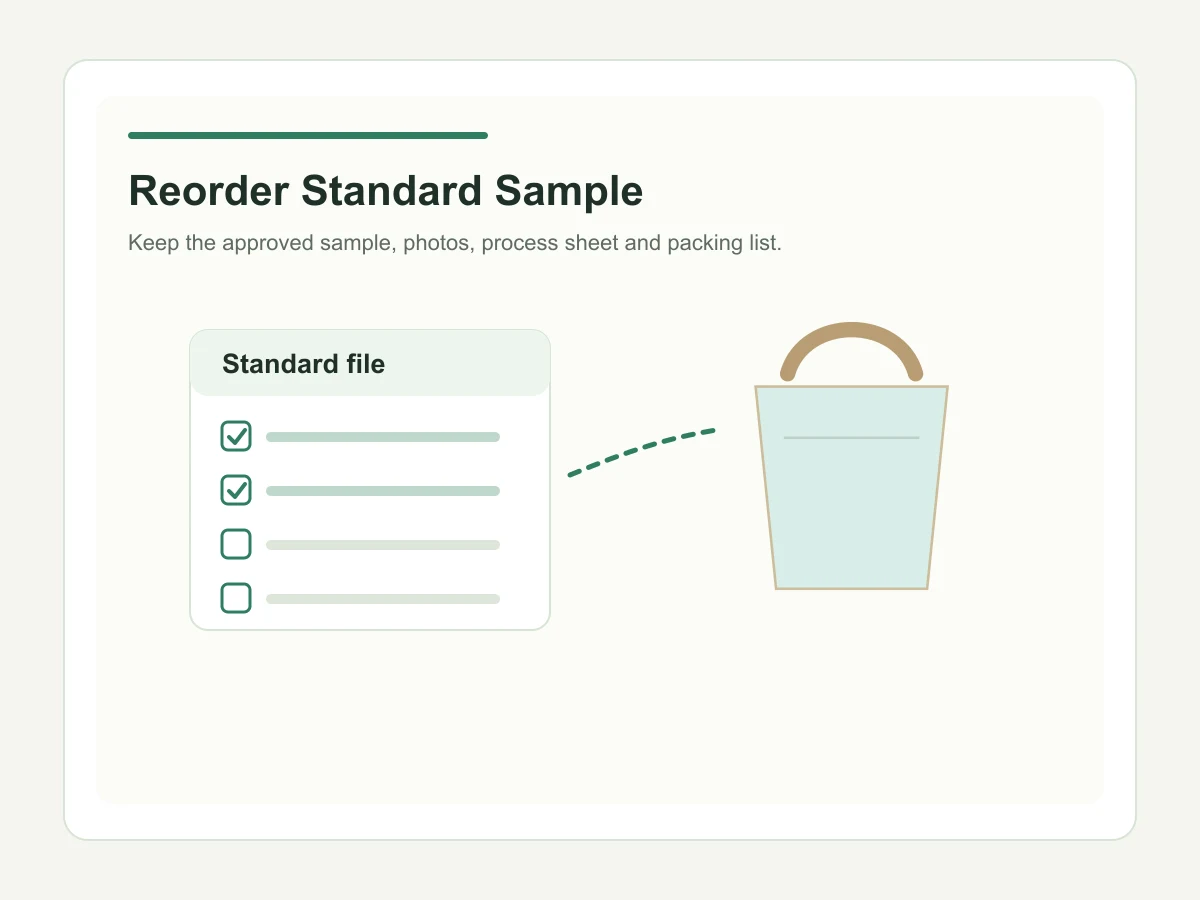
First classify the reorder: exact target or approved revision
Check whether the buyer wants the same SKU and product definition or an intentional update. Logo revision, new label, different handle, changed packing, new color or a different available fabric lot creates a revised version. Mark the changed fields before requesting price, because otherwise an apparently small update can surface only after sampling.
| Reference | Use in the reorder | Limit |
|---|---|---|
| Signed sample | Defines the original approved target. | May not show normal first-bulk variation. |
| Retained bulk sample | Shows the actual shipped product. | Can age and represents one production point. |
| Specification file | Records measurable construction and artwork. | Cannot fully represent handfeel or shade. |
| Current swatches | Shows what is available now. | Needs buyer selection against the references. |
Compare the current material with the retained bulk sample under agreed lighting.
- shade under agreed lighting
- surface and handfeel
- weight and structure
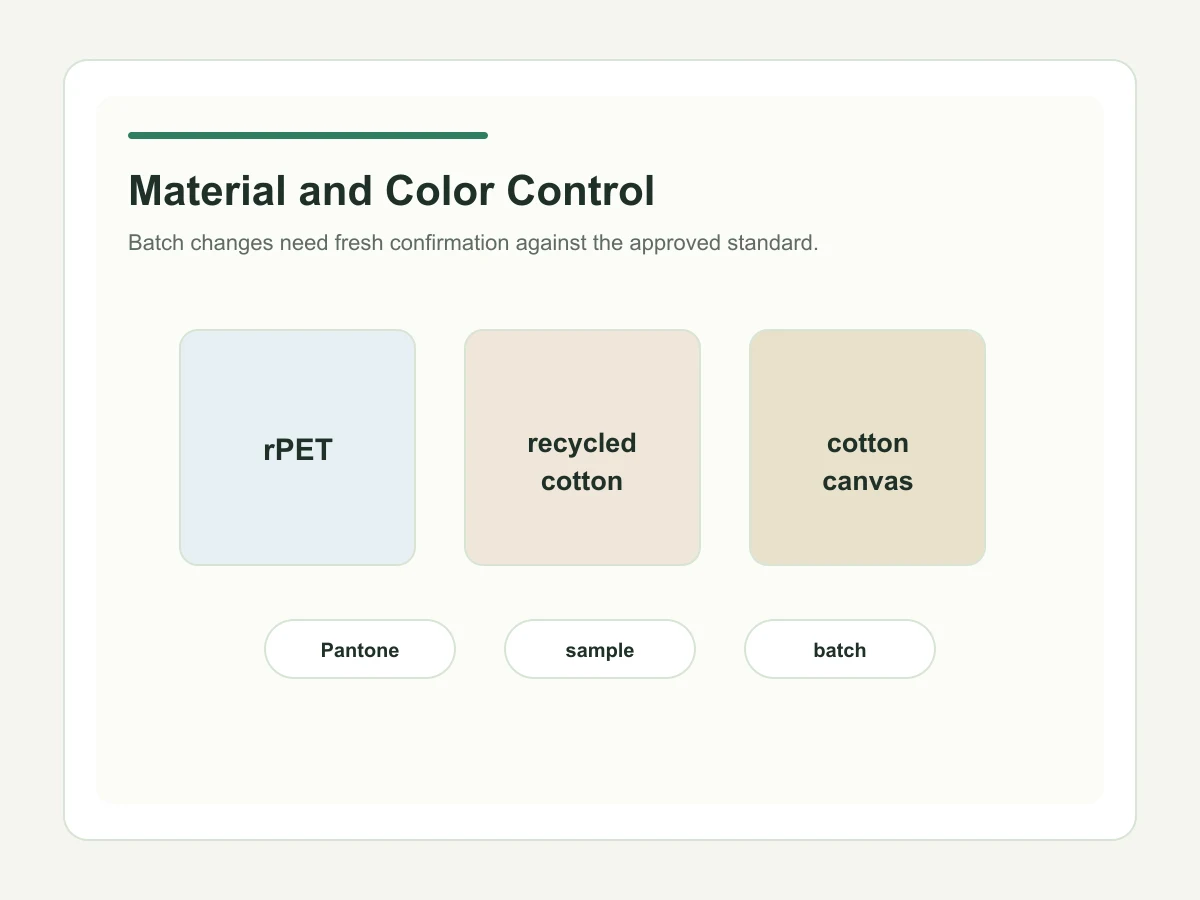
Small stock-material repeats need a choice, not an identical-match promise
Jolian noted that a small repeat order using stock material can be difficult to match exactly. When the original stock lot is unavailable, Ecoicolortote can provide A/B/C/D shade samples for the buyer to choose from. These letters identify alternatives; they are not quality grades.
The buyer can select the closest acceptable stock route or decide that brand consistency is important enough to justify a customized material route. This is more honest than promising an invisible batch difference before the current fabric has been seen.
Use close-ups for logo, stitching, labels and other details that may not be clear in one overview image.
- same lighting and angle
- close-up material surface
- logo and stitch details

Larger customized repeats give more control but still require approval
Jolian confirmed that larger customized repeat quantities usually avoid the same stock-lot limitation because material and color planning can be controlled more directly. That does not create an absolute guarantee. The current dye/material result, artwork and construction still need comparison with the retained references, and an intentional change must be recorded as a new approved version.
Confirm whether the repeat uses the same SKU, artwork, label, barcode and packing route.
- current logo file
- retail label/barcode
- approved packout
Measure the fields that photographs cannot freeze
ISO 3759 dimensional measurement [1] provides a standard framework for textile dimensional measurement. A repeat-order record should identify the actual measurement points and agreed tolerances. Color comparison can use the buyer-approved physical reference and, where specified, an agreed instrumental method such as the context in ISO 105-J03 color-difference calculation [3].
Give QC one reorder reference package
Place the signed sample, retained bulk sample, current approved swatch, specification, artwork, labels and packing instructions under one reorder version. ISO 2859-1 sampling inspection [2] can support a sampling plan, while defect definitions and tolerances remain tied to the order. The inspector should know whether to compare against the original target or a newly approved revision.
Freeze any intentional material, stitching or construction change as a new approved version instead of calling it an exact repeat.
- material and color
- construction and branding
- packing and dated approval
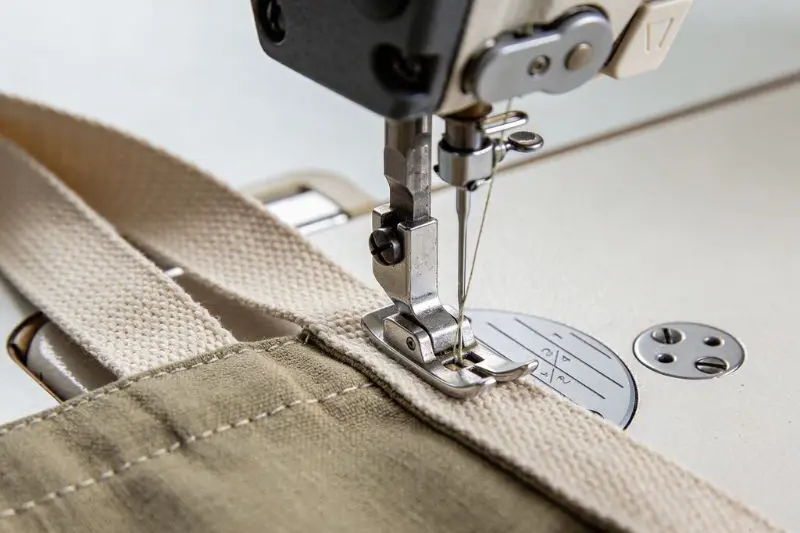
When a new pre-production sample is the safer route
Use a new sample when material lot, color, GSM, size, construction, handles, logo, lining, hardware, labels or packing changes. A swatch-only approval may be enough for a narrowly defined material change, but the buyer and supplier should record why that reduced route is suitable.
Choose a focused review: Compare Retained Sample or Review Material Match.
FAQ
Which physical samples should a tote factory keep after bulk shipment?
Keep the signed approval sample and at least one retained sample from the actual bulk production when practical. The first shows the approved target; the second shows what was shipped. Store them with the PO, specification, artwork, material/color reference, labels, barcode, packing and approval notes so the next order can identify both target and production reality.
Why can a small stock-material reorder differ from the previous batch?
Stock fabric can come from a different available lot, and small repeat quantities may not justify recreating the original custom material batch. Shade, handfeel or surface texture can therefore vary within a reasonable commercial range. The buyer needs to compare current A/B/C/D material options with the retained sample before confirming the repeat route.
What are A/B/C/D shade options in a reorder review?
They are clearly labeled current material alternatives supplied for selection when the previous stock lot is no longer available. They are not automatic quality grades. The buyer compares each option with the retained reference and chooses the most suitable route, or moves to a customized material order when closer brand-color control is commercially necessary.
Does a large customized reorder guarantee an identical result?
No production route should promise a perfect identity without review. A larger customized run gives more control over material preparation, dyeing and production planning, but the current material, color, artwork and construction still need approval. Use the retained references and agreed tolerances, then document any change as a new version.
Which reorder changes require a new sample?
A new sample is appropriate when material, color, GSM, size, structure, handle, logo scale or method, lining, hardware, label, barcode or packing changes. A different available stock lot may also justify a swatch or partial sample. The buyer and supplier should identify the changed fields before deciding the smallest reliable approval route.
How should bulk QC use the reorder reference package?
Inspectors should know whether the order is an exact-repeat target or an approved revised version. Compare dimensions, color, construction, branding and packing with the signed and retained samples, then apply the agreed inspection plan. Sampling standards provide a method framework, while the buyer-approved defect limits and tolerances remain project specific.
Can the first-order sample be used forever?
It remains useful evidence, but materials can age and future production inputs can change. Keep dated records and compare the signed sample with the retained bulk sample and current material options. When the visual or physical reference is no longer reliable, create a new approved standard instead of forcing an old sample to represent a changed product.
Sources
About the Author
 |
Zoe Yu is B2B Sales Manager at Ecoicolortote, supporting overseas brand buyers with custom tote RFQs, material and logo review, sampling, packing and bulk production coordination. |
Approve Reorder SampleView Private Label Tote Route