

 Zoe Yu
 Quick Summary
Scope boundary: this page covers barcode, SKU, label and carton-file handoff. The complete retail-ready packaging and label system remains with the Retail-Ready Tote Bag Packaging & Label System guide.
Retail-ready tote bag packaging needs more than a carton choice. Private label buyers should prepare polybag, sticker, hangtag, barcode, carton, carton mark and packing ratio files before packing starts. Ecoicolortote prefers complete packaging files when the order is placed, or at least 15 days before shipment. Barcode is the highest-risk detail because many SKUs, destinations or versions can create receiving errors if the file map is unclear.

Table of contents
How this retail-ready packaging checklist differs from general packaging options
The custom tote bag packaging options guide explains possible packaging formats. This retail-ready checklist is narrower: it helps private label brands prepare the actual files needed for packing and receiving, including polybag, sticker, hangtag, barcode, carton, carton mark and packing ratio. It supports the private label tote route rather than replacing it.
Use this guide when the tote is going to retail, store opening, warehouse receiving, DTC pack-out or GWP allocation. If the buyer only needs logo artwork, use the logo file guide. If the buyer needs barcode and hangtag details, the next guide in this cluster covers those files more deeply.
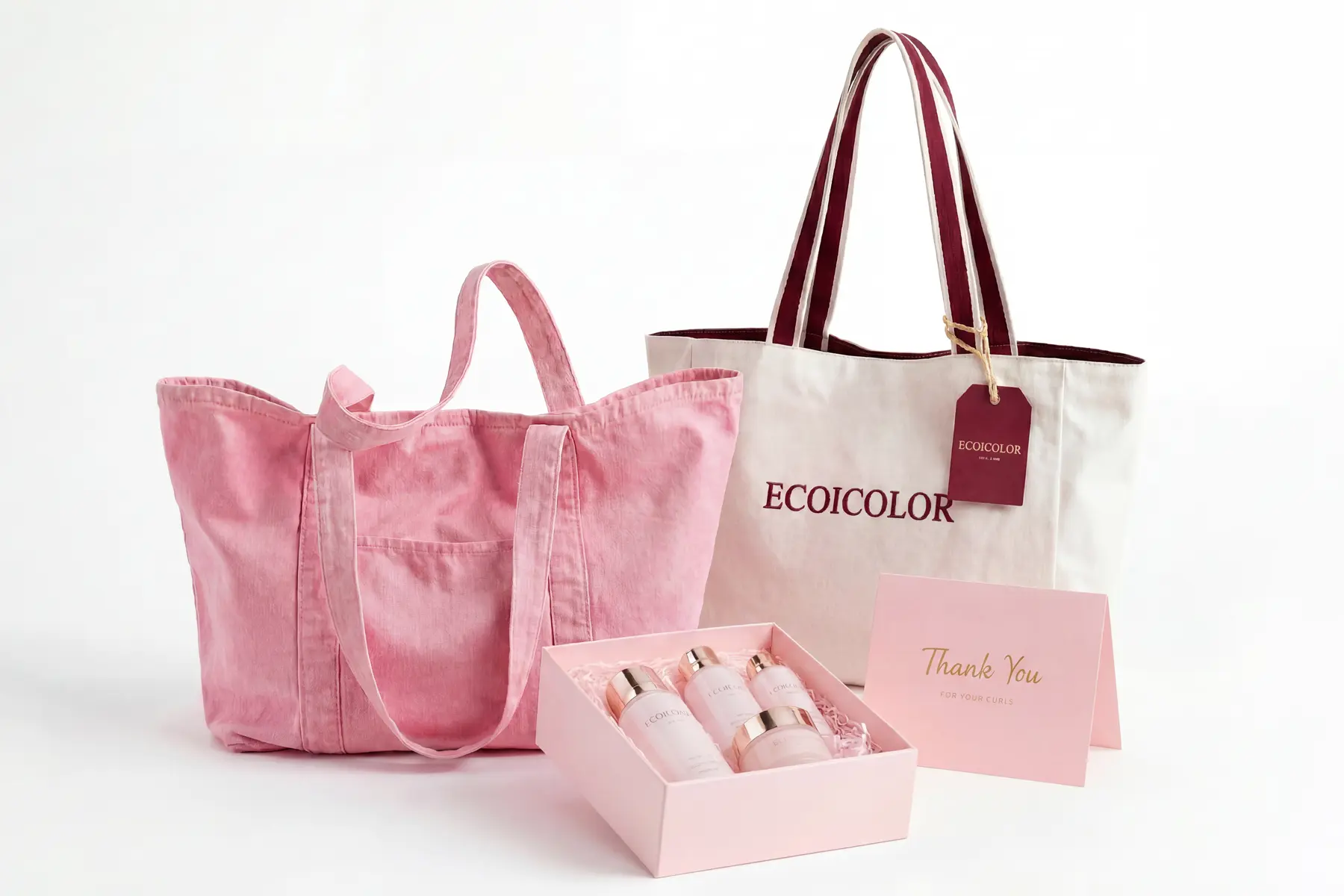
Retail-ready tote bag packaging files buyers should prepare
Private label and retail buyers normally need polybag details, stickers, hangtags, barcode files, carton specification, carton mark layout and packing ratio. If the order has several SKUs, colors, logos or delivery locations, the file must show which packaging version belongs to which tote version. A good packaging file prevents the factory from making assumptions during pack-out.
| File | What to include | Why it matters |
|---|---|---|
| Polybag | Size, material, warning text if needed, sticker position | Controls product presentation and receiving condition. |
| Sticker / label | SKU, barcode, color, size, destination or buyer code | Prevents version mix-ups. |
| Hangtag | Artwork, paper route, string method, hole position | Affects retail look and production timing. |
| Carton mark | PO, SKU, quantity, carton number, destination | Supports warehouse receiving and split shipment. |
| Packing ratio | Units per polybag, inner carton, master carton, color split | Controls inventory allocation and carton count. |
When carton handling marks matter, ISO 780 covers pictorial marking for packaged goods1. Buyers should confirm whether any handling symbols, carton orientation or destination marks are required before carton printing.
Why barcode files are the highest-risk packaging detail
Ecoicolortote sees barcode as the easiest retail packaging detail to get wrong because one buyer may have many barcode versions for different SKUs, colors, store groups or countries. The barcode file itself may look small, but it controls warehouse receiving and retail scanning. GS1 barcode standards explain barcode use for scanning and supply-chain identification2. If the wrong barcode is applied to the right tote, the product can still fail at receiving.
Buyers should send a barcode map, not only separate image files. The map should connect SKU, color, logo version, hangtag, sticker, carton mark and quantity. If the buyer has a retailer system export, simplify it into a factory-readable table. The factory does not need internal retailer notes; it needs the exact packaging version for each tote version.
When should packaging files be provided?
The best time to provide complete retail packaging files is when placing the order. If that is not possible, Ecoicolortote prefers the complete file set at least 15 days before shipment. Custom polybags, cartons and paper cards need time for confirmation and production. Late files can force the packing team to pause, recheck or wait for replacement packaging materials.
If paper labels or cards include certification or paper-sourcing claims, FSC explains that labels and claims need correct scope>4. Ecoicolortote should not add unsupported claims to paper cards, hangtags or stickers without buyer confirmation.
Artwork and label file quality
Packaging artwork should be production-ready. The file set should include barcode artwork, sticker size, hangtag layout, carton mark, placement note and color reference where needed. For distribution and packout risk, ISTA test procedures provide packaging-focused references for distribution testing3. The goal is not to over-document; it is to help the factory, QC and packing team check the same approved file.
Final packout should be checked against the buyer packaging map: barcode version, carton mark, unit packing, master carton quantity, label placement and destination split. Retail packaging is not only a design item; it is a receiving and allocation control point.
Best fit for this retail-ready packaging route
This route fits private label brands, store chains, DTC operators, beauty GWP teams and retail buyers ordering MOQ 500+ custom tote bags with SKU labels, hangtags, barcode stickers, carton marks or warehouse receiving rules. It is strongest when the buyer can provide a clear packaging map early and wants Ecoicolortote to translate that file into packing instructions for the factory and QC team.
Less suitable fit for this retail-ready packaging route
This route is less suitable for buyers who only need plain bulk cartons, have no retail receiving requirement, or cannot provide packaging files until the day of shipment. It is also not a match for single-piece personal gifts, no-brand consumer requests or lowest-only projects that do not care about barcode accuracy, carton allocation or retail presentation.
Barcode Version and Packing File Checklist
Disclosure: This is a planning checklist, not a customer case or reported project result.
- Use one controlled file list for barcode, SKU, color version, unit label and carton mark.
- Match every barcode file to the correct product and packing ratio before printing.
- Freeze version names and sign-off ownership before the packing deadline.
- Recheck destination and carton allocation whenever a label file changes.
FAQ: retail-ready tote bag packaging for private label brands
What packaging files do private label tote buyers usually need?
Private label buyers usually need polybag details, sticker files, hangtag artwork, barcode files, carton specification, carton mark layout and packing ratio. If the order has multiple colors, logos, SKUs or delivery destinations, the buyer should also send a version map showing which packaging file belongs to each tote version.
Why are barcode files the easiest packaging detail to get wrong?
Barcode files are high risk because one program may include many SKUs, colors, destinations or retail versions. A barcode can look correct in isolation but still be applied to the wrong tote or carton. The safest method is to connect barcode, SKU, color, logo version, quantity and destination in one factory-readable map.
When should buyers provide packaging files?
The best time to provide complete packaging files is when placing the order. If that is not possible, Ecoicolortote prefers complete files at least 15 days before shipment. Custom polybags, cartons and paper cards need confirmation and production time, so late files can delay packing or create avoidable version checks.
What should be included in a carton mark file?
A carton mark file should include PO number if used, SKU, item description, color or version, quantity per carton, carton number, destination, handling marks if needed and any buyer receiving code. The factory needs a simple final layout, not scattered comments across emails, screenshots and old spreadsheets.
Can Ecoicolortote proceed if packaging files are incomplete?
Ecoicolortote can review the order and prepare production, but retail-ready packing should not be finalized from incomplete packaging files. Missing barcode, sticker position, carton mark or packing ratio can create receiving problems. Buyers should separate product approval from packaging approval and give the packing team a final file before shipment.
Should buyers approve a packaging sample?
Yes, when retail presentation, barcode scanning or warehouse receiving matters. A packaging sample or packing mockup lets the buyer check polybag, sticker position, hangtag, barcode, carton mark and folded shape before the full packout. It is much easier to correct one sample than repack many cartons later.
Who is this retail packaging route best suited for?
This route is best suited for private label brands, store chains, DTC teams, retail launch operators and beauty GWP buyers with MOQ 500+ custom tote bag orders. It is especially useful when the buyer has multiple SKUs, barcode versions, hangtags, stickers, carton marks or destination-specific packing requirements.
Buyer verification links
For broader packaging choices, review custom tote bag packaging options. For labels and carton marks, use packaging and labeling requirements. For private label program routing, see private label totes. For GWP packout projects, see GWP brand totes.
About the Author

Trademark and certification note
GS1, FSC, ISTA, ISO and other certification, testing, packaging, barcode or standard names belong to their respective organizations. This buyer-side sourcing article does not claim that every product, material, order, package or shipment automatically carries every listed certification or test result. Buyers should confirm current document validity, certificate scope, material coverage, barcode ownership, label claim wording, packaging test method and shipment responsibility before finalizing quotation or bulk production.
Sources
- ISO 780 covers pictorial marking for handling packaged goods. ↩
- GS1 barcode standards explain barcode use for scanning and supply-chain identification. ↩
- ISTA test procedures support packaging and distribution testing discussions. ↩
- FSC explains label use and why paper-related claims need correct scope. ↩