Zoe Yu
 Custom tote bag packaging and labeling should be planned before sampling, not added after the tote looks finished. For retail, beauty GWP, museum shop, hotel gift and multi-location campaign projects, the barcode, hangtag, paper card, inner label, carton mark and pack-out method can affect cost, lead time, sample approval and warehouse receiving.
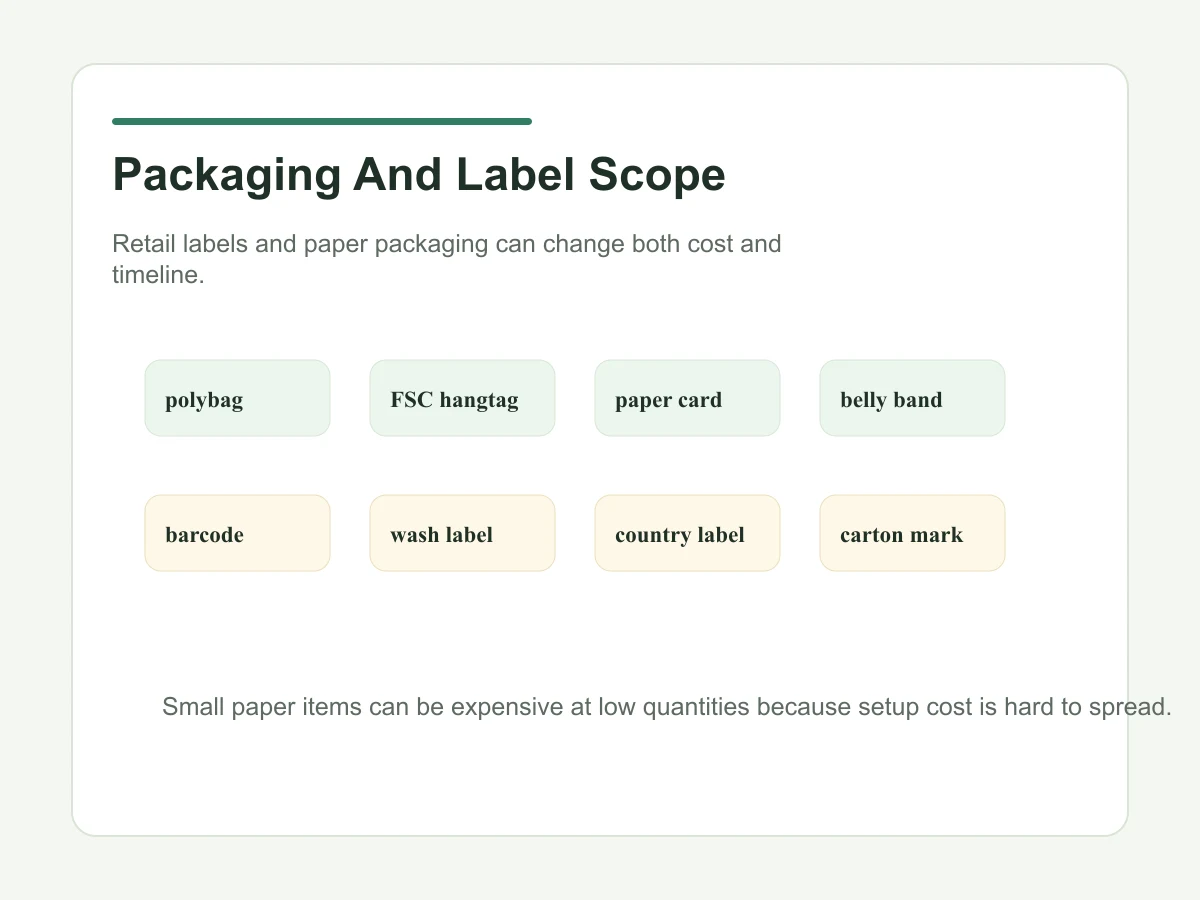
Buyer Summary
- Best for: retail private label, beauty GWP, museum shop, hotel gift, corporate gift and multi-location campaign buyers sourcing custom tote bags from 500 pcs per style.
- Main decision: confirm whether the project needs simple protective packing, retail-ready hangtags, barcode labels, paper cards, gift presentation, set assembly, carton labels or destination split packing.
- Factory-side note: packaging claims, barcode ownership, label content and carton mark logic are separate checks; none should be assumed from the tote material name alone.
- What to prepare: use case, quantity, size, logo file, packaging type, barcode files, label text, paper artwork, carton mark needs, destination market, retailer checklist and launch date.
What is the quick answer for custom tote bag packaging and labeling?
Custom tote bag packaging and labeling should connect the physical tote with the buyer's receiving, display, gifting and claim requirements. The safest route is to confirm packaging type, hangtag or paper card artwork, barcode or SKU logic, wash label, composition label, country-of-origin label, carton marks and pack-out method before the sample is approved.
A tote can look correct in a photo but still fail the project if the barcode is missing, the paper card is late, the carton label does not match the warehouse requirement, or the gift set does not pack cleanly. This is why packaging and label checks should sit inside the RFQ and sample stage, not after bulk production starts.
Best fit for this packaging and label guide
This guide is best for brand buyers who need a custom tote bag to arrive retail-ready, gift-ready or warehouse-ready, rather than only sewn and printed.
It fits projects where hangtags, paper cards, barcode stickers, SKU labels, wash labels, composition labels, country-of-origin labels, carton marks, packing sequence or multi-location delivery can change the quote, sample, approval record or final delivery plan. It is especially useful when the buyer has a retailer checklist, internal packaging guideline or launch calendar.
Use it before sampling if the tote will be sold in a store, paired with products, shipped to a retailer warehouse, packed for a seasonal campaign, distributed across event venues, or placed in hotel rooms as part of a guest gift program.
How does this guide differ from packaging options and private label pages?
The custom tote bag packaging options guide helps buyers compare broad packaging routes such as polybag, hangtag, belly band, paper card and gift box. The private label tote bag guide covers the wider commercial route for retail programs. This article is narrower: it focuses on the operational label system, barcode logic, paper goods, carton marks and pack-out checks that make a tote retail-ready or delivery-ready.
Which tote projects need retail-ready packaging and labels most often?
Retail-ready packaging and labels are most important when the tote needs to be scanned, displayed, gifted, bundled, stored by SKU, shipped by destination or received by a retailer warehouse.
A beauty GWP may need a paper card, product insert, barcode sticker and packed-sample review. A museum shop tote may need barcode, hangtag and retail display consistency. A corporate gift may need subtle packaging and multi-location carton labels. A hotel project may need room-allocation packing. The packaging route should follow the buyer's real receiving and display task.
| Project type | Packaging and label priority | What to confirm early |
|---|---|---|
| Retail private label tote | Barcode, SKU, hangtag, wash label, composition label and carton label. | SKU map, retailer checklist, barcode files and label text. |
| Beauty GWP set | Gift presentation, product fit, paper card and pack-out sequence. | Contents, insert order, paper artwork and launch date. |
| Museum or gift shop tote | Barcode, paper card, display-ready presentation and product story. | Artwork approval, barcode placement and retail price label route. |
| Corporate gifting tote | Clean presentation, recipient grouping and destination packing. | Recipient tiers, carton labels and delivery allocation. |
| Multi-location campaign | Carton marks, destination split and warehouse receiving fields. | Address list, carton count logic and deadline by destination. |
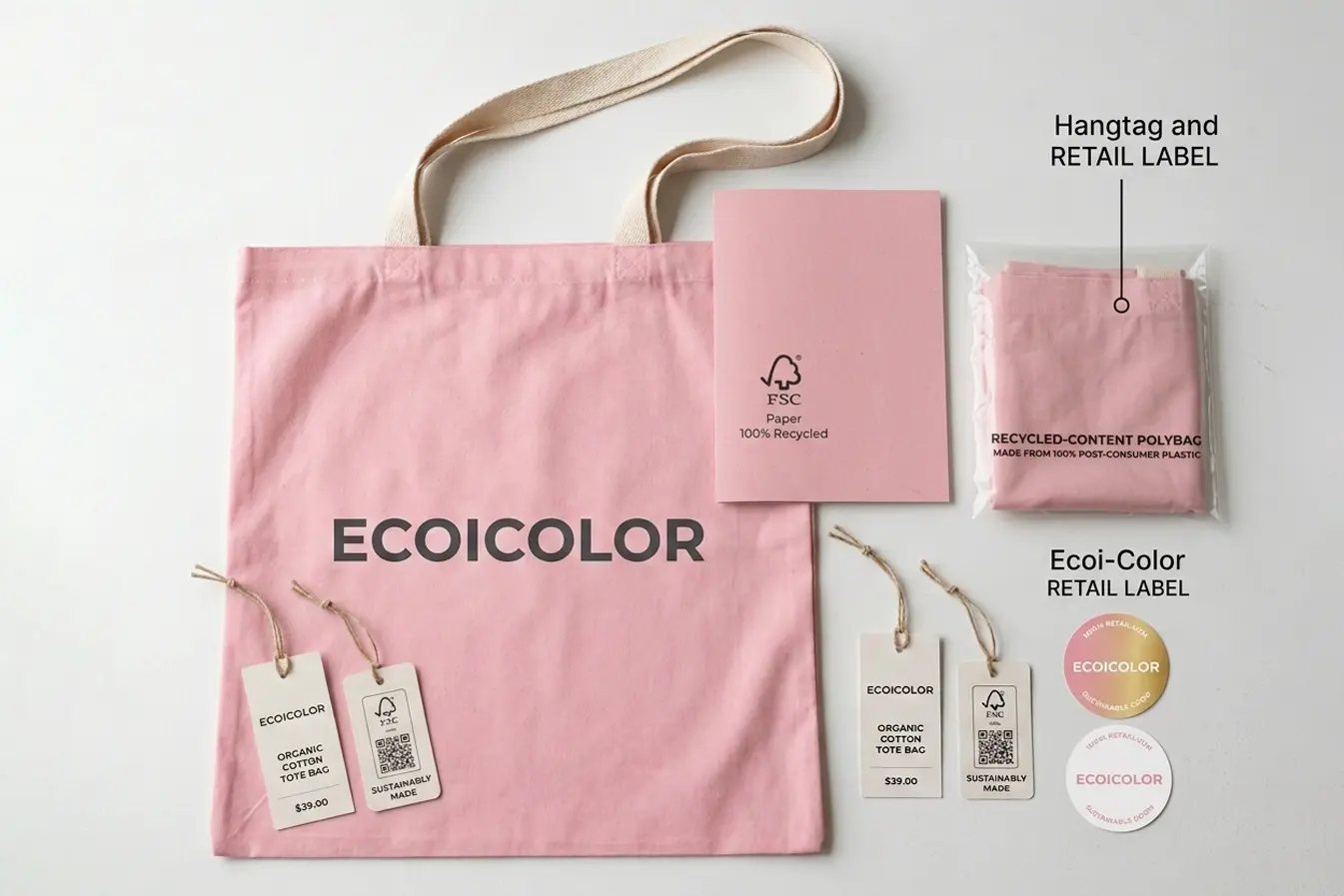
What do buyers often misunderstand about packaging and labeling?
Buyers often think packaging is only presentation, but for retail and campaign projects it is also receiving logic, claim control, barcode mapping, carton routing and production instruction.
For barcode-related projects, buyer teams should understand the difference between applying a supplied barcode file and owning the barcode data itself. GS1 barcode standards1 are a useful reference for barcode identification, but the buyer or retailer should confirm the final code source and format.
How should barcode and SKU labels be planned?
Barcode and SKU labels should be planned from the retailer, warehouse, product version and packing route. The factory can apply provided barcode artwork, but the buyer should confirm code ownership, scannability expectation, placement, label size and SKU mapping before sample approval.
A single tote style may have several colorways, destination versions, gift bundles or retailer-specific labels. If the SKU map is not clear, the risk is not only a wrong label. It can become wrong packing, wrong carton marks, wrong receiving records or relabeling after delivery.
| Barcode / SKU check | Buyer should provide | Factory-side review |
|---|---|---|
| Barcode file | Final barcode artwork or retailer-approved label file. | Check size, placement and print route. |
| SKU map | Style, color, size, quantity and destination version. | Match label to carton and packing instructions. |
| Label position | Hangtag, paper card, polybag sticker or carton label. | Confirm attachment and visibility by sample. |
| Retailer format | Retailer checklist or warehouse label requirement. | Flag missing fields before production. |
| Version control | Final file date and approval owner. | Keep one approved version for bulk packing. |
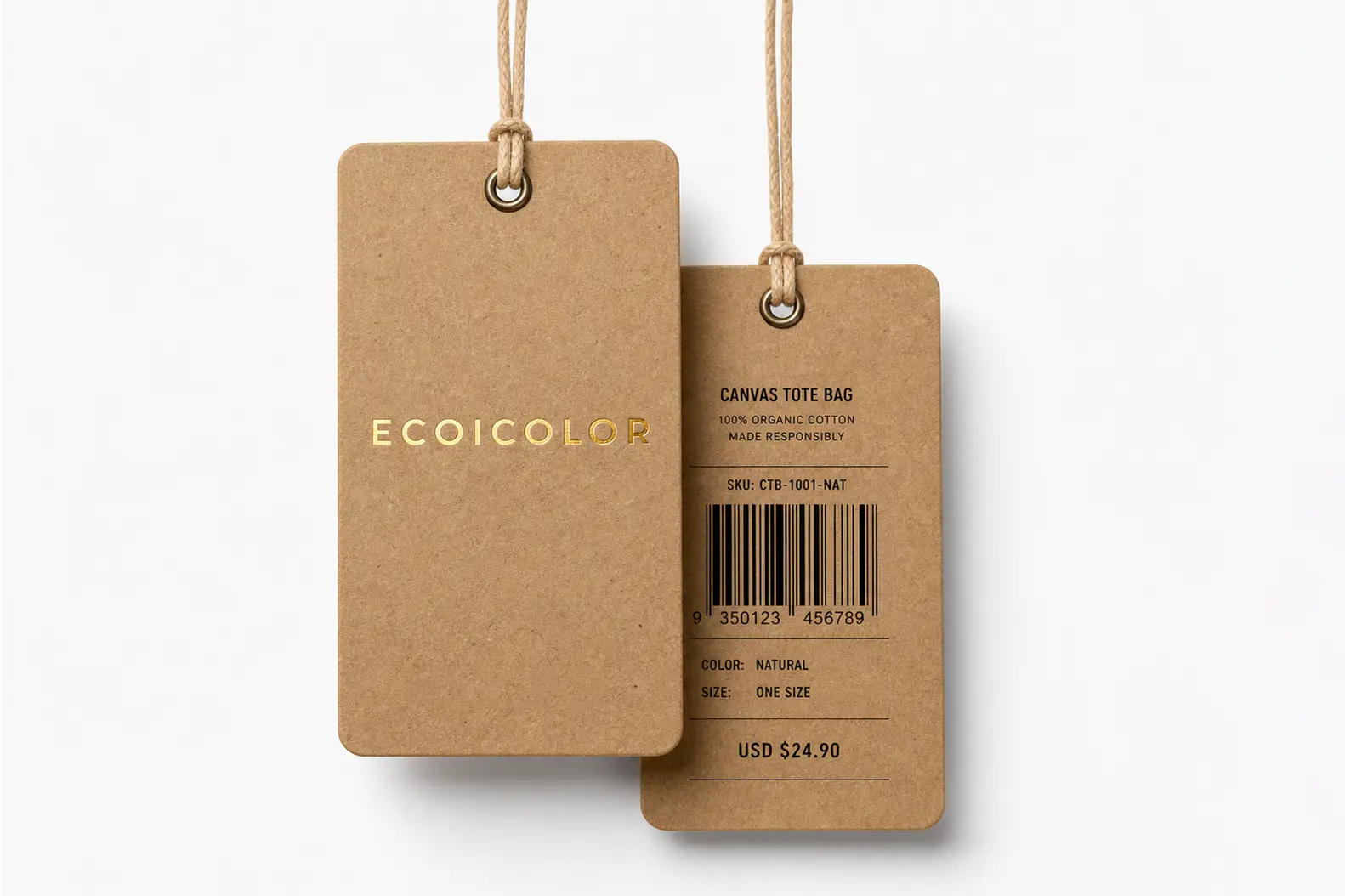
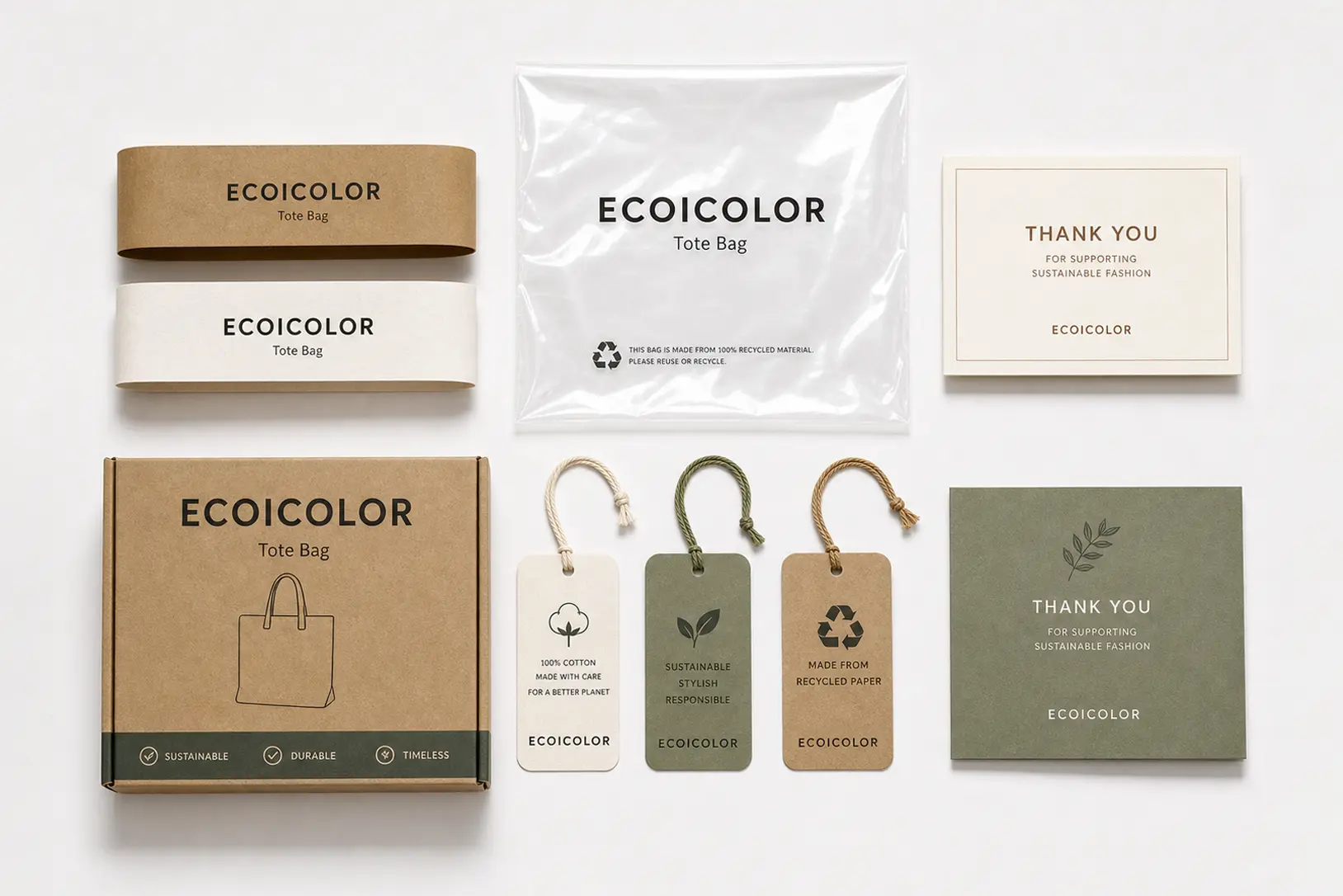
Hangtags, paper cards, sleeves and belly bands should be confirmed by artwork, paper size, paper route, attachment method, barcode position, folding line, color expectation and final packed effect.
Paper packaging can carry brand story, retail information, barcode labels or claim wording, so it needs the same level of project control as the tote logo. If a paper card uses FSC wording, recycled-content wording or other environmental language, the claim should match the paper route and document scope. FSC2 applies to relevant forest-based paper scope, not to the tote fabric automatically. Broad environmental wording should also be checked against principles such as the FTC Green Guides3.
| Paper item | Best use | Watch-out |
|---|---|---|
| Hangtag | Retail story, barcode, brand identity and product information. | Attachment method, barcode placement and small text clarity. |
| Paper card | GWP story, material information, campaign note or retail shelf detail. | Paper size, claim wording and insert position. |
| Belly band | Gift presentation, folded tote display or seasonal campaign look. | Band tension, folding line and packed thickness. |
| Gift sleeve | Premium gift, museum shop, hotel retail or seasonal set. | Sleeve fit, carton volume and paper edge durability. |
| Gift box | Higher-value retail or VIP gift projects. | Cost, MOQ, assembly time and freight volume. |
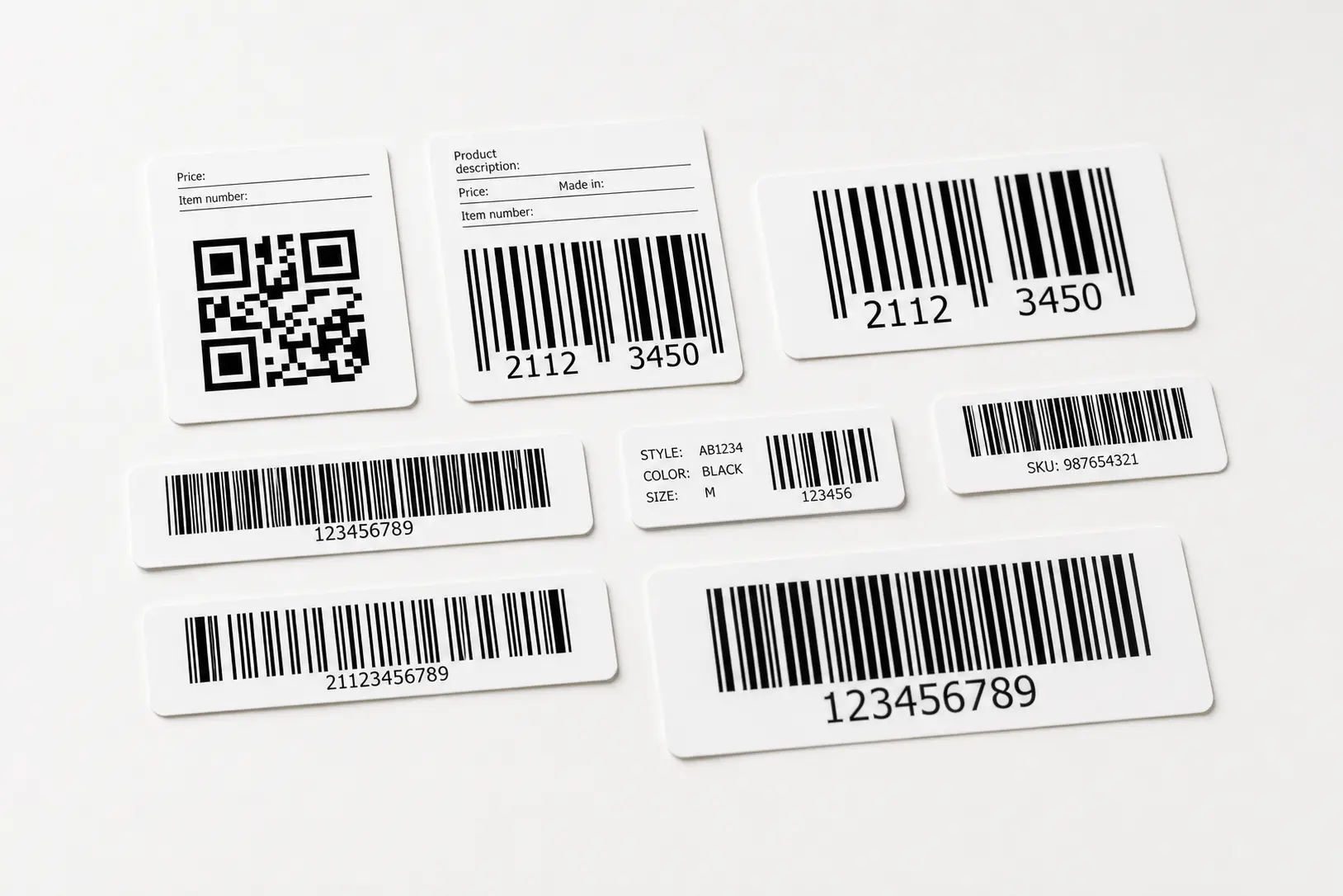
Which inner labels and textile details need buyer approval?
Retail or private label tote projects may need inner labels such as brand label, wash label, composition label, country-of-origin label or QR / SKU label. The exact need depends on buyer checklist, destination market and selling channel.
The factory can help prepare label placement and sewing method, but the buyer should approve the text and legal responsibility for the destination market. Textile safety or harmful-substance discussions are separate from label content; references such as OEKO-TEX STANDARD 1004 can support textile product-safety discussions when they match the project scope.
| Label type | What to confirm | Why it matters |
|---|---|---|
| Brand label | Size, woven or printed route, position and logo clarity. | Supports private label identity. |
| Composition label | Material content wording and final fabric route. | Prevents mismatch with approved material. |
| Care label | Buyer requirement and care instruction wording. | Affects retail and consumer information. |
| Country-of-origin label | Destination market and buyer checklist. | Should be confirmed before bulk packing. |
| QR / SKU label | Data file, position and version mapping. | Connects product record with packing and receiving. |
How should beauty GWP and retail pack-out be approved?
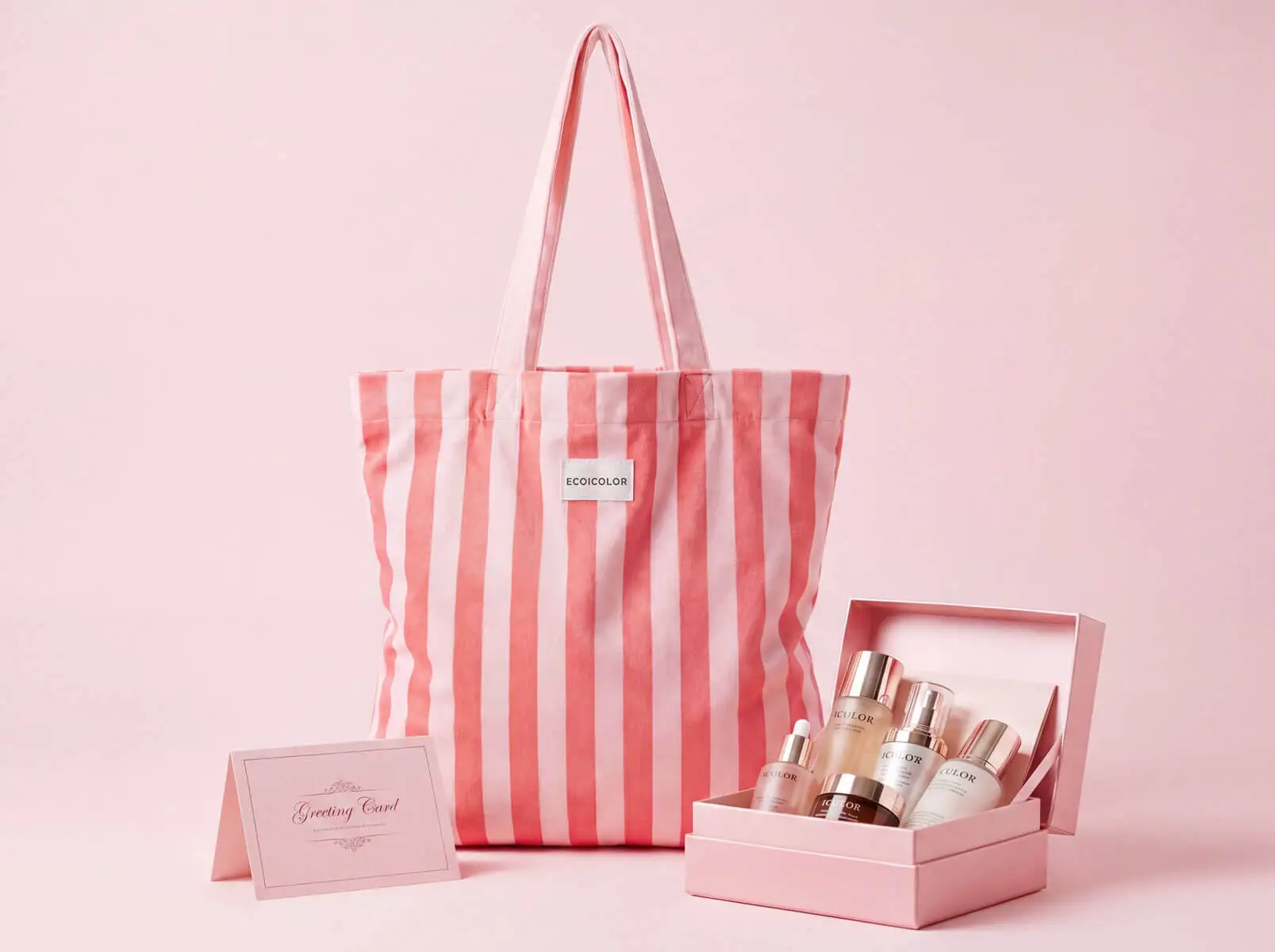
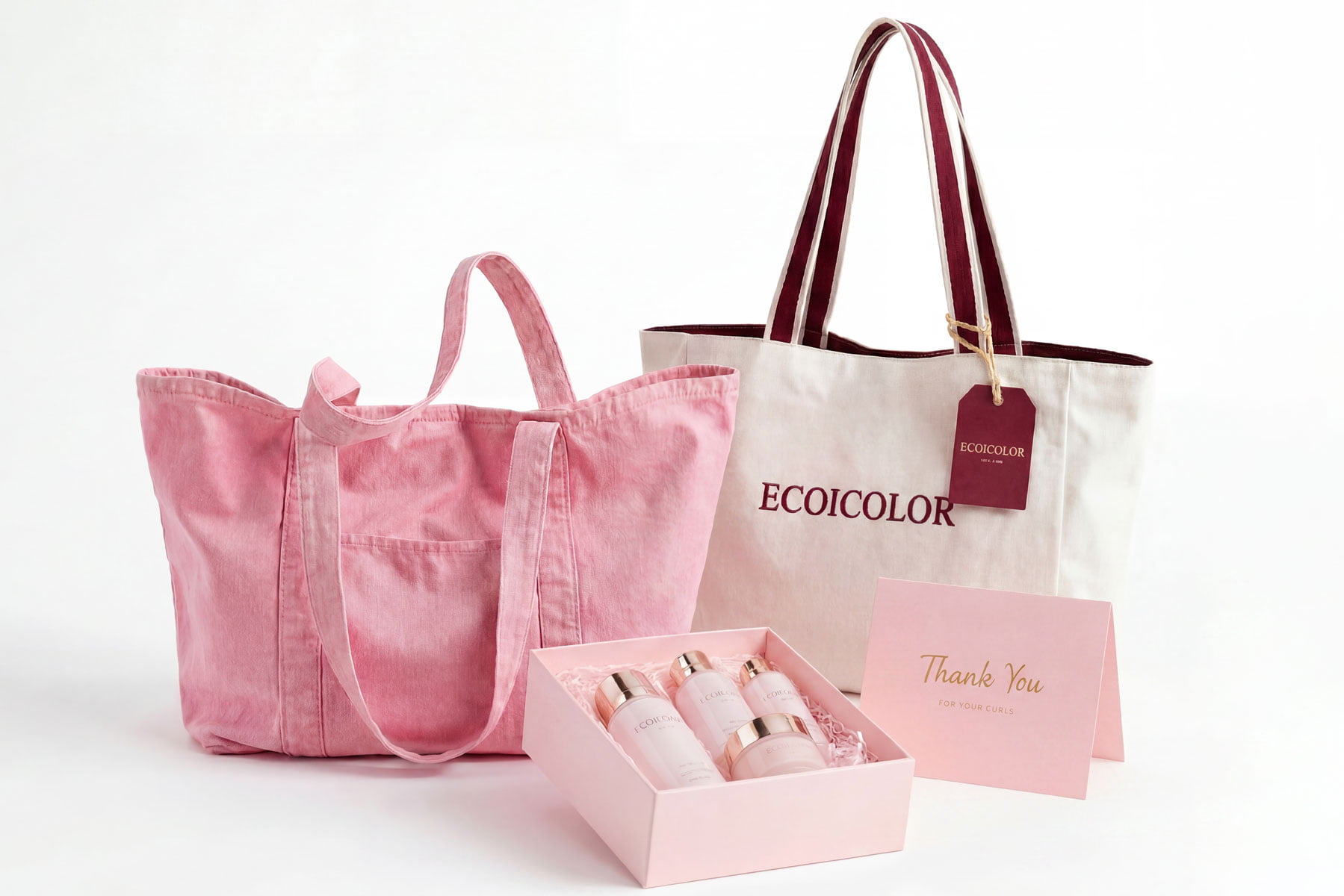
Pack-out should be approved with the actual tote, product contents, paper goods, label placement and carton plan whenever the bag is part of a gift set, retail bundle or campaign delivery.
For beauty GWP, the key questions are whether the products fit cleanly, whether the tote still looks presentable after packing, whether the paper card sits correctly, and whether the packed unit can move through carton packing without damage. For retail, the question is whether the barcode, hangtag and inner label support selling and receiving. For corporate or museum shop projects, the presentation also needs to fit the final buyer context.
Why do carton marks and delivery labels matter?
Carton marks and delivery labels matter because they connect the finished tote order to receiving, warehouse sorting, retailer allocation, event venue delivery and multi-location campaign distribution.
A carton mark may include PO number, SKU, product name, color, quantity, carton count, gross weight, net weight, carton size, destination code or receiving label format. If the order is split across locations, carton marks should be confirmed before packing. Shipping terms and delivery ownership should also be clear; Incoterms can help define trade responsibilities, but the buyer and supplier still need a project-specific freight and receiving plan. ICC Incoterms rules5 are a useful reference for shipping-term discussions.
| Carton / delivery item | Buyer should provide | Factory checks |
|---|---|---|
| Carton mark | PO, SKU, product name, quantity and destination fields. | Print or label format before packing. |
| Destination split | Quantity by location, event venue or warehouse. | Carton allocation and packing list logic. |
| Retailer receiving label | Retailer file, template or required fields. | Position, print route and carton match. |
| Carton count | Required units per carton if specified. | Carton volume, weight and packing method. |
| Delivery deadline | Required arrival date and shipping destination. | Sample, bulk and freight timing feasibility. |

How should packaging samples be approved before bulk production?
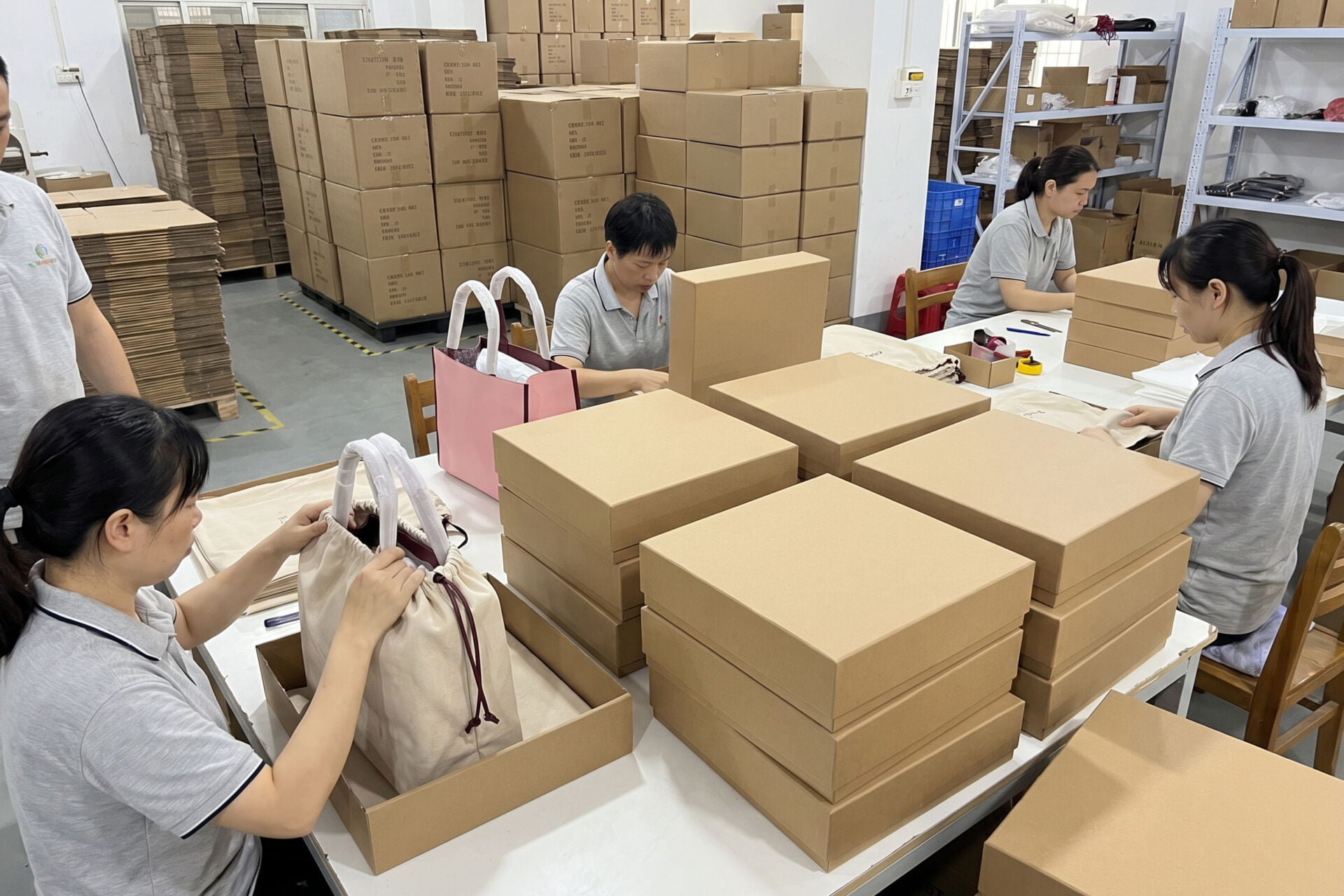
Packaging samples should be approved by real size, paper feel, barcode location, label text, pack-out sequence, carton mark logic and buyer-side approval owner. A flat mockup is useful, but it should not replace a physical sample when retail receiving or gift presentation matters.
The approved sample should become the production standard. If the buyer changes the barcode, paper artwork, claim wording, product insert or carton label after sample approval, the project may need a new review. Factory audit frameworks such as amfori BSCI6 relate to social compliance discussions and should not be confused with packaging claim proof.
| Sample item | Approve by photo? | Better physical check |
|---|---|---|
| Simple polybag | Sometimes enough for basic packing. | Check size and folded tote fit if presentation matters. |
| Hangtag | Mockup can confirm layout direction. | Check attachment, scale, barcode area and paper weight. |
| Paper sleeve | Flat proof is not enough. | Check sleeve tension, folding and removal. |
| Gift set | Photo helps record placement. | Check real contents, weight and carton protection. |
| Carton label | Template can be checked digitally. | Check printed field accuracy and carton side placement. |
Less suitable fit for complex packaging projects
Complex retail packaging is less suitable when the order is below MOQ, the buyer has no barcode files, label text is not approved, paper artwork is still changing, or the delivery deadline is too close for sample review.
What should buyers send before asking for a packaging quote?
Buyers should send the tote use case, quantity, size, packaging type, label contents, barcode files, SKU map, paper card or hangtag artwork, carton mark requirements, destination market, delivery deadline and retailer checklist if available.
If the buyer is not sure what packaging route is necessary, send the selling channel and receiving context first. Ecoicolortote can help separate basic protective packing, gift presentation, retail-ready labeling and multi-location carton work before quoting, so supplier comparisons are based on the same scope.
FAQ: Custom tote bag packaging and labeling
Is custom tote bag packaging only needed for retail orders?
No. Retail orders usually need the most complete packaging and label system, but beauty GWP, museum shop, hotel gift, event and corporate gifting projects can also need paper cards, hangtags, barcode stickers, carton labels, insert packing or destination split. The right level depends on how the tote will be received, displayed, gifted or distributed after production.
Can Ecoicolortote create barcode numbers for buyers?
Ecoicolortote can help apply barcode artwork, stickers or label files that the buyer provides, but barcode ownership and retailer format should be confirmed by the buyer or retailer. This distinction matters because the factory can manage placement and printing, while the buyer is usually responsible for the final code source, product data and selling-channel approval.
Should packaging samples be approved together with tote samples?
Yes when the packaging affects presentation, barcode position, sleeve fit, paper card size, product insertion, gift-set assembly or retail receiving. A digital mockup can show the artwork direction, but only a physical sample shows whether the paper bends, whether the barcode sits correctly, whether the tote packs cleanly and whether the finished unit feels retail-ready.
Does FSC paper packaging mean the tote fabric is certified?
No. FSC relates to relevant paper or forest-based packaging scope when the paper route supports it. It does not prove anything about tote fabric, recycled content, organic content or finished-product certification. Buyers should keep paper packaging claims separate from tote material claims and confirm each claim against the specific supplier document and order scope.
What label information should buyers confirm before sampling?
Buyers should confirm barcode files, SKU map, brand label, wash label, composition label, country-of-origin wording, hangtag text, paper card artwork and carton mark fields before sampling whenever possible. If some details are not final, they should still be listed as open items so the sample quote and production notes do not hide important packaging work.
Can packaging and labels affect MOQ, lead time and cost?
Yes. Gift boxes, paper sleeves, multiple hangtag versions, barcode stickers, SKU split packing, inner labels, set assembly and destination-specific carton marks can all affect cost, sample work, labor time and production scheduling. A simple polybag is usually easier; a retail-ready or gift-ready pack-out needs a more complete brief before accurate quotation.
What should buyers send to Ecoicolortote first?
Send the project use case, quantity, tote size, packaging type, barcode files, SKU map, label text, paper card or hangtag artwork, carton mark requirements, destination market, launch date and any retailer checklist. If the buyer only has a rough idea, sending the selling channel and receiving requirements first still helps Ecoicolortote identify which packaging details need early confirmation.
Share quantity, packaging route, barcode files, SKU map, paper artwork, label text, carton mark needs, delivery market and launch date. Ecoicolortote can help check which packaging details must be confirmed before sample approval. Start a packaging and label review.