Zoe Yu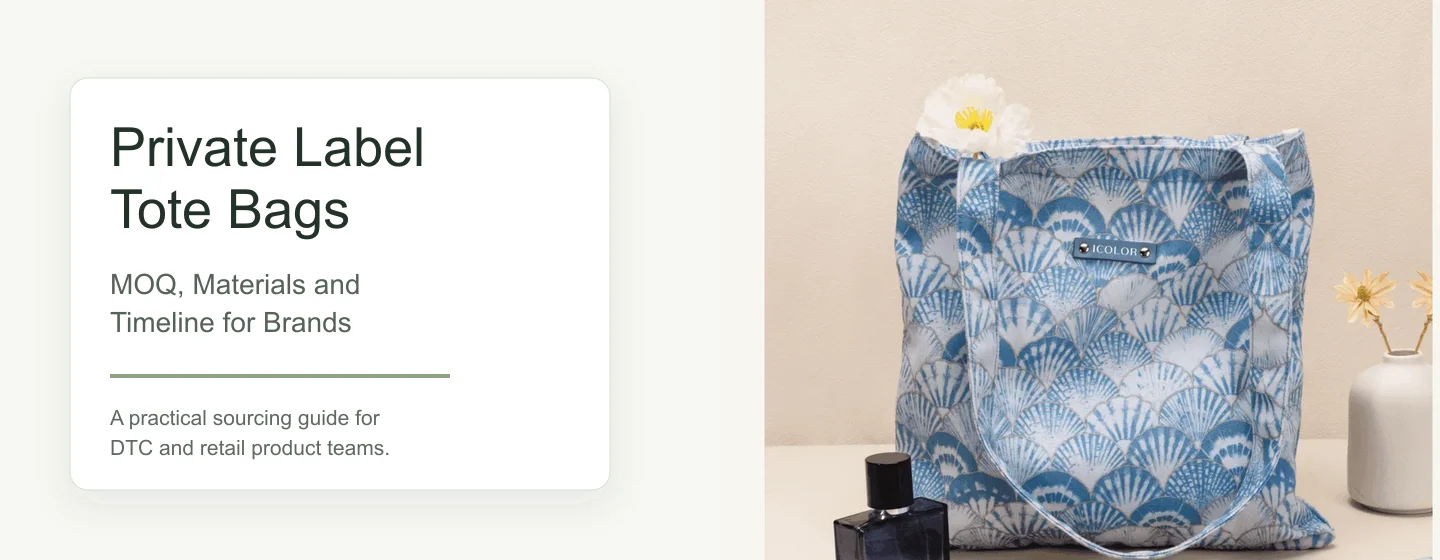
Private label tote bags for DTC, retail, beauty, wellness and lifestyle brands need planning around MOQ, materials, logo details, labels, packaging, documents, sample approval and production timeline. They should be treated as brand products, not simple logo bags.
TL;DR: Private label tote bags should be planned as brand products, not simple logo placements. Before comparing quotes, buyers should confirm MOQ, target customer, use case, material, colorways, logo method, label files, packaging, barcode or SKU needs, document scope, sample approval and launch timing. Ecoicolortote is usually a better fit for MOQ 500+ projects where retail-ready details can be checked before bulk production.
A private label tote can become a retail SKU, gift-with-purchase item, subscription box add-on, hotel shop product, wellness member gift or branded merchandise extension. The sourcing logic is different from a basic promotional tote because the project often includes material selection, colorways, woven labels, hangtags, barcode stickers, care labels, packaging and physical pre-production sample approval.
Ecoicolortote is a better fit for MOQ 500+ private label projects where buyers can share material direction, color plan, logo artwork, label files, packaging needs, destination market and launch date. Buyers can review our private label tote category, custom logo totes and customization options before deciding the product route.
Buyer Summary
- Best for: DTC brands, retail chains, Amazon sellers, beauty, wellness and lifestyle brands planning private label tote bags from 500 pcs per style.
- Main decision: private label tote projects should be planned as retail products with material, label, packaging and sample standards, not only as logo placement jobs.
- Factory-side note: labels, hangtags, barcode stickers, packaging, material choice and physical pre-production samples should be confirmed before bulk production.
- What to prepare: target quantity, material direction, colorways, logo artwork, label files, packaging needs, destination market, launch date and required documents.
What should buyers confirm before sourcing private label tote bags?
Buyers should confirm target customer, use case, quantity, colorways, material, size, logo method, labels, packaging, document scope, destination market and launch date before sourcing private label tote bags. MOQ starts from 500 pcs per style for Ecoicolortote projects.
The first question is not only whether the factory can add a logo. A private label tote needs to match the brand's product positioning, sales channel and quality expectation. A DTC tote may need stronger unboxing and repeat-order consistency. A beauty or wellness tote may need softer handfeel and careful claim wording. A retail chain may need barcode, label and carton consistency.
If your team is still shaping the product, send the use case, target retail price or budget direction, quantity and artwork first. Ecoicolortote can help check material, logo, label, packaging and timeline feasibility before sampling.
Best fit for this private label tote guide
This guide is best for DTC brands, retail teams, Amazon sellers, beauty brands, wellness brands, lifestyle brands, hotels and sourcing managers planning MOQ 500+ private label tote projects. It is especially useful when the tote needs to function as a sellable SKU, gift-with-purchase item, subscription box add-on, resort shop product, membership gift or recurring branded merchandise line. The strongest fit is a buyer who can prepare material direction, colorways, logo artwork, label files, hangtag or barcode needs, packaging expectations, destination market and launch timing before sampling. Those details help the factory recommend a realistic product route instead of guessing from a mood board.
This guide focuses on private label tote MOQ, materials, labels, packaging and timeline. Product pages show available tote routes, while logo and material guides go deeper into single decisions. This page helps buyers plan the full private label product scope before RFQ and sampling.
If your project is mainly logo customization, start with custom logo totes. If your team needs to compare fabric direction, use the rPET, recycled cotton and cotton canvas material guide. If the product needs hangtags, barcode stickers or retail packing, review custom tote bag packaging options.
This article keeps the broader product-development view: MOQ, color split, material availability, retail-ready details, sample approval, documents and bulk timeline.
What are private label tote bags?
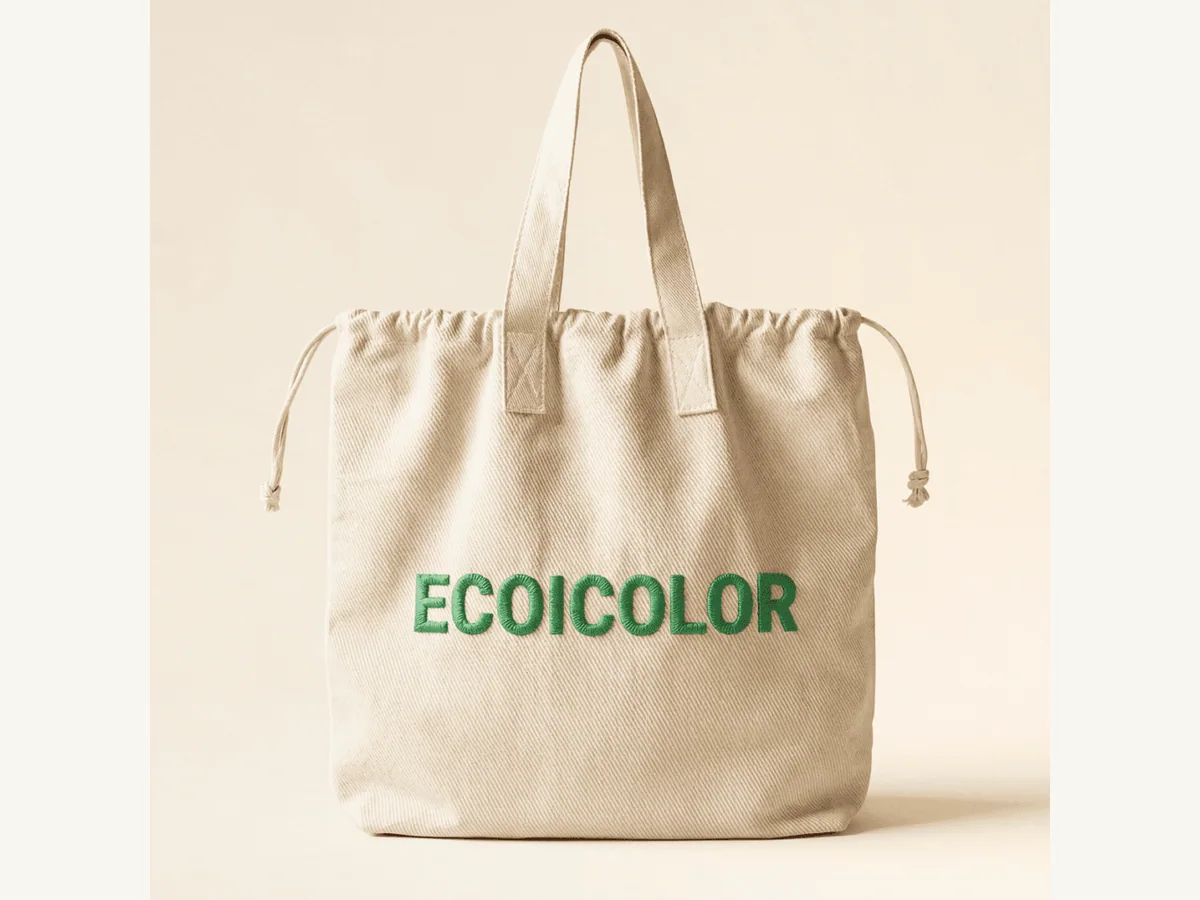
Private label tote bags are custom tote bags produced by a factory and sold or distributed under the buyer's own brand name. Unlike generic promotional bags, they usually require custom design, retail-ready finishing, brand labels, packaging and stronger control over material, color and quality.
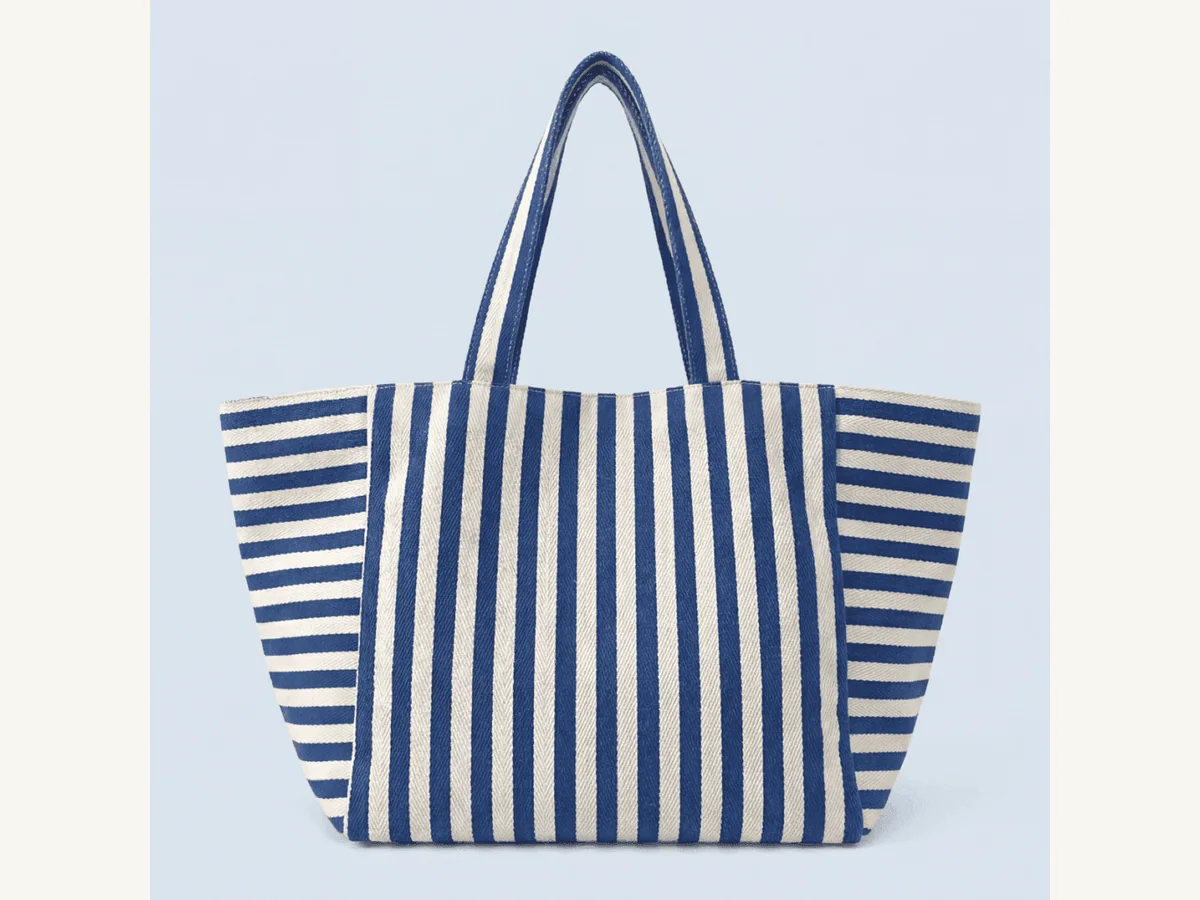
A private label tote is not just a bag with a logo. It is a product that needs to match brand positioning. For a beauty or wellness brand, the tote may need to feel clean, soft and giftable. For a lifestyle retail brand, it may need to stand on a shelf, hold daily-use items and look consistent with the rest of the product line.
Private label development should start with three questions: who will use or buy this tote, where it will be sold or given, and what level of material, finishing and packaging the brand needs. If the answer is only "we need a cheap tote with our logo," a basic promotional tote may be enough. If the product must carry brand identity and repeat-order quality, private label is the stronger route.
Who should use private label tote bags?
Private label tote bags are most suitable for brand buyers, DTC brands, retail chains, beauty and wellness brands, lifestyle brands and private label teams that need a custom tote product with brand-controlled design, packaging and quality.
| Customer type | Private label use case | Key concerns |
|---|---|---|
| DTC brands | Branded retail tote, product extension or limited launch item. | Brand look, repeatability, packaging and launch timing. |
| Beauty and wellness brands | GWP tote, membership gift or campaign set packaging. | Premium feel, material story, sample approval and campaign date. |
| Retail chains | Own-brand tote SKU or seasonal private label program. | Stable supply, barcode control, label consistency and repeat orders. |
| Amazon sellers | Retail-ready tote product for a branded listing. | Packaging, SKU labels, consistent color and production repeatability. |
| Hotels and resort shops | Welcome tote, spa gift or branded shop merchandise. | Giftable appearance, durable structure, presentation and reorder planning. |
The best-fit buyer is usually not the buyer looking for the lowest bag. A strong private label tote project needs a realistic budget for material, structure, logo process, packaging and sample approval.
What is the MOQ for private label tote bags?
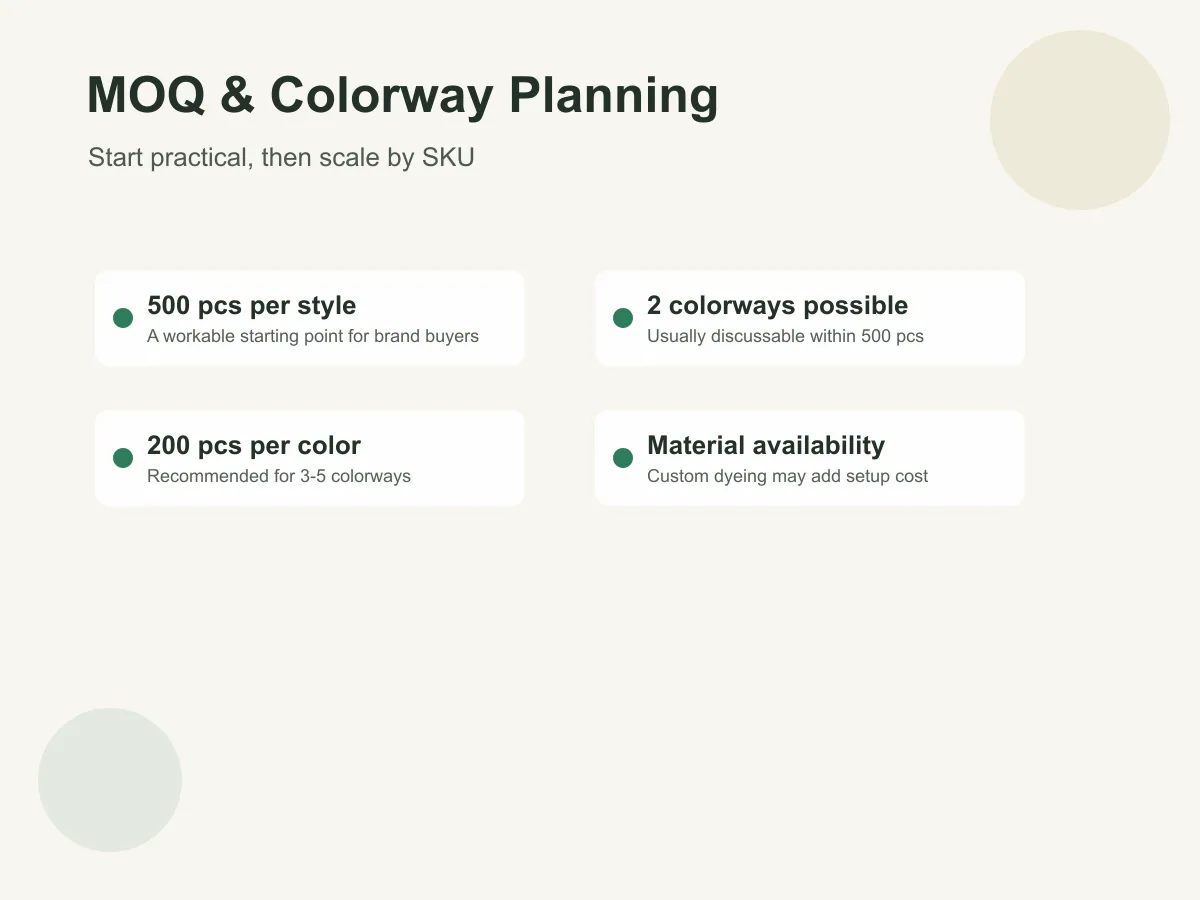
Ecoicolortote private label tote projects start from MOQ 500 pcs per style. A 500 pcs project can usually discuss two colorways, while projects with three to five colorways should normally plan at least 200 pcs per color.
MOQ is connected to material availability, color setup, printing process, sewing efficiency and packaging preparation. For many private label projects, 500 pcs per style is a realistic starting point. If the buyer wants two colorways, that can often be discussed within the same project. If the buyer wants three, four or five colors, at least 200 pcs per color is usually more practical.
The important MOQ question is not only "Can you do 500 pcs?" It is whether the material is in stock, whether the fabric needs custom dyeing, whether each color needs a separate logo setup, whether hangtags or packaging differ by color, and whether each SKU needs barcode stickers or retail labels.
What factors affect private label tote bag cost?
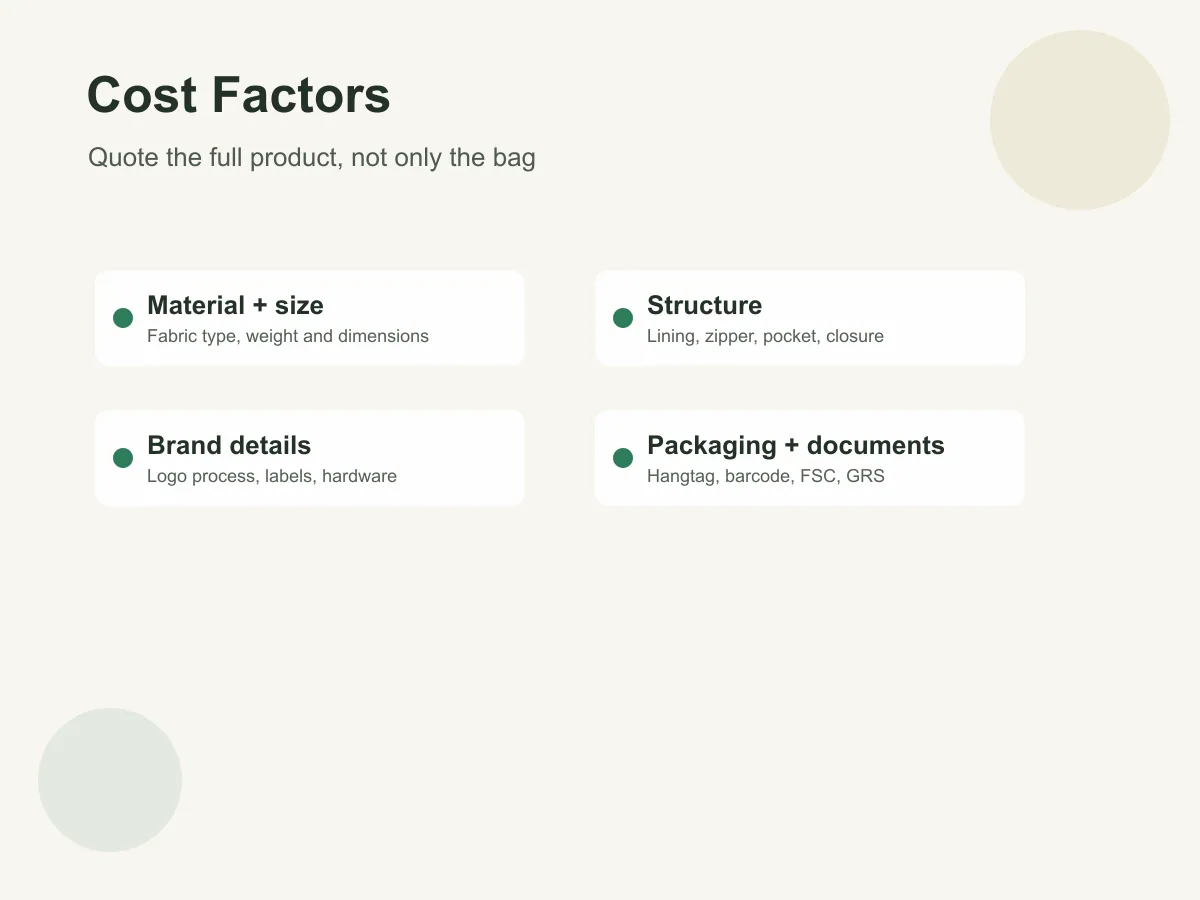
Private label tote bag cost is mainly affected by material, size, fabric weight, lining, zipper, hardware, logo process, packaging, certification documents and order quantity. Buyers should brief the full product structure before comparing prices.
| Cost factor | Why it matters |
|---|---|
| Material | rPET, recycled cotton, organic cotton, bamboo fiber, canvas and leather-look materials have different costs and supply conditions. |
| Size | Larger bags use more fabric and may need stronger handles or reinforcement. |
| Fabric weight | Heavier fabric improves handfeel and durability, but increases material cost. |
| Lining | Adds structure and a more retail-ready finish, but increases sewing time. |
| Zipper or closure | Zippers, magnetic snaps and special closures add material and labor cost. |
| Logo process | Screen printing, embroidery, woven labels, patches and metal plates all price differently. |
| Packaging | Hangtags, paper cards, recycled-content polybags, barcode stickers and individual packing add cost and time. |
| Documents | GRS, OEKO-TEX, FSC packaging or audit support may affect sourcing and material selection. |
| Quantity | Higher quantities usually improve unit cost because setup cost is spread across more units. |
A limited-budget project can still work when material, structure and packaging are adjusted together. For example, a buyer may simplify lining, use a woven label instead of custom hardware, or reduce packaging complexity while keeping the retail feel.
Which materials work best for private label tote bags?
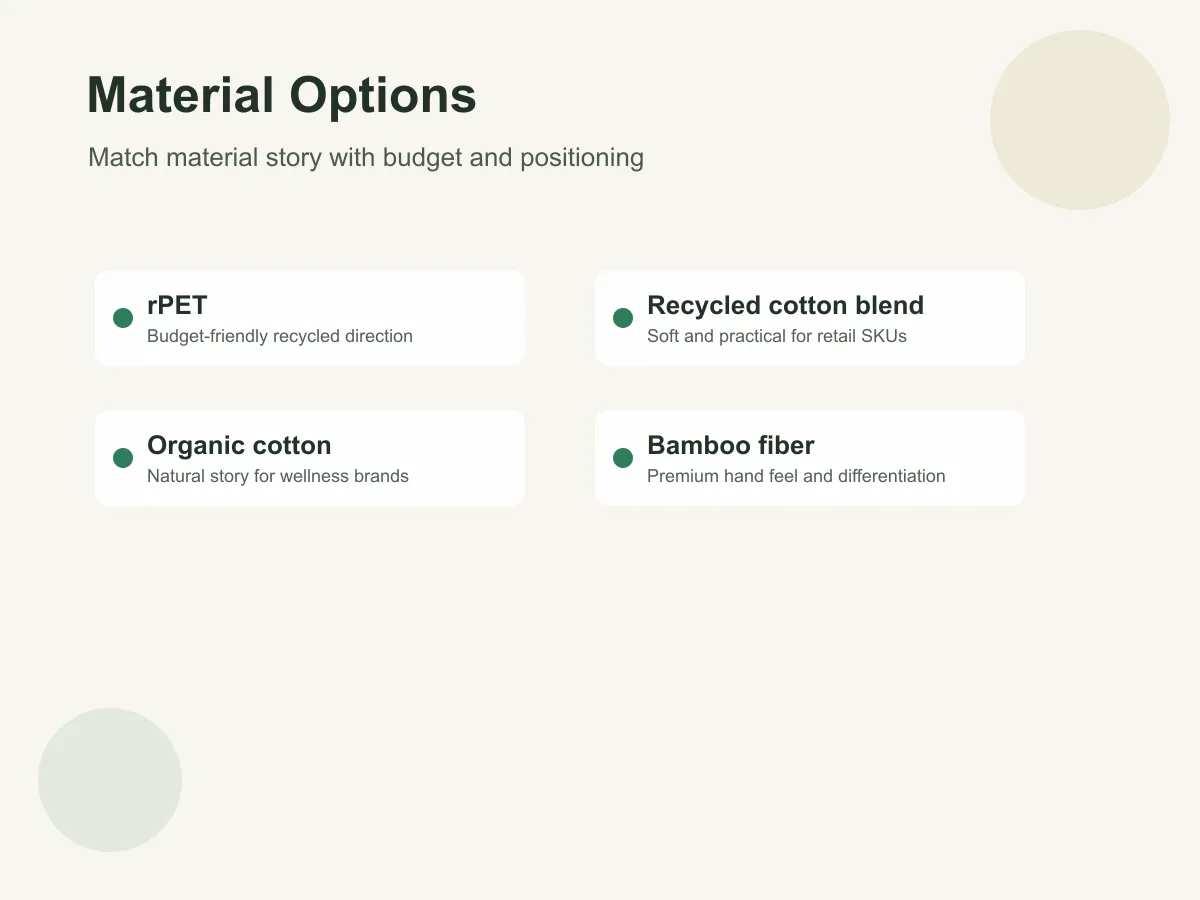
Common private label tote materials include rPET, recycled cotton, cotton canvas, organic cotton, bamboo fiber and leather-look materials. rPET and recycled cotton blends are often suitable for budget-conscious retail projects, while organic cotton, heavier canvas and specialty materials can support higher-positioned programs.
| Material | Good for | Buyer notes |
|---|---|---|
| rPET | Recycled-content direction, beauty and lifestyle campaigns. | Useful when buyers need a recycled material route with controlled cost. |
| Recycled cotton blend | Lower-budget retail SKU, casual tote and brand merch. | Often cost-controllable and suitable for soft daily-use totes. |
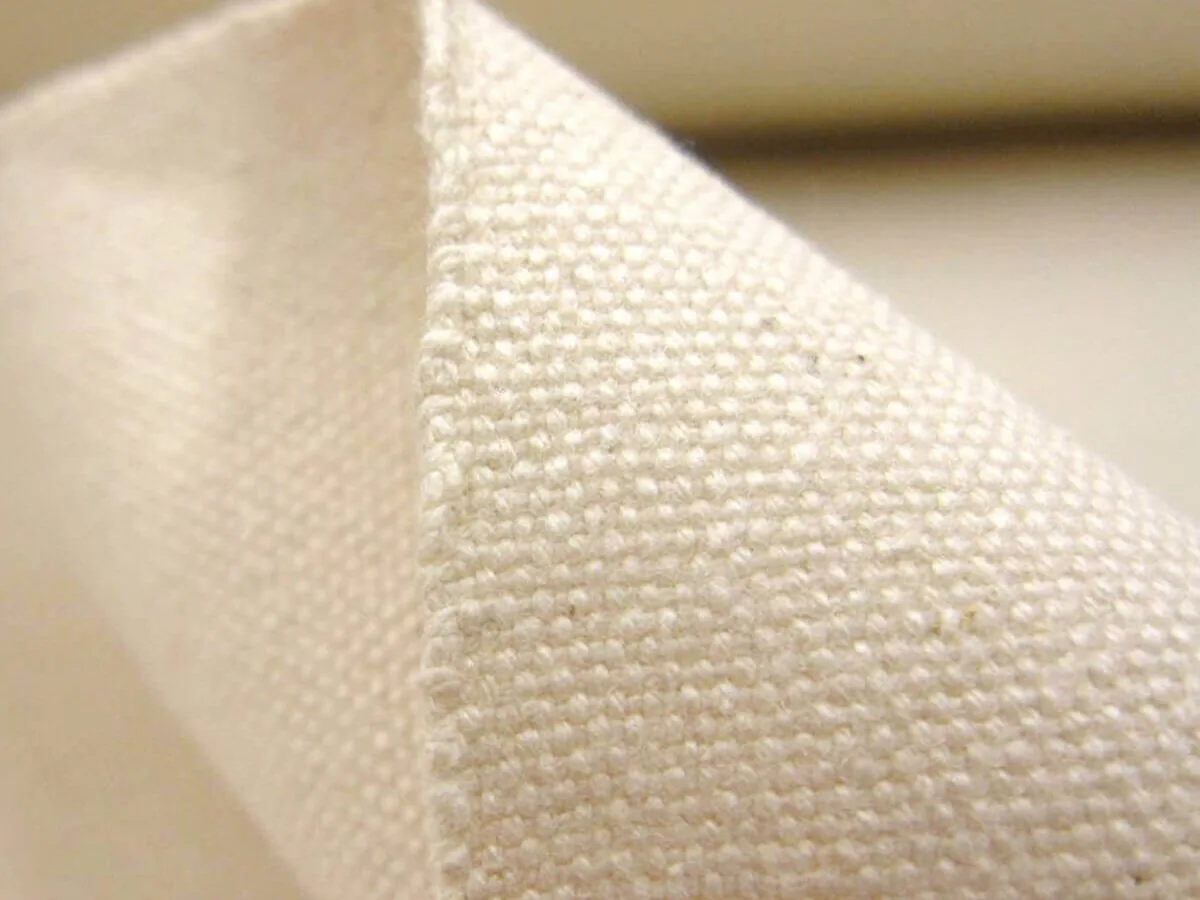
| Cotton canvas | Durable retail tote and structured daily-use bag. | Good for simple, sturdy designs and broad brand use. |
| Organic cotton | Wellness, beauty and natural lifestyle brands. | Stronger natural material story when document scope is confirmed. |
| Bamboo fiber | Soft handfeel and wellness or lifestyle positioning. | Material wording should be specific and supported. |
| Leather-look or vegan leather | Premium or fashion-oriented tote structures. | Better for structured designs, trims, patches or luxury-style details. |
If the project has a recycled or organic claim, buyers should confirm what documentation is needed for their market and marketing language. Textile Standards publishes the Global Recycled Standard for recycled-content and chain-of-custody requirements1. Textile safety may also be reviewed through OEKO-TEX STANDARD 1002 depending on buyer requirements.
What design details make a tote retail-ready?
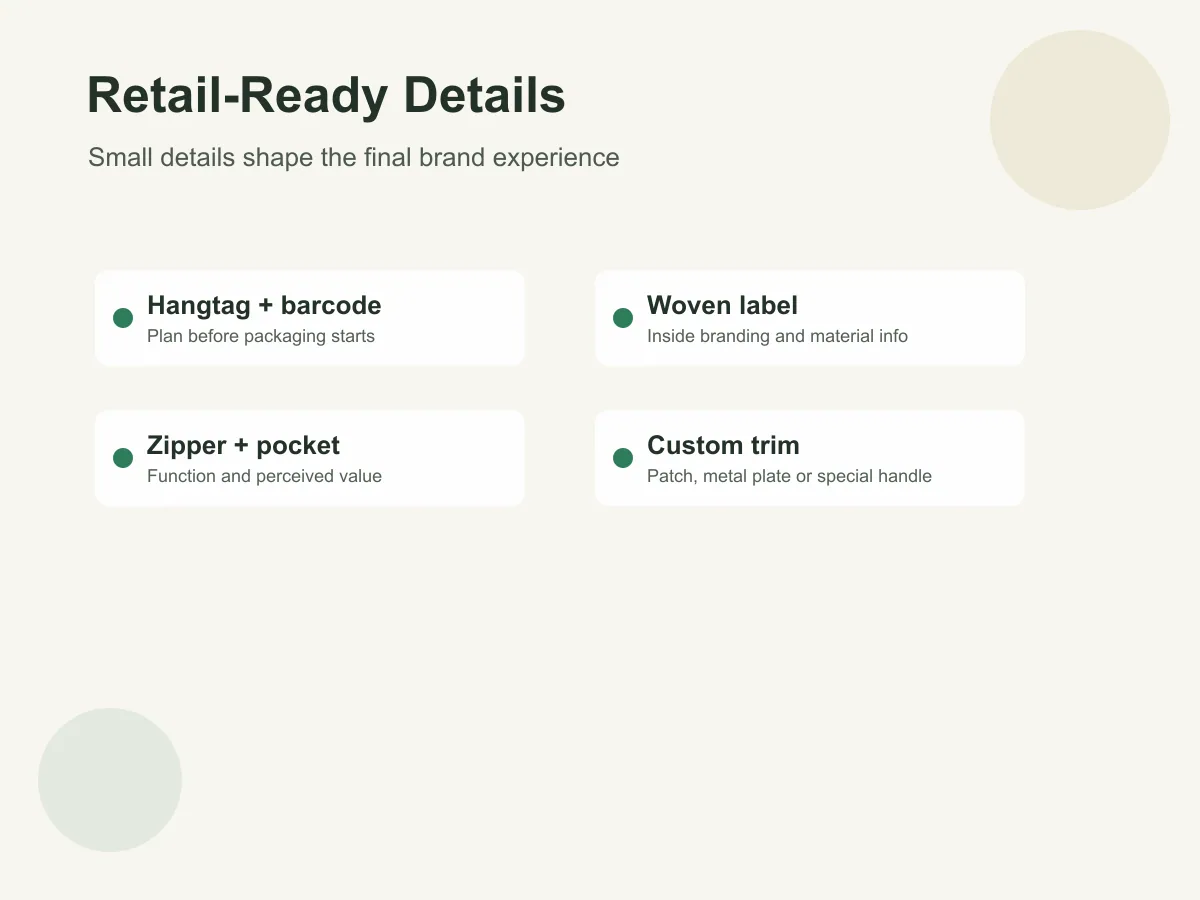
A retail-ready private label tote usually needs more than an exterior logo. Buyers should plan bag structure, inside label, hangtag, barcode sticker, packaging, closure, pocket, brand trim and final presentation before sampling.
The biggest difference between a logo tote and a private label tote is design intention. A basic logo tote asks where to print the logo. A private label tote asks what shape fits the brand, what fabric handfeel supports the price position, whether the bag needs lining, whether it needs an inner pocket, how it closes and how it will look when the customer receives it.
Common private label details include inner pockets, zipper closures, magnetic snaps, woven labels, leather-look patches, metal logo plates, hangtags, barcode stickers, individual packaging, care labels, material composition labels and country-of-origin labels.
For retail distribution, barcode systems and product identification may also need to align with retailer requirements. GS1 General Specifications define barcode and identification standards used by many retail and logistics systems3.

How long do samples and bulk production take?
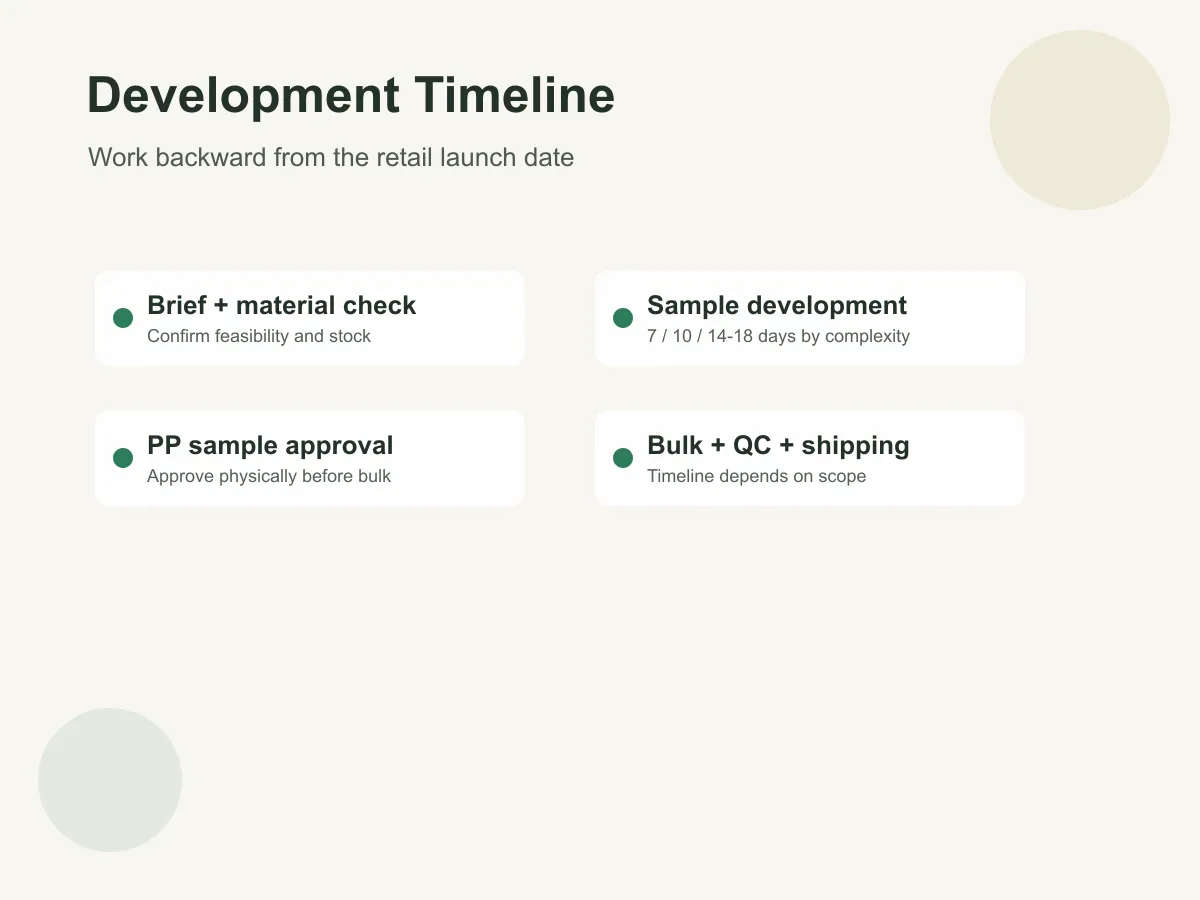
Sample timing is confirmed after the material, construction, logo method, artwork, packaging and approval scope are clear; the working schedule also depends on revision speed and current capacity. Bulk production timing depends on order quantity, material availability, process complexity and pre-production sample approval.
| Stage | What happens |
|---|---|
| Brief review | Confirm material, size, logo, structure, packaging and quantity. |
| Material check | Check stock material or arrange custom material or color development. |
| Sample development | Prepare sample based on design and approved material direction. |
| Pre-production sample | Buyer physically reviews and approves the final sample before bulk. |
| Bulk production | Production starts after approval and material preparation. |
| QC and packaging | Check sewing, logo, color, measurements, labels and packing. |
| Shipping | Arrange shipping based on destination and launch date. |
For retail projects, buyers should start earlier than they think. Custom material alone may require extra time in some cases. Then the buyer still needs sample review, pre-production approval, bulk production, packaging and shipping.
What packaging should brands plan before production?
Private label tote packaging should be planned before sampling, not after bulk production. Common options include FSC paper hangtags, recycled-content polybags, paper cards, belly bands, dust bags, barcode stickers, care labels and country-of-origin labels.
Packaging is part of the product experience. It also affects production preparation. If the tote will be sold through retail, the buyer should confirm packaging requirements early. A barcode, hangtag or country-of-origin label added late can delay packing even if the tote itself is finished.
FSC paper and packaging guidance applies to paper packaging scope4, such as hangtags, paper cards and cartons, not to tote fabric itself.
What certification documents may buyers need?
Private label tote buyers may need GRS, OEKO-TEX, BSCI, FSC packaging, material composition, test reports or country-of-origin documents depending on material, sales channel and buyer requirement. These documents should be discussed before final material selection.
Certification needs vary by brand and market. For private label tote projects, buyers may ask about GRS-related documentation for recycled materials, OEKO-TEX STANDARD 100 for textile safety concerns, BSCI or social compliance audit information, FSC paper packaging support, material composition information, test reports, country-of-origin documents and product labels.
Social compliance may also be reviewed through systems such as amfori BSCI audit guidance for producer audit requests5 depending on buyer policy. Broad environmental claims should be handled carefully; the FTC Green Guides summary6 is a useful reference for environmental marketing claim language in the United States.
What mistakes should brand buyers avoid?
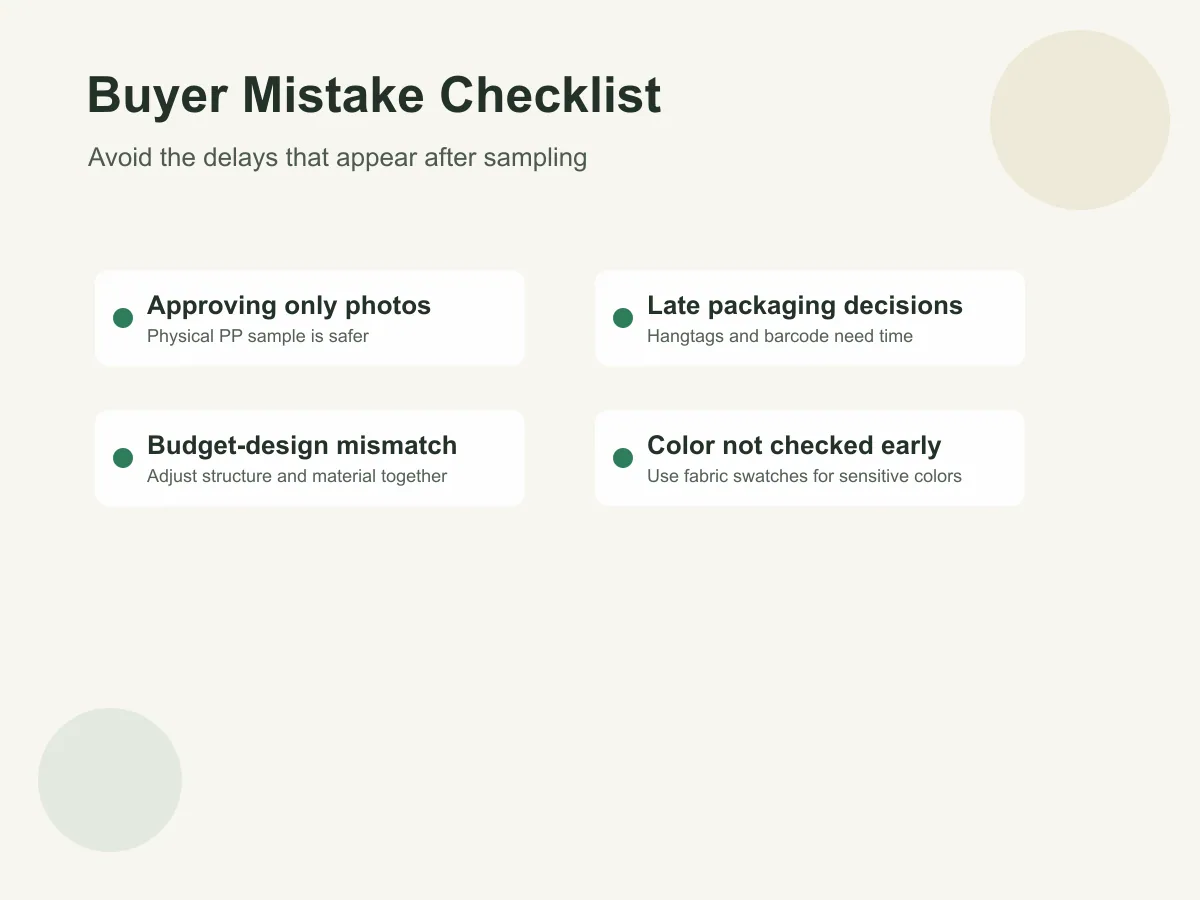
The biggest private label tote mistakes are underestimating timeline, approving bulk production only from photos, choosing details beyond the budget, adding packaging too late and selecting materials without checking availability.
| Mistake | Why it causes problems | Better approach |
|---|---|---|
| Starting too late | Material, sample, production and shipping all need time. | Work backward from launch date and add buffer. |
| Approving only by photos | Photos may not show handfeel, size, structure or color accurately. | Approve a physical pre-production sample before bulk. |
| Budget too low for the design | Premium material, hardware and packaging cannot fit every budget. | Adjust material, structure and packaging together. |
| Adding packaging late | Hangtags, barcode labels and cards may need separate setup. | Confirm packaging before sample or pre-production sample. |
| Not checking material color early | Sensitive colors can vary between fabric batches. | Ask for material swatches before sample development. |
For sensitive colors, the material supplier may prepare A/B/C/D material swatches first. The buyer can approve the direction before the sample is made. This takes time, but it can prevent bigger problems later.
How should you brief a factory for a private label tote project?
A strong private label tote brief should include target customer, use case, quantity, colorways, material preference, size, logo method, structure, packaging, certification requirement, launch date and shipping destination.
Before asking for a quote, prepare the target customer and use case, order quantity, number of styles and colorways, preferred material, bag size and shape, handle style, closure type, lining or pocket requirement, logo method, artwork file, Pantone color or material color direction, hangtag, label and barcode requirements, packaging method, document requirements, target launch date, shipping destination and budget direction if available.
If the budget is tight, share that early. A good factory partner can adjust material, structure, logo method or packaging to help the product stay closer to the target cost. If the timeline is tight, the factory can also tell you which custom details may need to be simplified.
What should be in a private label tote brief?
Before asking for a private label tote quote, buyers should prepare project quantity, colorways, size, material direction, logo file, label files, packaging needs, destination market, launch date and required documents.
- Target quantity per style and per colorway.
- Tote size or product-fit requirement.
- Preferred material: rPET, organic cotton, recycled cotton, canvas or another material direction.
- Logo artwork: AI, EPS or editable PDF preferred.
- Pantone color references or physical color samples.
- Label, hangtag and care label files.
- Barcode or SKU label requirements.
- Packaging direction: FSC paper hangtag, recycled-content polybag, belly band, dust bag or retail-ready packing.
- Destination market and shipping destination.
- Target launch date or in-store date.
- Required documents or certifications, such as GRS, OEKO-TEX, BSCI or FSC packaging.
Less suitable fit for this private label route
This route is less suitable for personal one-off orders, very small quantities below MOQ, or buyers who want retail-ready private label execution while leaving material, labels, packaging, sample approval and timeline unclear.
It may also be less suitable for projects that require many colors, complex trims, custom packaging and rush delivery while still expecting basic giveaway pricing. Ecoicolortote is a stronger fit for MOQ 500+ private label tote projects where the buyer can confirm use case, material direction, logo artwork, label files, packaging requirements, destination market and launch date before production. That does not mean every project must be premium. It means the private label standard should be clear enough for the factory to quote, sample and inspect the same product the buyer expects to sell or distribute.
Send your target quantity, material direction, colorways, logo artwork, label files, packaging needs and launch date. We can help check whether your design, MOQ, budget and timeline are realistic before sampling. Contact Ecoicolortote.
FAQ: Private label tote bags
What should buyers confirm before sourcing private label tote bags?
Buyers should confirm target customer, use case, quantity, colorways, size, material direction, logo file, label files, packaging needs, destination market, launch date and required documents. These details decide whether the tote should be quoted as a simple logo bag, a retail-ready SKU, a gift-with-purchase item or a recurring private label product.
What sample details matter most for private label tote bags?
Check material handfeel, color, size, structure, logo effect, label placement, hangtag, barcode sticker, packaging method and the approved physical pre-production sample. For retail projects, buyers should also check whether the sample reflects the final label, packaging and SKU setup, not only the bag body.
What MOQ and lead time should buyers expect for private label tote projects?
Ecoicolortote starts from MOQ 500 pcs per style. Sample timing is confirmed after the material, construction, logo method, artwork, packaging and approval scope are clear; the working schedule also depends on revision speed and current capacity. Bulk lead time should be confirmed after material, colorways, artwork, label files, packaging and pre-production sample approval are locked.
Which material or certification evidence should be checked?
Check material composition, recycled or organic claim scope, OEKO-TEX where textile safety is relevant, FSC paper packaging scope, audit information and buyer-specific document requirements. Evidence should match the selected material, packaging item, supplier route and order scope, especially when the tote will carry public sustainability wording.
What should be included in the RFQ?
The RFQ should include quantity, color split, material direction, tote size, logo file, label files, packaging needs, barcode or SKU requirements, documents, destination and launch date. If the tote will be sold by SKU, buyers should also share label mapping, carton mark needs and any retailer receiving rules.
What mistake causes the most rework?
The biggest mistake is adding labels, packaging, barcode requirements or material changes after the sample route is already locked. Late changes can require new quotes and samples. Private label projects are especially sensitive because packaging, label placement and SKU control affect both product presentation and receiving accuracy.
When should buyers contact Ecoicolortote?
Contact Ecoicolortote when your MOQ 500+ private label tote project needs help checking material, label, packaging, MOQ, budget and production timeline before sampling. The most useful brief includes target customer, quantity, colorways, artwork, label files, packaging expectations, destination market, launch date and document requirements.
Trademark and certification note
BSCI, Sedex, SMETA, GRS, OEKO-TEX, ISO, FSC and other certification or audit names belong to their respective organizations. This article is a buyer-side sourcing guide and does not claim that every product, material, order or shipment automatically carries every listed certification. Buyers should confirm current document validity, certificate scope, material coverage and market requirements before finalizing quotation or bulk production.
Sources
- Global Recycled Standard - recycled-content and chain-of-custody reference↩
- OEKO-TEX STANDARD 100 - textile product safety reference↩
- GS1 General Specifications - barcode and identification standards↩
- FSC paper and packaging↩
- amfori BSCI audit guidance - producer audit requests↩
- FTC Green Guides summary - environmental marketing claims↩