

 Zoe Yu
 An rPET tote buyer may ask for “the GRS certificate” as if one file proves everything. In practice, a company scope certificate and an order-specific Transaction Certificate answer different procurement questions at different stages.
Review an rPET Document RouteView the rPET Tote Route
This distinction helps sourcing teams avoid two costly errors: rejecting a suitable supplier because a future transaction document does not yet exist, or accepting a broad certificate as proof of a specific order.
- review current organization scope
- confirm the actual rPET material route
- define when transaction evidence can be available

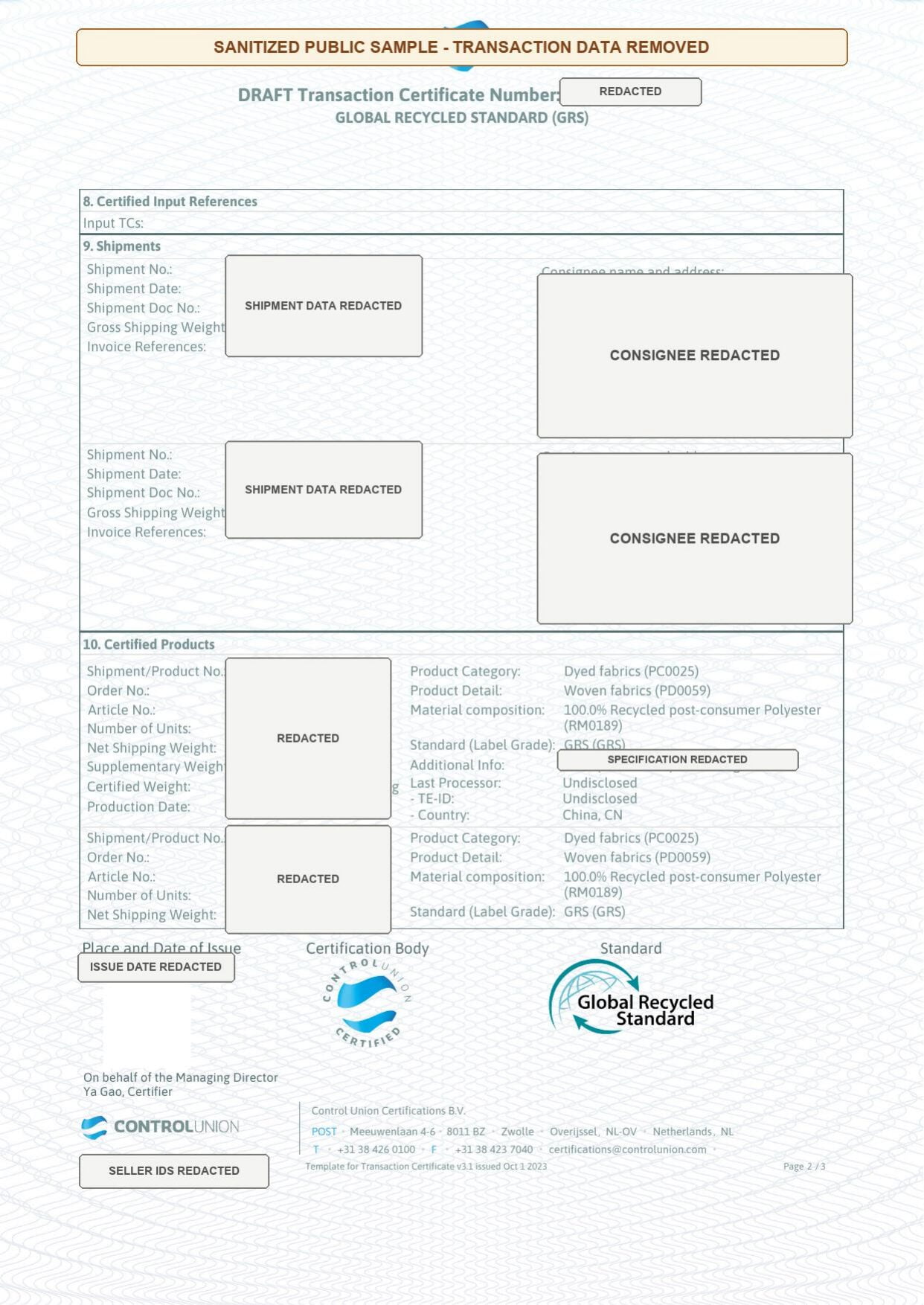
A supplier GRS scope certificate is organization-level evidence. It can support supplier and scope review, but it is not proof of one future order. A Transaction Certificate is tied to an actual transaction. In the sanitized example reviewed here, the approved public fields show two December 2024 shipments, 376.20 kg of certified weight and 100% recycled post-consumer polyester. The example explains document structure; it is not proof for another buyer’s order.
Evidence record: what this sanitized TC example actually contains
This field note is designed for European and North American brand procurement teams comparing recycled-material document routes. That describes the buyer context for this guide, not the identity of the parties named on the original transaction document.
Public-data boundary: company names, addresses, certificate numbers and order identifiers remain hidden. The approved aggregate fields above can be used to teach buyers how a transaction-level document differs from an organization-level certificate.
GRS and TC belong to different procurement checkpoints
| Document | Question it can help answer | What it does not prove by itself |
|---|---|---|
| Supplier scope certificate | Is this certified organization approved for the stated material/process scope? | That one future tote order already used a specific quantity of certified material. |
| Transaction Certificate | What certified transaction occurred between identified parties for stated product/material details? | Every unrelated future order or a material route outside the recorded transaction. |
Textile Exchange CCS User Manual [1] defines scope and transaction documents within the Content Claim Standard assurance system. For a buyer, the practical rule is simple: qualify the organization first, then verify order-specific evidence at the transaction stage.
A retail label, hangtag or campaign claim cannot be stronger than the evidence available for the actual product route.
- supplier scope at qualification
- material identity at sampling
- transaction evidence after the applicable order activity
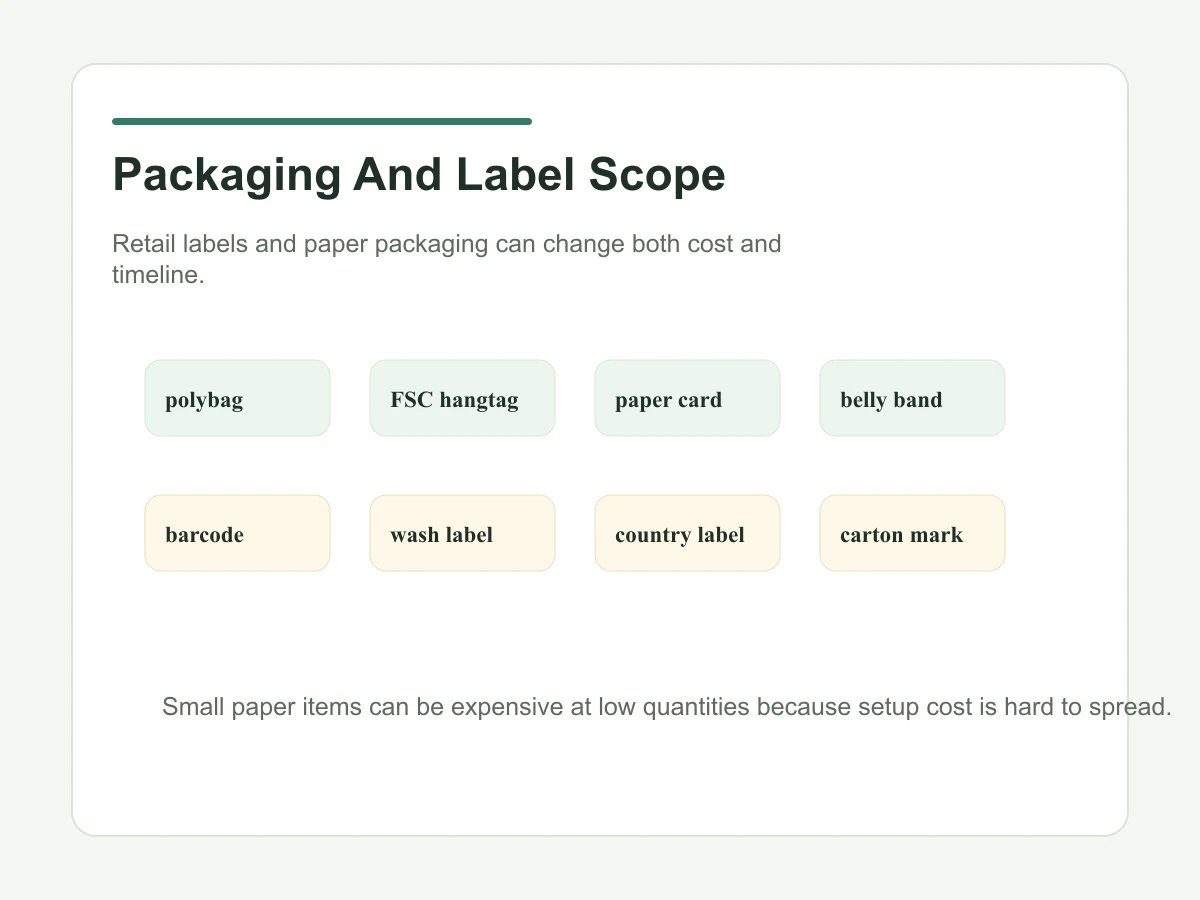
The evidence sequence starts before an order and ends after a transaction
Before the transaction exists
At inquiry or quotation stage, the factory can review the intended tote construction, selected rPET material, supplier route, target claim, destination market and requested documentation. A current company scope certificate may support this review when it covers the relevant organization and scope.
The certificate does not convert a quotation into a completed certified transaction. If a buyer asks for a TC before the order, material purchase and transaction exist, the accurate answer is to explain the later document route rather than attach an unrelated old TC.
The supplier’s GRS certificate confirms the certified organization’s approved recycled-material scope. An order-specific Transaction Certificate, when applicable, is issued for the completed transaction after the relevant material purchase and records the parties and transaction details.
The sample, specification and requested recycled-content wording need to point to the same rPET route.
- material supplier and composition route
- tote construction and order quantity
- buyer claim and destination-market wording

After the order and material transaction exist
A TC is transaction-level evidence. Depending on the applicable assurance route, it may record seller and buyer information, certificate references, product and material details, quantities or weights, transaction dates and shipment details. Textile Exchange Transaction Certificate Policy [2] explains why the document is controlled around the certified transaction rather than used as a generic sales brochure.
This means the RFQ must distinguish “show your current scope certificate” from “confirm whether an order-specific TC can be supported after the transaction.” Those are both reasonable buyer requests, but they are not the same deliverable or the same timing.
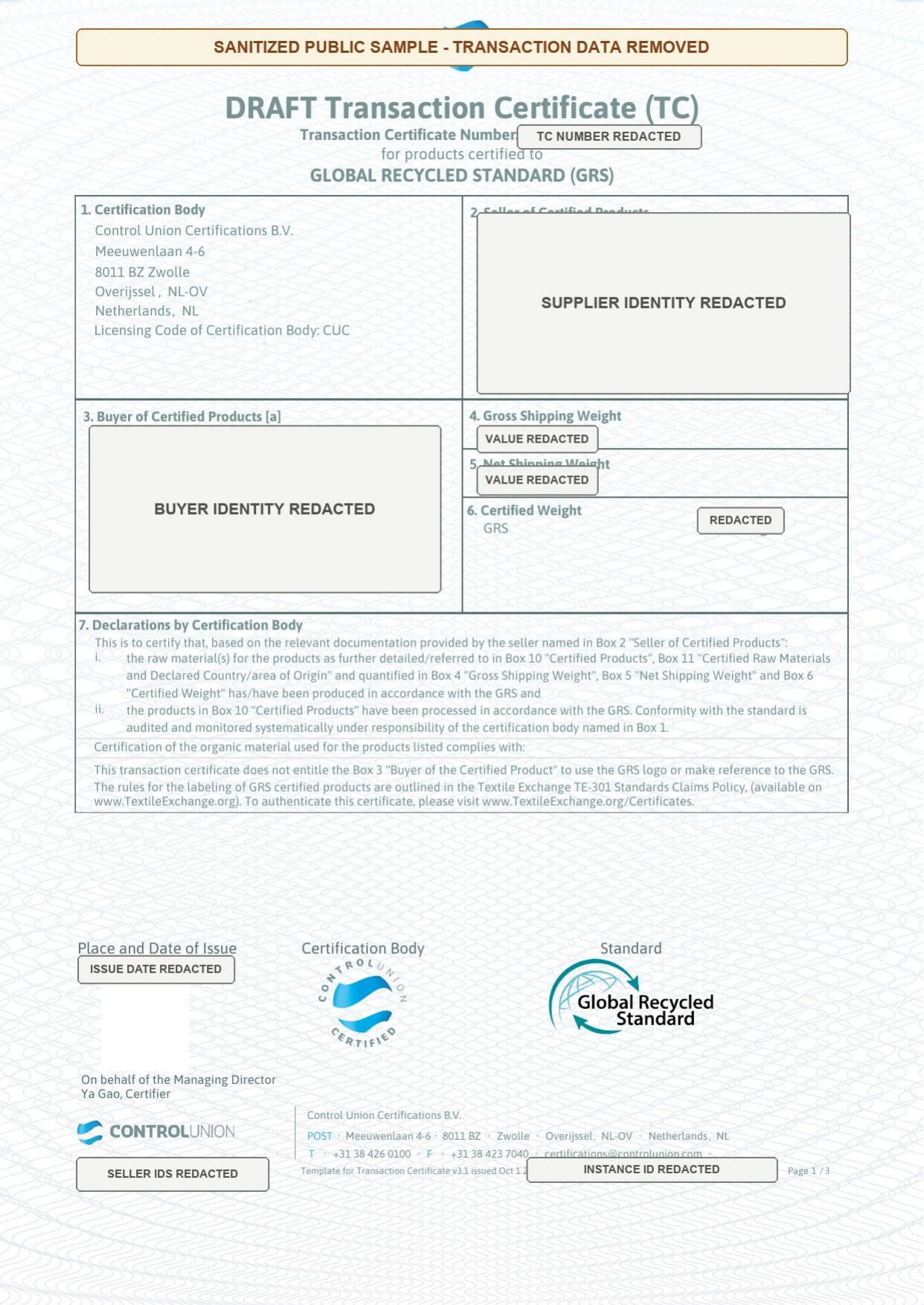
What 376.20 kg proves, and what it cannot prove
The sample below shows a transaction-level record with two shipments in December 2024, a combined certified weight of 376.20 kg and a recorded composition of 100% recycled post-consumer polyester. Those figures are useful because they demonstrate the level of transaction detail a TC can carry.
They do not prove that another tote order used the same material, weight or supply route. A new buyer still needs its own supplier-scope review, approved material route and applicable transaction evidence. The public example cannot be copied into a new RFQ as order proof.
Write five document fields into the RFQ before asking for a TC
Accuracy check: Textile Exchange Standards Policy Updates [3] should be reviewed for current Textile Exchange policy updates. Document eligibility and timing need confirmation for the live supplier and transaction; do not rely on an old sample or expired public certificate.
Factory control point: the physical rPET route and the records must stay aligned
A document workflow cannot repair a material mismatch. The selected rPET fabric, approved sample, bulk material and order records need to refer to the same route. If the material supplier, composition, process or order scope changes, the document plan needs another review before public claim wording is approved.
This is why Ecoicolortote treats the GRS/TC question as part of RFQ and material approval, not as a file request sent after production. The goal is not to show the most certificates. The goal is to give the buyer the correct evidence at the correct stage without promising a document that the transaction cannot support.
The retained swatch and production specification help the sourcing team check that the order being documented is the order that was approved.
- material identity
- sample and bulk reference
- claim and document scope

Use this evidence route for supplier qualification, not as a blanket product claim
Use it for: B2B rPET tote RFQs where a brand, retailer, hotel, event team or GWP buyer needs to qualify supplier scope and understand later transaction evidence.
Do not use it to: claim that every recycled tote automatically receives a TC, reuse another buyer’s transaction document, or replace current certification verification with an old screenshot.
Review Material RouteReview the Quote and Document ScopeReview Private-Label RoutePlan Sample Approval
Buyer questions about GRS and transaction evidence
Can a supplier send a GRS certificate before an rPET tote order is placed?
A current supplier scope certificate can be shared for initial scope review when public disclosure and certificate status allow it. It shows the certified organization and approved scope, but it does not prove that one future tote order has already used a specific quantity of recycled material. The RFQ must keep that boundary clear.
Does a company GRS scope certificate prove the recycled content of my specific tote order?
No. A scope certificate is organization-level evidence about the certified operation and its approved scope. Order-level proof depends on the actual transaction and applicable chain-of-custody records. Buyers need to separate supplier qualification from the later evidence tied to the specific material purchase and order.
When can a Transaction Certificate be provided for an rPET tote order?
A TC is connected to an actual transaction, so it cannot be treated as a pre-order marketing attachment. When applicable, it is supported after the order is confirmed and the relevant certified material transaction has occurred. Timing and eligibility still depend on the certified parties, material route and certification process.
What information can appear on a Transaction Certificate?
Transaction-level documents can contain the seller and buyer, certificate references, products or materials, quantities or weights, dates and shipment or transaction details. That is why a public sample must be sanitized. A buyer reviewing its own order should receive the applicable complete document through the agreed commercial channel.
What should a buyer write in an rPET tote RFQ about GRS and TC documents?
State the required recycled claim, target market, product specification, quantity, delivery route and which document must be reviewed before supplier selection versus after the transaction. Ask the supplier to confirm current scope and the conditions under which order-specific evidence can be supported, instead of requesting a future TC as if it already exists.
Can a TC be promised for every recycled tote project?
No. The supplier needs to verify that the relevant organizations, material route, process and transaction qualify under the applicable assurance system. The correct response is a scoped confirmation, not an unconditional promise. If the route changes after quotation, the document plan must be checked again before the buyer uses a public claim.
Sources
About the Author
 |
Zoe Yu is B2B Sales Manager at Ecoicolortote. She works with brand, retail, beauty, hospitality and event buyers on tote material routes, RFQ scope, sample approval, packaging, document planning and bulk-production handoff. |