

 Zoe Yu
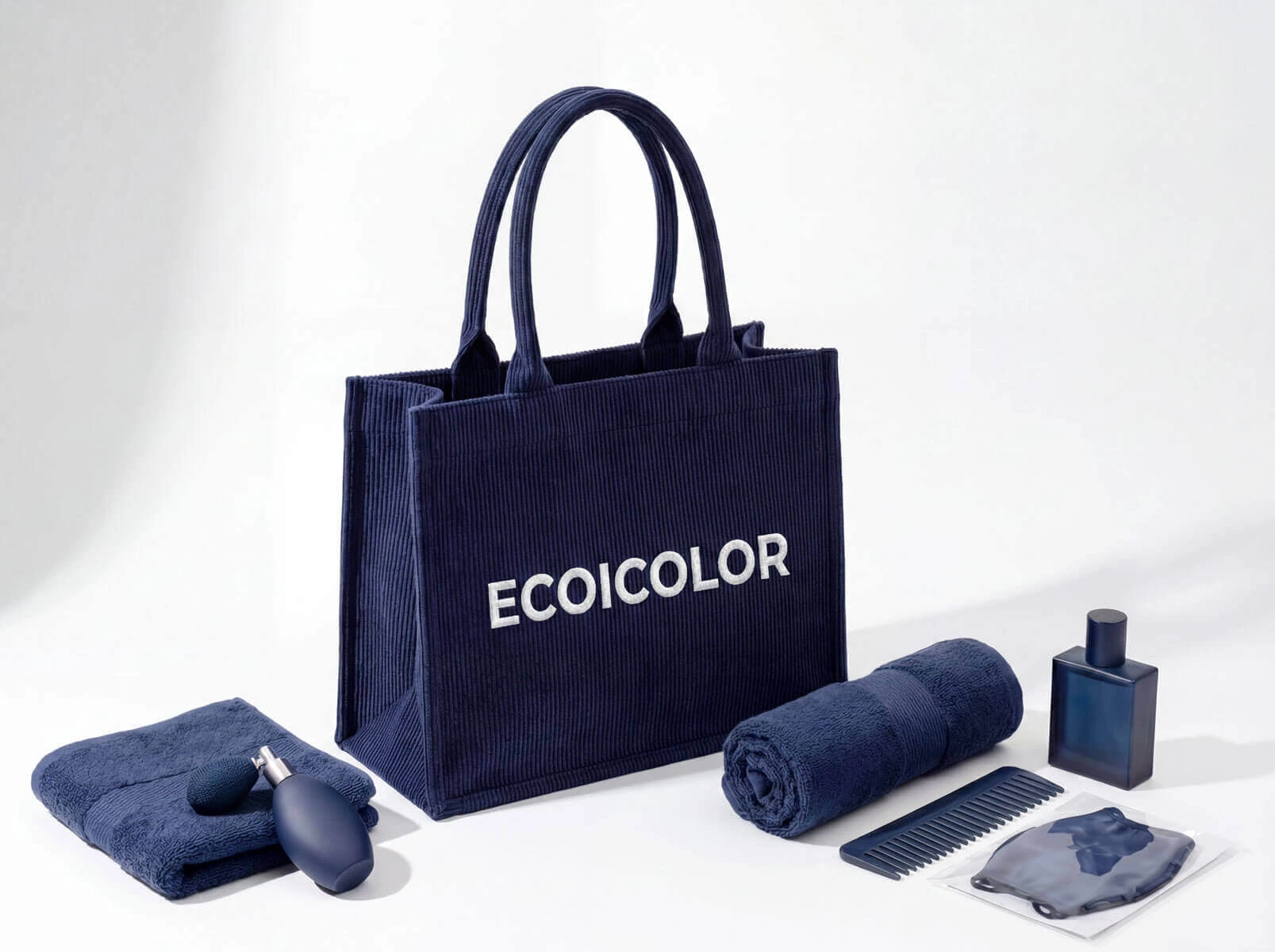
 This August 2025 project used 8-wale 100% cotton corduroy. The buyer approved a burgundy physical sample, a 45 x 42 cm finished tote, a recorded 30 cm shoulder-strap specification and an 8 x 5.5 cm PU badge with a debossed logo.
Review a Cotton Corduroy Tote BriefView the Private-Label Tote Route
The finished tote weighed 260 g. The project record did not retain the fabric GSM, so this article does not estimate one from the finished-product weight.
- 8-wale cotton corduroy
- burgundy physical color sample
- debossed PU badge and direction control
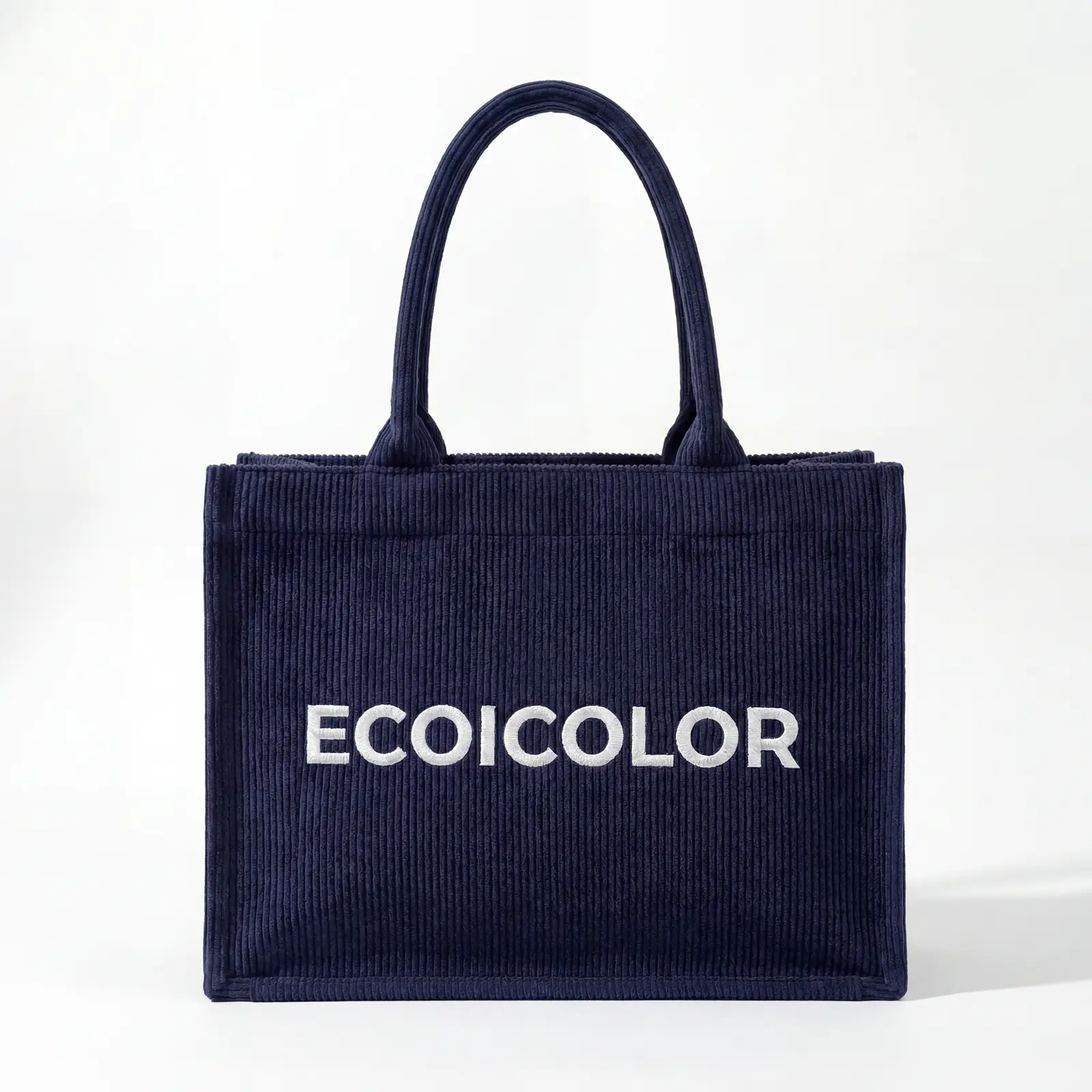
An established skincare-brand customer selected a cotton corduroy tote for a custom bulk order in August 2025. A standard burgundy option on the available color card matched the requested direction closely, so the physical sample was confirmed without unnecessary color redevelopment. Ecoicolortote aligned the wale direction and approved the 8 x 5.5 cm PU badge before bulk handoff. No failure or correction story is being invented; the useful factory experience is the preventive control that kept the sample route straightforward.
August 2025 case record: what was actually approved
Verified anonymized project record
| Buyer | Established skincare brand; identity and region withheld |
|---|---|
| Project date | August 2025 |
| Material | 8-wale 100% cotton corduroy |
| Finished size | W45 x H42 cm |
| Shoulder-strap field | 30 cm in the retained project specification; measurement endpoints must be reconfirmed on a repeat RFQ |
| Logo component | 8 x 5.5 cm PU badge with debossed customer artwork |
| Finished weight | 260 g per finished tote |
| Fabric GSM | Not recorded; no GSM is inferred from finished weight |
Wale count describes the number and visual scale of raised ribs. It does not supply the missing fabric GSM.
- record wale count separately
- mark panel and strap direction
- keep finished weight separate from fabric GSM

Eight-wale cotton corduroy is a rib specification, not a GSM value
CottonWorks corduroy wale construction [1] explains corduroy through its raised wale construction. For this project, the retained specification says 8-wale cotton corduroy and a 260 g finished tote. Those two facts do not reveal the fabric GSM because the finished weight also depends on size, strap construction, seam allowances, label, thread and any internal components.
The accurate buyer-facing statement is therefore simple: the project used 8-wale 100% cotton corduroy, while the fabric GSM was not recorded. A repeat order should use the retained sample, material reference and current supplier specification rather than a guessed GSM.
Why burgundy moved quickly from color card to physical sample
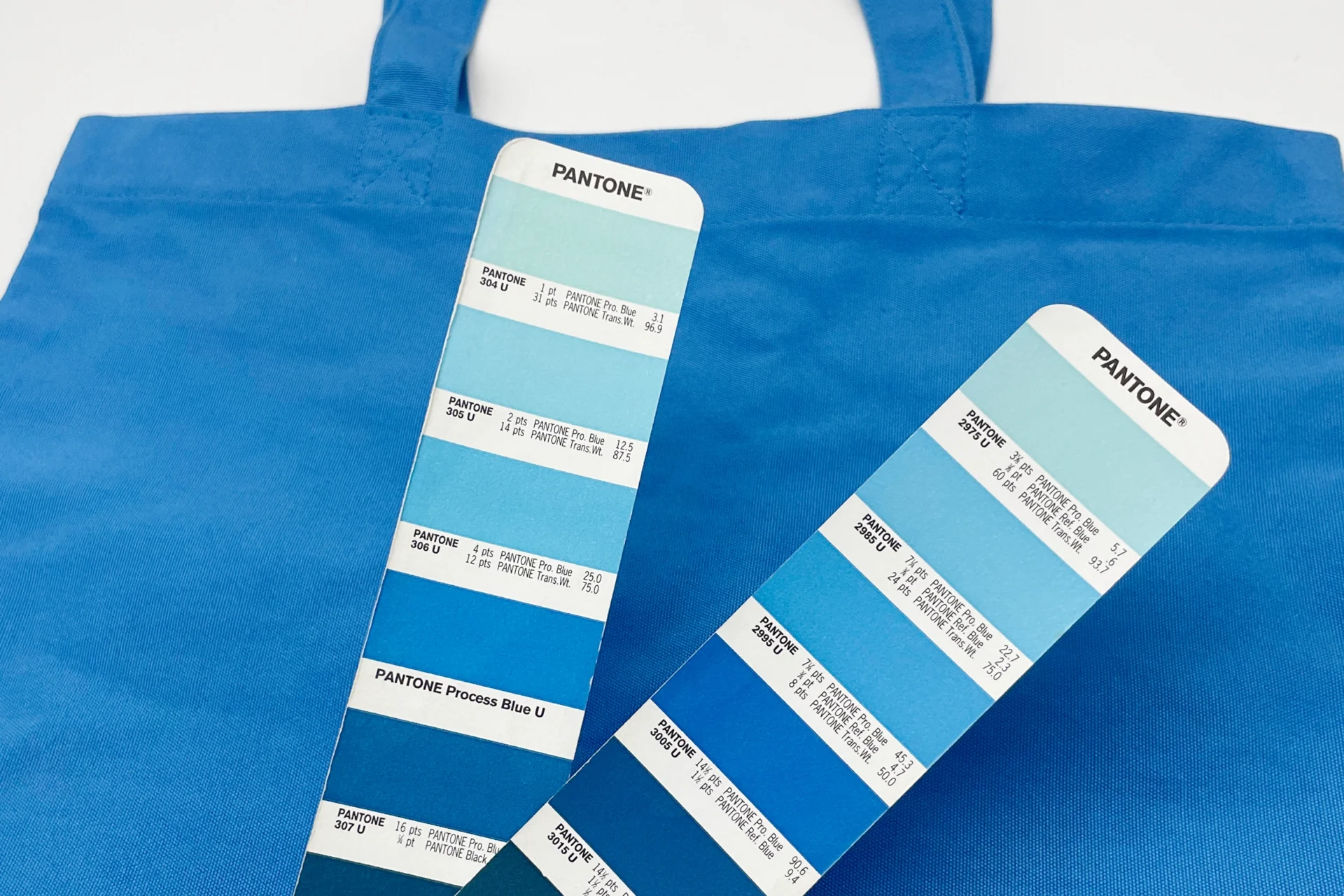
Burgundy was the trend-led color selected for this 2025 program. The available color card already included a standard option that was very close to the requested shade, so the factory could make the physical sample from a suitable route instead of starting with repeated lab-dip development.
Pantone Connect color-system guidance [2] supports standardized color communication, but the approval still depended on the physical corduroy sample. The ribs, pile direction and lighting change how burgundy appears. Once the actual sample looked accurate and coordinated with the PU badge, the buyer confirmed it and the bulk-order handoff became much more straightforward.
The 2025 project moved efficiently because a suitable burgundy option already existed and the buyer still confirmed the physical sample.
- record the supplied color reference
- retain the approved burgundy swatch
- compare the badge beside the fabric
A 30 cm shoulder-strap field needs defined measurement points
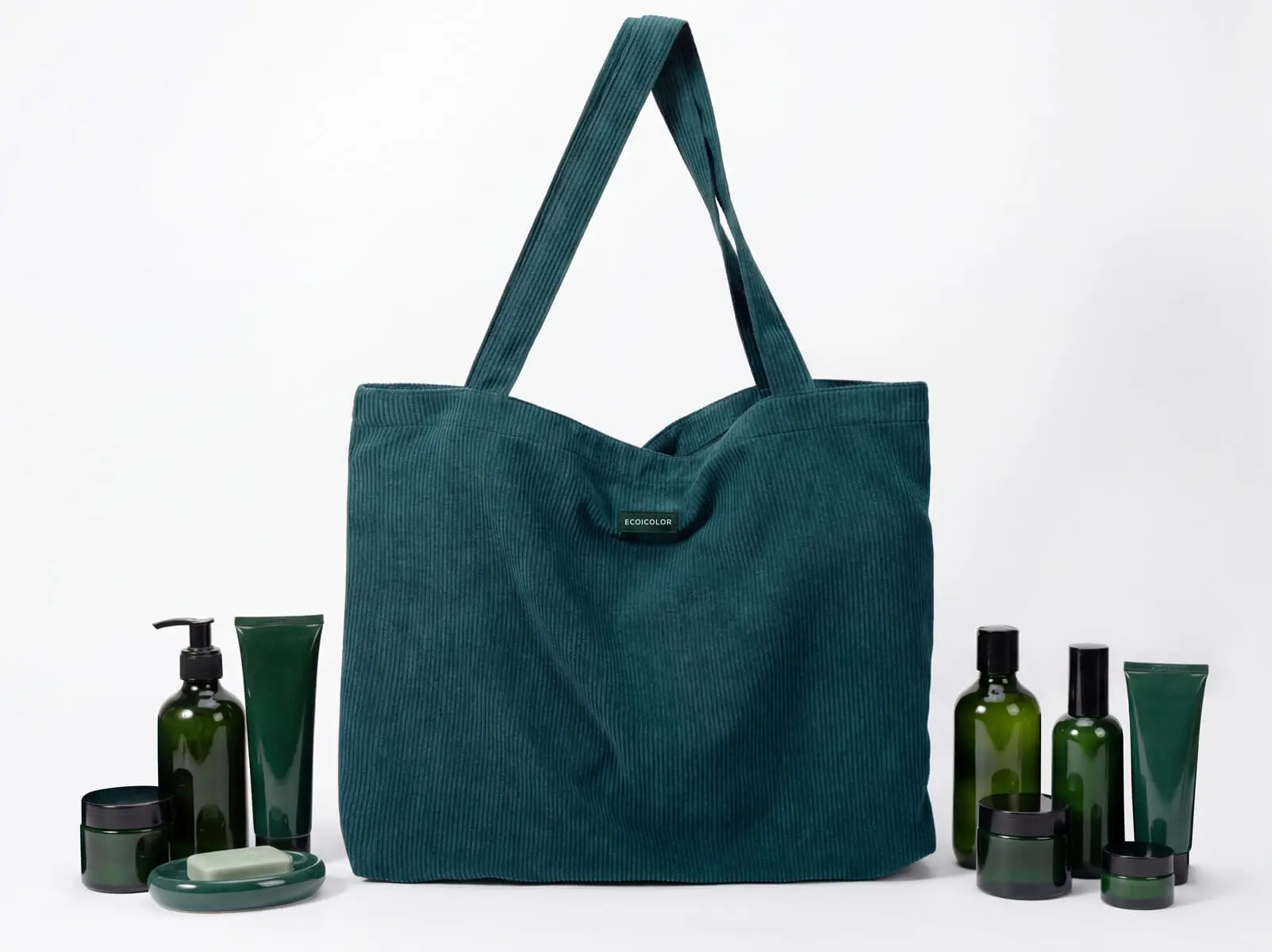
The retained specification records “shoulder strap 30 cm.” That number is useful only when the buyer and factory also agree how it was measured: total strap length, visible sewn length or handle drop are different fields. This article preserves the original 30 cm value without silently converting it into another measurement.
For a repeat order, the approved finished sample and a marked drawing should define the start and end points. That prevents a technically correct 30 cm entry from producing a different carrying fit.
A 45 x 42 cm tote still needs the strap measurement method, opening behavior and load use confirmed together.
- W45 x H42 cm finished body
- 30 cm field with endpoints marked
- retail or brand-merch carrying use
The 8 x 5.5 cm PU badge needed its own physical approval
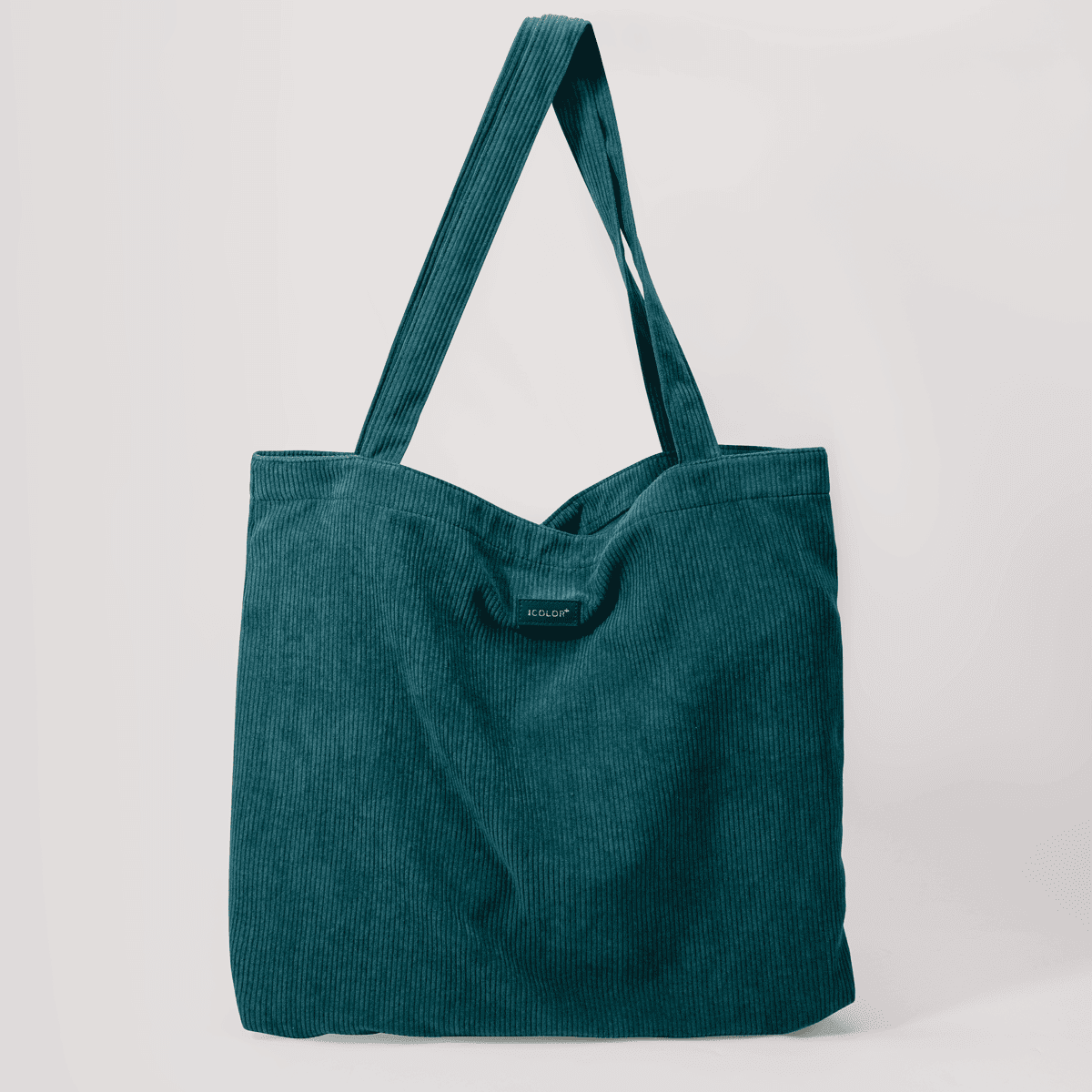
The project used an 8 x 5.5 cm PU badge with the supplied artwork debossed on the surface. Approval covered the badge dimensions, PU color, artwork scale, deboss depth and clarity, edge condition, stitch line, orientation and finished placement on the tote.
A digital logo file cannot confirm how small spaces, thin lines or deboss depth will look on PU. The physical badge therefore became a separate approval component before it was attached to the cotton corduroy sample.
The 8 x 5.5 cm badge needs its own version, physical proof and placement measurement beside the burgundy corduroy.
- deboss clarity
- badge edge and stitch
- position from finished seams
Why nothing failed: direction control happened before cutting
No stripe-direction, color or badge failure was recorded for this project. That is not an excuse to invent a dramatic case. Ecoicolortote already understood that corduroy is directional, so the wale orientation was aligned during pattern marking and sample preparation instead of being checked only after sewing.
The practical factory lesson is preventive: front and back panels, visible straps and other matching components need an approved direction map. Experience reduced the chance of an avoidable mismatch; the physical sample still remained the buyer’s final approval reference.
The retained sample becomes the repeat-order reference
After bulk shipment, Ecoicolortote retains the signed approval record and a bulk sample where available. For this cotton corduroy route, the useful repeat-order reference includes the August 2025 sample, burgundy swatch, 8-wale material identity, 45 x 42 cm size, 30 cm strap field, 8 x 5.5 cm debossed PU badge and 260 g finished weight.
If the original material lot is unavailable, the factory should present current options against that retained reference. The reference helps the buyer judge continuity, but it does not justify claiming that stock color, handfeel or fabric weight will be identical without a new sample confirmation.
The reference should connect the physical sample, swatch, measurement drawing, badge proof and current production specification.
- retained sample and burgundy swatch
- measurement endpoints
- badge version and QC fields
RFQ fields for a comparable cotton corduroy tote
| RFQ field | What to send | Why it changes the quote or sample |
|---|---|---|
| Material | Cotton corduroy, target wale count and required handfeel | Wale count and construction affect appearance, cutting and availability. |
| Finished size | Width, height, gusset and measurement drawing | This case used W45 x H42 cm; another structure changes consumption and packing. |
| Strap | Length or drop with marked endpoints | A bare “30 cm” value can be interpreted in more than one way. |
| Color | Reference code plus physical approval route | Burgundy appearance changes with ribs, direction and lighting. |
| Logo badge | Vector artwork, 8 x 5.5 cm target or revised size, PU color and position | Deboss clarity and badge placement require a physical component proof. |
| Weight and packing | Finished-weight target, packing method and delivery market | The recorded 260 g finished weight is not the same as fabric GSM. |
Bulk QC note: ISO 2859-1 sampling procedures [3] provides a framework for lot sampling by attributes. Project-specific inspection fields still need to define color reference, wale direction, measurements, badge quality and packing.
Where this cotton corduroy route creates buyer value
Best fit: beauty, wellness, retail and brand-merch programs that want a visible corduroy texture, can approve a physical burgundy or custom-color sample and need a documented logo-component route.
Less suitable: projects that need an exact screen color without physical sampling, cannot define strap measurements, or expect the missing fabric GSM to be reconstructed from finished-product weight.
Plan a Corduroy Sample ReviewReview a PU Badge LogoRequest a Quote-Scope Review
Questions buyers ask before approving a cotton corduroy tote
Does an 8-wale cotton corduroy tote need a different sample review from flat cotton canvas?
Yes. The usual size, construction, logo and packing checks still apply, but corduroy adds visible wale direction and surface direction. The approval record should identify the intended direction on the front, back, gusset, handles and pocket so bulk cutting does not rely on an unwritten assumption.
Is a Pantone or other color code enough to approve the burgundy corduroy color?
No. A code is useful for communicating the target, but the visible result changes with fiber, rib structure, dye route, finish and lighting. Approve a physical corduroy color sample, record the reference and then confirm the assembled sample beside the PU badge and any packaging that must coordinate with it.
What needs approval on a debossed PU logo badge?
Confirm the PU type and color, badge dimensions, corner shape, thickness, debossed artwork size, depth and clarity, edge finish, stitch color, stitch distance from the edge, placement and orientation. The artwork proof and the physical badge sample need the same version name so the final tote cannot use an earlier badge file.
Why can corduroy stripe direction affect the perceived quality of a tote?
Corduroy has repeated ribs and a directional surface. If adjacent panels or handles run in inconsistent directions, the finished tote can look unbalanced even when every piece is technically sewn. Direction control is therefore part of pattern marking, cutting and sample approval rather than a cosmetic check added after bulk production.
What information makes a cotton corduroy tote ready for quotation?
Share quantity, delivery country and required arrival window, finished size, gusset, shoulder-strap measurement method, lining or pocket requirements, target color reference, PU badge artwork and dimensions, packing and sample needs. For this case, the retained specification recorded 45 x 42 cm, a 30 cm shoulder-strap field and an 8 x 5.5 cm PU badge.
Can the same physical sample be used as the bulk-production reference?
It can when the sample represents the approved material, color, direction, construction and badge version and both parties record that approval. Keep a signed or clearly dated reference, plus the specification and artwork files. Bulk inspection can then compare production against defined fields instead of an informal photo or an old chat message.
Sources
About the Author
 |
Zoe Yu is B2B Sales Manager at Ecoicolortote. She supports brand buyers with tote material routes, physical color and logo sampling, project quotations, QC preparation and bulk-production coordination. |
Review a Cotton Corduroy Tote BriefView the Private-Label Tote Route