Zoe Yu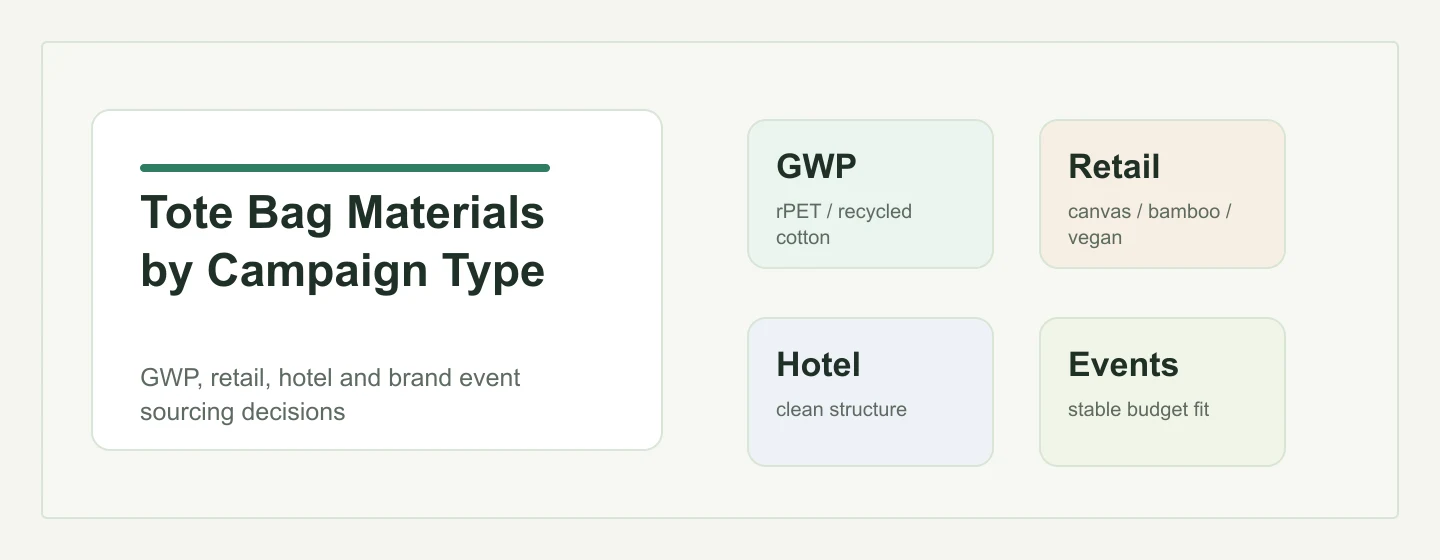
Buyer Summary
- Best for: beauty GWP, DTC, retail, hotel and brand event buyers sourcing custom tote bags from 500 pcs per style.
- Main decision: do not choose fabric only from a photo; match it to campaign use and production reality.
- Factory-side note: if the campaign purpose and budget are unclear, material recommendation becomes slow and inefficient.
- What to prepare: campaign type, budget direction, quantity, logo file, packaging needs, document requirements and launch timing.
From our factory side, the right tote bag material is usually not chosen in isolation. It is chosen around the campaign, budget, brand positioning, logo method, packaging and document requirements.
How Should Brand Buyers Start Material Selection?
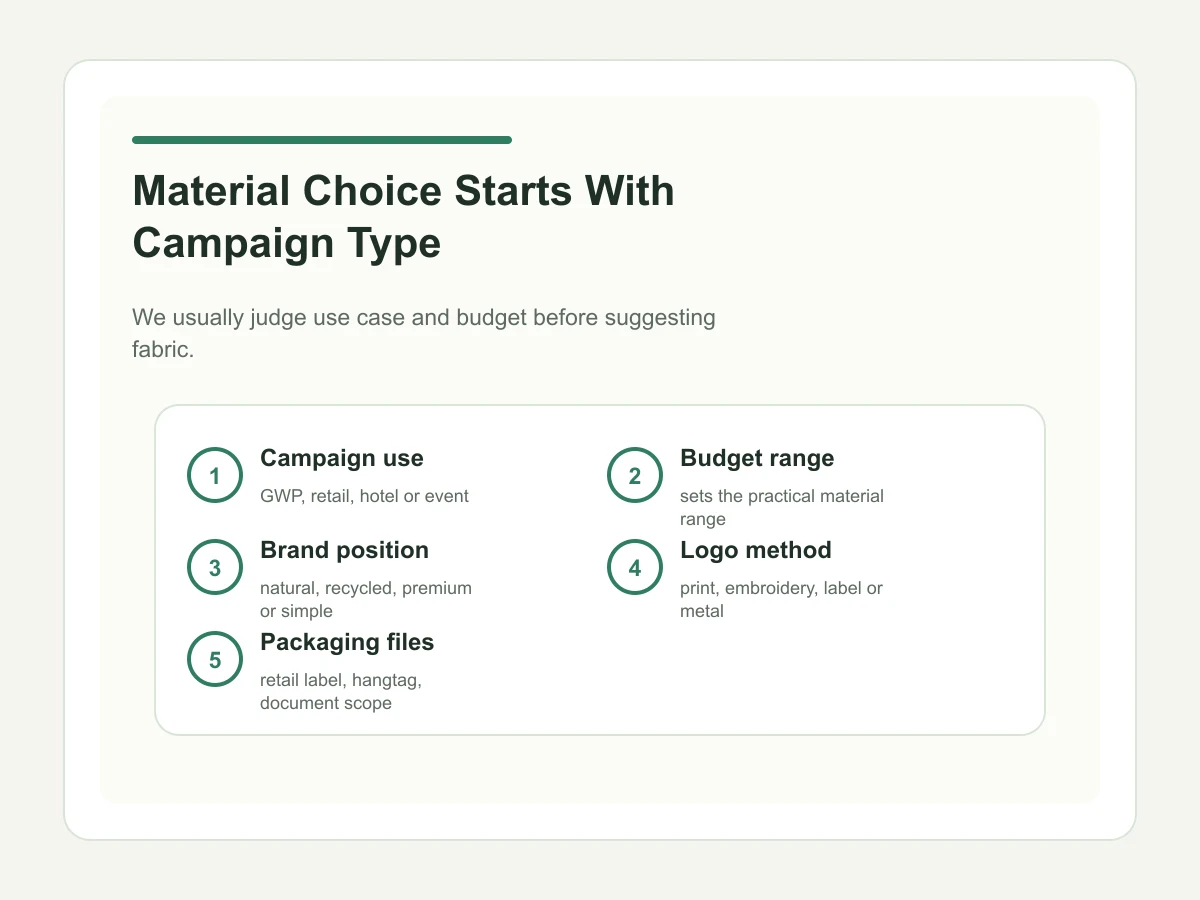
Start with the campaign use, budget direction, brand positioning, logo artwork, packaging plan, document needs and launch date. A material that works for one GWP or retail program may not fit another.
If a buyer asks "which material is better?" our answer is usually that there is no single better material. There is a material that fits the campaign more closely. A low-budget event tote, a clean beauty GWP, a retail private label tote and a hotel welcome bag should not be judged by the same material logic.
The most difficult RFQs are often not technically complex. They are unclear. If the buyer does not tell us whether the tote is a gift, a retail SKU, a hotel welcome item or a brand event bag, we may spend time quoting materials that do not match the real budget or use case. Apple leather, pineapple leather or other specialty materials can sound exciting, but they may not fit the project budget or launch timeline.
Which Materials Fit Beauty and Wellness GWP Campaigns?
For most beauty and wellness GWP campaigns, rPET and recycled cotton blend are practical starting points. For natural, clean beauty or wellness positioning, bamboo fiber, organic cotton or cotton-based materials may fit the brand story better.
For many beauty GWP projects, cost, color, logo result and packing efficiency matter. rPET and recycled cotton blend often work well because they can support campaign storytelling while keeping the project practical. If the brand wants a more natural positioning, bamboo fiber, organic cotton or cotton canvas may be more aligned with the brand voice.
Bamboo fiber is worth considering for wellness or natural campaigns because it gives the buyer a clearer story than ordinary canvas. Organic cotton can also work, but it should not be presented casually unless the material and document scope are clear. GOTS describes organic textile processing requirements across certified supply-chain conditions5, not just a general natural feeling.
If the buyer has a limited budget but still wants an environmental angle, we usually start with rPET or recycled cotton blend, then keep packaging clean and simple. That is often more realistic than pushing the highest-cost material family at the first quotation stage.
Which Materials Fit Retail and Private Label Tote Programs?
Retail and private label tote programs should prioritize repeat use, hand feel, structure and consumer-facing value. Bamboo fiber, rPET, vegan leather, organic cotton and cotton canvas can all work, depending on brand positioning.
For retail projects, the tote is not only a campaign container. It is a product the consumer may carry repeatedly. That means hand feel, structure, logo finish, label placement and packaging matter more than in a basic giveaway bag.
For a higher-positioned retail tote, bamboo fiber, vegan leather, organic cotton or a better rPET construction may help create a stronger product story. Cotton canvas can work for brand merch and lifestyle totes, but it is not automatically the right answer. If the artwork has many colors or a full-surface visual, rPET may be easier to control than cotton-based fabrics.
Which Materials Fit Hotel Welcome Totes and Brand Events?
Hotel welcome totes should match the property level, welcome items and reuse expectation. Brand events and conferences usually need stable cost, clear logo execution and efficient packing, so rPET or recycled cotton blend are common directions.
For hotels, material choice depends on the property positioning, room rate, welcome gift contents and whether guests are expected to reuse the tote. A resort or premium welcome bag may justify a more structured material or a cleaner finish. A simple guest amenity tote may need a lighter and more efficient option.
For brand events, conferences and large-quantity campaigns, the buyer often needs cost control, stable production and clear logo execution. rPET and recycled cotton blend are practical starting points. If the event has a strong natural or wellness theme, cotton canvas or bamboo fiber can also be considered, but the budget should be discussed early.
For airline amenity tote projects, we would treat the topic as product capability and development logic unless there is a public case that can be shared. The material should be judged by weight, packing method, presentation, document needs and shipment efficiency.
For an airline or passenger-kit RFQ, continue to the Airline Amenity Tote Bags route.
When Does rPET Make Sense for Campaign Totes?
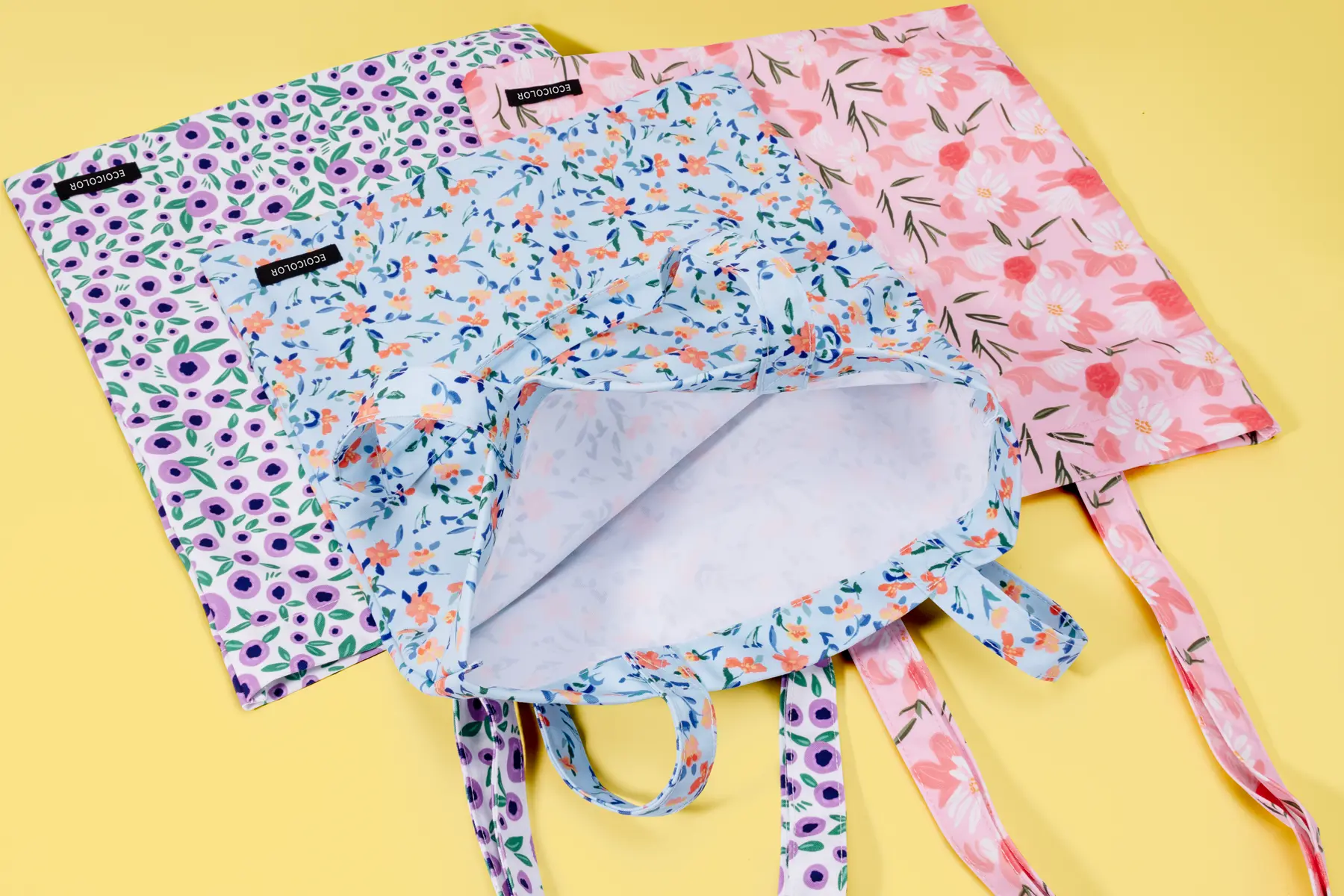
rPET makes sense when a campaign needs a recycled material story, lightweight construction, print flexibility, brand color options or a full-surface visual. It is especially useful when cotton is not ideal for complex artwork.
rPET is not only one look. It can be developed in many surface directions, including canvas-like, satin-like, velvet-like, fleece-like and other finishes. For our factory, one practical advantage is that rPET can sometimes be ordered in smaller custom-color quantities than buyers expect, which helps brand color matching projects.
For full-color artwork, gradients or multi-color visuals, rPET is often friendlier than cotton-based materials. It can support strong campaign visuals without forcing the buyer into expensive or unstable print routes. If the project also needs recycled documentation, the buyer should confirm GRS or related recycled material scope early. Global Recycled Standard - Textile Standards1 can be used as a recycled material standards reference when discussing whether documentation matches the actual material and supply-chain scope.
When Should Buyers Use Recycled Cotton, Cotton Canvas or Natural Fibers?
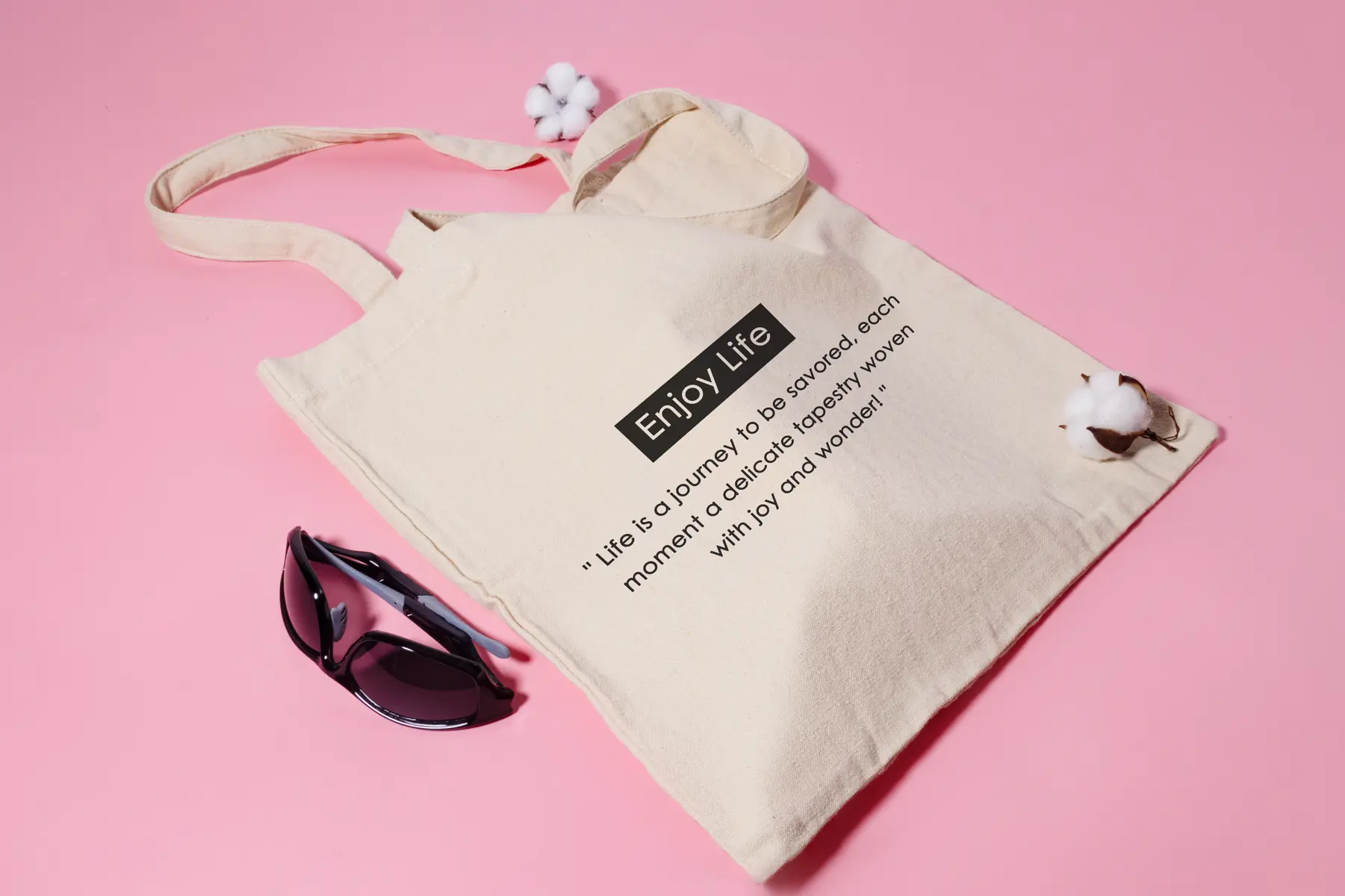
Recycled cotton blend is often practical for budget-conscious GWP or events. A 100% recycled-cotton route can support clearer recycled storytelling only when composition documents substantiate that percentage and the wording is permitted for the destination market. Cotton canvas works for structure and lifestyle use, while bamboo fiber and organic cotton fit natural positioning.
Recycled cotton has more than one sourcing route. Some recycled cotton blends include polyester and can be more cost-effective for GWP or event projects. A documented 100% recycled-cotton route may sit closer to regular cotton pricing and can support a clearer recycled-fiber story only when the composition evidence and destination-market wording support the claim.
Cotton canvas can work well for retail totes, brand merch, shopping totes and structure-driven projects. But for complex full-surface printing, cotton canvas may not be the smoothest route. If the artwork has many colors or needs a very consistent visual result, rPET may be more practical.
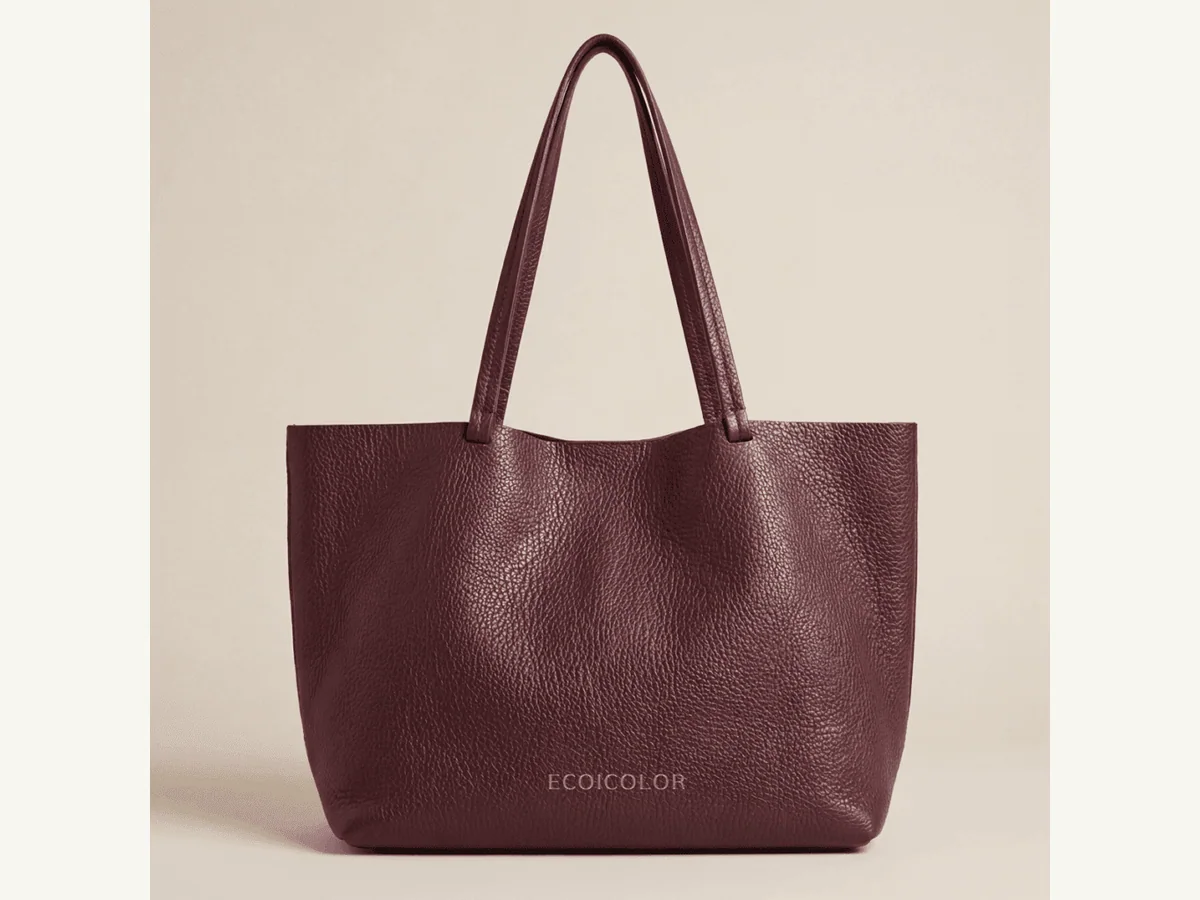
Bamboo fiber and organic cotton can be strong options for natural or wellness brand campaigns, but they should be selected because they fit the brand position, not because they sound more unusual. Vegan leather can be considered for premium retail, hotel lobby retail or gift-oriented totes, but it should be treated as a premium direction rather than a default material for every campaign.
How Do Logo Process, Packaging and Documents Change Material Choice?
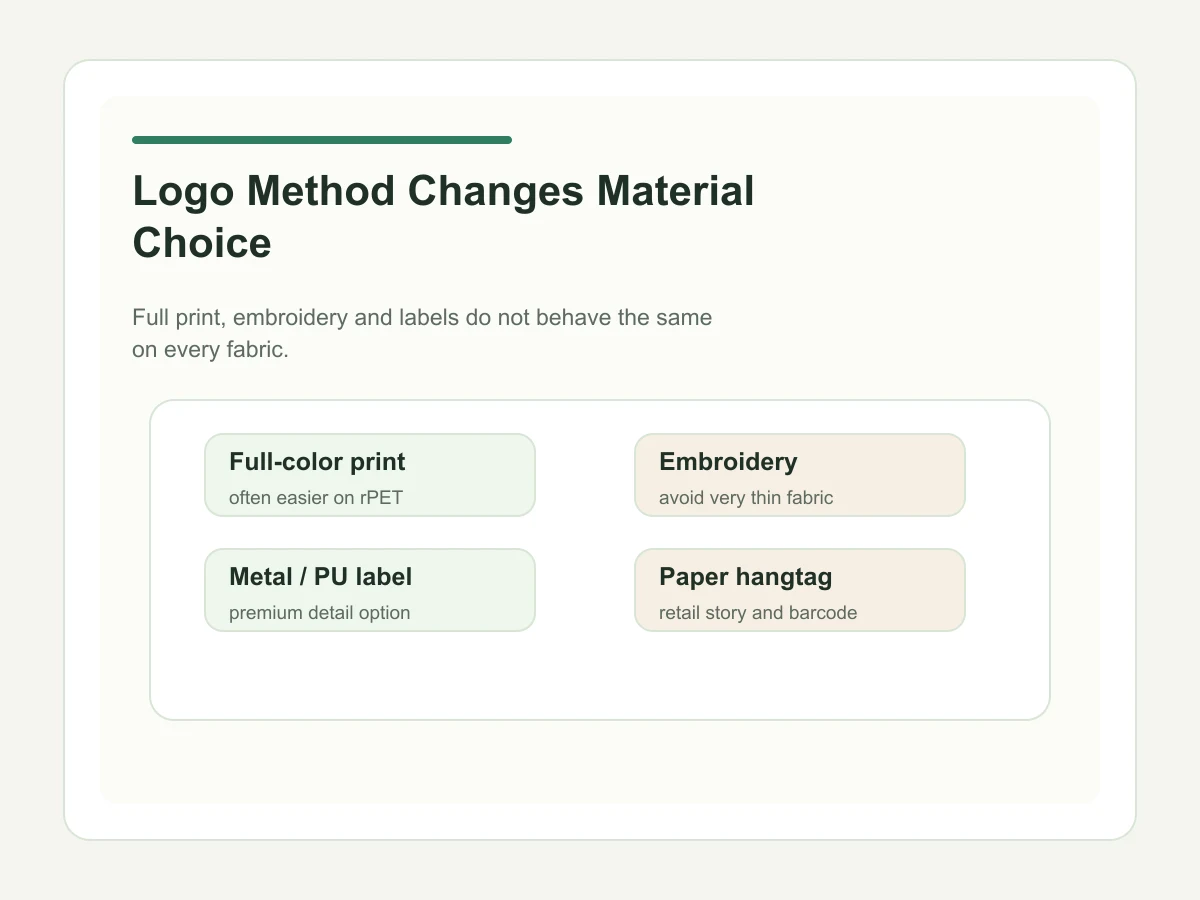
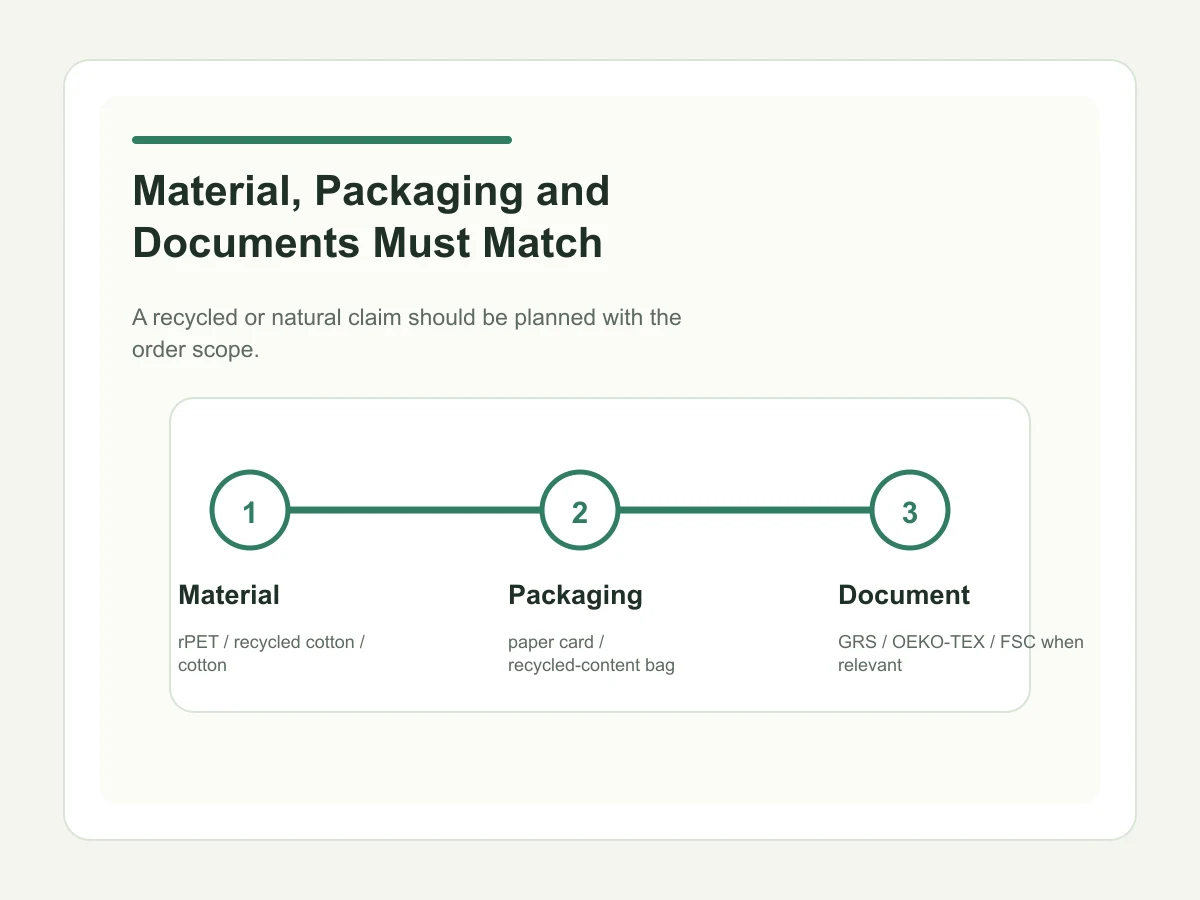
Logo process, packaging and documents can change the material choice. Full-color print, embroidery, woven labels, metal plates, hangtags, barcodes and recycled or organic claims all need to be checked with the selected material.
Logo artwork can decide whether a material is realistic. Multi-color artwork and gradients may point toward rPET or another print-friendly surface. Embroidery usually needs enough fabric support, because very thin materials may wrinkle or require backing. Woven labels, leather patches, metal plates and debossing may work better when the bag structure can support them.
Packaging also changes the decision. A GWP tote may use simpler packing and a clean hangtag. A retail tote may need a barcode sticker, wash label, composition label, country-of-origin label, paper card or belly band. A hotel tote may need clean bulk packing or pre-assembly. For paper hangtags or cards, FSC paper and packaging4 is a paper packaging question, not a tote fabric question.
For textile safety discussions, OEKO-TEX STANDARD 1003 may be relevant, but it should not be confused with recycled or organic material claims. For environmental claims in marketing2, broad language should be avoided unless the material and evidence support it.
What Campaign Material Checklist Should Buyers Use?
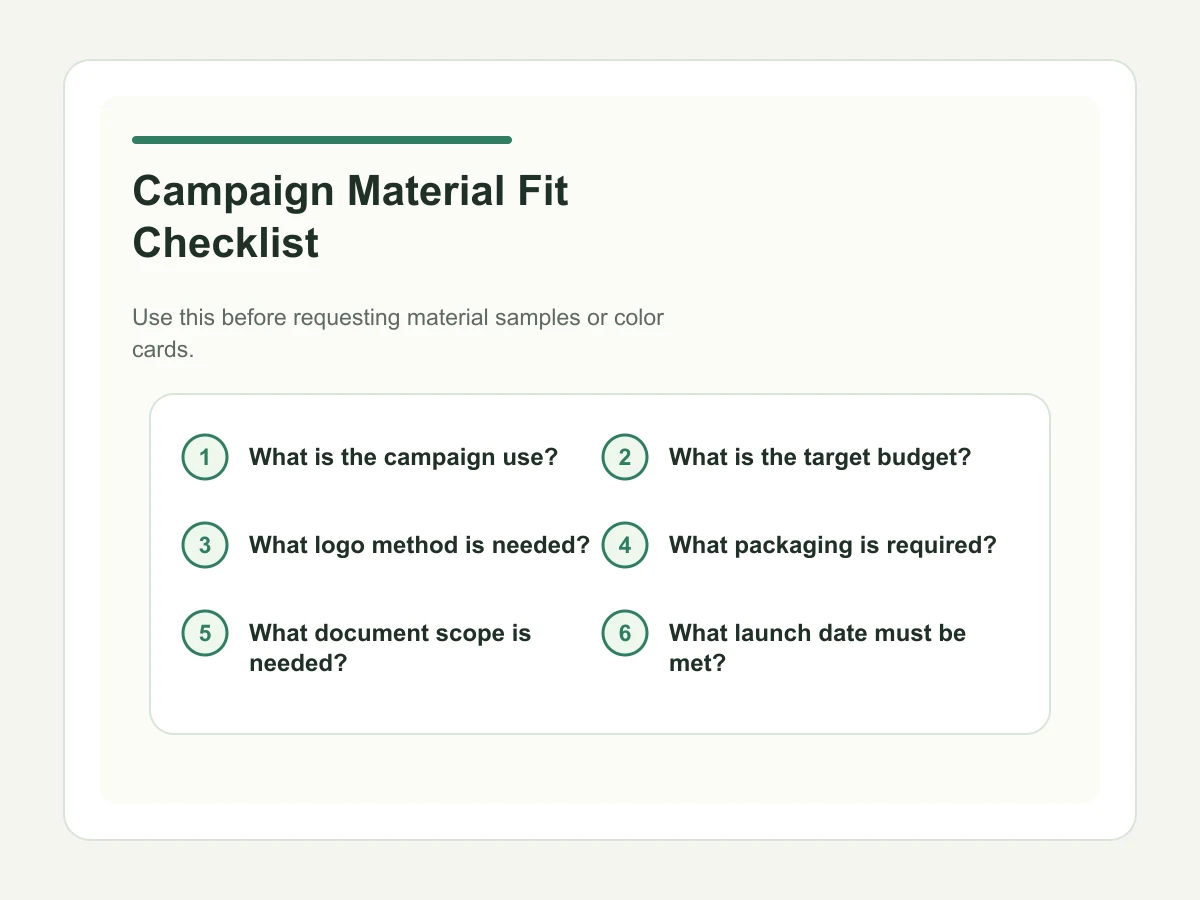
Use a campaign-based checklist: define the campaign type, budget, logo method, brand positioning, packaging, document needs and launch date before requesting material samples or final quotations.
| Campaign type | Material direction | Why it fits | Watch-out |
|---|---|---|---|
| Beauty / wellness GWP | rPET, recycled cotton blend, bamboo fiber, organic cotton | Balances campaign story, cost and brand positioning | Confirm whether the brand wants recycled, natural or premium positioning. |
| DTC / retail private label | bamboo fiber, rPET, vegan leather, organic cotton, cotton canvas | Supports repeat use, hand feel and consumer-facing value | Check logo process, labels, barcode and packaging early. |
| Hotel welcome tote | rPET, recycled cotton blend, cotton canvas, premium materials when needed | Can match room level, welcome items and guest reuse | Confirm whether the tote is pre-packed or used as a clean welcome carrier. |
| Brand events / conferences | rPET or recycled cotton blend | Practical for larger quantities and stable execution | Do not choose unusual materials before confirming budget and timeline. |
Material Fit by Campaign Type
| Material | GWP | Retail / Private Label | Hotel Welcome | Brand Event |
|---|---|---|---|---|
| rPET | Strong fit for recycled story, color and print-heavy campaigns | Good when the brand wants lightweight structure or full-color artwork | Useful for clean, practical welcome totes | Practical for larger quantities and visual campaigns |
| Recycled cotton blend | Strong fit when budget and recycled positioning both matter | Works for casual retail or brand merch if hand feel is approved | Works for relaxed hotel welcome bags | Practical for events that need a recycled material direction |
| Cotton canvas | Works when the brand wants a natural, familiar fabric feel | Strong fit for structure, lifestyle use and brand merch | Works for more structured welcome totes | Works when budget allows a heavier cotton look |
| Bamboo fiber / organic cotton | Strong fit for natural beauty, wellness or clean-brand positioning | Useful for higher-positioned retail programs | Works for premium or wellness hotel positioning | Use when the event concept supports the material story |
| Vegan leather | Use only for premium gift direction, not basic GWP | Strong fit for premium retail or lobby retail | Good for premium hotel gift or retail programs | Usually not the first route for large event quantities |
Who We Do Not Take On
- Orders below 500 pcs per style without an existing brand context.
- Buyers who only ask for the lowest unit price with no campaign brief.
- One-off promo bags with no brand intention or follow-up campaign.
- Buyers who want specialty materials without confirming budget, timeline or sample approval.
FAQ
Which tote bag material is suitable for beauty GWP campaigns?
For many beauty GWP campaigns, rPET and recycled cotton blend are practical starting points. For natural or wellness positioning, bamboo fiber, organic cotton or cotton-based materials may fit better.
Is rPET only for low-cost tote bags?
No. rPET can have many surface directions, including canvas-like, satin-like, velvet-like or fleece-like textures. It can be practical for both cost-conscious and more design-led campaigns.
When should I choose cotton canvas?
Cotton canvas can work well for retail totes, shopping totes, brand merch and structure-driven projects. For very complex full-surface printing, rPET may be easier to control.
Should packaging be discussed before choosing material?
Yes. Retail labels, hangtags, belly bands, recycled-content packing or FSC paper packaging can affect the material story, cost and timeline.
Can Ecoicolortote recommend materials if I only know the campaign type?
Yes. If you share campaign type, quantity, budget direction, logo artwork, packaging needs and launch timing, we can suggest material directions before sampling.
Which material works best for retail or private label tote programs?
Retail and private label projects should prioritize hand feel, structure, repeat use and packaging. Bamboo fiber, rPET, organic cotton, cotton canvas and vegan leather can all work depending on the brand position and budget.
What should buyers send before asking for a material recommendation?
Buyers should send campaign type, target quantity, budget direction, logo artwork, desired hand feel, packaging needs, document requirements, destination market and launch date.
Send your campaign type, quantity, budget direction, logo file, packaging needs, document requirements and launch date. We can help narrow the material direction before sampling. Contact Ecoicolortote for material recommendation.