Zoe Yu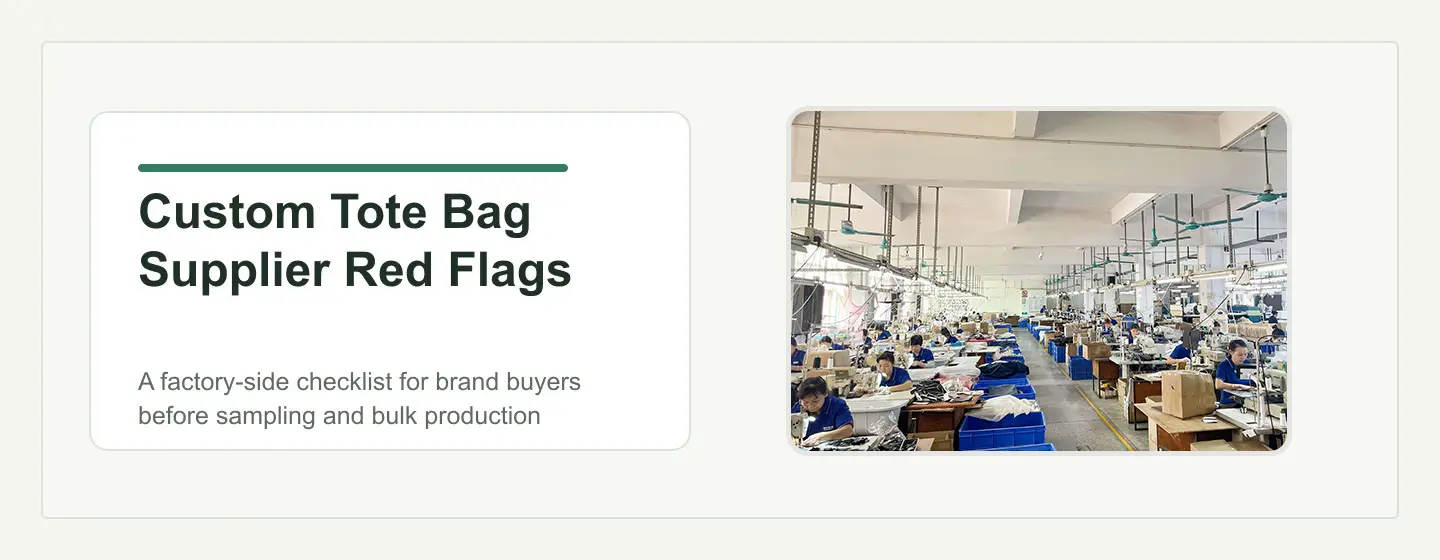
Red flags when sourcing custom tote bags usually appear before bulk production starts. A weak quotation, unclear sample route, vague document promise, late packaging discussion or no accountable project owner can create more risk than the bag design itself.
For beauty GWP, DTC, retail, hotel and event brand teams, custom tote bag sourcing is not only about finding a fast quote. The safer question is whether the supplier understands the full project: quantity, size, use case, material, logo process, packaging, documents, sample approval and delivery plan.
Ecoicolortote is a better fit for MOQ 500+ brand projects where buyers want the supplier to ask useful questions before sampling. If your team is still preparing the first brief, use the custom tote bag RFQ checklist. If your team is evaluating supplier capability, compare this article with the tote bag manufacturer vetting checklist and custom tote bag audit checklist.
Buyer Summary
- Best for: beauty GWP, DTC, retail, event and hotel brand teams sourcing custom tote bags from 500 pcs per style.
- Main decision: do not judge a supplier only by how fast they quote; check whether they ask the right project questions.
- Factory-side note: a professional supplier usually asks more questions before quoting, not fewer.
- What to prepare: quantity, size, use case, material direction, logo file, packaging needs, document requirements and target delivery plan.
What are the biggest red flags when sourcing custom tote bags?
The biggest red flags are firm pricing without a full brief, no physical sample approval, vague material answers, unreviewed logo promises, generic certificate claims, ignored packaging details, unrealistic lead-time promises and no clear project owner.
These warning signs matter because custom tote bag projects usually fail before production starts. If size, material, logo, packaging, documents and delivery basis are not clear, the supplier may still quote quickly, but the buyer does not yet know what is being quoted.
A professional supplier should be able to explain what information is missing, what details affect cost, what requires a physical sample and which documents apply to the actual material or packaging scope.
How is this guide different from supplier vetting and audit checklists?
This red-flag guide focuses on early sourcing risks during RFQ, quotation, sample planning, document review, packaging discussion and communication. Supplier vetting is broader, while audit checklists focus more on factory and production-control capability.
The tote bag manufacturer vetting checklist helps buyers select and evaluate suppliers more broadly. The custom tote bag audit checklist focuses on audit and production-control checks.
If you are already talking to suppliers and something feels too vague, too fast or too convenient, use this red flag guide. It helps buyers spot sourcing problems before a weak quote becomes a weak sample or a risky bulk order.
What quotation red flags should buyers watch for?
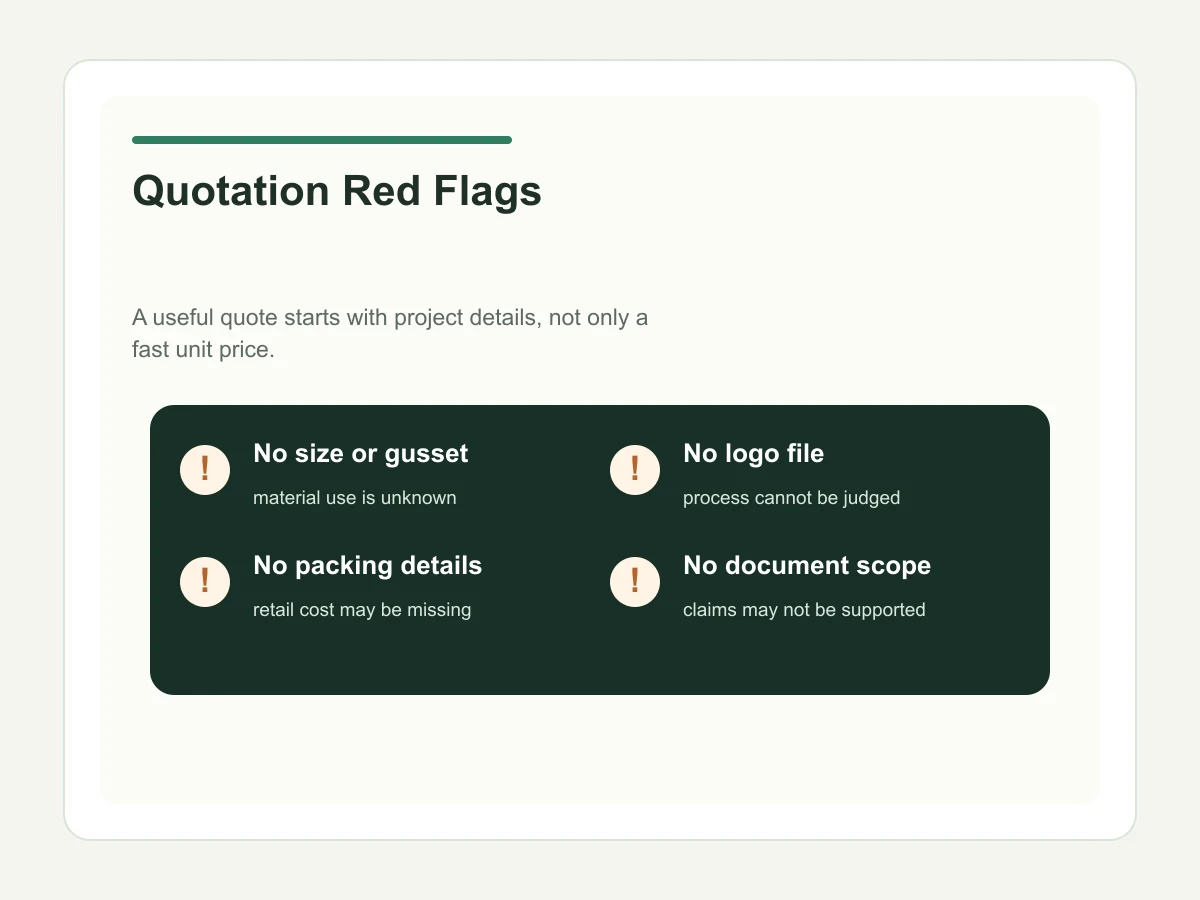
A quotation is a red flag when the supplier gives a firm answer before checking size, material, quantity, logo process, color, packaging, document needs, target launch date and destination.
If a buyer only asks "how much per bag?" we normally need to slow the conversation down first. The same tote shape can change cost depending on material, logo method, lining, zipper, label, hangtag, packing and order quantity. A fast number without these details may look convenient, but it does not protect the project.
A low unit price can also hide missing work. Material weight, sewing details, logo finish, carton packing, inspection time and packaging support are easy to reduce if the quote is built only to win on one number. A useful RFQ compares the full scope, not only the lowest line item.
If the quotation itself is incomplete, use the custom tote bag RFQ checklist before sampling.
What sample approval red flags matter most?
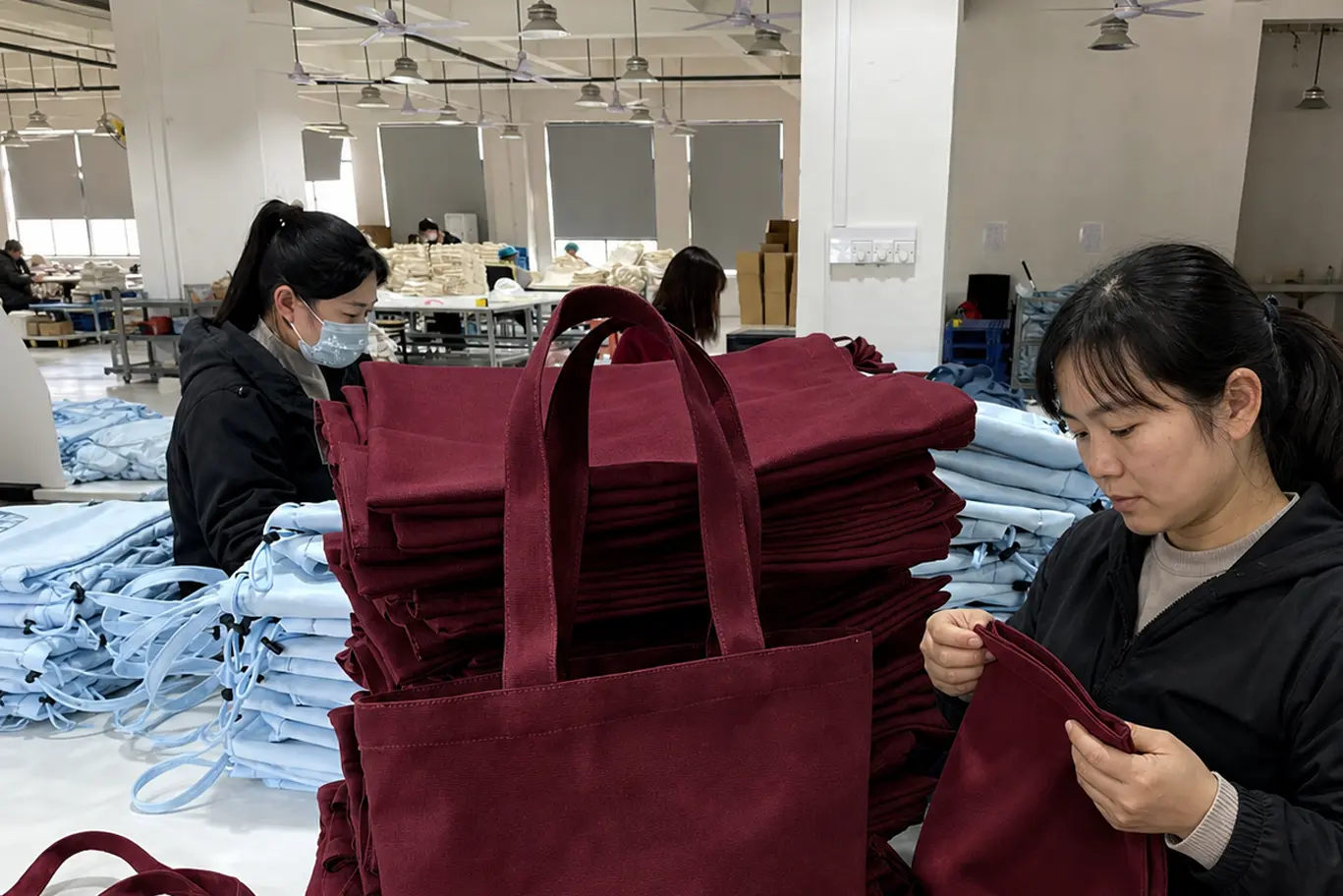
The biggest sample red flag is skipping a physical pre-production sample for a brand project. Photos can help communication, but they cannot fully confirm handfeel, material weight, structure, color or logo result.
For simple early development, a sample may use available material or temporary color. A pre-production sample is different: it should represent the standard for bulk production. If a supplier has no signed sample, retained sample, photo record or production instruction, the bulk order has fewer controls.
Pre-production sample approval converts a design discussion into a production standard. This is especially important for GWP launches, retail SKUs, hotel welcome bags and any project with custom color, complex logo or packaging. For a deeper review process, see our guide on how to evaluate a custom tote bag sample before bulk production.
How can material answers reveal supplier weakness?
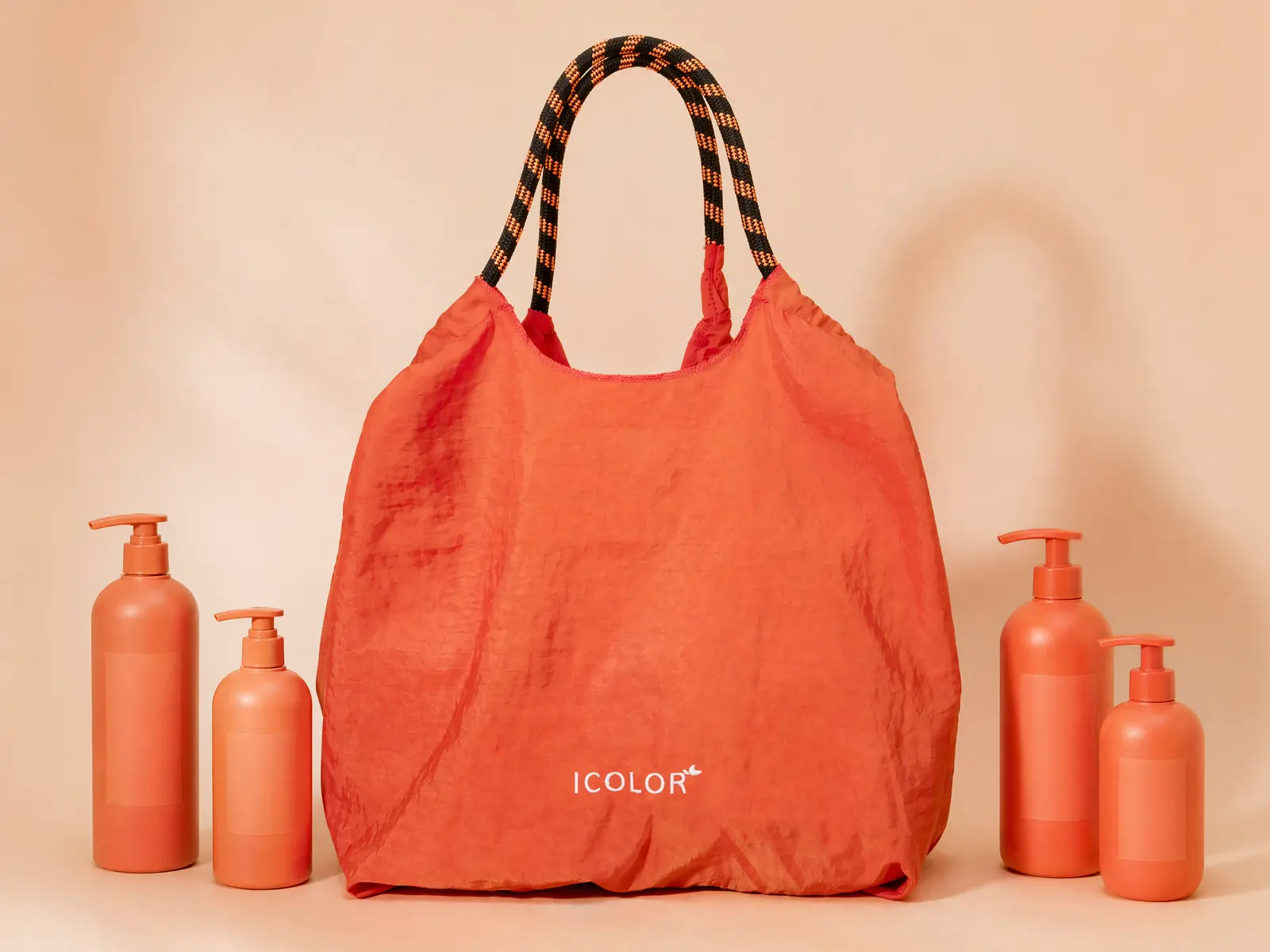
Material answers become a red flag when the supplier treats every fabric as interchangeable. rPET, recycled cotton, cotton canvas, organic cotton and leather-look materials differ in handfeel, appearance, logo compatibility, cost and document requirements.
A buyer can be misled when material names sound similar. Recycled cotton may have different compositions. Broad responsible-material wording is not a production specification. Canvas can vary by weight and finish. rPET can support full-print directions that may not behave the same on cotton fabric.
For material selection, review how to compare rPET, recycled cotton and cotton canvas. For recycled or environmental claims, the supplier should avoid broad language without evidence. Claims should be specific and supported by the right material and order scope. The FTC Green Guides summary explains that environmental marketing claims should be clear, specific and supported1.
What logo and process promises should be checked?
A logo process promise is weak if the supplier has not checked the artwork. Small text, gradients, many colors, metal plates, woven labels, debossing, edge finish and combined processes all need different confirmation.
Screen printing, embroidery, heat transfer, woven label, patch, metal plate and debossing are not just decoration choices. They change sample time, cost, handfeel and visual result. A mature supplier should explain what is suitable for the material and logo artwork.
For complex logos, we normally review the file first, then suggest the process. Sometimes the right answer is not one process. A large graphic may work better as printing, while an inner label or small brand mark may be handled differently. "Yes, no problem" without this discussion is often a weak sign.
Buyers can compare screen printing vs embroidery, heat transfer printing and woven labels, patches and metal plates before locking the logo route.
What document and certification red flags matter?
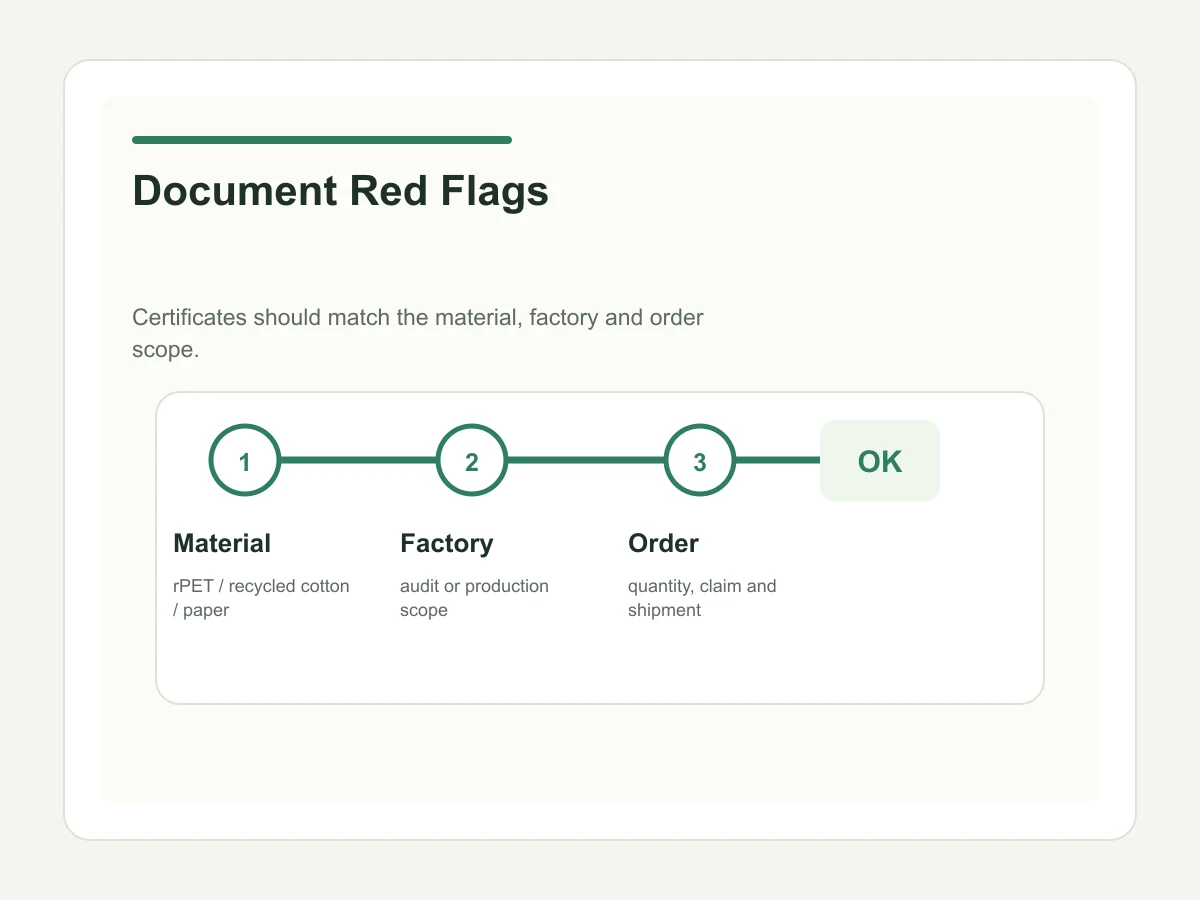
Document promises become a red flag when a supplier says "we have all certificates" without explaining which document matches the material, factory, packaging, testing request and order scope.
Brand buyers often ask about BSCI, GRS, OEKO-TEX, FSC paper packaging, testing reports and certificates of origin. These are different questions. Social compliance, recycled material documentation, harmful-substance testing and paper packaging sourcing should not be mixed into one vague answer.
For recycled textile projects, Textile Standards publishes the Global Recycled Standard for recycled-content and chain-of-custody requirements2. OEKO-TEX STANDARD 100 is related to harmful-substance testing for textile products and components3, but it is not a recycled or organic claim by itself.
For paper cards, hangtags or paper packaging, FSC paper and packaging guidance applies to paper packaging scope4, not to tote fabric itself. For factory audit direction, buyers may reference amfori BSCI audit guidance for producer audit requests5 depending on buyer policy.
Why can packaging become a sourcing red flag?
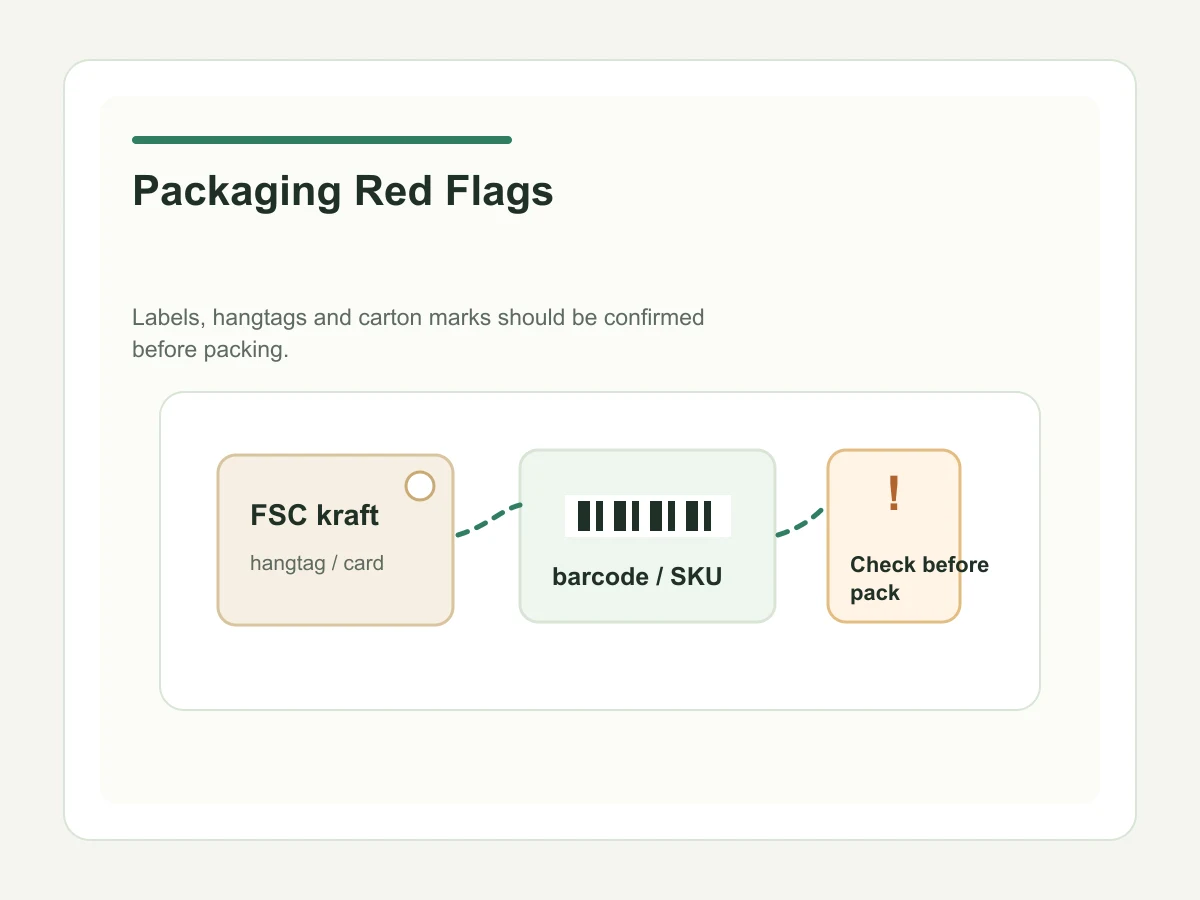
Packaging becomes a red flag when the supplier only discusses the bag body and ignores hangtags, barcode stickers, wash labels, composition labels, country-of-origin labels, paper cards, carton marks and packing method.
For retail and private label projects, packaging is part of the product. For GWP and hotel projects, packaging affects presentation, warehouse handling and launch timing. If hangtags, labels or paper cards are added at the end, artwork confirmation and material preparation can become rushed.
Small-batch paper cards and hangtags can also feel unexpectedly expensive because printing setup costs are spread over fewer pieces. A supplier who understands brand projects should raise this early and suggest practical options such as FSC paper hangtags, paper cards, belly bands, recycled-content polybags or simpler bulk packing. For more detail, see our guide to custom tote bag packaging options.
What timeline promises should buyers treat carefully?
A fixed lead-time promise for every project is a red flag. Real timelines depend on material availability, custom color, logo process, packaging, mold or metal work, customer feedback speed, seasonality and shipment plan.
Sample timing is confirmed after the material, construction, logo method, artwork, packaging and approval scope are clear; the working schedule also depends on revision speed and current capacity. Bulk production is better discussed after sample approval, because quantity, material availability and process complexity can change the plan.
The most common timing risk is not only production speed. It is delayed confirmation. If the buyer confirms material, artwork, packaging or documents late, production and shipping time get compressed. A professional supplier should explain this before the project becomes urgent.
What red flag checklist should buyers use before choosing a supplier?
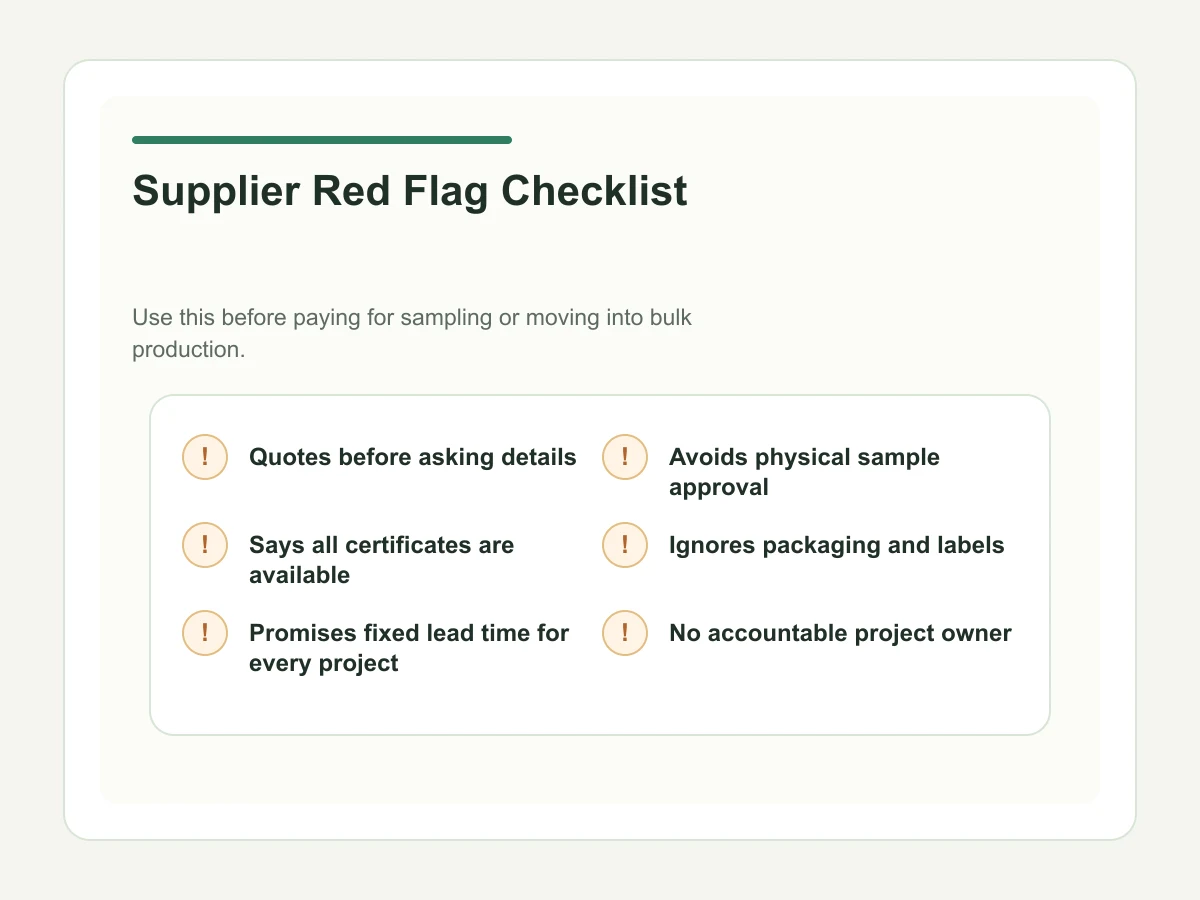
Before choosing a custom tote bag supplier, check quotation logic, material explanation, artwork review, physical sample process, document scope, packaging capability, timeline realism and project ownership.
| Red flag | Why it matters | Better supplier behavior |
|---|---|---|
| Quotes before asking details | The price may not include the real project scope. | Asks quantity, size, material, logo, packaging, documents and destination first. |
| No physical sample approval | Photos cannot confirm handfeel, structure or color. | Uses sample and pre-production sample to set the bulk standard. |
| Generic certificate claims | Documents may not match the order. | Explains material, factory, packaging and order scope clearly. |
| Ignores packaging | Retail labels and paper goods may be late or wrong. | Discusses hangtags, barcodes, labels and carton marks early. |
| Says yes to everything | Risks are hidden until production. | Explains process limits, alternatives and confirmation points. |
| No accountable PM | Details can get lost between people. | One Sales / PM owns the project from RFQ to shipment. |
Who We Do Not Take On
Ecoicolortote is a better fit for MOQ 500+ brand projects where the buyer can confirm material, logo, sample approval, packaging, documents and timeline before production.
- Orders below 500 pcs per style without an existing brand context.
- Buyers who only ask for the lowest unit price with no project brief.
- One-off promo bags with no follow-up campaign or brand intention.
- Buyers who skip pre-production sample approval to save time.
If you are unsure whether a supplier quotation is complete, send us the quantity, size, material direction, logo file, packaging requirement, document needs and target delivery plan. We can help identify the material, process, packaging and document questions before sampling. Contact Ecoicolortote.
FAQ: Red flags when sourcing custom tote bags
What should buyers confirm before sourcing custom tote bags?
Buyers should confirm quantity, size, use case, material direction, logo file, logo method, packaging needs, document requirements, target delivery plan and approval route before choosing a supplier.
What sample details matter most when checking a supplier?
Check whether the supplier supports physical sample approval, pre-production sample standards, retained samples, logo review, material swatches, packaging notes and production instructions.
What MOQ and lead time should buyers expect for custom tote bag projects?
Ecoicolortote starts from MOQ 500 pcs per style. Sample timing is confirmed after the material, construction, logo method, artwork, packaging and approval scope are clear; the working schedule also depends on revision speed and current capacity.
Which material or certification evidence should be checked?
Check material composition, recycled or organic claim scope, OEKO-TEX where textile safety is relevant, FSC paper packaging scope, audit information and any buyer-specific document checklist.
What should be included in the RFQ?
The RFQ should include quantity, size, use case, material direction, logo file, logo process, packaging needs, document requirements, destination, target launch date and inspection needs.
What mistake causes the most rework?
The biggest mistake is accepting a fast quote before material, logo, packaging, documents and sample approval scope are clear. That can lead to revised quotes, remade samples and timeline pressure.
When should buyers contact Ecoicolortote?
Contact Ecoicolortote when your MOQ 500+ brand project needs a factory-side review of quotation scope, material risk, logo process, packaging needs, documents and sample approval before bulk production.