Zoe Yu
Buyer Summary
- Best for: beauty, wellness, DTC, retail, Amazon, hotel and event buyers sourcing custom tote bags with recycled-content, organic, textile safety or packaging-document requirements from 500 pcs per style.
- Main decision: do not ask only whether a supplier has certificates. Ask which document applies to the material, factory, packaging, order scope, destination market and claim language.
- Factory-side note: BSCI, GRS, OEKO-TEX, FSC, GOTS, OCS, composition statements and test reports support different questions. They should not be treated as interchangeable environmental documents.
- What to prepare: material direction, destination market, claim wording, packaging plan, order quantity, timeline and whether you need general supplier files or order-specific documents.
For brand buyers, sustainable tote bag sourcing should not stop at a supplier saying the material is environmentally friendly. The safer question is: which documents match this material, this factory, this order scope and this market requirement?
TL;DR: Sustainable tote bag documents should be checked by material, factory, packaging, order scope, destination market and claim wording before sampling or bulk production. BSCI, GRS, OEKO-TEX, FSC, GOTS, OCS, composition statements, testing reports, barcode files and carton marks answer different buyer questions. A supplier certificate screenshot is not enough unless it matches the actual material, claim, production route and document need.
From our factory side, the first step is usually to clarify what the buyer really needs: factory audit documents, recycled material documents, textile safety testing, paper packaging files, barcode or label information, or third-party testing for a specific shipment.
Ecoicolortote works with brand buyers from 500 pcs per style. Documents such as BSCI, GRS, OEKO-TEX, FSC packaging files, material composition statements and test reports can be discussed according to the material, project scope and customer requirements.
Best fit for this sustainable tote bag documents checklist
This guide is best for beauty, wellness, DTC, retail, Amazon, hotel and event buyers planning MOQ 500+ custom tote bag projects where document scope matters before quotation, sampling or bulk approval. It is especially useful when buyers need recycled-content material files, organic cotton claim support, OEKO-TEX textile safety references, FSC paper packaging files, social-compliance audit information, composition labels, origin labels, third-party testing, barcode data or carton marks. The strongest fit is a buyer who can share material direction, destination market, expected claim wording, packaging plan, order quantity and timeline before asking which certificate applies. Those details help the factory separate general supplier documents from order-specific proof and avoid unsupported environmental wording.
How is this document checklist different from material, packaging and supplier audit pages?
This page focuses on document scope for sustainable tote bag claims. Material guides help buyers choose rPET, recycled cotton, organic cotton or canvas. Packaging pages compare hangtags, polybags, labels and carton marks. Supplier audit pages check factory proof and production control.
If the buyer is still choosing fabric, start with the rPET, recycled cotton and cotton canvas material guide or the materials by campaign type guide. If the question is how to package, label or barcode the order, use the custom tote bag packaging options page. If procurement is choosing a supplier, compare this page with the manufacturer vetting checklist. This document checklist stays focused on which file supports which claim, material, package, order or destination requirement.
Why Should Documents Be Checked Before Ordering?
Documents should be checked before ordering because sustainability claims, factory audits, material certificates and packaging files must match the actual material, supplier, order scope and destination market. A recycled material story is not the same as a shipment-specific certificate.
For many buyers, the risk is not that a supplier has no files at all. The risk is using the wrong file for the wrong claim. A recycled fabric certificate may support the material story, but it does not automatically prove that each finished bag in one order has a transaction certificate or shipment-specific document.
This is why we usually ask what the buyer needs the document for: internal approval, retail compliance, marketing copy, product labeling, customs documents or third-party audit review. The answer changes which file should be prepared.
| Buyer need | Relevant document direction | Factory-side note |
|---|---|---|
| Supplier onboarding | BSCI, factory information, factory photos or video review | This checks factory and management scope, not material content. |
| Recycled material claim | GRS/RCS-related documents, material composition, chain-of-custody discussion | Confirm whether the buyer needs general files or order-specific proof. |
| Textile safety review | OEKO-TEX STANDARD 100 or testing reports when applicable | This is not the same as recycled or organic content certification. |
| Paper packaging claim | FSC paper packaging documents | FSC usually applies to paper hangtags, cards, sleeves or cartons. |
| Retail or marketplace setup | Barcode, SKU labels, origin labels, composition labels and carton marks | Label files should be confirmed before packing starts. |
Which Factory and Audit Documents Should Buyers Check?
Buyers should first check whether the supplier is a real factory or a factory-backed partner with enough export capability, then review audit documents such as BSCI, factory information, video audit options and production control process.
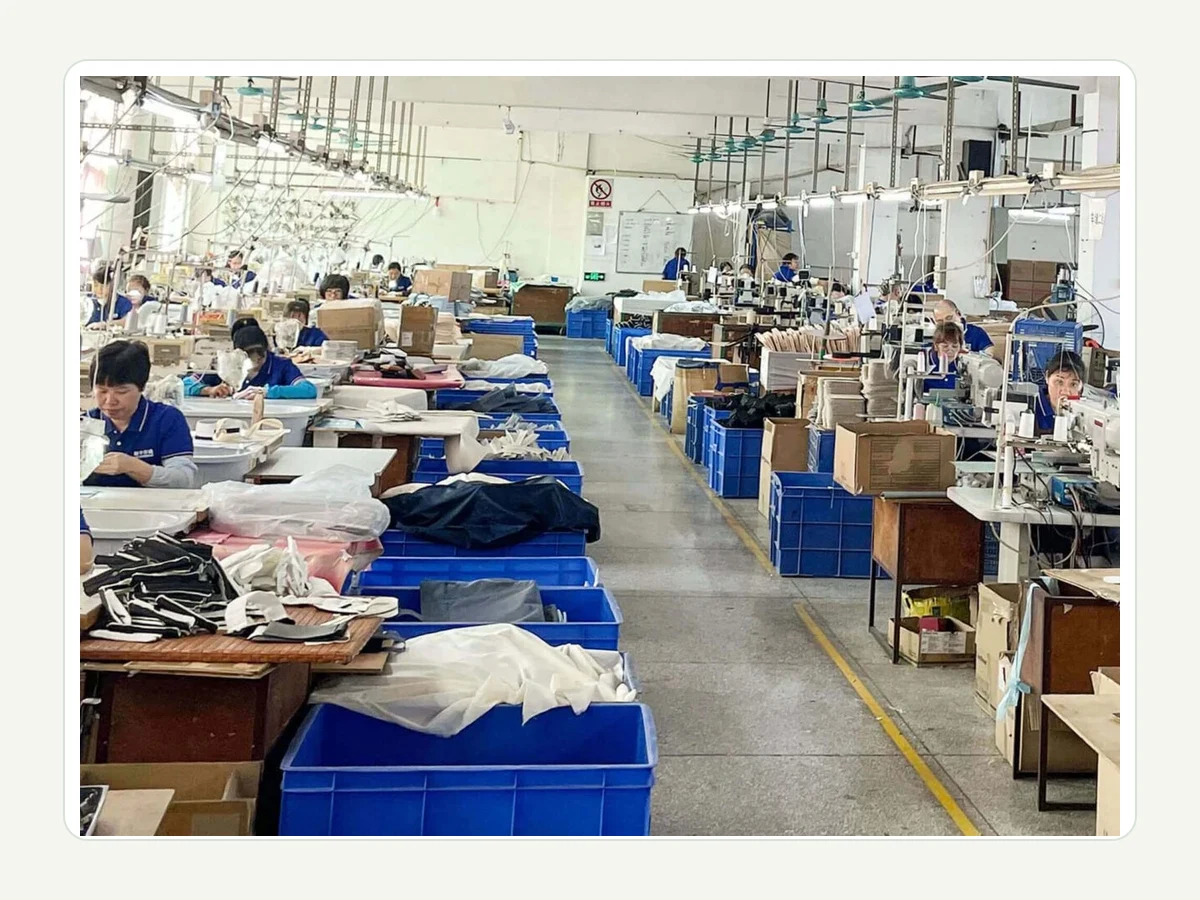
amfori BSCI audit guidance for producer audit requests1 is often referenced when buyers discuss social responsibility, labor standards and factory management systems. It is not a product material certificate. It helps buyers understand the factory side of the supply chain.
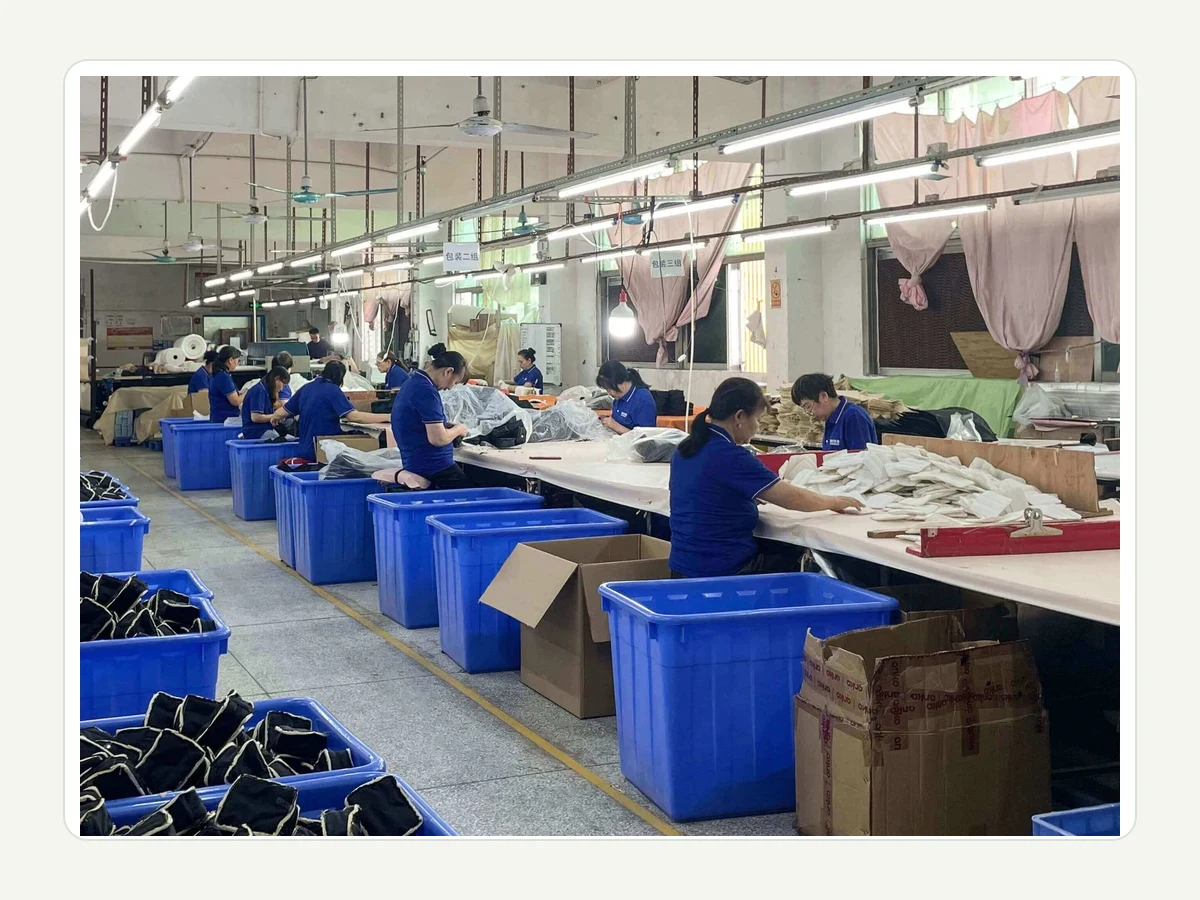
We also recommend that buyers choose a supplier with both production capability and export communication ability. A factory without project management experience can create communication risk; a trading company without production control can create execution risk. The practical choice is a production partner that can show factory reality and manage overseas brand requirements.
For supplier vetting, buyers should avoid treating a factory audit as proof of every product claim. A BSCI-related audit may support factory review, but recycled content, organic content, textile safety, paper packaging and shipment-specific testing each need their own document logic.
Which Material Documents Matter for Recycled or Organic Tote Bags?
For rPET and recycled cotton tote bags, buyers commonly ask about GRS-related documents. For organic cotton, buyers should be careful: organic cotton describes fiber origin, while GOTS or OCS certification depends on the certified supply chain and claim scope.

| Document | What it supports | When to request | Watch-out |
|---|---|---|---|
| BSCI | Factory social responsibility and management audit | Before supplier approval | It is not a material certificate |
| GRS-related files2 | Recycled material and chain-of-custody claims | Before confirming recycled material claims | Order-specific documents may require extra cost |
| OEKO-TEX STANDARD 1003 | Harmful substance testing / product safety | When textile safety is required | It does not automatically prove recycled or organic content |
| FSC paper packaging | Paper packaging source claim | When using FSC kraft hangtags, cards or paper packaging | FSC is for paper packaging, not tote fabric |
| Composition statement | Material content explanation | For label, retail or internal approval | Must match the chosen material |
Recycled cotton also needs careful wording. There is 100% recycled cotton, and there is recycled cotton blended with polyester. These are different material routes. Buyers should confirm this before placing the order, because cost, hand feel, claim language and document scope can differ.
For organic cotton, the safer wording depends on the actual certification. If the product and supply chain are truly GOTS certified4, the claim can follow the applicable GOTS label grade. If only the fiber source is organic but the finished product is not GOTS certified, wording such as "organic cotton" or "made with organic cotton" may be more appropriate. If OCS applies, it should be stated within its proper scope.
What Does OEKO-TEX Prove, and What Does It Not Prove?
OEKO-TEX STANDARD 100 mainly relates to harmful substance testing and product safety. It should not be used as a blanket environmental material claim unless the exact OEKO-TEX certification and claim scope support that wording.
This distinction matters. Buyers sometimes group all environmental documents together, but textile safety and recycled material content are different. OEKO-TEX STANDARD 100 can support safer textile testing language, while GRS, GOTS or OCS may be closer to recycled or organic material claims depending on the project.
A more careful expression is "tested for harmful substances according to OEKO-TEX STANDARD 100" when that is what the certificate supports. Avoid broad wording such as "OEKO-TEX certified environmental material" unless the exact certificate scope justifies it.
Which Packaging and Label Documents Should Be Confirmed?
Packaging documents may include FSC kraft hangtags, paper cards, recycled-content polybags, wash labels, composition labels, origin labels, barcode stickers and carton marks. These details should be confirmed before packing starts.

FSC5 should be connected to paper packaging, not mixed into tote material certification. For tote bag projects, it may apply to kraft hangtags, paper cards, paper sleeves, paper gift packaging or cartons when the packaging supplier and material support it.
Recycled-content polybags and reduced plastic filling can also be discussed. These choices should match the buyer's packaging policy and destination market expectations. Labels and barcode information should be checked as part of the product file, especially for retail and private label orders.
| Packaging / label item | Document or file to confirm | Why it matters |
|---|---|---|
| FSC kraft hangtag or paper card | FSC-related packaging file when applicable | Paper packaging claims should be separate from fabric claims. |
| Recycled-content polybag | Material or supplier file when requested | Packaging material should match buyer policy and claim wording. |
| Composition label | Material content statement | Retail and private label orders need accurate material wording. |
| Barcode sticker | Barcode data, SKU file and placement instruction | Retail and marketplace packing need clear SKU control. |
| Carton marks | Warehouse or distributor packing instruction | Incorrect carton marks can create receiving problems. |
Which Testing Reports May Be Needed?
Depending on the market and product structure, buyers may request colorfastness testing, handle strength testing, metal salt spray testing, REACH, Prop 65, material composition reports, certificate of origin or third-party testing.

Not all orders need the same tests. If a tote bag includes metal parts, salt spray testing may be relevant, and our factory has equipment for this type of internal check. If handle strength is important, pull or load testing can also be discussed. For market-specific compliance such as REACH or Prop 65, the buyer should confirm requirements early.
When a buyer needs a test report specifically for one batch of material or one shipment, third-party testing or batch-specific documents may involve additional cost and time. This should be planned before the order timeline becomes tight.
How Should Buyers Match Document Scope to Claim Language?
Claim language should not be stronger than the document scope. Buyers should match words such as recycled, organic, FSC, OEKO-TEX tested, reduced plastic or responsibly sourced to the exact document, material and packaging that support the claim.
Environmental wording can create risk when it sounds broader than the evidence. For example, a tote made with recycled fabric should not automatically be described with broad sustainability claims. FSC paper packaging does not make the tote fabric FSC certified. OEKO-TEX STANDARD 100 does not prove recycled content.
If the buyer plans to print claims on hangtags, packaging, product listings or campaign pages, the wording should be reviewed before bulk production. The FTC Green Guides summary6 is a useful reference for environmental marketing claim language in the United States, especially around avoiding vague or unsupported claims.
What Document Mistakes Should Brand Buyers Avoid?
The most common mistake is assuming one recycled material file, certificate screenshot or supplier statement can support every marketing, retail and compliance claim. Documents need to match the material, factory, order scope and claim language.
- Do not treat "recycled material" as the same as a shipment-specific GRS document.
- Do not mix FSC paper packaging files with textile material claims.
- Do not use OEKO-TEX STANDARD 100 as a broad environmental material claim.
- Do not confirm certification requirements only after bulk material is ordered.
- Do not publish marketing copy that is stronger than the document scope.
- Do not assume one supplier file applies to every material, colorway or shipment.
- Do not ask for "all certificates" without explaining the destination market and claim language.
From our side, if a customer asks, "Can you provide certificates?", the next step is not simply sending a file. We first need to know which certificate, which material, which market, which use case and whether the buyer needs a general material file or an order-specific document.
Can Document Requirements Affect Cost or Timeline?
Yes. Document requirements can affect cost and timeline, especially when buyers need third-party testing, batch-specific material proof, order-specific certificates or special packaging documents. The safest time to clarify document needs is before order confirmation.
Many of our materials already have environmental material options and available documents. But if the buyer needs a document specifically proving one batch, one shipment or one material lot, there may be extra cost. If the buyer can use an existing material document within the correct scope, that may be a more practical Plan B for budget-sensitive projects.
Sample timing is confirmed after the material, construction, logo method, artwork, packaging and approval scope are clear; the working schedule also depends on revision speed and current capacity. Bulk production timing after sample approval depends on quantity, material availability, process complexity and any document or testing requirements.
What Should Buyers Tell the Supplier Before Asking for Documents?
Before asking for documents, buyers should share the destination market, material direction, product use, order quantity, claim language, packaging plan and whether they need general supplier files or documents linked to a specific order.
| Buyer input | Why it matters |
|---|---|
| Destination market | Different markets may have different testing or labeling expectations |
| Material choice | GRS, organic, OEKO-TEX or composition documents depend on material |
| Claim language | Marketing copy must not exceed document scope6 |
| Packaging plan | FSC and recycled-content packaging files are separate from tote material files |
| Order quantity and timeline | Batch-specific documents or third-party tests may affect schedule |
Sustainable Tote Bag Documents Checklist
A practical sustainable tote bag document checklist should separate factory documents, material documents, packaging files, label information, testing reports and shipment-specific requirements before sampling or bulk production.
| Checklist area | What to confirm | Buyer question |
|---|---|---|
| Factory documents | BSCI, factory information, factory video or audit status | Does this document match the factory making the order? |
| Recycled material documents | GRS/RCS-related files, material composition, recycled-content scope | Do we need general files or order-specific proof? |
| Organic material documents | GOTS, OCS or fiber-origin information when applicable | What exact organic claim can this project support? |
| Textile safety | OEKO-TEX STANDARD 100 or testing reports when required | Is the specific fabric or component covered? |
| Packaging | FSC paper packaging, recycled-content polybag, hangtag, paper card, carton files | Which packaging claim is supported? |
| Labels and retail files | Composition label, origin label, barcode, SKU sticker, carton mark | Are label files ready before packing starts? |
| Testing | Colorfastness, handle strength, salt spray, REACH, Prop 65 or third-party testing | Is this market or buyer requirement confirmed early? |
| Claim wording | Marketing copy, product page copy, hangtag copy and packaging claims | Does the wording stay within the document scope? |
Less suitable fit for this document checklist
This document checklist is less suitable for buyers who want broad environmental claims but do not want to confirm material route, packaging scope, order quantity, destination market or claim wording before quotation.
It may also be less suitable for very small personal orders below MOQ, buyers who request "all certificates" without explaining what the documents must support, or projects that add order-specific testing only after bulk material has been purchased. Ecoicolortote is a stronger fit for MOQ 500+ brand projects where documents are reviewed before sample approval, packaging printing and bulk packing. A certificate can be useful only when the buyer knows whether it supports factory review, recycled content, organic cotton, textile safety, paper packaging, label wording, shipment testing or marketplace receiving.
FAQ
Does recycled material automatically mean the full order has a GRS certificate?
No. Recycled material and order-specific GRS documentation are not always the same thing. A supplier may have a recycled material route or general material file, while a buyer may need batch-level, shipment-level or transaction-related proof. Buyers should confirm the exact claim, material route, order quantity and document need before treating any recycled-content wording as approved.
Is OEKO-TEX an environmental material certification?
OEKO-TEX STANDARD 100 mainly relates to harmful substance testing and product safety. It should not be used as a broad recycled, organic or environmental material claim unless the exact certificate scope supports that wording. Buyers should separate textile safety language from recycled-content, organic cotton, FSC paper packaging or broader sustainability claims in product pages, hangtags and approval files.
Can FSC apply to tote bag fabric?
For tote projects, FSC usually applies to paper packaging such as kraft hangtags, paper cards, paper sleeves or cartons. It should not be mixed with textile material certification or used to describe the tote fabric itself. If a buyer wants FSC wording, the paper packaging supplier, material and document scope should be checked before artwork or hangtag copy is approved.
Can Ecoicolortote support third-party testing?
Yes. Third-party testing can be coordinated when the buyer requires it. Testing requirements should be confirmed early because they may affect cost and timeline, especially for batch-specific material reports, colorfastness, handle strength, metal hardware, REACH, Prop 65 or destination-market requirements. The buyer should share the test standard and deadline before sample approval whenever possible.
What is the MOQ for custom sustainable tote bag projects?
Ecoicolortote projects usually start from MOQ 500 pcs per style. The final material, document and testing plan depends on the order scope, selected fabric, packaging route, claim language and customer requirements. If a buyer needs order-specific documents, third-party testing or special packaging files, those requirements should be reviewed together with MOQ and timeline before quotation is treated as final.
What documents should buyers confirm before making environmental claims?
Buyers should confirm the material document, factory scope, packaging file, testing report and claim wording before using recycled, organic, FSC, OEKO-TEX, reduced-plastic or other environmental language. The safest review checks which document supports which exact statement, where the claim will appear, and whether the selected material, package or shipment is actually covered.
Can document requirements affect the sampling or production timeline?
Yes. Third-party testing, batch-specific proof, order-specific certificates and special packaging documents can add time, so they should be confirmed before order approval and material purchasing. Late document requests can delay material release, packaging printing, sample approval, bulk packing or shipment review. A clear document checklist helps the buyer and factory plan the schedule realistically.
Send us your material direction, order quantity, destination market, packaging plan and document requirements. We can help check which files are realistic before sampling and bulk production. Contact Ecoicolortote.
Trademark and certification note
BSCI, Sedex, SMETA, GRS, RCS, GOTS, OCS, OEKO-TEX, FSC, ISO, REACH, Prop 65 and other certification, audit, testing or standards names belong to their respective organizations. This article is a buyer-side sourcing guide and does not claim that every product, material, packaging item, order or shipment automatically carries every listed certification. Buyers should confirm current document validity, certificate scope, material coverage, packaging coverage, order-specific requirements and destination-market rules before finalizing quotation, claim wording or bulk production.