Zoe Yu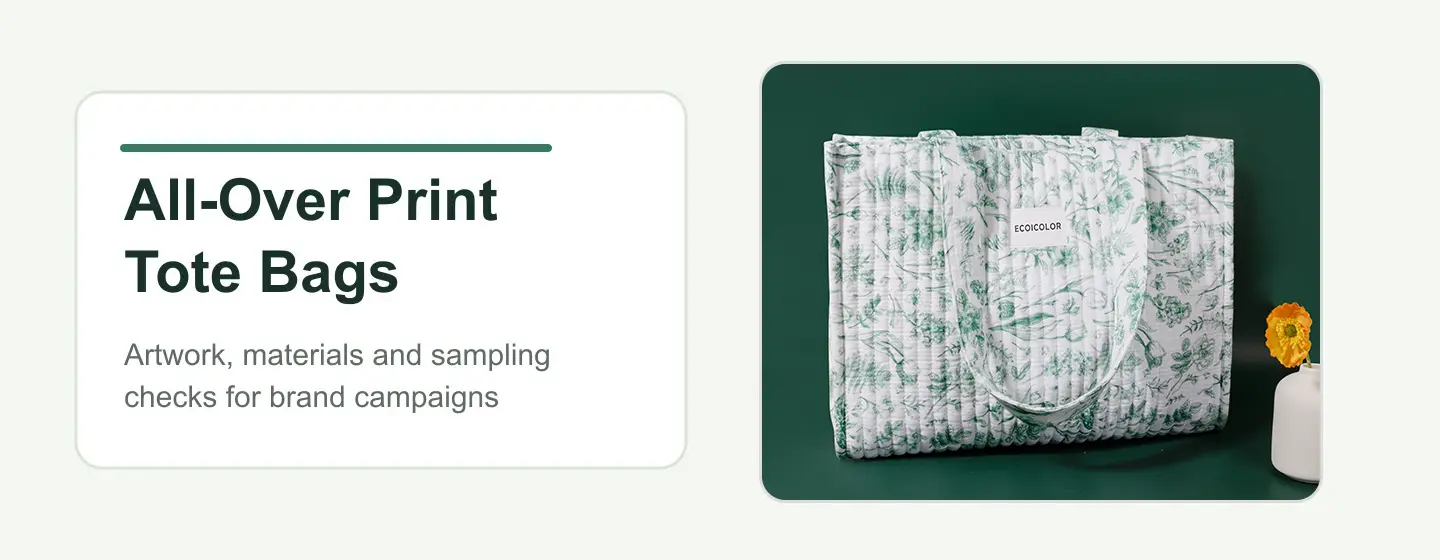
Buyer Summary
- Best for: seasonal GWP campaigns, limited retail drops, resort patterns, event merchandise and full-color brand visuals.
- Main decision: confirm artwork quality, material direction, print method, layout proof and sample approval before bulk order.
- Factory-side note: rPET and smooth recycled materials are often stronger choices for complex full-color campaign artwork.
- What to prepare: artwork file, tote size, print area, quantity, Pantone or color reference, packaging needs and launch date.
How should buyers plan all-over print tote bags for brand campaigns? Confirm artwork repeat, fabric choice, print method, sample approval and campaign claim scope before comparing tote bag quotes or approving bulk production.
What is an all-over print tote bag?
An all-over print tote bag uses artwork across a larger area of the bag instead of only a small front logo. It needs artwork, material, layout, print method and sample approval to be checked together.
From our factory side, all-over print is not only a design choice. It becomes a production standard. The artwork may cover the front panel, both sides, the gusset, the bottom or even a repeat pattern across the whole tote. If the artwork is treated like a simple logo file, the sample can look different from what the buyer expected.
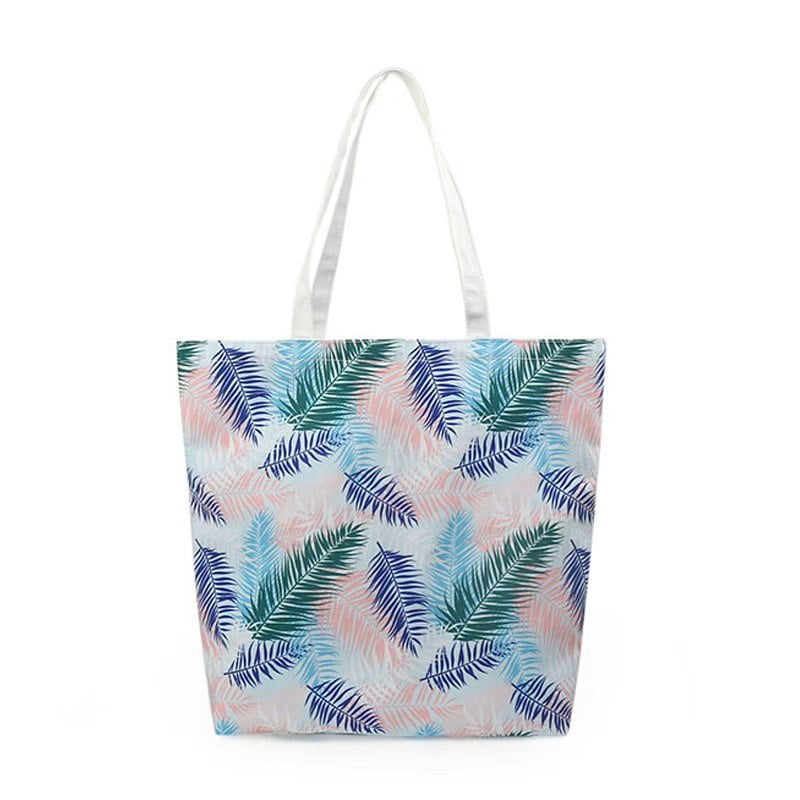
For brand campaigns, all-over print can make a tote feel more like a seasonal gift, retail SKU or limited-edition item. It is often used for beauty GWP campaigns, wellness launches, resort gifts, retail collections and event merchandise, including rPET recycled tote projects, custom logo tote programs and GWP brand tote projects. The artwork should still be prepared in a production-ready vector or high-resolution file format such as SVG when suitable. W3C SVG 2 defines the SVG format for scalable vector graphics1
How is all-over print different from material guides and brand campaign tote pages?
This guide focuses on artwork repeat, print method, layout proof and sample approval for all-over print. Broader tote bag material guidance helps buyers compare fabric direction, while the brand campaign tote guide covers campaign use cases, launch planning and sourcing scope.
If the main question is whether an all-over pattern can be produced cleanly, stay with the artwork, material surface and sample route in this guide. If the buyer is still choosing the campaign tote type, review the campaign guide first and then return to all-over print when the artwork direction is clear.
When should brand buyers use all-over print tote bags?
All-over print is useful when the tote itself needs to carry the campaign visual, not only the brand logo. It works well for seasonal GWP, limited retail drops, resort patterns and multi-color artwork.
We usually recommend all-over print when the buyer has a strong visual theme: a seasonal beauty pattern, floral artwork, travel collection, resort graphic, IP-style illustration or retail pattern. For beauty and wellness brands, this often appears in holiday gifts, summer travel sets, product series artwork and special campaign launches.
DTC and retail brands may use full-print totes as sellable products or limited collaboration items. Hotels and resorts may use destination patterns or beach-inspired prints. In all cases, the buyer should decide whether the tote is mainly a gift container, a reusable product or a campaign visual asset.
| Campaign type | Artwork direction | Material direction | Watch-out |
|---|---|---|---|
| Beauty seasonal GWP | Floral, holiday, product series pattern | rPET or smooth recycled surface | Confirm color and gift set fit |
| DTC / retail limited drop | Brand pattern or collaboration artwork | rPET canvas, cotton canvas or structured fabric | Check sellable hand feel and repeat alignment |
| Hotel / resort gift | Destination, beach or lifestyle artwork | rPET, canvas or recycled cotton | Confirm durability and packing method |
| Event merchandise | Bold graphic or sponsor artwork | Budget-friendly rPET or recycled blend | Avoid low-resolution artwork and unclear color expectations |
Which materials work better for all-over print tote bags?
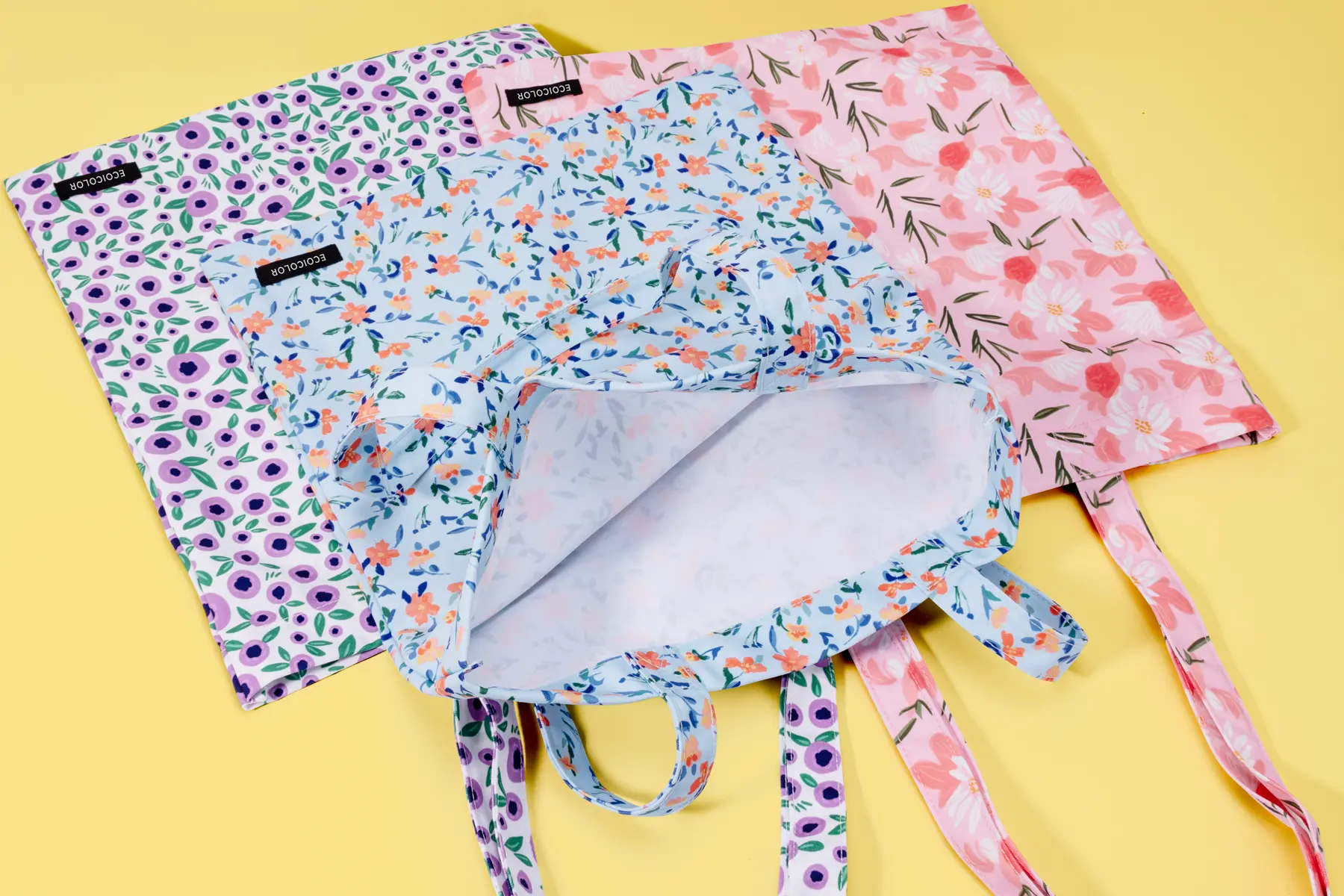
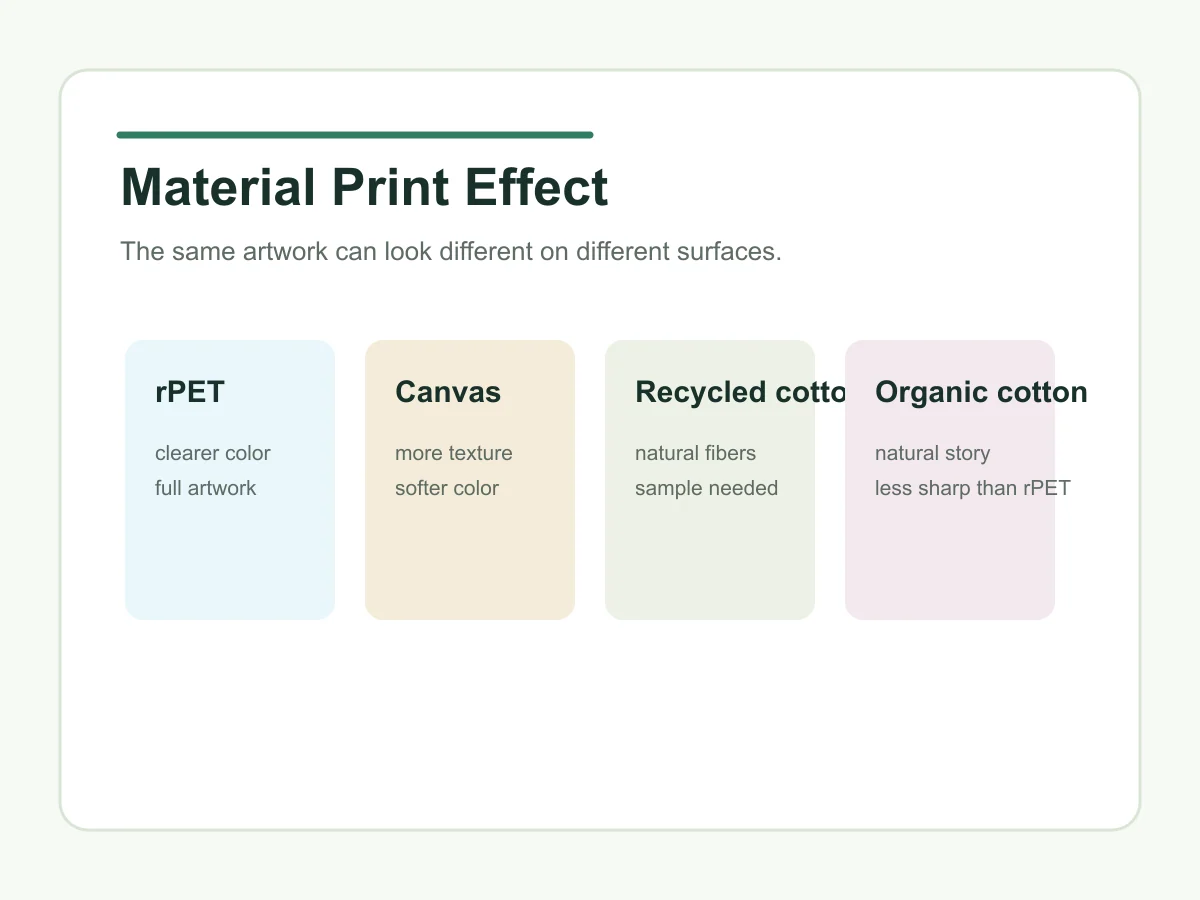
rPET and smooth-surface recycled materials are often strong choices for complex all-over print because they can support clearer artwork and wider visual options. Cotton and recycled cotton can work, but the result depends more on texture and absorption.
For complex full-color artwork, rPET is often a practical direction. It can be made in many surface styles, including rPET canvas, satin-like surfaces, velvet-like textures and other looks. This gives buyers more room to balance budget, color, print effect and brand positioning.
Cotton canvas, recycled cotton and organic cotton can also be used, especially when the brand wants a more natural material story. But on these materials, color may look softer, texture may show more clearly and fine details may not behave like they do on a smoother rPET surface. If the customer wants both a natural story and complex artwork, we usually check which priority matters more: material positioning or print sharpness.
If a recycled or environmental claim is used, the material and claim should match the correct document scope, not only the artwork story. Textile Exchange provides useful reference points for textile material documentation3 Environmental wording should also be reviewed carefully so the print story does not overstate the material or packaging claim. FTC Green Guides summarize environmental marketing claim principles5
| Material | All-over print behavior | Best use | Risk to confirm |
|---|---|---|---|
| rPET / rPET canvas | Good for colorful artwork and smoother surfaces | GWP, events, resort, full-color campaigns | Hand feel, finish and print method |
| Cotton canvas | More natural texture, softer print feeling | Retail tote, lifestyle tote, natural brand story | Color absorption and detail clarity |
| Recycled cotton | Good responsible-material direction, more fiber variation | GWP and brand merchandise | Texture, color consistency and sample approval |
| Organic cotton | Natural positioning, less ideal for very sharp complex artwork | Clean beauty and wellness projects | Cost, color and print sharpness |
What artwork files should buyers prepare?
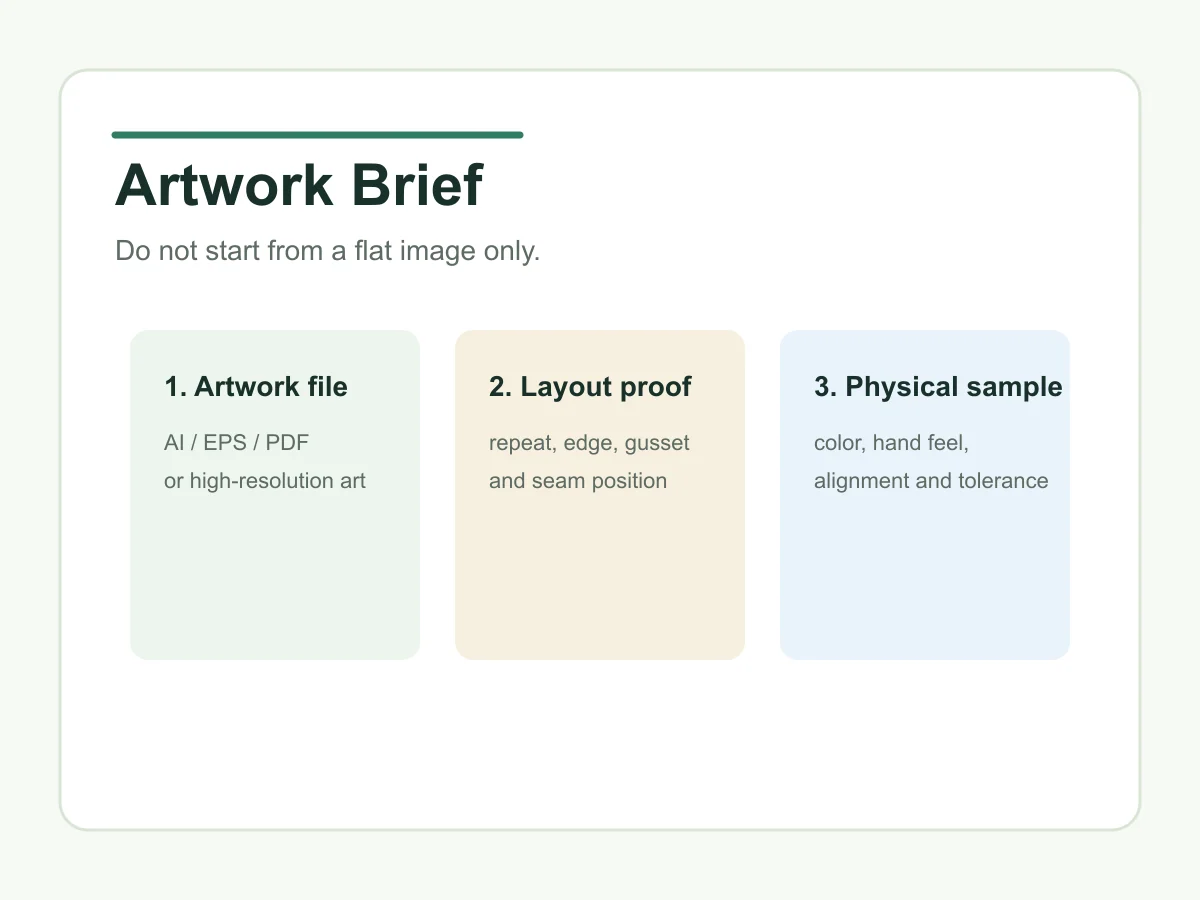
Buyers should prepare AI, EPS, editable PDF or high-resolution artwork files. Low-resolution JPG or PNG images may be useful for reference, but they are risky for large printed areas.
Full-print artwork is enlarged across a large fabric area, so file quality matters. If the artwork is low resolution, the final print may lose edge clarity or look blurry when scaled. If the pattern is continuous, the repeat logic should also be checked before sampling. A normal flat image may not work well if the buyer expects a seamless repeat.
For brand colors, Pantone references are useful, but final approval should be based on the physical sample because materials, inks, lighting and printing methods do not display color in the same way. Pantone Connect Premium supports access to Pantone color libraries and references2 Multi-color, gradient and photo-style artwork often needs a print method that can support those visual details.
Why do gusset, seams and layout proof matter?
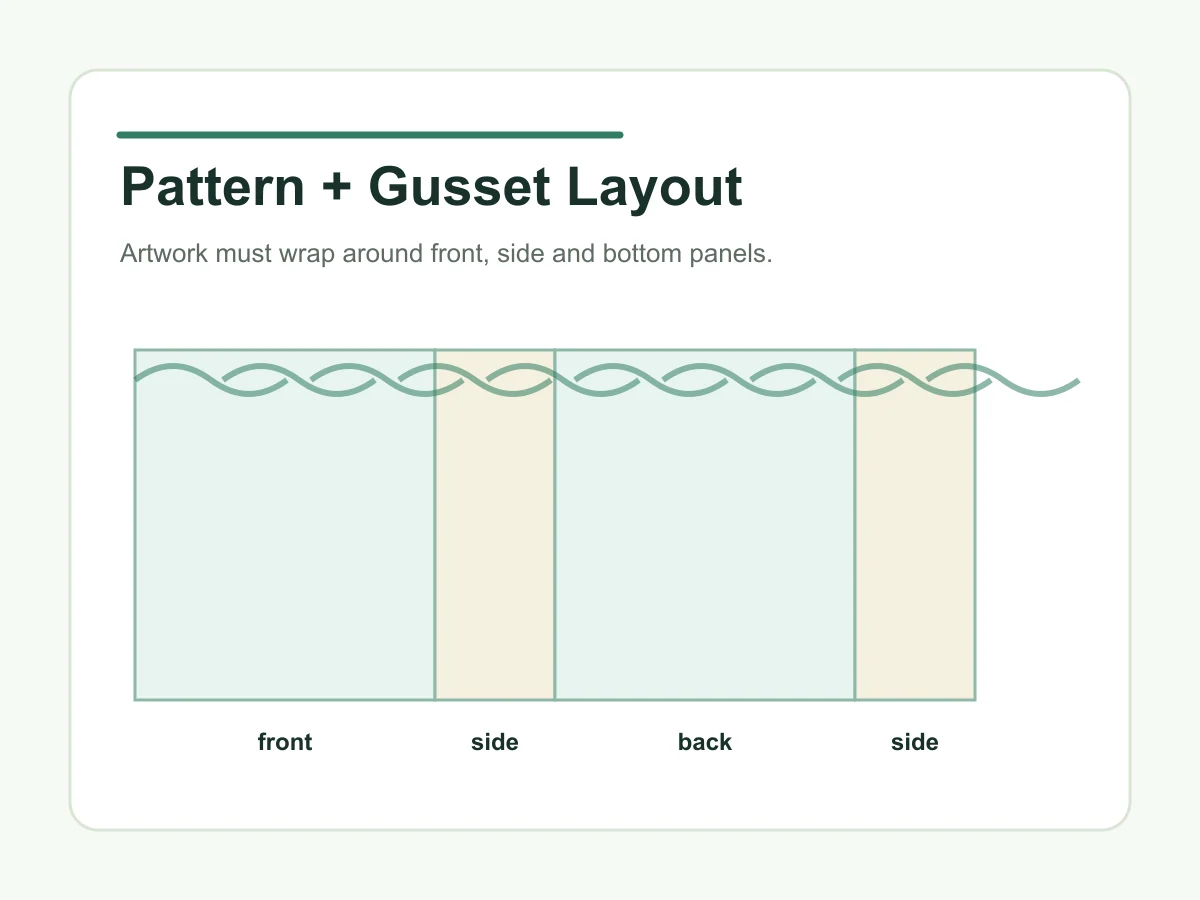
All-over print artwork should be checked against the real bag structure. Gusset, bottom fold, side seams, handles, pockets and zippers can all interrupt the pattern.
The most common production risk is that the artwork looks good on a flat screen but changes when it wraps around a tote. A side gusset may cut the pattern. A bottom fold may hide part of the artwork. Stitching can interrupt a line or motif. If the bag has pockets, zipper, lining or special handle construction, the print layout should be reviewed with those details.
For tote bags with bottom and side panels, we prefer to review an expanded layout or placement proof. This helps the buyer see how the artwork moves from front to side to back. It also makes sample checking more specific.
Which printing method should buyers consider?
Heat transfer and digital printing are often useful for complex all-over artwork, while screen printing is usually stronger for simpler color blocks. The right process depends on artwork, material, quantity and hand feel.
Screen printing can be a good option for clear, simple and limited-color designs. But when artwork has many colors, gradients, shadows or photo-style details, heat transfer or digital printing may be more practical. The buyer should not choose only by process name. The process should fit the artwork and material.
If the full-print artwork also needs a small brand logo, the tote can combine processes. For example, a printed pattern can be paired with a woven label, small patch or metal plate. That can help the product keep campaign impact while still carrying clear brand identity.
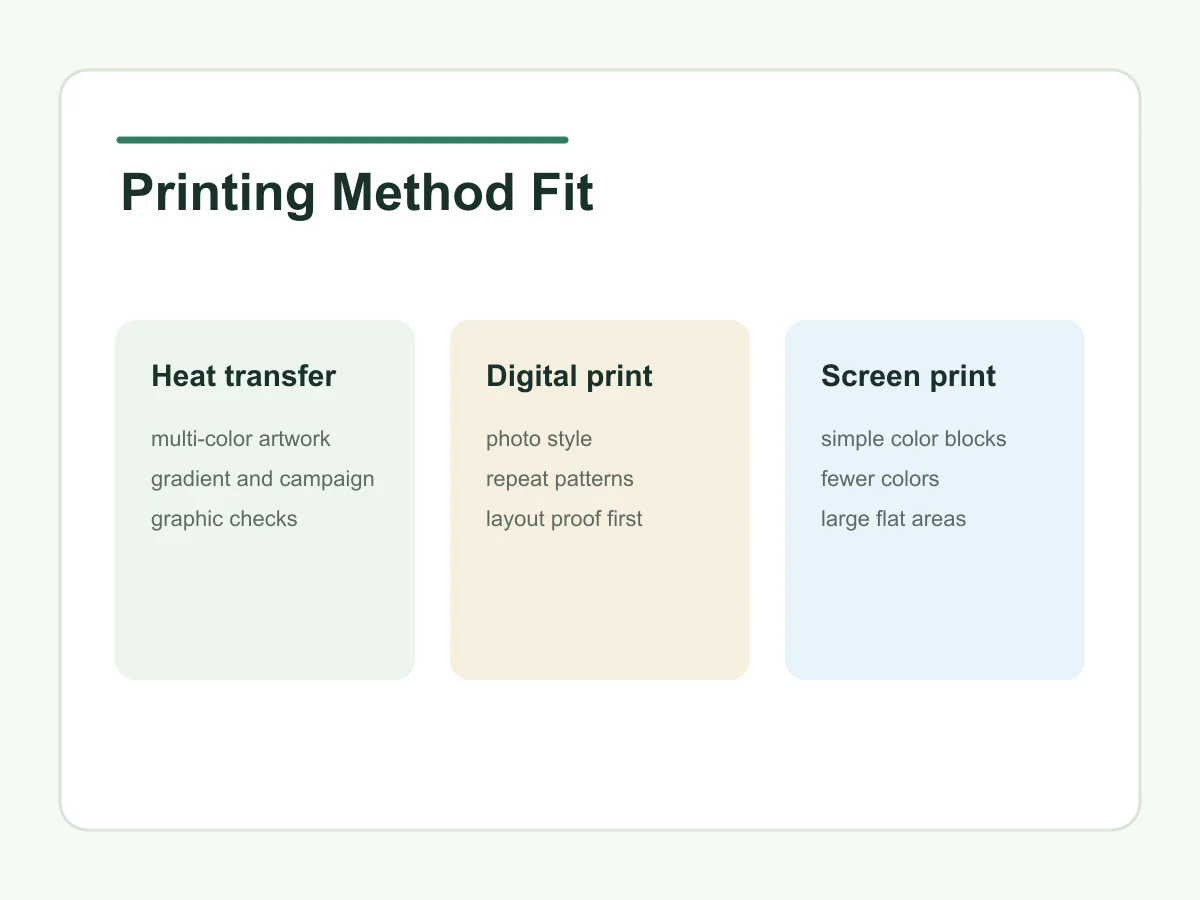
| Artwork type | Recommended direction | Why | Watch-out |
|---|---|---|---|
| Simple two-color pattern | Screen print or heat transfer | Clear color blocks can be controlled more easily | Check registration and edge position |
| Gradient or shadow artwork | Heat transfer or digital print | Better for continuous color changes | Confirm hand feel and physical sample color |
| Photo-style artwork | Digital print or suitable transfer method | Needs high-resolution color detail | Low-resolution files will show quality loss |
| Repeat brand pattern | Layout proof plus print sample | Repeat alignment affects front, side and back panels | Check gusset, seams and bottom fold |
| Printing method | rPET / rPET canvas | Cotton canvas | Recycled cotton | Watch-out |
|---|---|---|---|---|
| Digital print | Strong for repeat pattern and full-color campaign artwork | Possible, but texture may soften the result | Possible, sample color should be checked | Needs high-resolution artwork and physical sample approval |
| Sublimation-style print | Often useful when the material system supports it | Usually not the first direction | Usually not the first direction | Confirm material compatibility before quoting |
| Screen print | Good for simpler repeat artwork and limited colors | Good for simpler color blocks | Good for simple artwork with softer texture | Color count and registration affect cost and result |
| Heat transfer | Useful for colorful artwork, gradients and campaign graphics | Can work, but hand feel and edge should be checked | Can work, sample confirmation is important | Large areas need hand-feel and bonding checks |
What should buyers check in the physical sample?
Confirm color, print scale, shrinkage control, edge alignment, repeat layout, hand feel, seam interruption and the printed panel size before approving bulk production.
A physical sample is important because all-over print touches both artwork and construction. For 100% cotton canvas, record the shrinkage-test or pre-shrink route before final printing and cutting approval. The printed panel should be checked against the approved cutting pattern, not only against the artwork on screen.
For heat-related processes, fixation and bonding should also be checked carefully because weak handling can create color or durability problems later. If the tote is for retail or repeated use, the buyer may request relevant textile safety or testing requirements according to market needs. OEKO-TEX STANDARD 100 is a common textile harmful-substance testing reference4 For brand-sensitive orders, factory audit and social compliance expectations should be discussed before order confirmation. amfori explains how producer audit requests are handled6
Real order lesson: pre-shrink cotton canvas before positioned all-over printing
In a recent UK skincare brand order, a 1,000-piece tote used 16 oz 100% cotton canvas and a positioned all-over direct digital print. The first material route went to printing without a confirmed shrinkage test. When the printed fabric returned, the usable printed panel was smaller than the required cutting pattern.
We corrected the route by pre-shrinking the canvas first, then repeating the positioned direct print against the approved pattern size. The corrected sample met the finished-size requirement, and the bulk order was completed. Factory-side lesson: shrinkage allowance belongs in artwork and cutting control before print release; it is not a separate fabric note to check after printing.
Does all-over print affect cost, MOQ and timeline?
All-over print can affect cost and timeline because artwork area, material choice, print method, color complexity, sample approval and packaging all add production variables.
Ecoicolortote custom tote projects start from 500 pcs per style for qualified brand projects. Sample timing is confirmed after the material, construction, logo method, artwork, packaging and approval scope are clear; the working schedule also depends on revision speed and current capacity. Full-print artwork may need extra review time if the file, repeat layout or material choice is not clear.
Bulk production timing depends on order quantity, material availability, artwork complexity, process setup and packaging. If the buyer wants a special material color or a complex repeat pattern, the project should start earlier. If the buyer changes artwork after sample approval, a new sample or new layout proof may be needed.
| Printing direction | Cost drivers | MOQ / setup note | Sample lead watch-out |
|---|---|---|---|
| Simple screen print pattern | Color count, print area, screen setup, material surface | Works from 500 pcs per style when the artwork is clear | Usually faster if colors and placement are confirmed |
| Heat transfer campaign artwork | Artwork size, film quality, bonding, material match | Suitable for complex artwork when sample result is approved | Check hand feel, edge and color before bulk |
| Digital / full-color print | Artwork resolution, repeat layout, material choice, color target | Best when the buyer provides production-ready artwork | Layout proof and physical sample may add review time |
| All-over print with extra branding | Main print plus woven label, patch, metal plate or packaging | More variables than a single-print tote | Can move from one-process to complex sampling |
What mistakes should buyers avoid?
Common mistakes include using low-resolution artwork, ignoring gusset layout, choosing material only by photo, approving only a computer mockup and expecting every material to print the same.
Many all-over print problems are not caused by the artwork itself. They happen because the buyer does not check how the artwork behaves on the selected material and bag structure. The same artwork can look different on rPET, cotton canvas, recycled cotton or organic cotton. A physical sample is the safest way to confirm the result.
Another common mistake is leaving artwork, material and launch timing too late. If there is not enough time for material selection, layout proof and physical sample approval, the buyer may have to accept a simpler material, a closer available color or a more expensive shipping option.
Who We Don't Take On
- Orders below 500 pcs per style without an existing brand project context.
- Buyers who expect complex full-print artwork but only provide a low-resolution image.
- Projects that skip physical sample approval for color, hand feel and repeat alignment.
- Buyers who want a fixed result but keep changing artwork after the sample standard is locked.
What should buyers send before sampling?
Before sampling, buyers should send the artwork file, material direction, tote size, print area, quantity, Pantone or color reference, packaging requirement and target launch date.
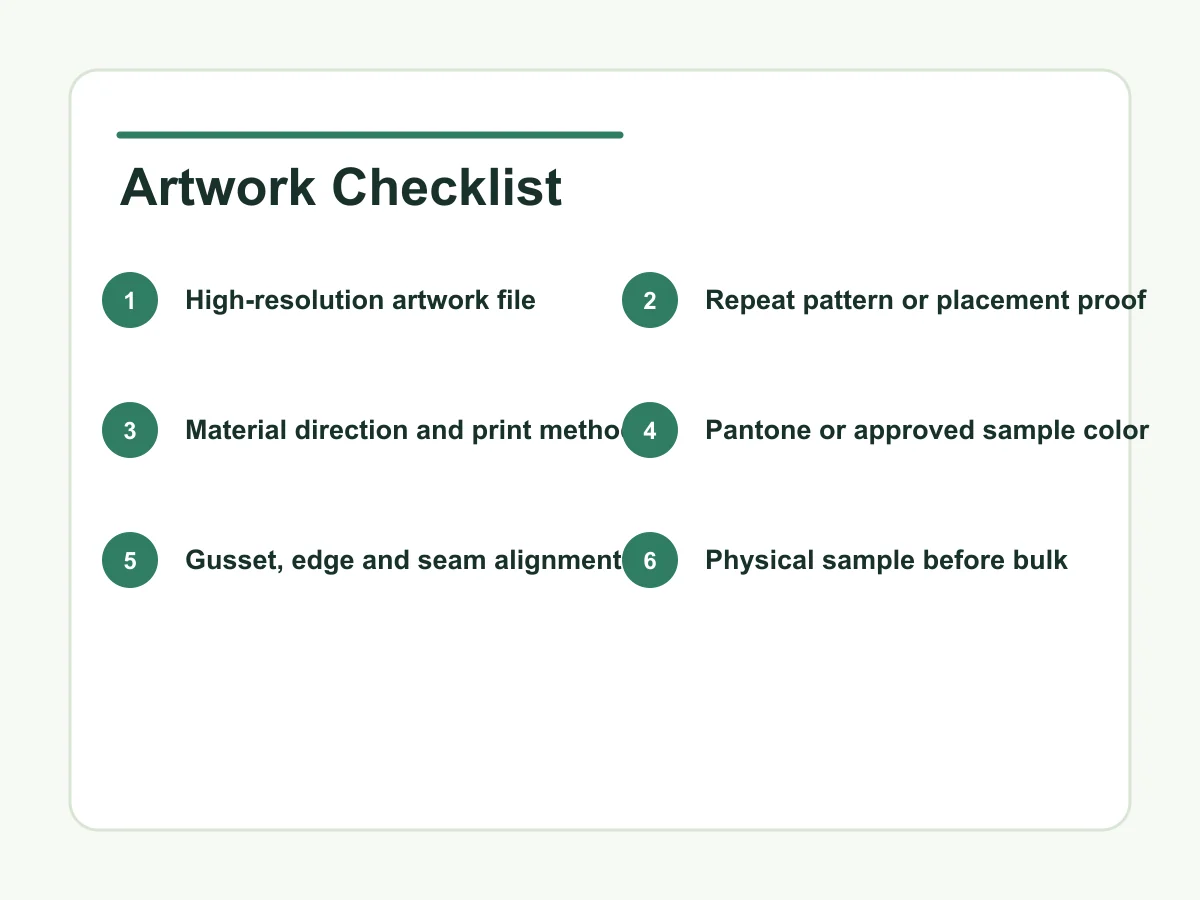
All-Over Print Tote Artwork Checklist Before Sampling
- Final artwork file in AI, EPS, editable PDF or high-resolution format
- Repeat pattern or placement proof if the artwork wraps around the tote
- Tote size, gusset, side panel and print area
- Material direction, such as rPET, rPET canvas, cotton canvas or recycled cotton
- Print method direction, such as heat transfer, digital print or screen print
- Pantone reference or approved color sample if brand color matters
- Packaging requirement, label requirement and target launch date
- Physical sample and pre-production sample approval before bulk
FAQ
What artwork files are needed for all-over print tote bags?
Buyers should send AI, EPS, editable PDF or high-resolution artwork files, plus repeat pattern information when the design wraps across panels, gussets or the bottom of the tote.
How should buyers approve an all-over print sample?
Buyers should review the physical sample for color, artwork scale, repeat alignment, seam interruption, hand feel, edge finish and whether the tote matches the campaign visual standard.
Does all-over print affect MOQ or lead time?
Yes. All-over print can add artwork review, layout proofing, material testing and sample approval steps. Ecoicolortote custom tote projects start from 500 pcs per style for qualified brand orders.
Which material works best for all-over print campaigns?
rPET and smooth recycled surfaces are often practical for colorful campaign artwork, while cotton canvas, recycled cotton and organic cotton need sample checks for texture, absorption and print clarity.
What print tolerance should be written in the RFQ?
The RFQ should state artwork placement, repeat direction, acceptable alignment tolerance, color reference, material surface, print area and whether seams, gussets or folds may interrupt the pattern.
What mistake causes the most rework?
The most common rework comes from approving a flat mockup without checking the real tote structure, material surface and physical sample. Large artwork can shift at seams, gussets and folds.
When should buyers contact Ecoicolortote?
Buyers should contact Ecoicolortote when they have campaign artwork, target quantity, tote size, material direction, packaging needs and launch date, especially before final sample or bulk approval.
Next step: If you have campaign artwork, quantity, material direction and launch date, send them to Ecoicolortote. We can help check material, print method, layout proof and sample risks before production starts.
Send your artwork file, material direction, size, quantity, packaging needs and launch date. We can help check print method, layout risk, sample scope and production timing before bulk order. Contact Ecoicolortote.
Sources
- W3C SVG 2 - scalable vector graphics specification ↩
- Pantone Connect Premium - color library access ↩
- Textile Exchange - textile material documentation reference ↩
- OEKO-TEX STANDARD 100 - textile product safety ↩
- FTC Green Guides - environmental marketing claims ↩
- amfori BSCI audit guidance - producer audit requests ↩