

 Zoe Yu
 A custom tote bag QC checklist protects the buyer after the sample is approved. For MOQ 500+ brand, retail, hotel, event and GWP orders, QC should check more than stitching. It should compare bulk goods with the approved sample, logo file, measurements, packing route, carton marks and delivery handoff.
Send QC Review Brief Check Approved Sample Review Packing Before Bulk
A buyer should know what will be checked before the order moves from sample approval to final shipment.

Buyer Summary
This checklist helps B2B buyers prepare custom tote bag QC requirements before bulk approval. It explains which points to review: control sample, material, measurements, stitching, handle strength, logo position, packing, carton marks, quantity split and shipment release. The goal is a clearer RFQ and fewer late surprises before delivery.
Quick answer
Before bulk approval, confirm the control sample, tolerance, logo file, color reference, stitch points, handle length, packing method, carton mark, carton ratio, delivery market and inspection timing. A QC checklist should be shared before production starts, not only when the shipment is ready.
What should a custom tote bag QC checklist cover?
| Area | What to confirm | Why it matters |
|---|---|---|
| Control sample | Approved sample, final artwork, material route, size and logo reference. | Gives the QC team a real comparison point instead of a loose description. |
| Construction checks | Measurements, seams, handle attachment, stitching, fabric defects and load-use concerns. | Protects the buyer from sample-to-bulk drift. |
| Logo checks | Logo position, scale, color, edge clarity, embroidery or print consistency. | Keeps brand presentation close to the approved file. |
| Packing checks | Individual pack, carton ratio, carton mark, version split and receiving label. | Prevents good totes from arriving under poor packing or unclear carton data. |
Acceptance sampling is often discussed when bulk goods are inspected by attributes. ISO 2859-1 sampling procedures [1] is useful context for sampling-plan conversations, while the actual inspection scope should match the buyer's tote order and risk level.
If cartons need handling symbols, those marks should be reviewed as part of packing and shipment release. ISO 780 package marking guidance [2] is useful background for package handling marks.
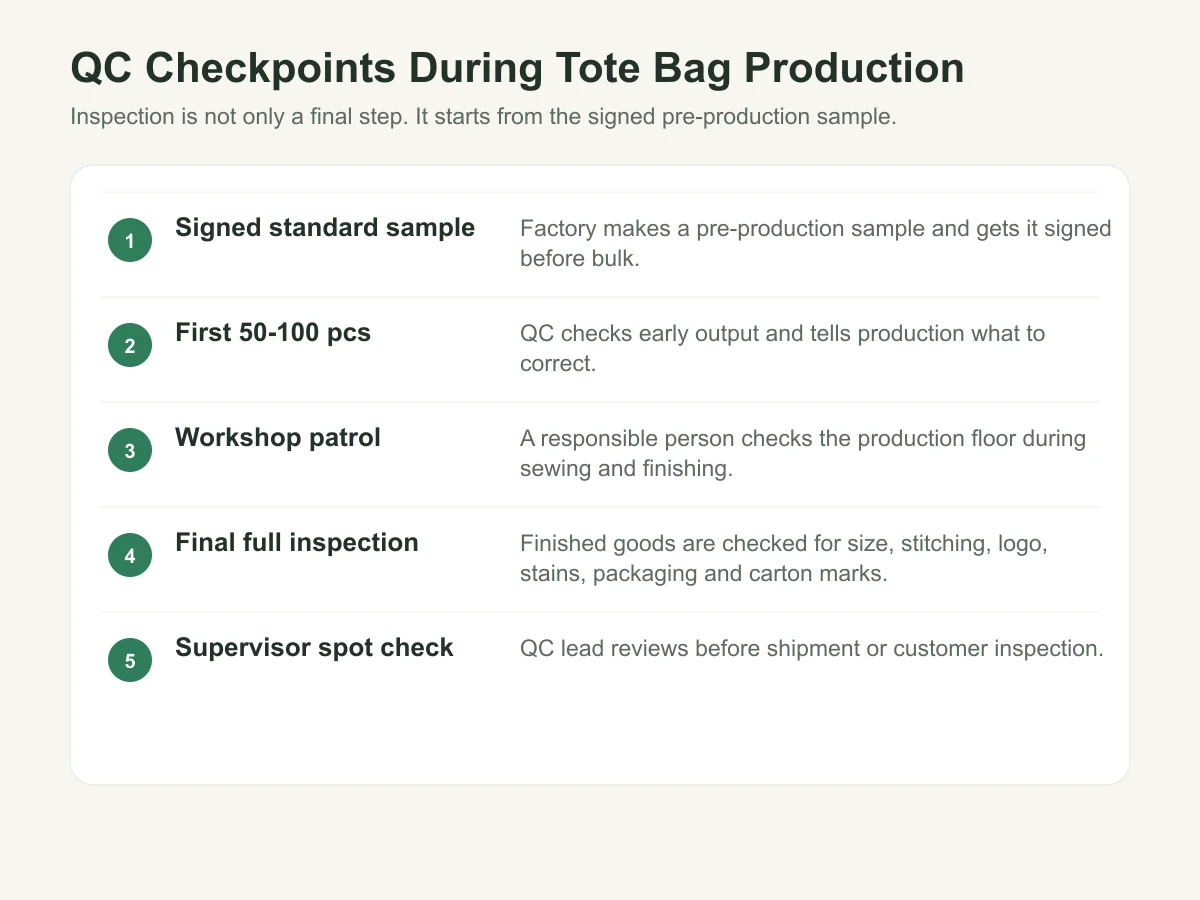
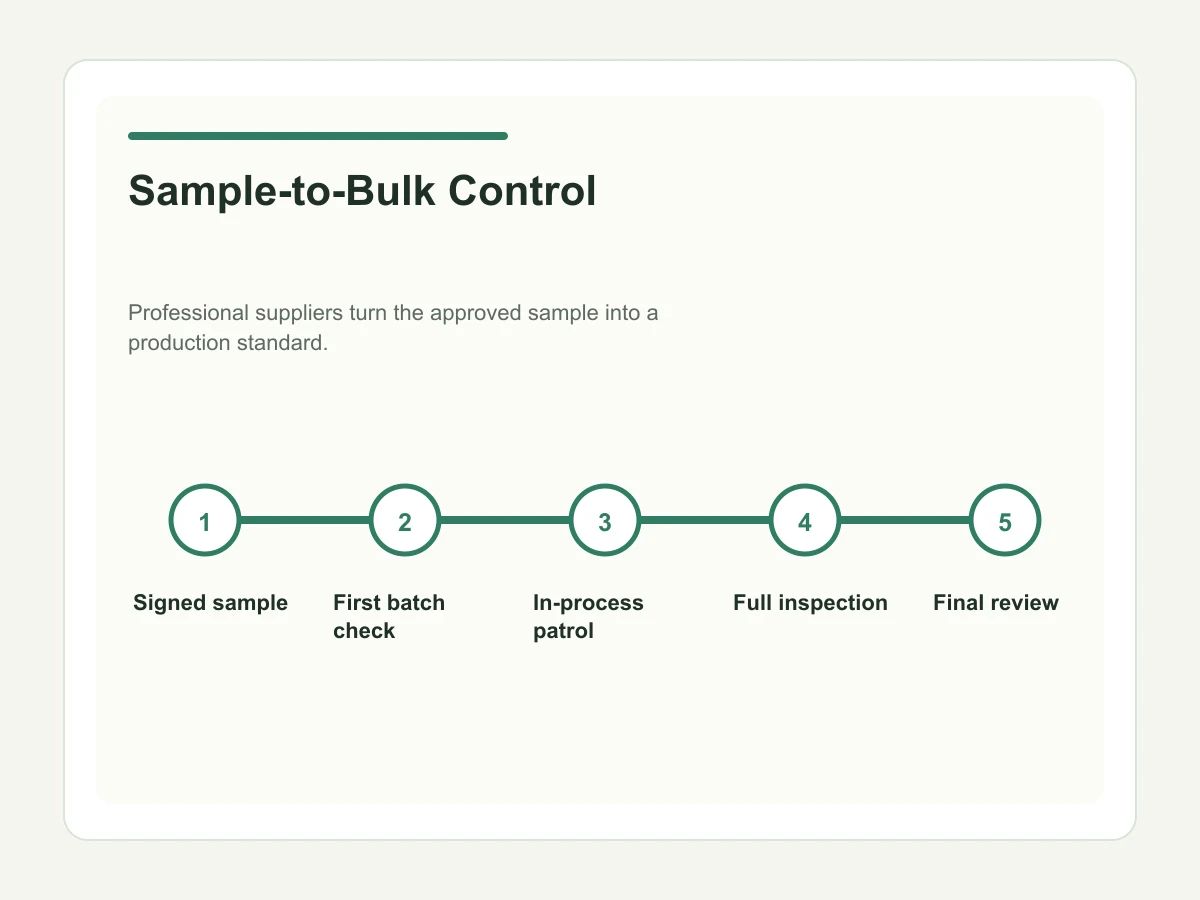
The approved sample should guide measurement, logo, stitching, material, packing and carton review.
- control sample
- measurement
- logo position
Which defects matter most before bulk release?
Sample drift
Bulk goods use the right material but differ in size, handfeel, handle drop or structure.
Logo mismatch
Logo placement, scale, color or edge detail moves away from the approved sample.
Packing mismatch
The tote passes visual inspection but carton data, label files or packing ratio are wrong.
The right route should be chosen from the buyer's real project use, not from a generic tote mockup. A brand, retail, hotel, GWP, event or private-label order can share the same tote shape but require different material, sample, QC and packing decisions.
How should carton and delivery checks be included?
Country-of-origin and import marking context can matter before shipment. CBP marking guidance [3] is useful background for U.S.-bound goods, while final wording still depends on the actual project and market.
Delivery terms influence who is responsible for parts of the shipment handoff. ICC Incoterms rules [4] helps explain why carton data and delivery responsibility should be aligned before release.
Useful related routes include the primary supporting page, the related route page, the secondary buyer guide.
A visual tote check is not enough when labels, carton marks and packed quantities affect receiving.
- packing rule
- carton mark
- receiving file

Bulk Release and Carton Label Checklist
Disclosure: This is a planning checklist, not a customer case or reported project result.
- Compare bulk appearance, logo, measurements and construction with the approved sample.
- Match unit counts, color splits and packing ratios to the final order file.
- Check carton marks and destination labels against the released artwork version.
- Assign an owner for every open correction before shipment release.
QC route fit filter
Best fit: brand, retail, GWP, hotel, event and private-label buyers planning MOQ 500+ custom tote orders where sample approval, logo accuracy, packing or delivery handoff matters.
Less suitable: one-piece gifts, no-brand blank orders, buyers who want to skip sample approval, or requests where only the lowest unit price matters and no QC scope is shared.
Document and inspection wording note
AQL, sampling standards, carton marks, delivery terms and import guidance belong to their respective organizations and must be applied to the actual project scope. Ecoicolortote can review QC checkpoints and inspection file needs for a specific tote order, but a general checklist is not a substitute for buyer approval of the final sample and packing route.
FAQ
What is a custom tote bag QC checklist?
A custom tote bag QC checklist is a buyer-facing list of points to inspect before bulk approval or shipment release. It usually covers approved sample, measurements, seams, handle strength, fabric defects, logo position, color, packing method, carton marks, quantity split and delivery handoff. It helps align the buyer and supplier before production risk increases.
When should the QC checklist be shared?
Share the QC checklist before bulk production starts, ideally after sample approval and before final packing is planned. If the buyer waits until the goods are ready to ship, the factory may not have the correct control sample, tolerance, packing file or carton mark instruction. Early QC alignment reduces late correction pressure and avoids unclear release decisions.
Does QC only check sewing quality?
No. Sewing quality is important, but B2B tote QC should also check material, measurements, handle drop, logo position, color result, label files, packing route, carton mark and quantity split. For retail, GWP, hotel and event orders, a visually acceptable tote can still fail if packing or carton data is wrong.
What does the approved sample control?
The approved sample should control the physical tote standard: material handfeel, size, handle length, logo method, color reference, structure and packing route where applicable. The QC checklist should compare bulk production against that sample and the final RFQ files so the buyer is not judging from memory or scattered messages during release.
Should carton marks be part of tote QC?
Yes, when the order has warehouse, retail, event, hotel or split-shipment requirements. Carton marks, version labels, quantity per carton and packing ratio affect receiving. If those details are not checked before release, the buyer may receive correct totes under unclear carton data, which creates operational problems after delivery and slows warehouse handoff.
What MOQ applies to QC review?
MOQ 500+ is the preferred planning target for Ecoicolortote custom tote projects. QC review is especially valuable at that scale because small file errors can multiply across cartons and versions. Smaller quantities may be reviewed only when the project has credible B2B scope and the buyer can share sample, artwork and packing requirements.
Who should use this QC checklist?
This checklist is for procurement, brand, retail, GWP, hotel, event and private-label buyers planning MOQ 500+ custom tote programs with real sample approval and delivery needs. It is not for personal gifts, single-piece orders, no-brand shopping or buyers who refuse to define sample standard, logo file, packing route or delivery market before bulk review.
Sources
About the Author
 | Zoe Yu is Sales Manager at Ecoicolortote. She helps overseas brand, retail, hospitality and event buyers review custom tote bag material routes, logo methods, MOQ feasibility, sample approval, packing requirements and bulk delivery planning before production. |