Zoe Yu
For brands that order tote bags more than once a year, every project should not start from zero. A recurring tote program helps the buyer and factory carry forward approved standards, reduce repeated sampling, manage packaging files and plan production before rush season.
From our factory side, the smoothest repeat orders are not only "same bag again." They are managed with a clear standard sample, material direction, color reference, logo process, packaging files, document requirements and target shipment date for each order.
Ecoicolortote works with qualified brand buyers from 500 pcs per style. Recurring planning is especially useful for beauty GWP campaigns, DTC and retail restocks, hotel welcome tote replenishment and brand event merchandise.
Buyer Summary
- Best for: beauty GWP teams, DTC and private label brands, retail chains, hotel welcome gift programs, event buyers, fitness or wellness membership programs and brand teams ordering custom totes more than once a year.
- Main decision: recurring tote programs should preserve approved standards and files, not restart sourcing from zero for every campaign, colorway or replenishment order.
- Factory-side note: reorders are smoother when the buyer and factory keep the approved sample, material spec, Pantone reference, logo process, packaging files, barcode/SKU data and previous production notes.
- What to prepare: previous order reference, approved sample, forecast quantity, colorways, packaging files, launch calendar, document needs, destination and target shipment date.
What is the quick answer for custom tote bag reorder planning?
Custom tote bag reorders work best when the buyer keeps the approved sample, material standard, color reference, logo process, packaging files, label data, document needs and shipment calendar together. A reorder is only faster when the standard is clear and the changes are marked early.
A true reorder can often carry forward previous production files. A seasonal revision, new colorway, updated packaging file or new document requirement still needs review. The goal is not to skip control steps; it is to avoid rebuilding the same decisions from zero every season.
How does this guide differ from MOQ, RFQ and sample guides?
Our MOQ and lead time guide helps buyers judge one order's quantity and timeline. Our RFQ checklist explains what to send before the first quote. Our sample evaluation guide explains how to approve a sample. Reorder planning focuses on repeat orders and seasonal programs after the first standard already exists.
If the buyer is placing a first custom tote order, start with the RFQ and sample guides. If the buyer already has a style, approved files or seasonal calendar, a reorder plan helps manage standards, version updates, packaging files, document checks and shipment timing.
Why should brands plan tote reorders instead of starting from zero?
Brands should plan tote reorders because repeat programs can save development time, stabilize quality, reduce repeated sampling, prepare materials earlier, control packaging files and make rush-season production easier to manage.
A one-time tote order can be handled project by project. But when a brand uses tote bags for several campaigns or recurring retail replenishment, repeating the same development questions every time wastes time and creates avoidable risk.
For recurring programs, we usually suggest keeping a standard file: approved sample, material reference, Pantone or color sample, logo process, packaging method, label files, carton mark and previous order notes. This lets the next order start from a known standard instead of a blank brief.
Which brands benefit from a recurring tote program?
Recurring tote programs are useful for beauty GWP campaigns, DTC and retail replenishment, hotel welcome tote programs and seasonal brand merchandise. They are less suitable for one-time low-budget orders, personal sellers or projects far below MOQ.
Beauty and wellness brands may use tote bags for holiday GWP, new product launch kits, seasonal gift sets, member gifts or campaign merchandise. DTC and retail brands may reorder private label totes as a saleable SKU or launch a new colorway. Hotels may replenish welcome totes by quarter or half-year when the style remains stable. Buyers can also review GWP tote bag programs when planning repeat campaign use.
Retail chains and Amazon sellers benefit when the tote has stable SKU, barcode, label and carton requirements. Conference and annual event buyers benefit when sponsor versions, event dates and carton sorting can be planned ahead. Fitness and wellness brands may also use repeat tote programs for membership welcome kits, seasonal challenges or retail merchandise.
These customers benefit because the standard does not need to be rebuilt every time. Materials, packaging, labels and files can be checked against previous orders, while each new campaign can still adjust color, quantity or packaging details when needed.
How is a reorder different from the first custom tote order?
A reorder can often carry forward the first approved sample, material direction, logo process and packaging standard as references. However, the buyer should still reconfirm material availability, color batch, logo version, packaging files, labels, quantity and delivery timing.
The first order usually needs more development work: material comparison, structure decisions, logo sampling, packaging planning and pre-production sample approval. A reorder can be faster because the style standard, process route and files are already clearer.
But a reorder is not automatic. If the material is out of stock, the color batch changes, the logo is updated, the packaging artwork changes, the barcode changes or the order enters peak season, the timeline can still slow down.
If the order is exactly the same and the original standard is still available, some confirmation steps may be simplified. If key details change, we recommend confirming the pre-production standard again before bulk production.
Is this a true reorder or a new development?
A true reorder keeps the same size, material, color standard, logo process, packaging files and quality standard. If the buyer changes material, structure, logo method, colorway, packaging system or document requirement, the project should be treated as a revised development.
| Change type | How to treat it | Why it matters |
|---|---|---|
| Same bag, same material, same logo and same packaging | True reorder | Previous sample and production files can usually guide the order. |
| Same bag, new colorway | Reorder with color confirmation | Material stock, dye batch and Pantone direction should be checked. |
| Same style, new packaging or barcode files | Reorder with packaging review | Label and carton errors can delay retail receiving. |
| New material, lining, zipper, size or logo process | Revised development | Sampling, cost and timeline should be checked again. |
| New document or testing requirement | Reorder with document scope review | Documents must match current material, factory, packaging and shipment scope. |
What should buyers save for a reorder file package?
A reorder file package should save the approved physical sample, material spec, Pantone or color standard, logo artwork, logo process, packaging files, barcode or SKU labels, carton mark, previous production notes, document requirements and inspection or packing photos.
| Reorder file item | What to keep | Why it matters |
|---|---|---|
| Approved physical sample | Signed sample or latest approved production sample. | Serves as the physical standard for material, size, logo and sewing. |
| Material spec | Material name, weight, texture, lining, handle material and substitute notes. | Prevents confusion if the same description can mean different materials. |
| Pantone / color standard | Pantone code, swatch, color card or previous batch reference. | Helps control color expectations across different material batches. |
| Logo artwork | Current AI/PDF artwork, placement size and logo version. | Prevents old logo, wrong size or incorrect artwork from being reused. |
| Packaging files | Hangtag, paper card, belly band, dust bag, barcode label and packing method. | Reduces retail, warehouse and presentation mistakes. |
| Previous production notes | QC notes, buyer feedback, material issues, packing notes and improvement points. | Helps avoid repeating the same problem in the next batch. |
| Document requirements | BSCI, GRS, OEKO-TEX, FSC, testing reports or order-specific paperwork. | Clarifies whether the new order needs updated documents or general support files. |
How should seasonal and annual tote programs be planned?
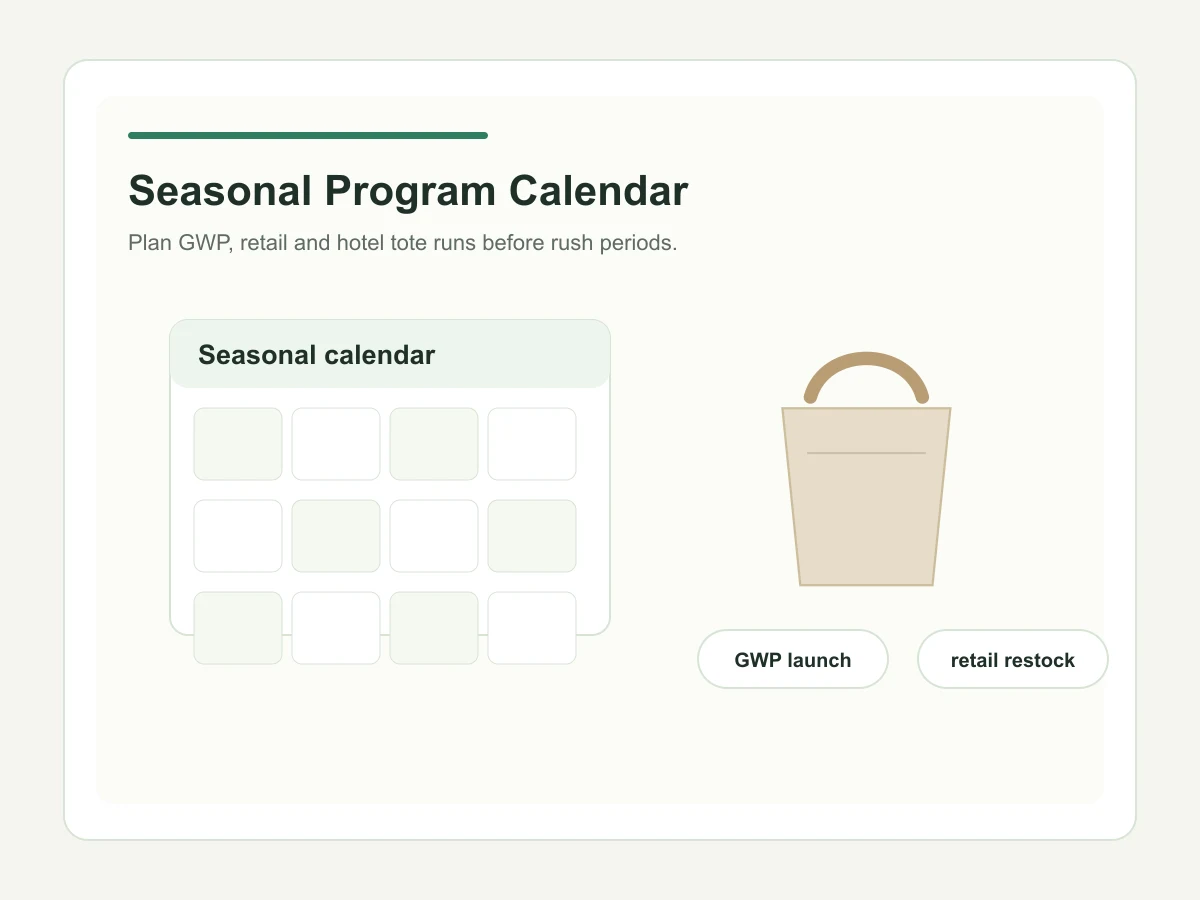
Brands with 3-4 tote campaigns per year should map the annual activity calendar first, then estimate quantity, launch date, color direction, packaging needs, document requirements and shipment timing for each program.
For seasonal GWP or holiday campaigns, starting 6-10 weeks before launch is usually more realistic. If the project includes custom material, complex logo process, special packaging, multiple rounds of sampling or ocean shipment, the planning window should be earlier.
DTC and retail tote SKUs should use at least a rough forecast. Even a quarterly or half-year estimate is more useful than placing each reorder as an emergency. Hotel welcome tote projects can also work well with quarterly or half-year replenishment when the style is stable.
If the buyer has an annual activity calendar, we can help work backward from launch dates to sampling, material confirmation, bulk production, packing and shipment.
How should buyers plan reorders by campaign type?
Beauty GWP programs should plan around launch dates, retail and DTC programs should plan around SKU replenishment, hotel programs should plan around occupancy or quarterly use, and event programs should plan around fixed delivery deadlines.
| Program type | Planning focus | What to confirm early |
|---|---|---|
| Beauty / wellness GWP | Campaign launch date, gift set fit, seasonal color and packaging. | Material, logo, paper card, GWP quantity and shipment buffer. |
| DTC / private label retail | SKU replenishment, colorway performance and packaging consistency. | Barcode, hangtag, color split, reorder point and warehouse destination. |
| Retail chain / Amazon seller | Inventory planning, label accuracy and carton control. | SKU table, carton marks, FBA-style requirements and shipment batch. |
| Hotel / resort welcome program | Quarterly or seasonal replenishment and guest presentation. | Room-ready packing, delivery batch, destination and welcome-item assembly. |
| Event or conference buyer | Fixed event deadline and sponsor version control. | Logo versions, carton sorting, venue delivery and final approval date. |
How can buyers control material and color consistency?
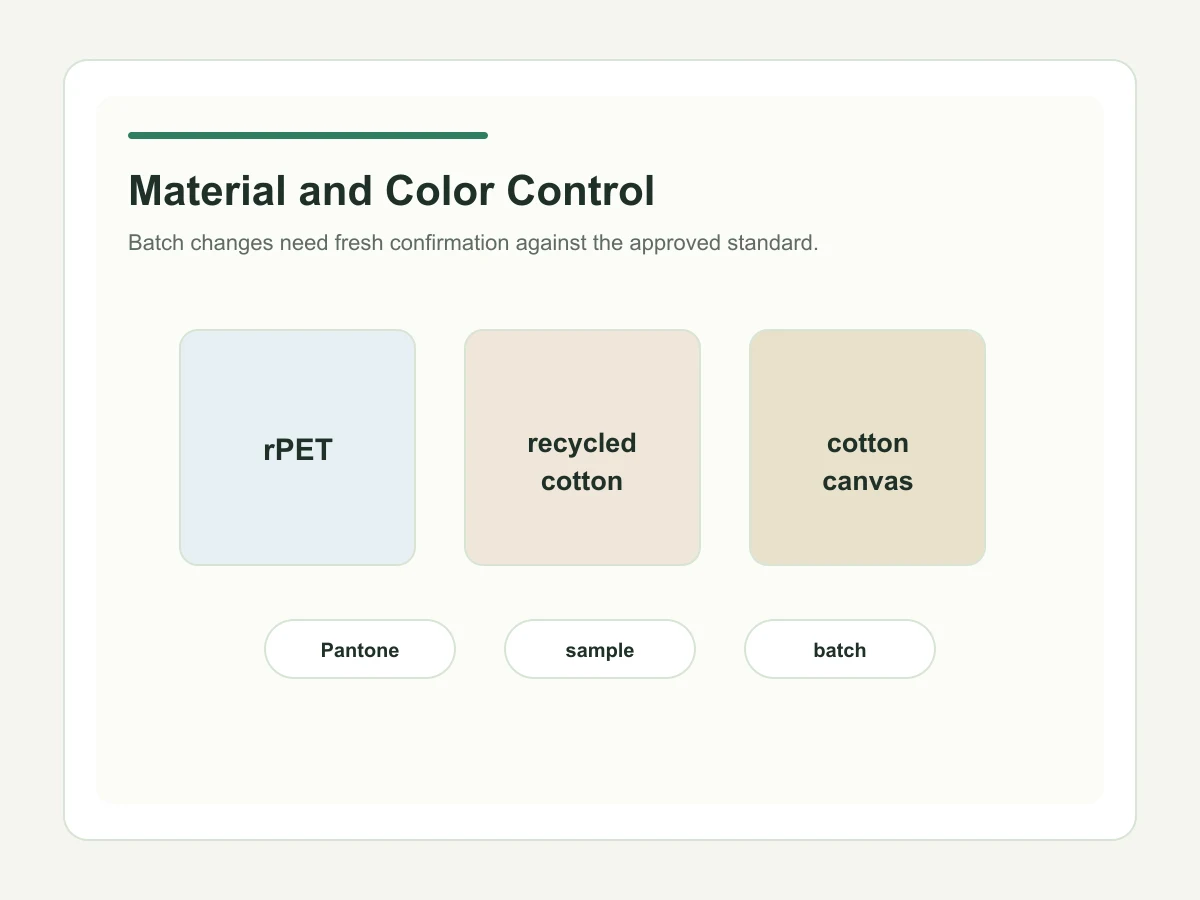
For recurring tote programs, buyers should keep an approved material sample, Pantone or color standard, previous production sample and batch notes. Different material or dye batches may have small variations, so the approved standard should be reconfirmed when needed.
Long-term projects are most efficient when the material system is stable. If the buyer wants each batch to stay close in color and handfeel, the RFQ should keep the same material family, approved sample and color standard as reference.
Different materials behave differently. rPET, recycled cotton and cotton canvas can show different handfeel, texture, color absorption and surface consistency between batches. That does not mean reorders are risky; it means the standard should be visible and physical, not only described in email.
If the original material is not available, we usually tell the buyer quickly and suggest substitute options or a new confirmation process. The buyer should then decide whether the substitute is acceptable for that campaign or whether timing needs to be adjusted.
How do MOQ and cost planning work for repeat orders?
Ecoicolortote custom tote projects start from 500 pcs per style. Long-term planning can help control cost by reducing repeated sampling, preparing materials earlier, using consistent packaging files and avoiding last-minute rush decisions.
Recurring programs can help with cost control, but we should not promise that every reorder will keep the same price. Material cost, labor, exchange rate, packaging design, order quantity, document needs and shipping requirements can all change.
If the buyer has an annual estimated quantity, we can discuss how to split it into several production batches. This may help with planning, storage pressure and seasonal launch timing. The important point is to discuss the forecast early enough for the factory to judge material and production feasibility.
Repeat orders may also reduce unnecessary development cost because the bag structure, logo route and packaging files already exist. But if the buyer changes size, material, logo process or packaging, the project should be treated as a revised development instead of a simple reorder.
How should samples and production standards be managed?
The first approved sample can become the long-term reference standard for reorders. The factory should keep a sample, photos, process sheet and packaging notes, while the buyer should confirm whether each reorder follows the same standard or includes changes.
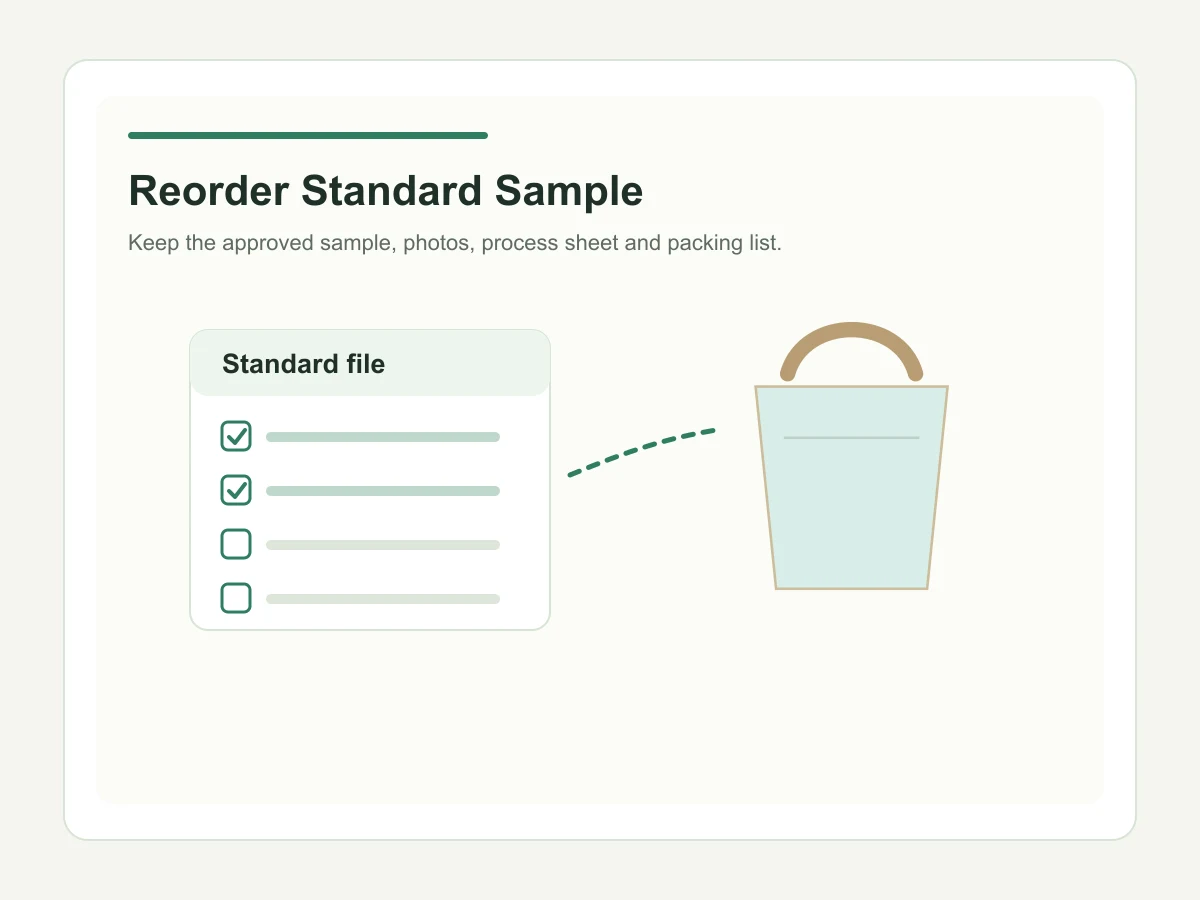
For repeat programs, the standard sample is more than a memory of the first order. It is the reference for material, handfeel, size, logo position, sewing details and packing method. From our side, we keep internal records such as sample reference, photos, process sheet and packaging notes when the project requires long-term control.
If the buyer changes material, size, logo, packaging or structure, a new sample or pre-production confirmation is usually needed. The most common reorder problem is simple: one side thinks the order is the same, but a small detail has changed.
How should packaging and label files be managed for reorders?
Packaging and label files should be managed as part of the reorder standard. Retail programs should keep current hangtag, barcode, wash label, composition label, origin label, SKU and carton mark files to prevent version mistakes.
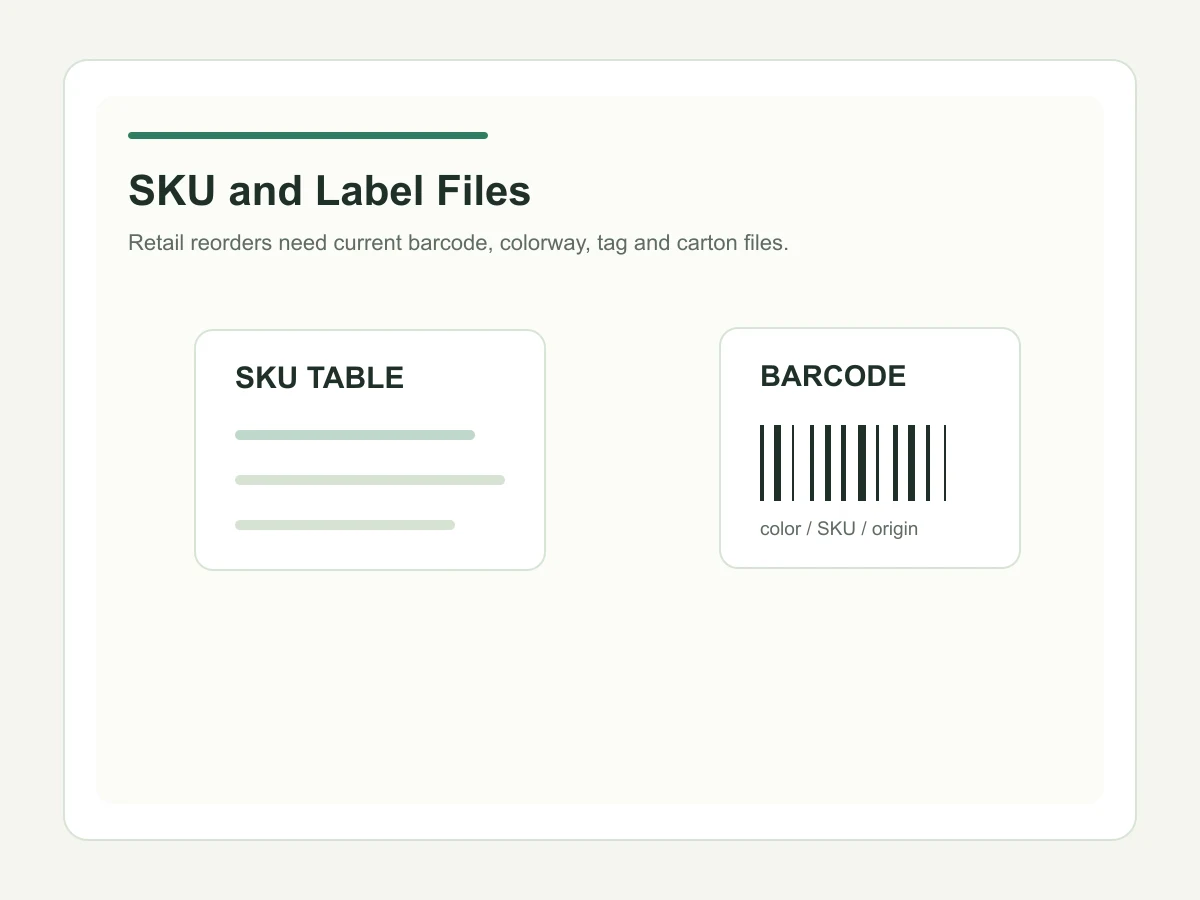
For private label and retail tote programs, packaging files can create as much risk as the bag itself. A wrong barcode, old paper card version, wrong color name or outdated carton mark can disrupt receiving even if the tote is made correctly.
If the brand has multiple colors or SKUs, we suggest keeping a label folder or SKU table. Each reorder should confirm the current barcode, hangtag, wash label, composition label, country-of-origin label, carton mark and packaging artwork.
If the brand updates packaging design, the factory should be told early. Otherwise, old files may be used accidentally or the reorder may need extra time for new paper card or label production. For more detail, see our custom tote bag packaging options guide.
Which documents should be checked again for repeat orders?
For repeat orders, buyers should reconfirm whether recycled, organic, textile safety, paper packaging or audit documents are needed for the current material, factory, order scope and shipment. Document needs should be included in the annual plan.
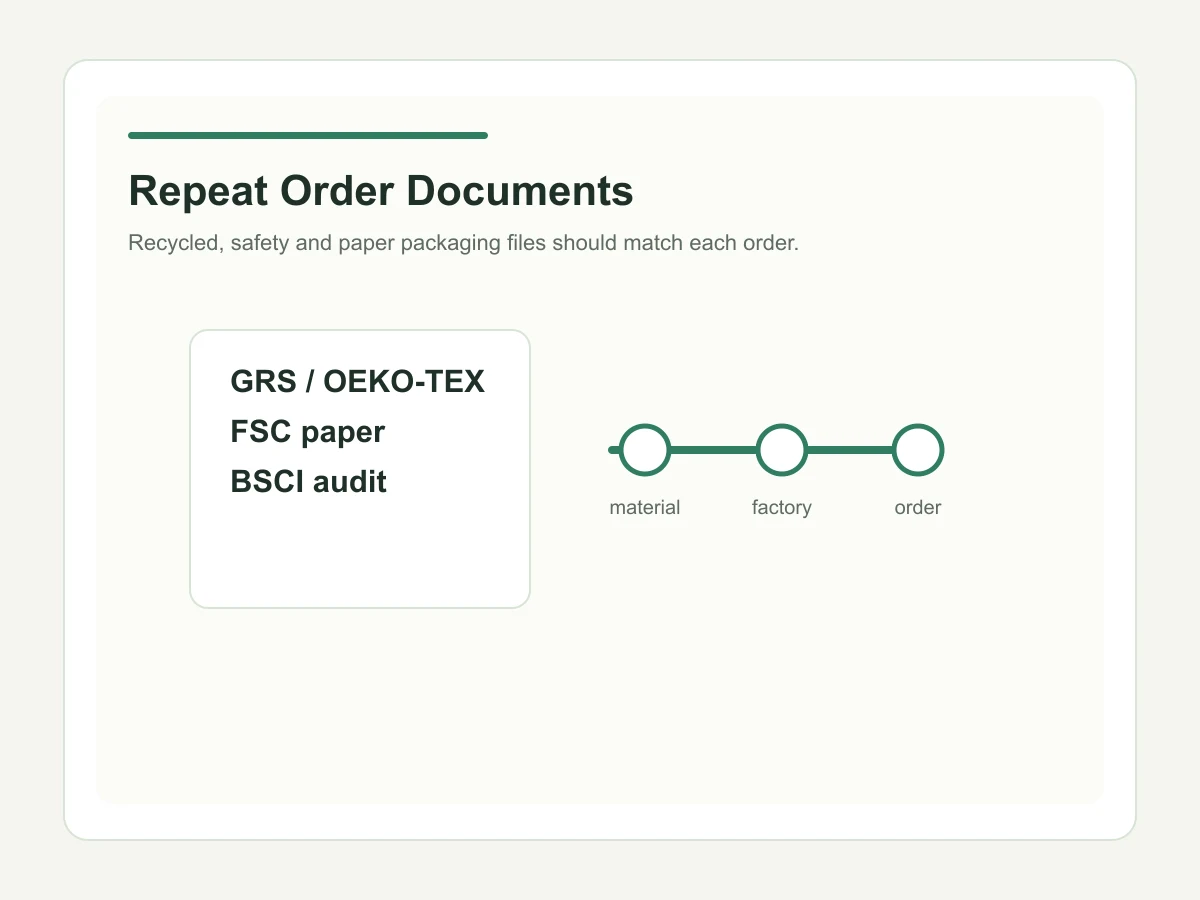
Document requirements should not be assumed automatically from a previous order. The FTC Green Guides summary5 is a useful reference when buyers need to avoid broad or unsupported environmental claims in recurring programs. If the project uses recycled material, Global Recycled Standard - Textile Standards1 can be used as a recycled material standards reference when discussing whether the recycled material and chain-of-custody scope match the project. If textile safety wording is needed, OEKO-TEX STANDARD 100 is related to harmful substance testing for textiles2. If paper cards or hangtags use FSC wording, FSC should apply to the paper packaging material and claim scope3.
BSCI is about factory social compliance and audit systems, while material and packaging documents answer different questions. amfori BSCI audit guidance4 is useful when buyers need to understand producer audit request workflows. For repeat programs, the buyer should tell the factory whether each shipment needs updated files, order-specific documents or only general supporting documents.
What mistakes make reorders slower than expected?
The most common reorder mistakes are assuming everything is unchanged, checking material too late, updating packaging without notifying the factory, missing SKU or barcode changes, requesting documents late or placing every reorder as an urgent project.
We have seen projects where the first development took a long time, but the reorder became much smoother because the standard was clear. We have also seen the opposite: every reorder became urgent because the buyer waited until the last moment, while material, packaging or label details still needed confirmation.
Packaging and label files are especially easy to overlook. A retail tote may look the same, but the SKU, barcode, color name, paper card version or carton mark may have changed. If that is discovered late, the reorder can slow down even when the bag itself is simple.
Long-term buyers usually value stable quality, fast communication, sample and standard management, packaging file control and realistic delivery coordination. That is the difference between producing one order and helping a brand manage a tote program over time.
What should be in a recurring tote program plan?
A recurring tote program checklist should include annual quantity estimate, activity dates, SKU or colorway plan, material standard, logo files, packaging files, document needs, target shipment dates and the buyer-side contact responsible for approvals.
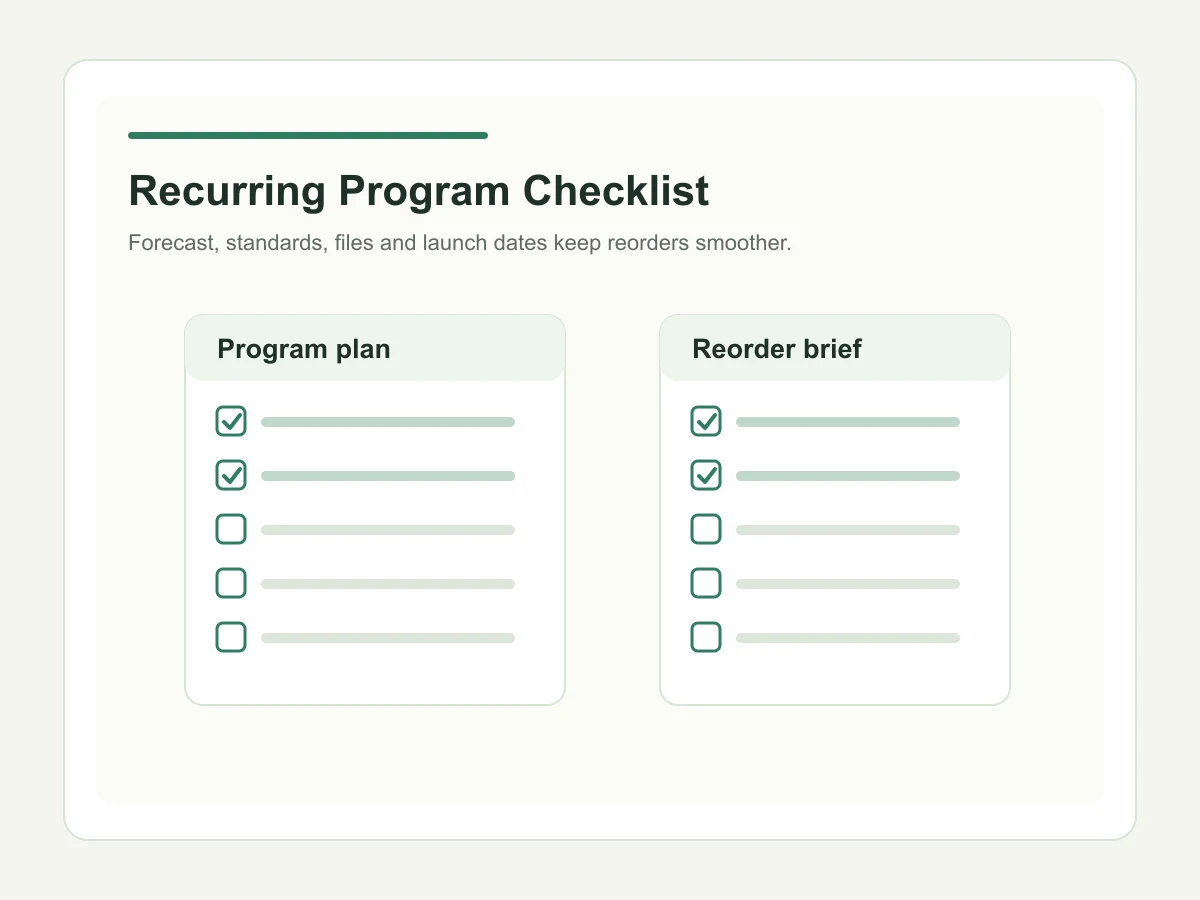
| Program item | What to prepare | Why it matters |
|---|---|---|
| Annual estimate | Expected yearly quantity and batch split. | Helps judge material and production planning. |
| Activity dates | Launch, event, retail or hotel replenishment dates. | Allows backward planning from delivery needs. |
| SKU / colorway | Color names, SKU table, reorder quantity by color. | Reduces label and sorting mistakes. |
| Material standard | Approved sample, color reference, material family. | Controls batch and handfeel expectations. |
| Logo files | Current vector artwork and Pantone reference. | Prevents old logo or color version issues. |
| Packaging files | Hangtag, barcode, wash label, carton mark, paper card. | Prevents retail receiving and packing errors. |
| Document needs | BSCI, GRS, OEKO-TEX, FSC, test reports, origin files. | Keeps order scope and claims aligned. |
| Reorder contact | Buyer-side approval owner. | Reduces slow feedback during sample or file review. |
For each reorder, send a short brief with quantity, colorway, any changes from the previous order, packaging version, document requirements and target shipment date. If nothing has changed, say that clearly. If anything has changed, mark it before quoting.
What should be in a seasonal program brief?
A seasonal program brief should connect each campaign date with order quantity, approved tote standard, material, color, logo file, packaging, label files, document needs, reorder timing, destination and launch or event date.
| Brief item | What to send | Why it matters |
|---|---|---|
| Annual campaign calendar | Holiday GWP, launch kits, retail seasons, hotel replenishment, event dates or fitness membership programs. | Lets the factory work backward from launch and shipment dates. |
| Order quantity by season | Quantity by batch, style, colorway, SKU or destination. | Helps with material planning, MOQ discussion and carton sorting. |
| Approved tote standard | Previous order reference, sample photo, signed sample or production file. | Shows whether the order is a true reorder or a revised development. |
| Material / color / logo file | Material standard, Pantone, logo artwork, placement and process. | Keeps visual identity and brand consistency under control. |
| Packaging and label files | Hangtag, paper card, barcode, SKU sticker, wash label, carton mark and packing method. | Prevents late-stage retail and warehouse errors. |
| Document needs | GRS, OEKO-TEX, FSC, BSCI, testing, origin files or shipment-specific documents. | Document scope should be checked before the order becomes urgent. |
| Shipping destination | Warehouse, hotel group, event venue, FBA-style routing or multiple delivery locations. | Affects carton mark, packing method and delivery timing. |
| Approval owner | Buyer-side contact for artwork, sample, label and document approval. | Reduces delays caused by unclear feedback ownership. |
Planning seasonal tote programs or repeat orders?
Send your annual activity calendar, forecast quantity, previous sample reference, material standard, packaging files and target shipment dates. We can help check which parts can be carried forward and which parts need fresh confirmation before the next order becomes urgent.
Most useful when you include: reorder type, previous order reference, any changes from last batch, packaging version and target shipment date. Send your reorder brief >
FAQ: Custom Tote Bag Reorders and Seasonal Programs
Can a reorder use the same sample as the first custom tote order?
Often yes, the first approved sample can be used as an important reference standard. If material, color, logo, size or packaging changes, the updated details should be confirmed again.
Is a custom tote bag reorder always faster than the first order?
It can be faster because the standard, process and files are clearer. However, material availability, color batch, packaging updates, document changes and peak-season capacity can still affect timing.
Can I split an annual tote quantity into several batches?
Yes, this can be discussed. A rough annual forecast helps the factory review batch planning, material needs and shipment timing.
Will the reorder price always stay the same?
No. Material cost, labor, exchange rate, quantity, packaging, documents and shipping requirements can change. Reorder planning helps control variables, but prices still need current order review.
What should I send for a repeat tote order?
Send the previous order reference, quantity, colorway, any changes, packaging version, document needs, target shipment date and destination. If the order is meant to be identical, state that clearly.
When should seasonal tote programs be planned?
Seasonal programs should be planned as soon as the launch calendar is known. Beauty GWP, hotel replenishment, retail restock and event programs should work backward from delivery date to sample approval, material confirmation, packaging files and shipment timing.
What changes make a reorder become a revised development?
A reorder becomes revised development when the buyer changes material, size, structure, logo process, colorway, packaging system, document requirement or delivery scope. Those changes may need fresh costing, sample review or pre-production confirmation.