Zoe Yu
Buyer Summary
- Best for: beauty, wellness, DTC, retail, hotel and event buyers reviewing custom tote bag samples before bulk production.
- Main decision: a tote sample should become the production standard, not just a visual reference.
- Factory-side note: physical sample approval helps confirm material, handfeel, size, logo effect, sewing, packaging and QC expectations before bulk production starts.
- What to prepare: approved artwork, Pantone references, material direction, product-fit needs, packaging files, document needs and final order requirements.
A custom tote bag sample is not just a preview photo. For brand buyers, it is the point where design ideas become production standards: material, handfeel, size, logo effect, sewing, packaging and the physical reference for bulk quality control.
TL;DR: Custom tote bag sample evaluation should confirm whether the sample is ready to become the bulk production standard. Buyers should check size, material, handfeel, logo effect, sewing, product fit, packaging, label files, document requirements and final approval notes before bulk production. Photo approval can help communication, but physical sample approval is safer for color, texture, structure, capacity, handle comfort, logo finish and QC reference.
From the factory side, the most important sample is the pre-production sample. A normal development sample may use stock material or a temporary substitute. A pre-production sample should use the bulk material and represent the real condition of the final order.
Physical sample review is usually safer than photo-only approval. Photos help communication, but they cannot fully show handfeel, thickness, structure, color under real light, product fit, packaging experience or the way a logo looks on fabric.
Best fit for this sample evaluation guide
This guide is best for beauty, wellness, DTC, private label, retail, hotel, resort and event buyers who already have a custom tote bag sample or pre-production sample to review before bulk approval. It is especially useful for MOQ 500+ projects where material, size, logo process, product fit, packaging, label files, document scope and QC expectations need to be confirmed as one production standard. The strongest fit is a buyer who can compare the physical sample with approved artwork, Pantone references, material swatches, packaging files, product contents and final order requirements before giving approval.
What is the quick answer for custom tote bag sample evaluation?
Custom tote bag sample evaluation should confirm whether the sample is ready to become the bulk production standard. Buyers should check size, material, handfeel, logo effect, sewing, capacity, packaging, documents and whether the sample matches the final order specification.
A sample that looks acceptable in a photo may still fail in real use. The material may feel different from expectation, the bag may not fit the actual product set, or the logo may look less refined on fabric than it did in artwork. These details matter for retail SKUs, GWP campaigns, hotel welcome gifts and event tote projects.
How is this different from the sample approval mistakes guide?
This sample evaluation guide explains what to check on a physical tote sample: material, size, logo, sewing, packaging and production standard. Our tote bag sample approval mistakes guide focuses on approval risks, late changes and preventable mistakes before bulk production.
Sample evaluation guidance is useful when a team has a physical sample in hand and needs a practical review checklist. The mistakes guide is more useful when the team is preparing internal approval rules, trying to avoid rework, or checking why past sample approvals caused bulk production problems.
Choose the correct review stage. Use this sample-evaluation guide while material, size, logo, sewing or packaging corrections are still open. It helps the buyer diagnose what must change on the first or revised physical sample.
Once the corrected version is intended to become the frozen standard for bulk production, move to the pre-production sample approval checklist. That final step records the approved sample version, measurements, material and color, logo artwork, packaging comments and written release before bulk cutting starts.
Why does sample evaluation matter before bulk production?
Sample evaluation matters because the approved physical sample becomes the reference for bulk production. Buyers should confirm size, material, handfeel, logo effect, sewing, capacity and packaging before the factory starts cutting and producing the full order.
A physical sample gives the buyer and factory one shared standard. It can be measured, touched, photographed, signed and compared against finished goods. Without that standard, both sides may interpret the approved specification differently.
For larger orders, photo approval alone can create avoidable risk. The buyer may approve a visual direction but miss the real texture, fabric weight, color shift, handle comfort or packaging feel. Those details are much harder to correct after bulk material has been cut.
What sample types should brand buyers understand?
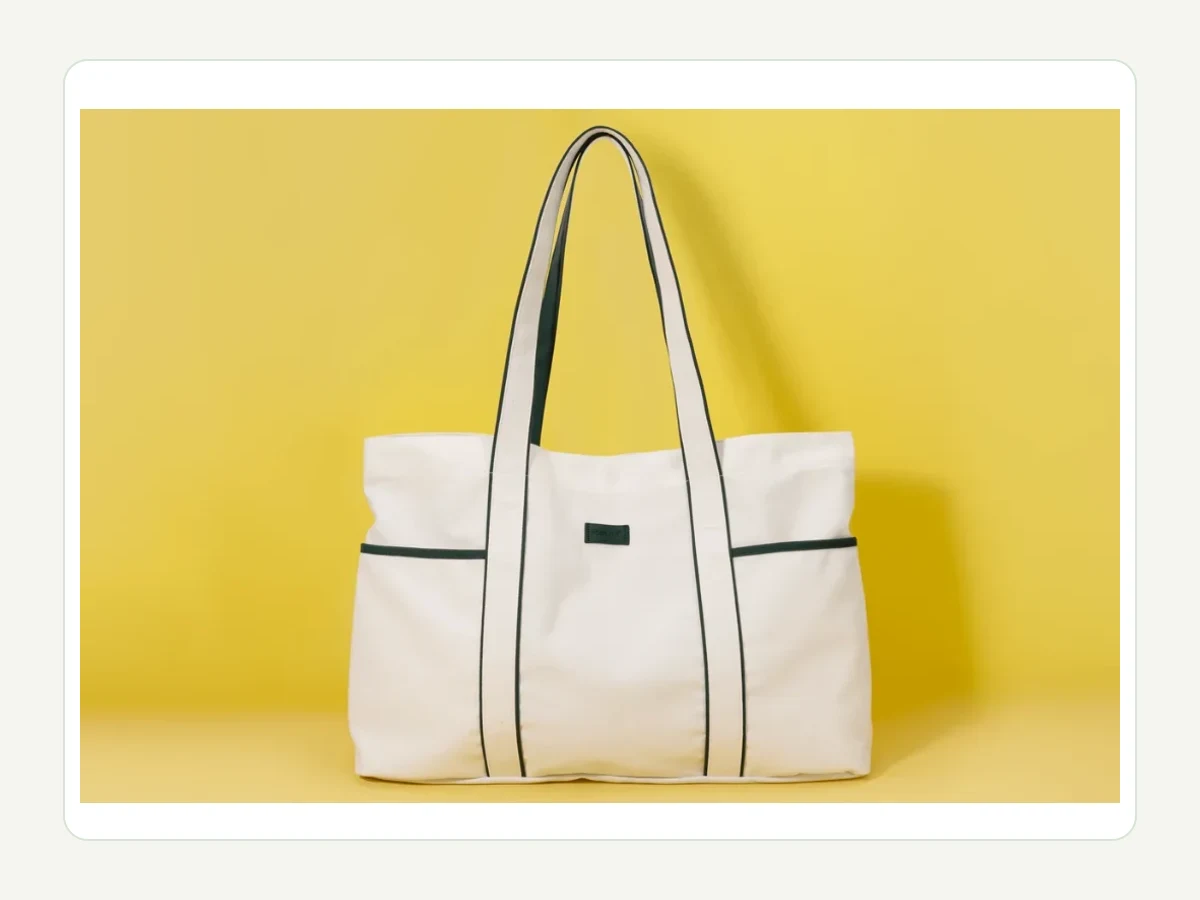
Brand buyers may review material swatches, color cards, logo process samples, full development samples and pre-production samples. Each sample answers a different question, so buyers should not treat all samples as equal.
| Sample type | What it confirms | Buyer risk if skipped |
|---|---|---|
| Material swatch | Texture, thickness, softness, surface and handfeel | Material may feel different from expectation. |
| Color card | Available or custom color direction | Color may be judged only by screen display. |
| Logo process sample | Print, embroidery, heat transfer, label, patch or metal detail effect | Logo may look different from artwork. |
| Full sample | Size, structure, capacity and overall look | Bag may not fit the real products or use case. |
| Pre-production sample | Bulk material and final standard before mass production | Bulk goods may lack a clear reference standard. |
A normal development sample may be made from stock material or a temporary material close to the final direction. That is useful for checking structure and design, but it is not always the final production standard. The pre-production sample should be made with the bulk material and final approved details.
What should buyers check first when the sample arrives?
When a tote sample arrives, buyers should first check the overall structure, then measure the size, handle drop, gusset, real product fit and usage comfort. Looking "about right" is not enough for bulk approval.
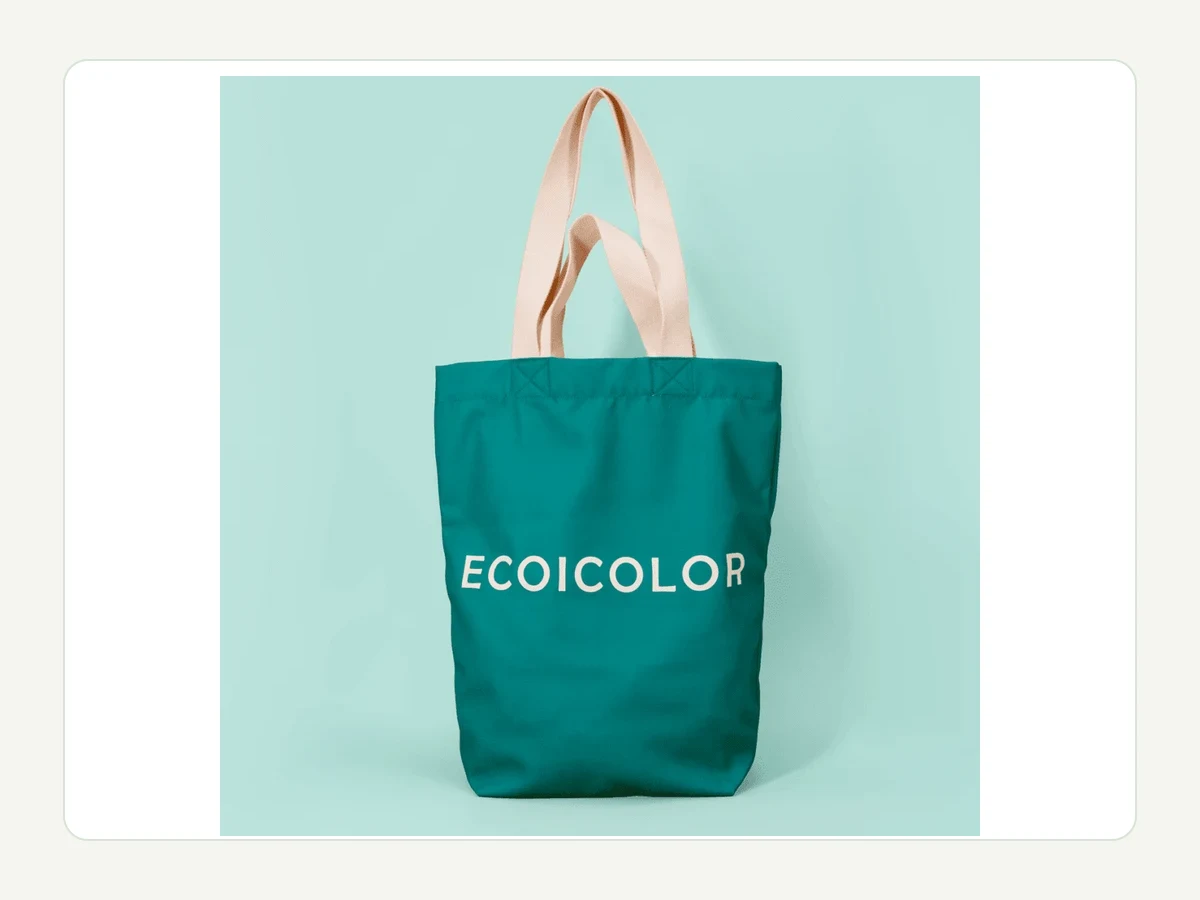
For a GWP tote, the buyer may care most about whether the bag works with the product set and campaign color. For a retail tote, the buyer may focus more on finish, durability and whether the consumer would reuse it. The checking method is similar, but the priority changes by use case.
- Measure width, height, bottom gusset, side gusset, handle drop and shoulder comfort.
- Put the real product, gift box, bottle set or welcome item inside the tote.
- Check whether the bag looks too empty, too tight, too soft or too bulky.
- Review whether the logo position still looks balanced after products are inside.
- Check whether the bag stands, folds, hangs or carries the way the project requires.
| Buyer type | Sample focus | Why it matters |
|---|---|---|
| Beauty / wellness GWP | Product fit, color, giftable appearance and packaging | A GWP tote must match the campaign tone and real product set. |
| DTC / private label | Retail finish, label placement, barcode needs and repeatability | The approved sample becomes the retail product standard. |
| Retail chains | QC consistency, packaging, carton marks and barcode control | Store-ready supply needs repeatable standards across bulk orders. |
| Hotels / resorts | Handfeel, durability and welcome-gift presentation | The tote reflects the guest experience and brand level. |
| Events / MICE | Logo visibility, capacity, budget fit and delivery timing | Event gifts need clear branding, practical use and reliable delivery. |
How should material, color and handfeel be checked?
Material approval should include thickness, firmness, softness, texture, color, smell and handfeel. Many buyers check color first, but handfeel can affect perceived quality just as much as the visible appearance.
For rPET, recycled cotton, cotton canvas, organic cotton or vegan leather, the basic sample review logic is similar: look, touch, test, compare and confirm. A buyer should not approve material only from a screen because fabric reacts differently under different light and on different surfaces.
If a sample carries recycled-content claims, ask whether the material and supplier scope can support the claim. Textile Exchange standards1 are useful references when discussing recycled or organic material documentation, but exact document scope should be confirmed for each order.
Pantone matching also needs a realistic expectation. For larger quantities and custom material, color can often be made close to the target. For smaller orders, the practical approach may be choosing the closest available market material. This should be discussed before sample approval, not after bulk production starts.
If the material feels too soft, too thin or too flat, the issue may not always be the base material itself. Sometimes the finishing process can be adjusted by the material supplier. The key is to raise the concern during sample review, while correction is still possible.
How should logo process samples be reviewed?
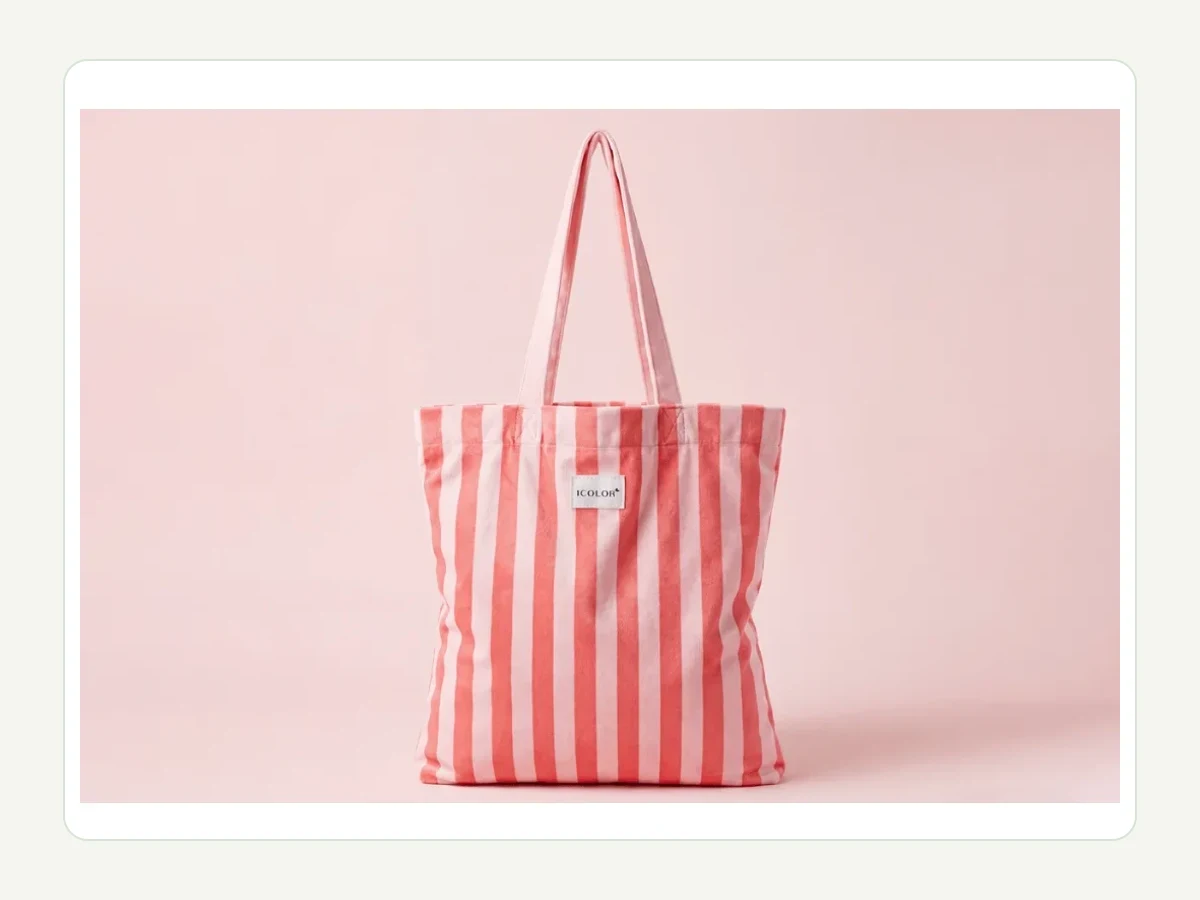
Logo samples should be reviewed for size, position, color, clarity, edge quality, handfeel and durability. Artwork on a computer cannot fully predict how the logo will appear on fabric, leather alternative, label or metal.
| Logo process | What to check | Factory-side note |
|---|---|---|
| Screen printing | Color, edge bleeding, surface coverage and colorfastness | Very small text may blur and should be enlarged if needed. |
| Embroidery | Thread color, puckering, backing paper and stitch density | Thin fabric may wrinkle even with backing. |
| Heat transfer | Color match, clarity, edge feel and fixation | Good for many colors, but material surface still affects the result. |
| Woven label | Size, stitching position and brand color | It must match the bag scale and sewing location. |
| Patch or metal detail | Mold detail, edge finish, placement and surface finish | Artwork and placement should be checked carefully before tooling. |
A logo will not look exactly the same on screen, paper, cotton, rPET or vegan leather. Even the same color can shift visually by surface and texture. The sample stage is where the buyer should decide whether the real material effect matches the brand expectation. Our heat transfer printing and embroidery custom tote bags guides cover process-level checks.
What sewing and structure details should be checked?
Sewing checks should cover stitch spacing, loose threads, crooked sewing, skipped stitches, reinforcement, handle alignment, zipper function, lining, pockets and hardware. Handle alignment is one of the most visible quality details.
The most common visible sewing issue in tote bags is handle misalignment. If the handles are not balanced, the whole bag looks less professional, even when the material and logo are correct. Buyers should also check whether reinforced areas feel strong enough for the intended use.
- Check whether the two handles are aligned and symmetrical.
- Pull gently on the handles to evaluate strength and reinforcement.
- Open and close zippers, magnetic snaps and inner pockets.
- Inspect lining, seams, thread ends, skipped stitches and stains.
- For metal parts, confirm whether salt spray testing is required for the project.
When should packaging and retail details be confirmed?
Packaging can sometimes be confirmed slightly later than the main sample, but hangtags, barcode stickers, wash labels, composition labels, origin labels, paper cards and polybag choices should be locked before packing begins.
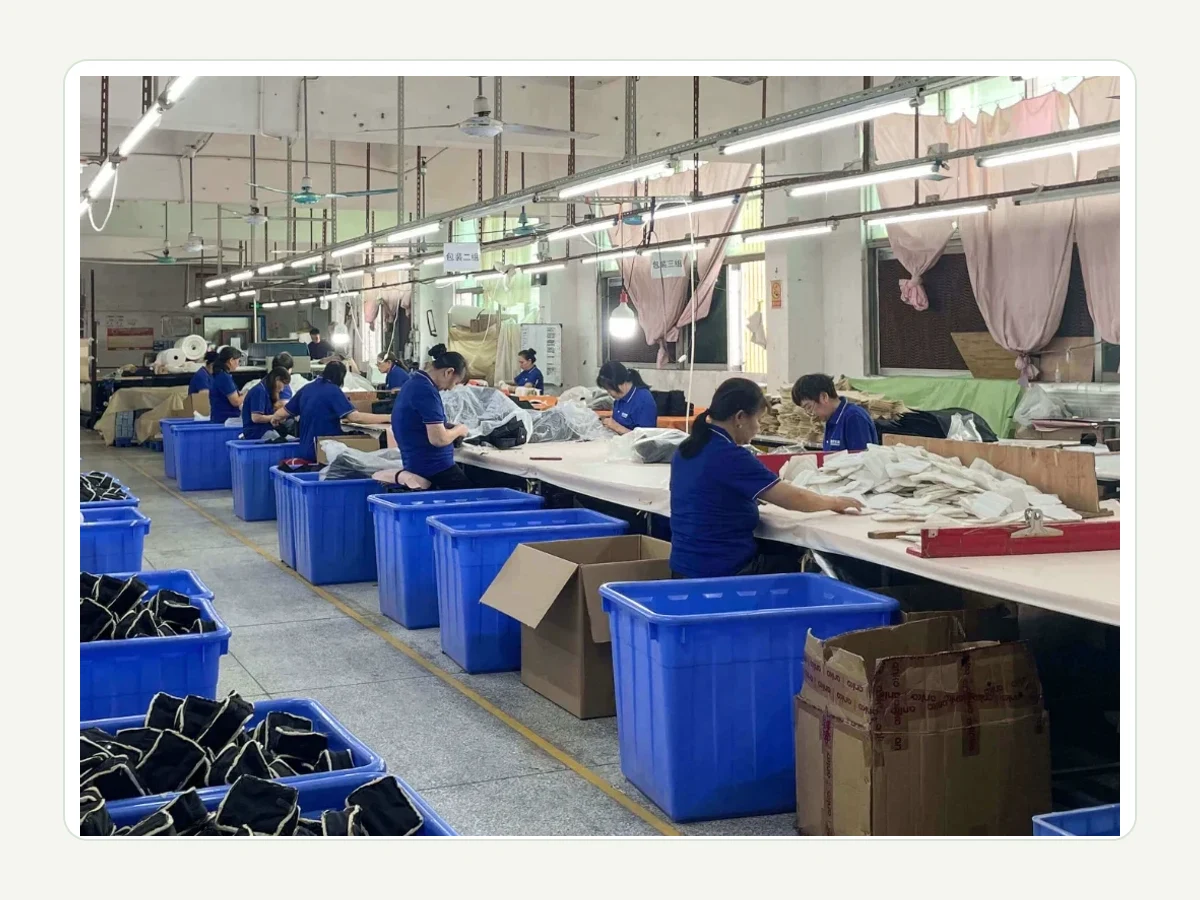
For retail and private label tote projects, packaging is part of the product experience. For GWP and hotel projects, packaging affects presentation, carton planning and whether the gift feels over-packed. FSC paper and packaging3, recycled-content polybags and reduced plastic filling can be discussed when they fit the project.
Retail packaging may also require barcode control. GS1 General Specifications5 are often relevant when barcode data, SKU labels or retailer requirements are part of the project.
Packaging added later may not always delay the project, but it can affect cost and coordination. The safer rule is simple: confirm the packaging direction before materials arrive and before the factory prepares final packing.
Which sample changes affect cost or timeline?
Most sample changes can affect cost or timeline, but size increases, material changes, extra logo colors, added packaging or new labels are especially important. If the main material must be reordered, the project schedule should be reviewed again.
Small corrections may be manageable, but bulk planning should not assume that every change is small. A larger bag uses more fabric. A new material may require sourcing or custom treatment. More logo colors can raise process cost unless the method is heat transfer. Added hangtags or packaging parts also add work and cost.
| Change request | Risk level | Why it matters |
|---|---|---|
| Minor logo position adjustment | Low to medium | Usually manageable before bulk if confirmed early. |
| Size increase | High | May require more material or material reorder. |
| Main material change | High | Affects handfeel, color, cost and timeline. |
| More logo colors | Medium to high | May increase screen printing cost or process complexity. |
| Added hangtag or retail packaging | Medium | Adds printing, approval and packing coordination. |
How does a sample become the bulk production standard?
After the buyer approves the pre-production sample, the factory should retain a signed reference sample, take photos, prepare a production sheet and use that standard for workshop production and QC inspection.
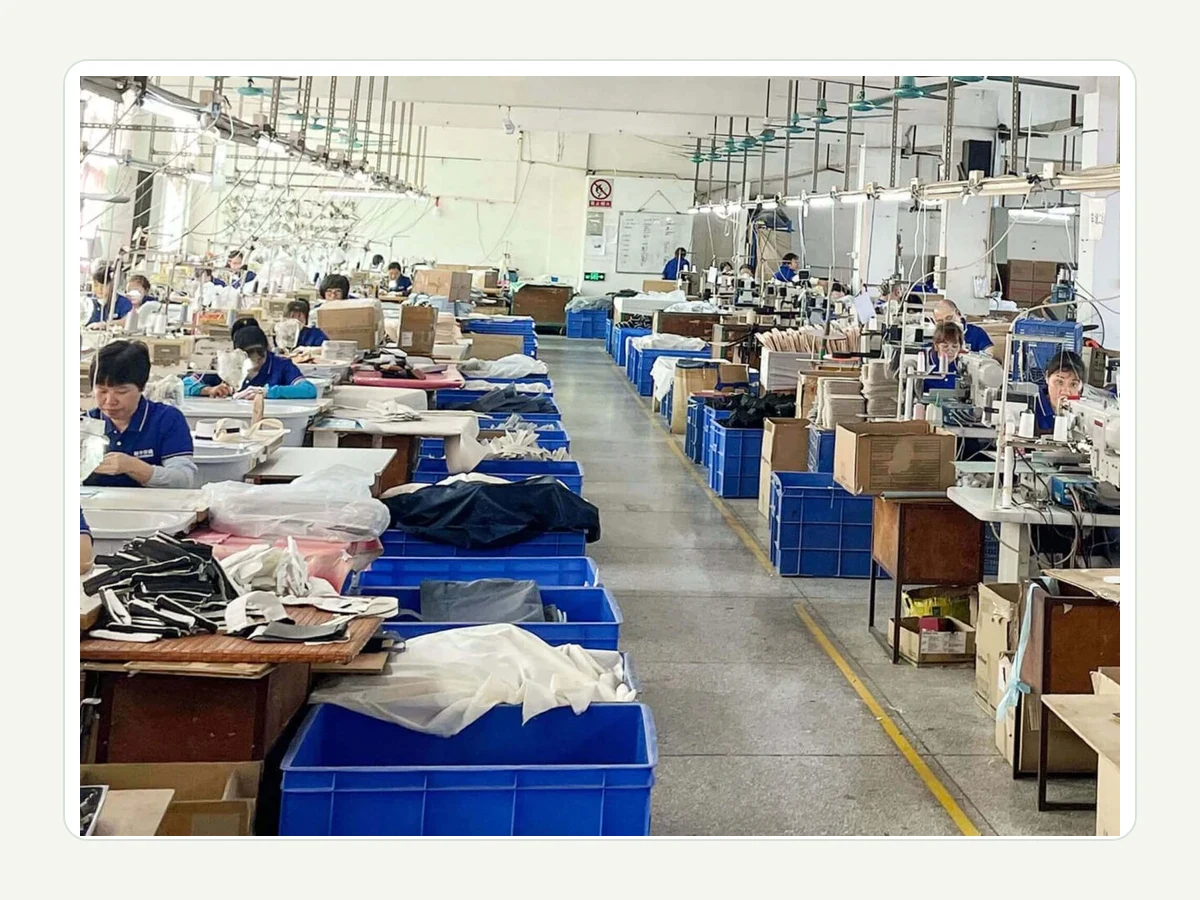
A practical factory route is to make two samples when needed: one sent to the customer and one retained internally. After the customer confirms the sample, the retained sample becomes the signed standard for the workshop. The production team then follows the sample, photos and process sheet.

During production, QC should check early pieces as soon as possible and report issues immediately. The factory can correct problems before they spread through the order. Finished goods are then inspected against the approved sample before packing, with final spot checks before shipment.
What should be in a sample approval brief?
Before approving a custom tote sample for bulk production, buyers should check material, size, logo effect, sewing, packaging, color reference, product fit and whether the sample matches the final order specification.
- Approved artwork and logo size.
- Pantone or physical color reference.
- Material type, fabric weight and handfeel.
- Bag size, gusset and handle drop.
- Product-fit test for GWP, retail or welcome-gift use.
- Logo process effect: printing, embroidery, label, patch or metal detail.
- Sewing, handle reinforcement and inside finishing.
- Packaging, hangtag, barcode or label files.
- Required documents: recycled material scope, OEKO-TEX, BSCI, FSC or test reports where applicable.
- Written approval notes before bulk production.
If textile safety or harmful-substance testing is part of the buyer's requirement, confirm whether OEKO-TEX STANDARD 1002 or another testing route applies to the actual material and project scope. If supplier onboarding requires social compliance information, amfori BSCI4 may be relevant depending on the buyer's policy.
Real sample correction: from a flat two-panel tote to a side-gusset structure
A recent 500-piece cotton tote launch order changed structure after the buyer reviewed the first physical sample. The lesson was to approve silhouette, filled shape and packing volume together, not from a reference image alone.
Initial brief
The brand buyer supplied a reference image and target dimensions for a cotton tote. We suggested 16 oz cotton canvas, and the first sample followed the two-panel construction shown in the reference.
What the physical sample revealed
The two-panel sample matched the flat reference, but after handling the real sample the buyer wanted a more dimensional and better-defined silhouette for the launch product. This design-direction change only became clear after the physical sample was reviewed.
Correction path
We presented a side-gusset construction and added bottom support so the bag could hold a more structured shape. The buyer accepted the revised direction before bulk production.
Commercial trade-off
The side gusset and bottom support meant the finished bag could not be packed completely flat. Folding thickness and shipping volume increased, but the buyer accepted that trade-off because the shaped presentation was more important for this 500-piece order.
Factory-side lesson
A reference image can define the starting silhouette, but it does not prove how the tote will look when filled or how the structure will affect carton volume. Approve the physical sample, intended contents and packing route together before bulk production.
Continue from sample correction to project scoping. If the approved tote uses a special silhouette, side gusset, hard support or other non-standard structure, review the specialty tote route. Before confirming delivery cost, use the packaging options guide to check folding thickness, carton loading and freight impact.
Send the revised sample, intended contents, quantity and delivery market for review.
Less suitable fit for this sample approval route
This sample approval route is less suitable for buyers who cannot review a physical sample, confirm final order requirements, provide artwork or packaging files, or allow time for corrections before bulk production.
It may also be less suitable for very urgent projects that rely only on photo approval, orders below MOQ, or teams that change size, material, logo process or packaging after approving the sample. Ecoicolortote is a stronger fit for MOQ 500+ brand projects where the sample can become a clear production and QC reference before bulk manufacturing starts.
Send your sample photos, approved artwork, Pantone reference, target quantity, material direction, packaging needs and launch date. We can help check whether the sample is ready to become the bulk production standard. Contact Ecoicolortote.
FAQ: Custom tote bag sample evaluation
What is the MOQ for custom tote bag projects?
Ecoicolortote custom tote bag MOQ starts from 500 pcs per style. Final planning depends on material availability, color, logo process, packaging and document requirements. If a buyer needs multiple styles, colorways or packaging versions, MOQ and setup should be reviewed per style so the sample standard matches the real production plan. This prevents one sample from being approved for a scope that production cannot repeat consistently.
How long does custom tote bag sampling take?
Sample timing is confirmed after the material, construction, logo method, artwork, packaging and approval scope are clear; the working schedule also depends on revision speed and current capacity. Timing can change when custom material, special color matching, metal details, packaging files, labels, testing or document requirements are added before sample approval. Buyers should confirm the sample route before fixing the launch timeline.
Can I approve a tote bag sample by photo only?
Photo approval is risky because it cannot fully show material handfeel, thickness, structure, color under real light or logo surface effect. For bulk orders, physical pre-production sample approval is safer because the sample can be measured, touched, tested with real contents and used as the QC reference during production. Photos should support approval, not replace the final physical standard.
What should I test with a tote bag sample?
Buyers should measure the size, test real product fit, check material handfeel, review logo clarity and color, inspect sewing and handles, and confirm packaging details when relevant. The sample should also be carried, folded, filled and compared with the original brief so the team can catch practical issues before bulk approval. For GWP or hotel projects, real contents should be tested inside the bag.
Do certification documents need to be confirmed during sampling?
If your project needs recycled material documentation, OEKO-TEX, FSC packaging or other documents, confirm the requirement early. Documents should match the material, order scope and supply chain used for the project. It is safer to check claim wording and document scope before hangtags, packaging cards or product files are printed. Late document requests can change cost, timeline or available material options.
Should packaging and labels be approved with the sample?
Yes, when packaging affects retail presentation, barcode control, hangtag placement, gift value or carton packing. Packaging can sometimes be finalized slightly later, but the direction should be clear before bulk packing. For retail, GWP or hotel welcome programs, packaging files and label placement can affect both cost and delivery timing. A first-piece packing check is useful when several labels or SKUs are involved.
What changes require another sample before bulk production?
Material changes, size increases, structure changes, new logo processes, important color changes, added hardware or major packaging changes may require another sample or pre-production confirmation before bulk production. If the change affects fit, cost, durability, document scope or brand appearance, the buyer should not rely only on written approval notes. The revised sample should become the updated production reference.
Trademark and certification note
Textile Exchange, OEKO-TEX, FSC, amfori BSCI, GS1 and other standards, certification or organization names belong to their respective owners. This article is a buyer-side sourcing guide and does not claim that every material, sample, factory, packaging item or shipment automatically carries every listed certification. Buyers should confirm current document validity, certificate scope, material coverage, packaging claim scope and market requirements before final quotation, sample approval or bulk production.