Zoe Yu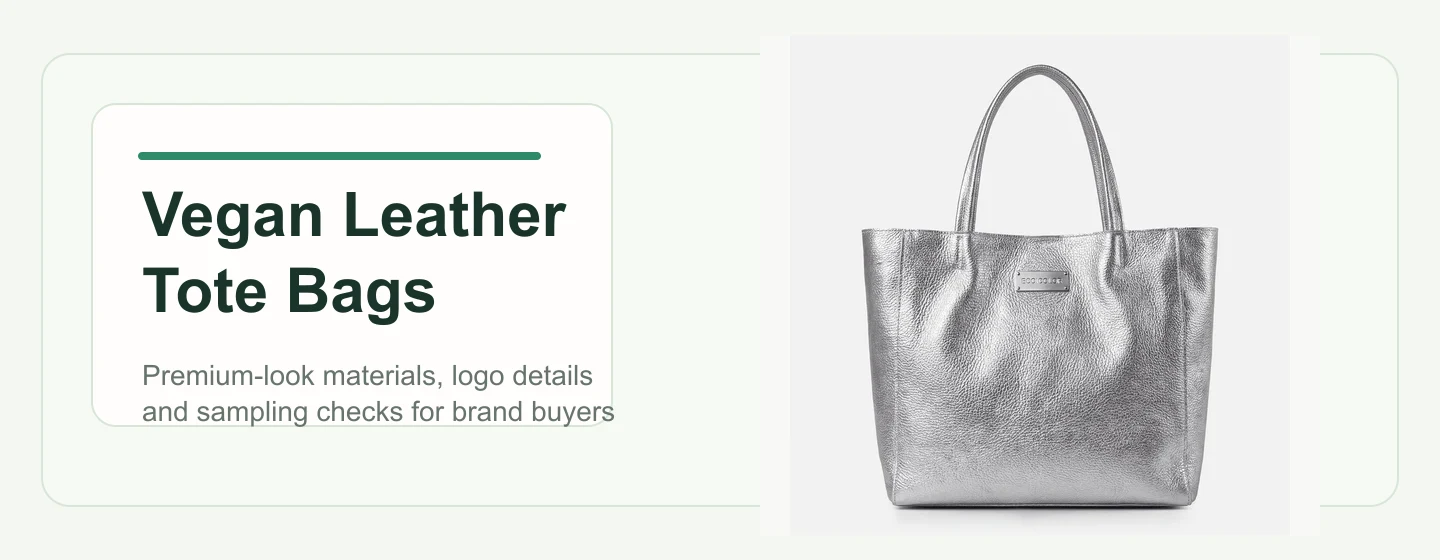
From our factory side, vegan leather tote bags are usually not the right choice for low-budget giveaway bags. They are better for retail private label, hotel lobby retail, premium brand merchandise and higher-positioned GWP projects where the buyer cares about structure, logo detail and brand feel.
TL;DR: Vegan leather tote bags are best for MOQ 500+ brand projects that need premium structure, leather-look material, refined logo detail and sample-first approval. Buyers should confirm whether PU, recycled PU or a plant-based leather-look option fits the brand position, budget, logo method, packaging and claim scope. Vegan means non-animal material; it does not automatically prove recycled, natural, compostable or lower-impact.
Buyer Summary
- Best for: premium GWP, DTC retail, private label, hotel lobby retail and brand merchandise projects from 500 pcs per style.
- Main decision: whether stable PU, recycled PU or a story-led plant-based leather-look material best fits the brand position, budget, structure and claim scope.
- Factory-side note: vegan leather means non-animal material; it does not automatically prove recycled, natural, compostable or lower-impact.
- What to prepare: use case, quantity, size, material direction, logo file, logo method, packaging plan, document needs, launch date and shipping destination.
Best fit for this vegan leather tote guide
This guide is best for beauty, wellness, DTC, retail, hotel and premium merchandise buyers planning MOQ 500+ vegan leather tote bag projects where product feel matters more than the lowest possible unit price. It is especially useful when the buyer is comparing PU, recycled PU, cactus, apple, pineapple or other leather-look materials and needs to understand how material choice affects hand feel, logo detail, structure, packaging, document scope and claim wording. The strongest fit is a brand project with a launch window, retail or GWP purpose, logo file, packaging direction and willingness to approve a physical sample before bulk production.
What is vegan leather for tote bag projects?
For tote bag sourcing, vegan leather usually means a non-animal leather alternative. In real projects, it may include PU, recycled PU, apple leather, cactus leather, pineapple leather or other leather-look materials, each with different cost, availability and claim limits.
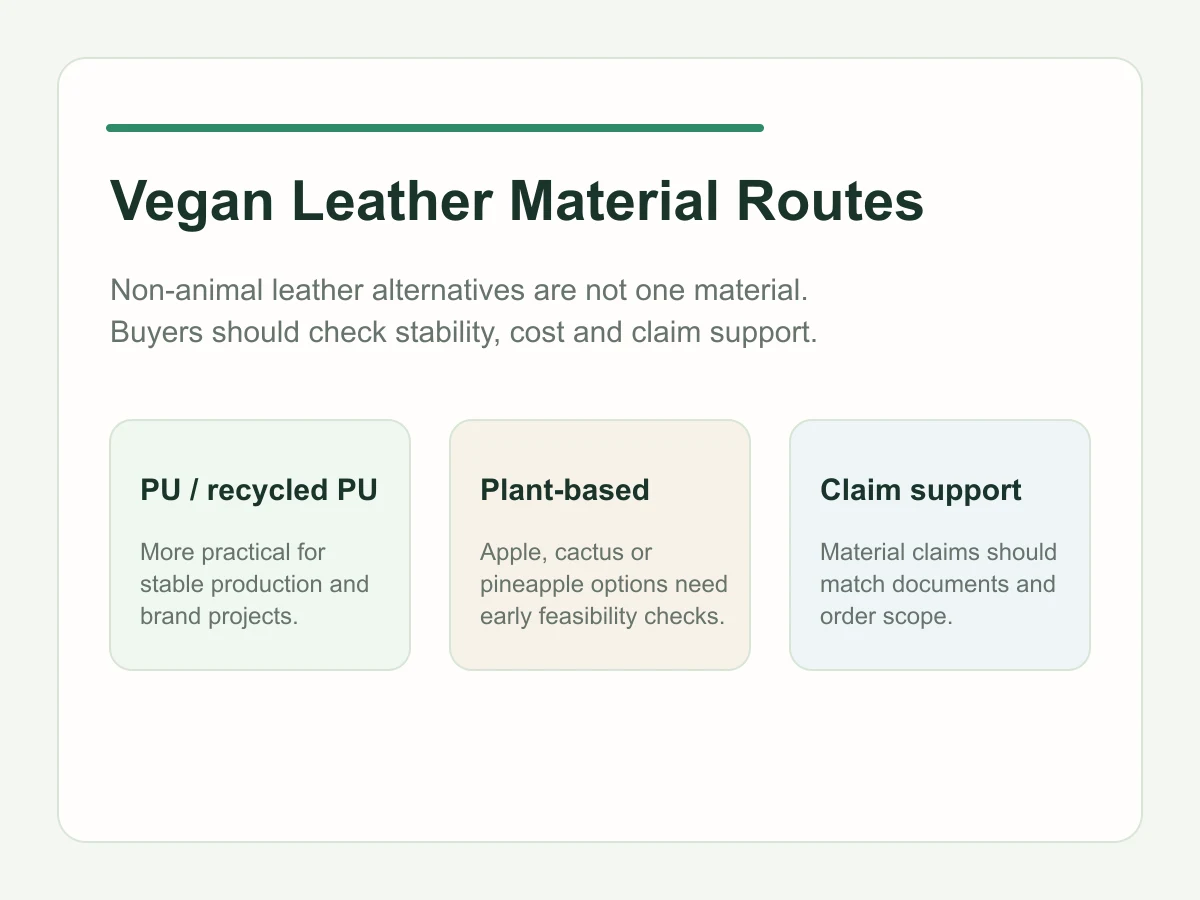
We do not treat vegan leather as one single material. Some options are stable and practical for production, especially PU and recycled PU. Some options sound very attractive from a storytelling angle, such as apple, cactus or pineapple leather, but they may require more time, higher budget or a more careful MOQ discussion.
The buyer should first decide what the material has to do. Is it for a premium retail SKU? A hotel lobby item? A high-positioned GWP gift? Or a brand merchandise piece? That use case decides whether a leather-look tote is worth the extra structure, process and document work.
When does vegan leather make sense for brand buyers?
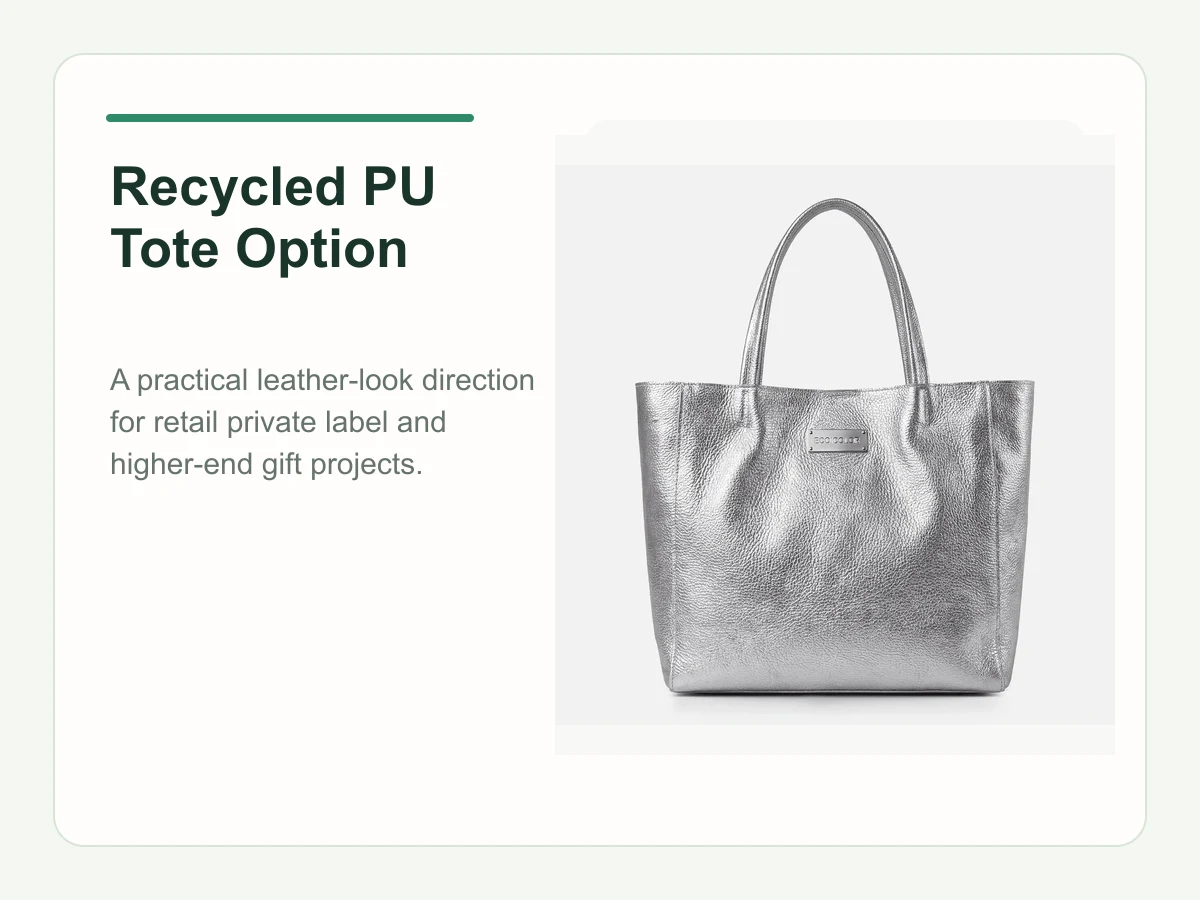
Vegan leather makes sense when the tote needs a premium look, stronger structure or a leather-like brand feel. It is usually a better fit for retail, hotel lobby retail, brand merchandise and higher-end GWP projects than for basic low-cost giveaway bags.
For beauty and wellness brands, vegan leather can work well for membership gifts, gift set pairing, brand merchandise and high-end campaign gifts. For DTC and retail buyers, it can support a sellable private label tote when the product needs to feel more complete than a simple cotton shopper.
For hotels, I would separate welcome totes and lobby retail. A basic welcome tote often needs to be practical and cost controlled. A lobby retail tote can justify more structure, a leather-look material, debossing, hot stamping or a metal plate.
| Buyer scenario | Vegan leather fit | Better alternative when budget is tight | Watch-out |
|---|---|---|---|
| Premium beauty GWP | Good when the gift must feel elevated | rPET with clean logo detail | Confirm packaging and claim wording early |
| DTC / private label retail | Strong fit for sellable tote styles | Canvas with patch or woven label | Structure, lining and hardware affect cost |
| Hotel lobby retail | Good fit for premium guest retail | Cotton canvas with leather-look trim | Test use, handle strength and finish |
| Basic event giveaway | Usually not first choice | Recycled cotton blend or rPET | Vegan leather may overrun the cost target |
Which vegan leather types are practical for tote bags?
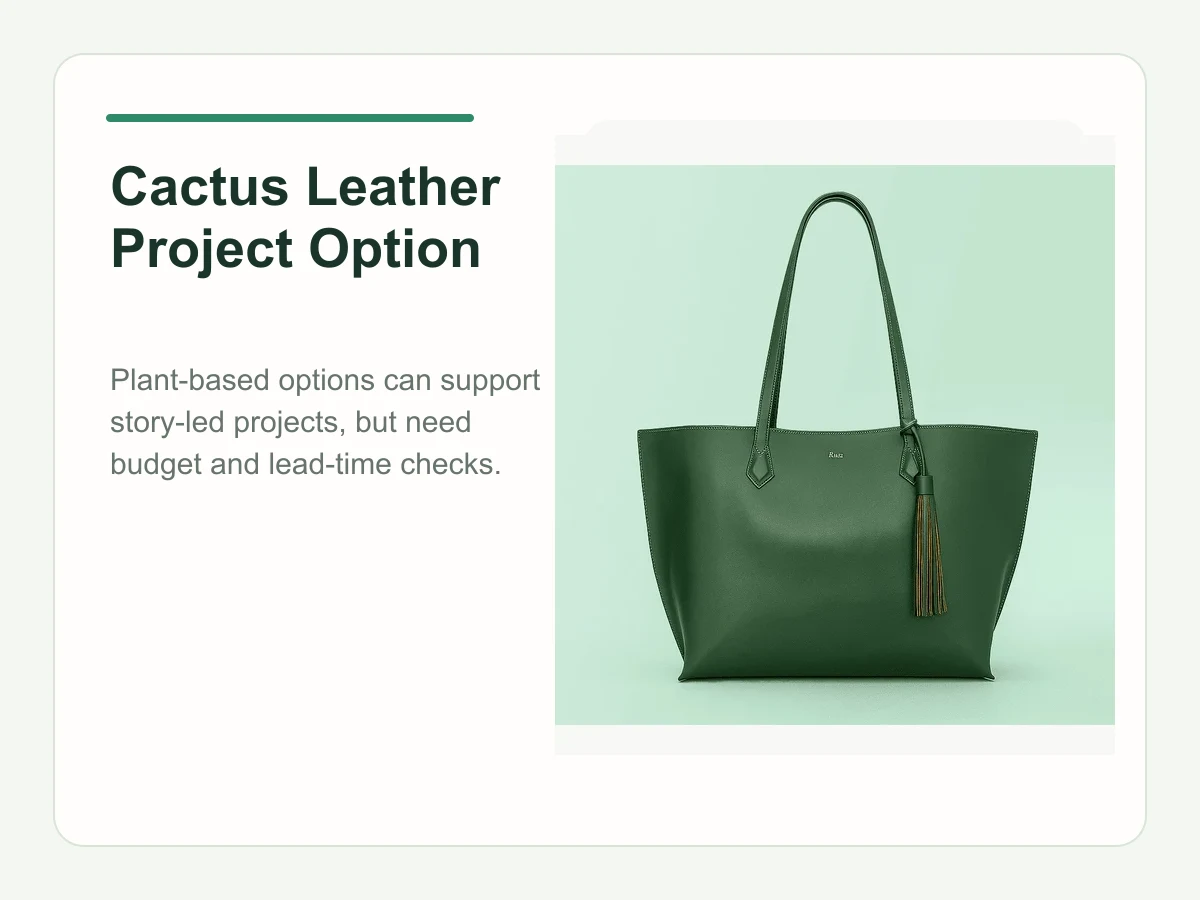
PU and recycled PU are usually the most practical vegan leather directions for tote bags because they are more stable for sourcing and production. Apple, cactus and pineapple leather can be useful for story-led projects, but budget, MOQ and lead time need earlier checks.
Some buyers are first attracted by the material name. Apple leather, cactus leather or pineapple leather sounds distinctive, and for the right brand it can create a stronger story. But from the factory side, the project still has to land through budget, hand feel, structure, logo method, document scope and sample approval.
If the goal is a premium leather-look tote that can be sampled and produced with less uncertainty, PU or recycled PU is often the more practical starting point. If the campaign is built around a plant-based material story, then we can discuss apple, cactus, pineapple or other options, but the buyer should expect earlier material confirmation.
How should logo details be planned on vegan leather totes?
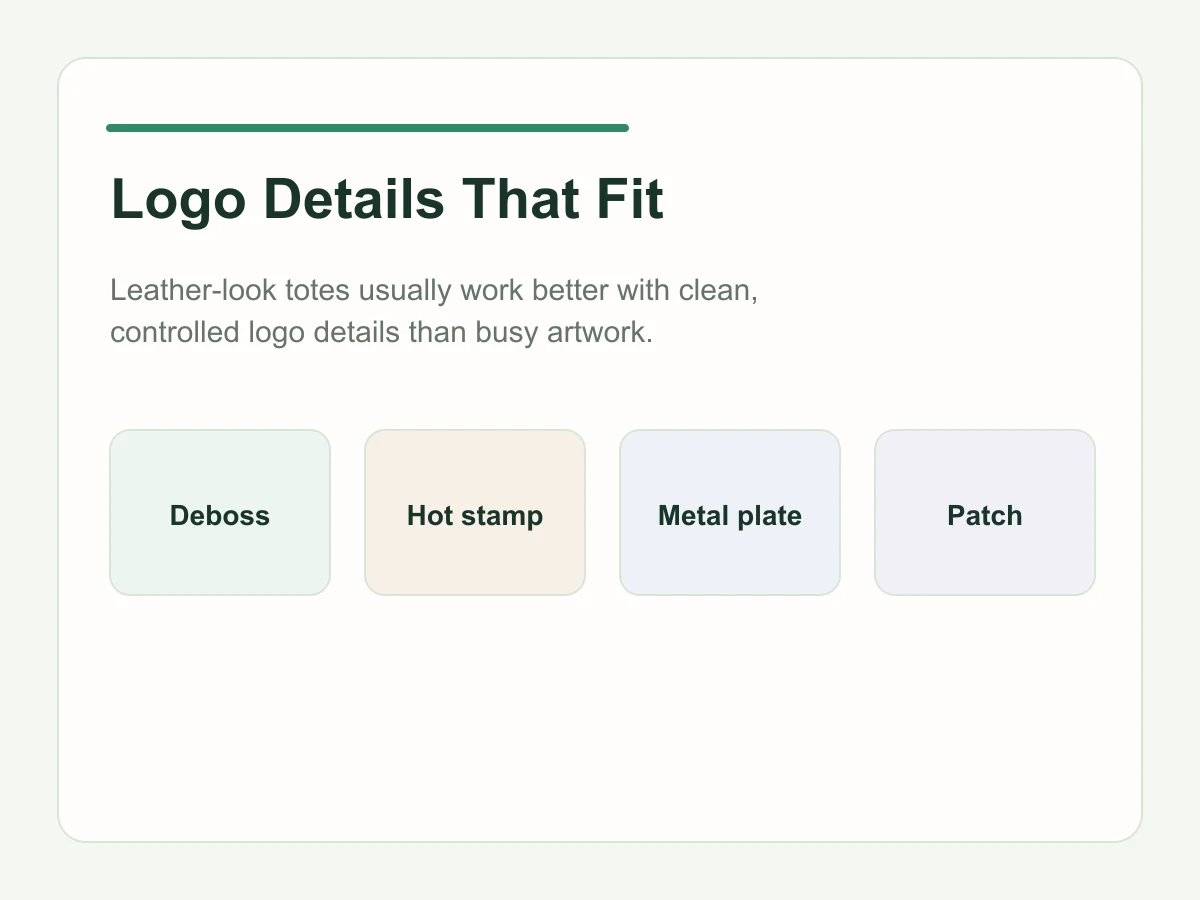
Vegan leather usually works best with cleaner logo details such as debossing, hot stamping, metal plates or leather-look patches. Complex full-surface artwork is usually better handled through other materials and print methods.
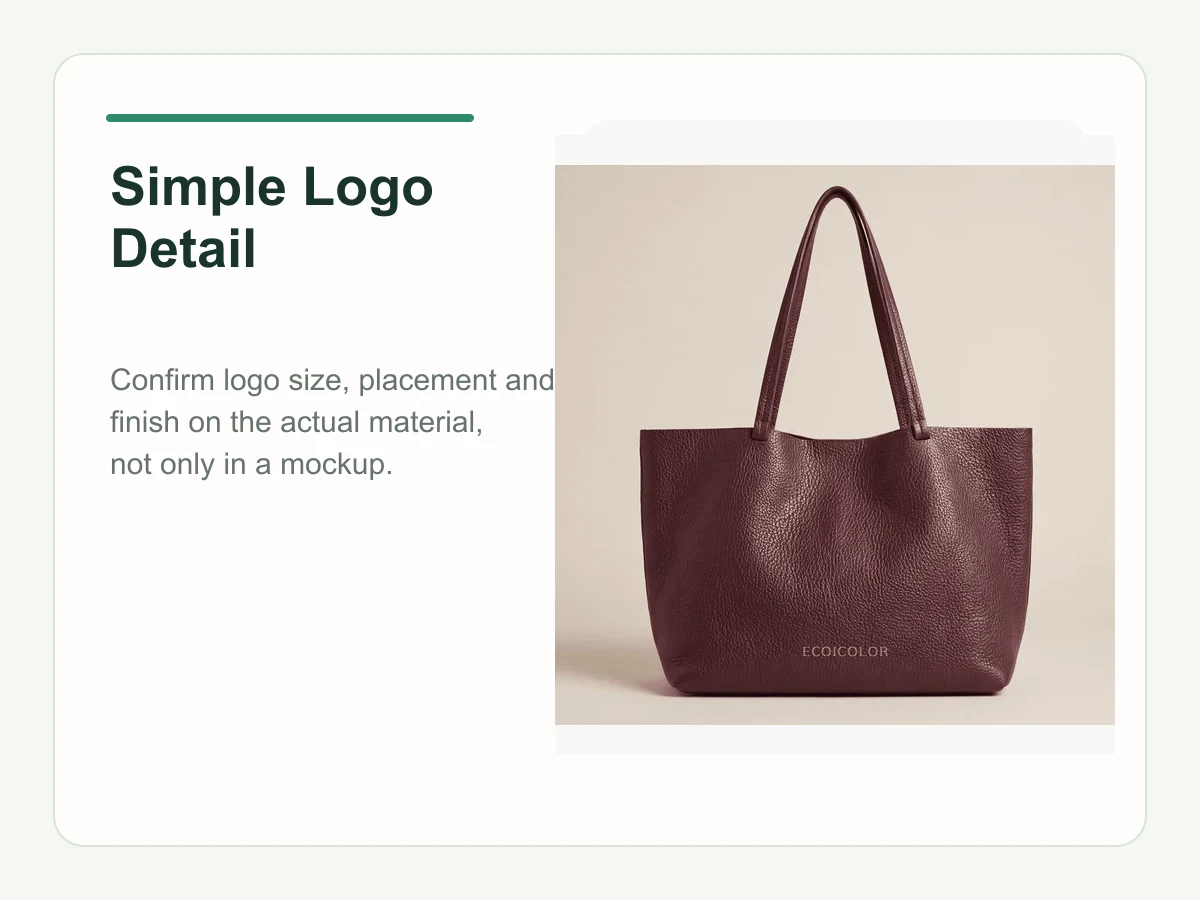
For leather-look materials, the most premium result often comes from restraint. A small debossed logo, a foil-stamped mark or a metal plate can make the tote feel more finished than a large, busy print. This is especially true for hotel retail, premium GWP and private label projects.
Vegan leather can also combine with edge painting, glue work, multiple hardware pieces and embedded nameplates. Those details can look strong, but they also increase sampling importance. A computer mockup is not enough for this type of tote.
| Logo detail | Good for | What to confirm | Risk if skipped |
|---|---|---|---|
| Debossing | Quiet premium branding | Depth, position, material surface | Logo appears too shallow or uneven |
| Hot stamping | Gift and retail presentation | Foil color, heat, edge clarity | Foil mismatch or peeling risk |
| Metal plate | High-end hardware look | Mold drawing, plating, fixing method | Extra cost, scratches or fixing issue |
| Patch / label | Softer lifestyle detail | Size, stitching, edge, color | Position or color mismatch |
What affects MOQ, cost factors and timeline?
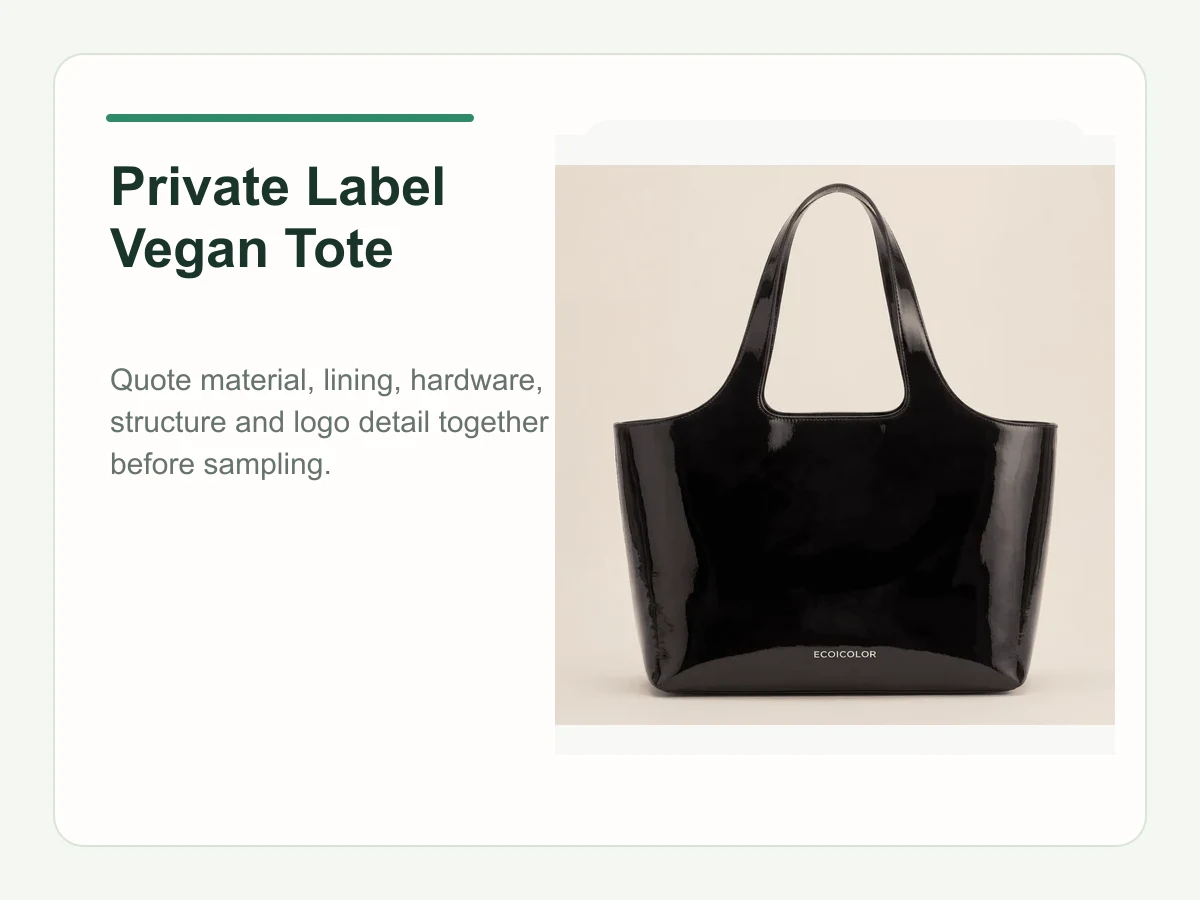
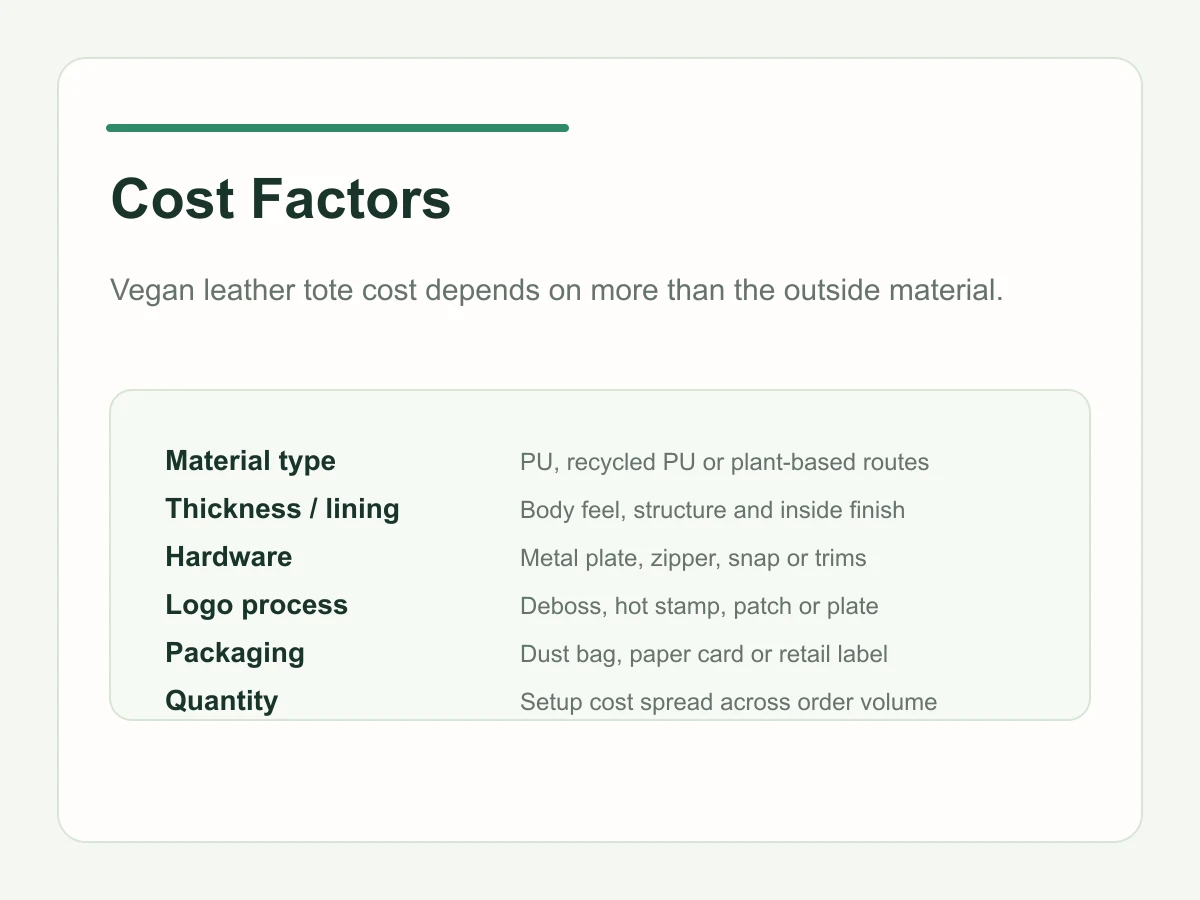
Vegan leather tote cost is affected by material type, thickness, lining, hardware, edge finishing, logo process, packaging and quantity. Our general MOQ starts from 500 pcs per style, but feasibility depends on the exact material and structure.
Vegan leather totes are usually more expensive than basic rPET, recycled cotton or canvas totes because the structure and finishing details matter more. The buyer may need lining, stronger handles, edge treatment, hardware, special logo methods and more careful packaging.
Sample timing is confirmed after the material, construction, logo method, artwork, packaging and approval scope are clear; the working schedule also depends on revision speed and current capacity. Final timing depends on material availability, project complexity and how quickly the buyer confirms details.
What documents and claims should buyers confirm?
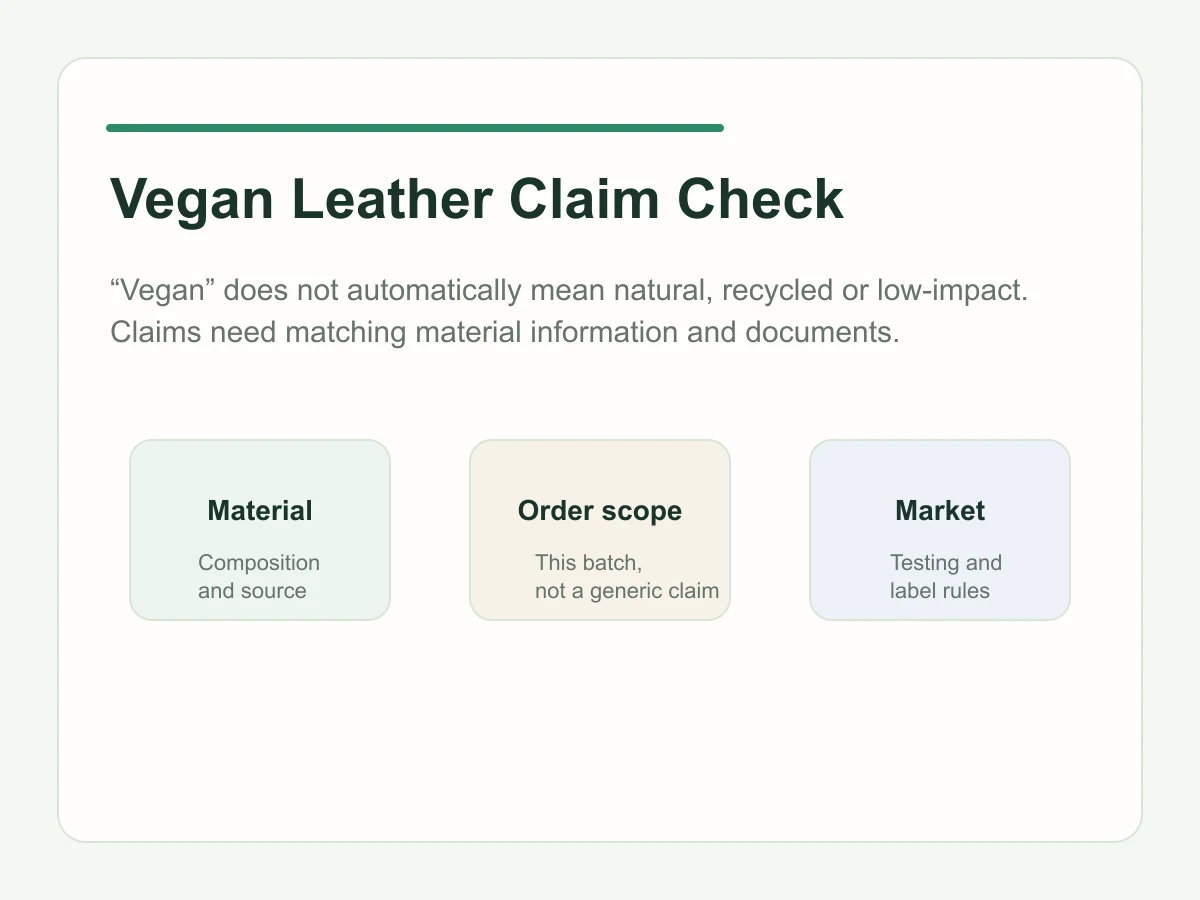
Vegan leather means non-animal material. It does not automatically mean recycled, natural, compostable or lower-impact. Any recycled, plant-based, FSC packaging or safety claim should match the material, factory, order scope and packaging claim.
This is an important compliance point. A buyer can say a material is vegan only if the statement is accurate. But if the campaign also says recycled, plant-based, environmental claim or lower-impact, the buyer should confirm what documents support that wording. The US FTC Green Guides1 are one useful reference for environmental marketing claims.
For textile safety or restricted substance concerns, buyers may ask about OEKO-TEX STANDARD 1002, REACH, Prop 65 or other market-specific testing. For paper hangtags or paper cards, FSC label guidance applies to paper packaging claims3, not to the vegan leather itself.
For factory-side social compliance, some brand buyers also ask about audit frameworks such as amfori BSCI4. If a market requires warning or chemical disclosure checks, buyers may also review official references such as California Proposition 65 guidance.5
For EU-bound products, environmental wording also needs extra care. The European Commission Green Claims work focuses on claims that are clear, evidence-based and verifiable6 For Italy-bound products, UNIC explains that Italian leather terminology rules can restrict words such as leather, pelle or cuoio for non-animal materials7; buyers should confirm local labeling wording before using vegan leather on product labels.
Plant-based leather-look materials also need careful wording. A material may contain cactus, apple, pineapple or other plant-derived content, while still using PU, resin, coating or other polymer support for strength and finish. Unless the supplier can document the composition, avoid claims such as fully plant-based, fully natural or broad environmental claim.
| Material direction | What buyers should verify | Safer claim wording | Watch-out |
|---|---|---|---|
| PU / recycled PU | PU type, recycled-content evidence if claimed, testing scope | Vegan leather alternative; recycled PU only when documented | Vegan does not automatically mean lower-impact |
| Cactus / apple / pineapple leather-look material | Plant-derived content, polymer support, coating and supplier documents | Partly plant-based leather alternative when supported | Do not assume 100% plant-based |
| Bamboo leather-look material | Actual composition and whether the term bamboo is allowed in target market | Bamboo-derived or bamboo-look material only when documented | Material names can be misunderstood by consumers |
| Premium synthetic leather | Base material, finish, restricted substance testing and label wording | Non-animal leather alternative or synthetic leather-look material | Some markets restrict leather terminology |
How should vegan leather samples be checked?
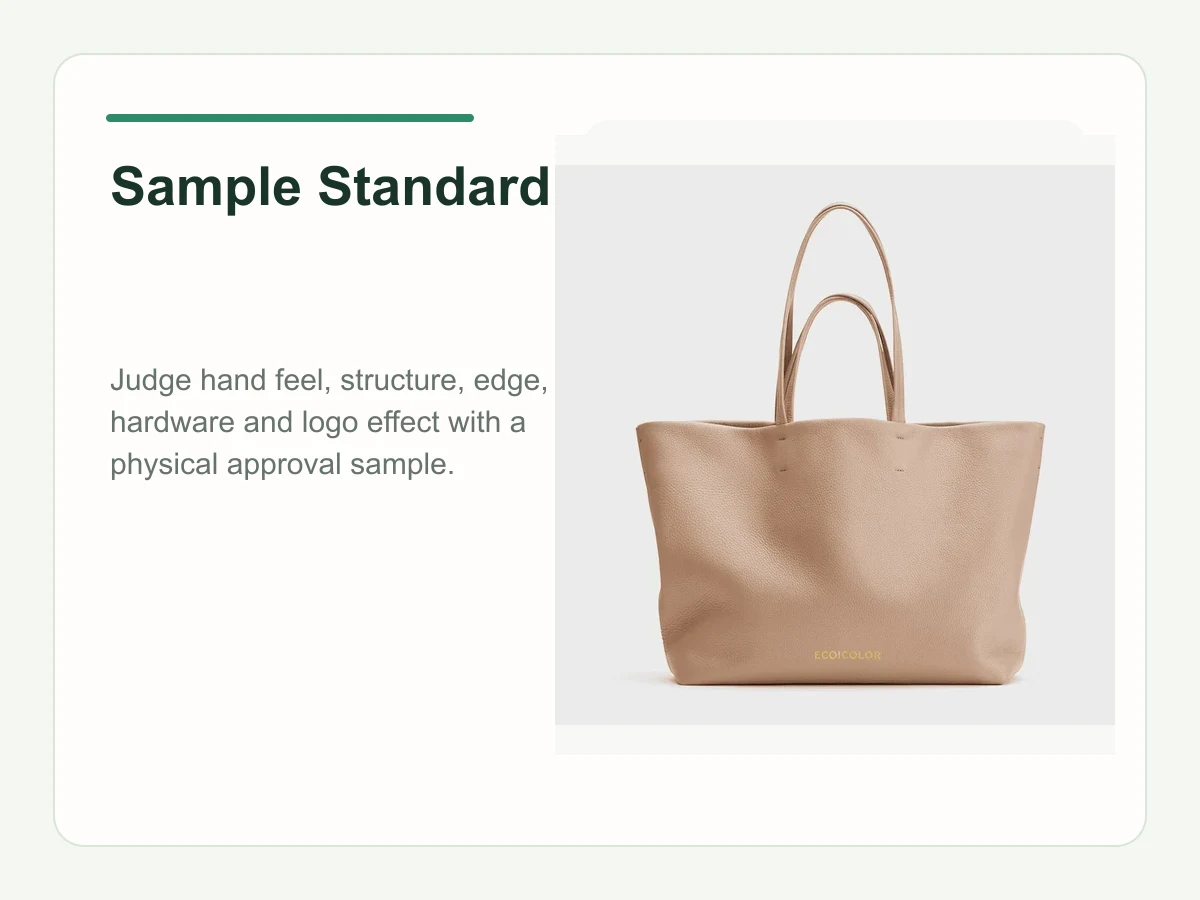
Vegan leather samples should be checked by hand feel, thickness, surface finish, logo effect, edge treatment, hardware, lining and packaging. A photo can help, but the physical sample should be the production standard for premium projects.
This material category is sensitive to touch. Two vegan leather options can look similar in a photo but feel very different in hand. The buyer should review the surface, softness, thickness, structure, edge finish and logo detail before approving the project.
For a premium tote, the pre-production sample is especially important. Once the physical standard is approved, the factory should use the signed sample, photos, material record and process sheet to guide bulk production. This is also why a late change to material, logo detail or hardware can affect time and cost.
What mistakes should buyers avoid?
The most common vegan leather tote mistakes are choosing by material name only, ignoring hand feel, confirming from photos, adding hardware too late, assuming vegan means lower-impact and comparing quotes without checking structure and document scope.
From our factory side, we often see buyers get excited by material names first. Apple leather, cactus leather or pineapple leather sounds special. But when the project reaches quoting and sampling, the real decision is usually budget, process stability, hand feel, document support and launch timeline.
Another common issue is overloading the design. If the material already has a leather-look premium feel, a clean logo detail may work better than a complicated print. If the project needs full-surface artwork, a different material may be more suitable.
| Common mistake | What happens | Better factory-side approach |
|---|---|---|
| Choosing by name only | The material story sounds good, but cost or MOQ does not fit | Check budget, use case and document needs first |
| Skipping hand-feel approval | Photo looks acceptable, physical sample feels wrong | Approve a material or full sample before bulk |
| Adding metal plate late | New mold, plating or fixing method delays sampling | Confirm logo detail before sample stage |
| Assuming all vegan leather is lower-impact | Marketing claim may be unsupported | Match claim wording with material documents |
Questions to resolve before supplier selection
Use these questions to compare a proposed material route and sample plan. They are procurement checks, not buyer testimonials or evidence of a completed Ecoicolortote project.
Material route and backing
Which coating and backing are proposed, and what evidence supports any recycled or plant-derived content stated in the brief?
Logo and sample compatibility
Which logo method is being sampled on the selected surface, and which edge, handle-root and packing checks must be approved before bulk?
Commercial and claim boundary
Do MOQ, sample timing, delivery market and permitted claim wording fit the project before the campaign story is built around the material name?
What should buyers send before asking for a quote?
For a useful vegan leather tote quote, buyers should send the use case, quantity, size, material direction, logo file, preferred logo method, packaging direction, document needs, target launch date and shipping destination.
If the buyer is not sure which vegan leather direction fits, that is fine. Send the use case, budget level, logo file, quantity and packaging direction first. We can help compare whether PU, recycled PU, a plant-based option, or another material such as rPET or canvas is more realistic for the project.
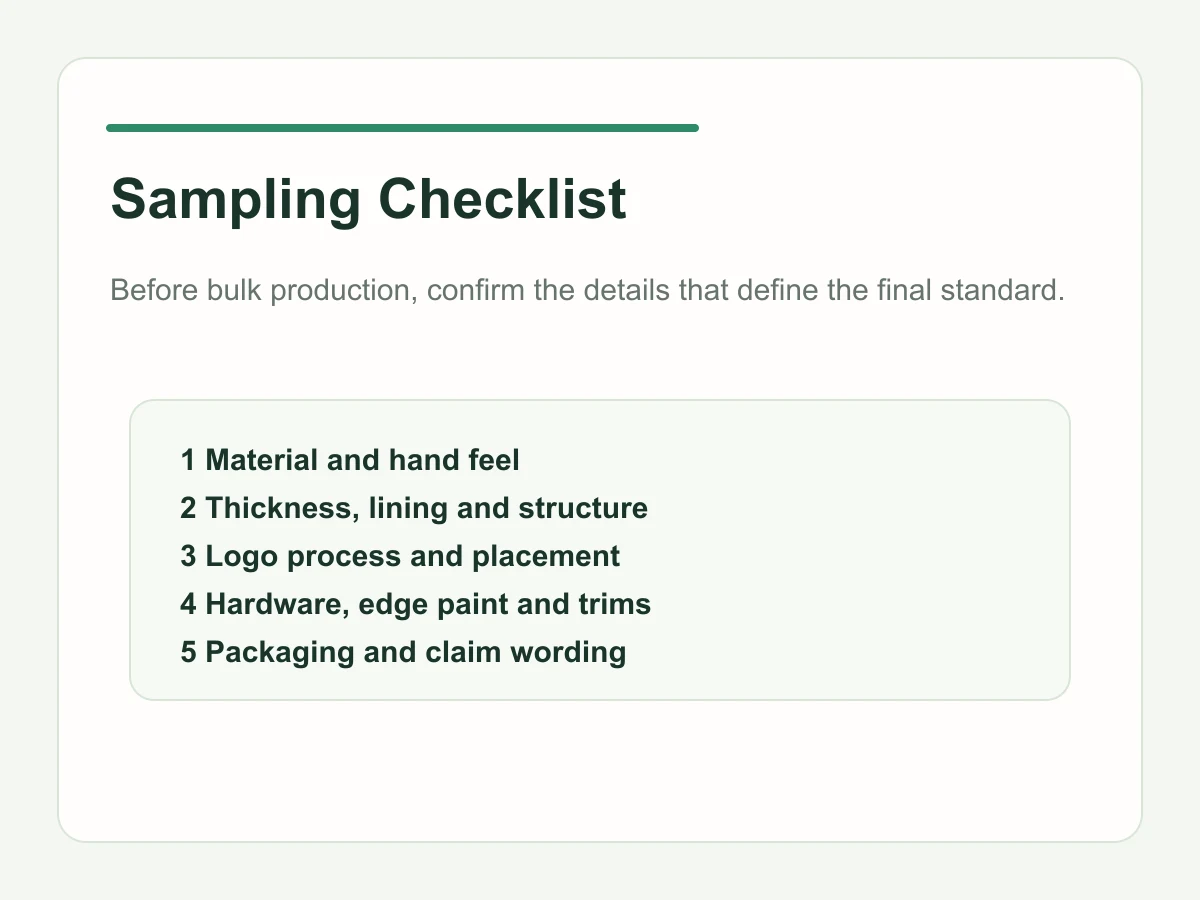
Vegan Leather Tote Sampling Checklist
- Use case: premium GWP, retail SKU, hotel lobby retail or brand merchandise.
- Material direction: PU, recycled PU, plant-based leather-look material or trim only.
- Quantity and colorways: MOQ starts from 500 pcs per style.
- Logo file: AI, EPS or PDF, plus Pantone or approved color sample if relevant.
- Logo method: debossing, hot stamping, patch, metal plate or mixed detail.
- Structure: lining, edge paint, hardware, zipper, pocket and handle construction.
- Packaging: hangtag, paper card, dust bag, carton mark or retail label.
- Documents: material composition, claim support, audit or testing requirement.
- Timeline: sample deadline, launch date and shipping destination.
Less suitable fit for this vegan leather tote route
This vegan leather tote route is less suitable for single-piece gifts, low-budget giveaways, lowest-price-only sourcing, or projects that want premium material claims without physical sample approval and document checks.
Ecoicolortote is usually not the right fit for orders below 500 pcs per style without a clear brand project context, buyers who only ask for the lowest price while expecting premium vegan leather construction, or projects that want recycled, plant-based or broad environmental claims without checking document scope. This route works better when the buyer has a real retail, GWP, hotel or merchandise project and is willing to approve hand feel, logo detail, structure and packaging on a physical sample.
Send your use case, quantity, size, material direction, logo file, preferred logo method, packaging needs, document requirements and launch date. We can help compare PU, recycled PU, plant-based leather-look options, rPET and canvas before sampling. Contact Ecoicolortote.
FAQ: Vegan leather tote bags
Is vegan leather always lower-impact than animal leather?
No. Vegan leather means non-animal material, but it does not automatically prove recycled, natural, compostable or lower-impact. Buyers should check the specific material composition and supporting documents before using environmental claims. The safer sourcing approach is to separate animal-free wording from recycled, plant-based, chemical safety and packaging claims on the project.
Is recycled PU usually more practical than apple or cactus leather?
For many tote bag projects, recycled PU is often more practical because it is usually more stable for sourcing, sampling and production. Apple, cactus or pineapple leather can work for story-led projects, but budget, MOQ, supplier availability, document support and launch timing should be checked much earlier before sampling begins.
What logo method works best on vegan leather tote bags?
Debossing, hot stamping, metal plates and leather-look patches usually fit vegan leather better than complex full-surface artwork. The final choice should depend on the material surface, brand position, budget and physical sample result. Buyers should check logo depth, foil clarity, plating color, fixing method, placement and packaging thickness before bulk approval.
What MOQ and lead time should buyers expect for vegan leather tote bags?
Ecoicolortote is usually a better fit for MOQ 500+ vegan leather tote projects. Sample timing is confirmed after the material, construction, logo method, artwork, packaging and approval scope are clear; the working schedule also depends on revision speed and current capacity. Bulk timing should be confirmed after physical sample approval.
Which material or certification evidence should be checked?
Buyers should check material composition, recycled-content evidence if claimed, restricted-substance testing when needed, FSC scope for paper packaging, factory audit information and local labeling rules for leather terminology. Evidence should match the actual material, component, packaging and market wording, not a general supplier file that may not apply to production.
What should be included in the RFQ?
The RFQ should include use case, quantity, size, material direction, logo file, preferred logo method, lining, hardware, packaging needs, document requirements, target launch date and shipping destination. If the buyer is still comparing PU, recycled PU or plant-based leather-look options, they should share budget level and brand positioning first too.
What mistake causes the most rework?
The biggest mistake is approving a vegan leather tote from a mockup or material name only. Rework often happens when hand feel, surface finish, logo depth, hardware, lining, edge treatment, packaging thickness or claim wording is checked after sampling starts. A physical sample should become the production standard before bulk.
Trademark and certification note
FTC, OEKO-TEX, FSC, amfori BSCI, Proposition 65, European Commission Green Claims and UNIC references are included for buyer education and scope discussion only. They are owned by their respective organizations. Any vegan, recycled, plant-based, textile safety, restricted substance, audit, paper packaging, leather terminology or environmental claim should be checked against the actual material, component, order scope, destination market and buyer requirement before it is used in product labels, packaging artwork or marketing copy.
Sources
- FTC Green Guides - environmental marketing claims↩
- OEKO-TEX STANDARD 100 - textile product safety↩
- FSC labels for paper and packaging↩
- amfori BSCI - producer audit requests↩
- California Proposition 65 official guidance↩
- European Commission - Green Claims↩
- UNIC - leather terminology and Italian Legislative Decree no. 68/2020↩