Zoe Yu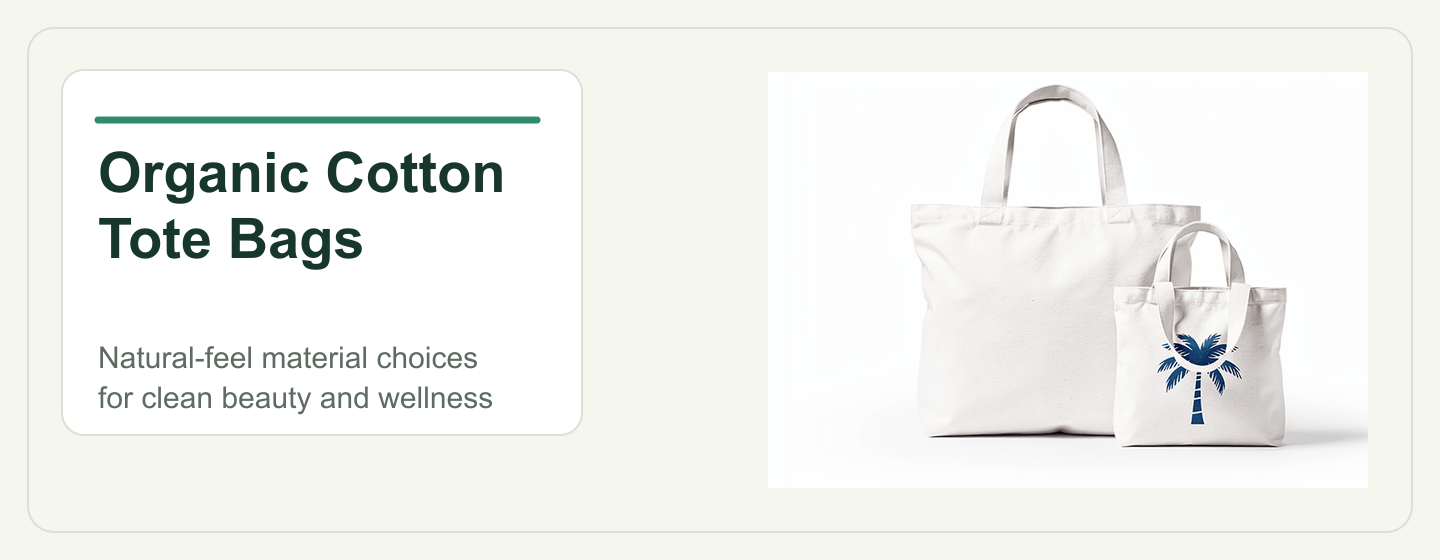
From our factory side, organic cotton is usually a natural-feel material choice for clean beauty, wellness, spa and premium GWP projects. It is familiar to buyers, but it still needs careful checks on budget, logo method, certification scope and physical samples before bulk production.
TL;DR: Organic cotton tote bags are best for MOQ 500+ clean beauty, wellness, spa, hotel gift and premium GWP projects where a familiar natural material story matters. Buyers should compare organic cotton with recycled cotton, canvas, bamboo fiber and rPET based on brand positioning, budget, artwork, hand feel, claim scope, sample approval and launch timing. Organic cotton material does not automatically make the finished tote a certified organic product.
Buyer Summary
- Best for: clean beauty launches, wellness gifts, spa retail, hotel gifts and premium GWP projects from 500 pcs per style.
- Main decision: whether organic cotton supports the brand story, budget, hand feel, artwork and claim scope better than recycled cotton, canvas, bamboo fiber or rPET.
- Factory-side note: organic cotton is not automatically a certified finished-product claim; material scope, chain-of-custody documents and sample approval need to match the project.
- What to prepare: use case, quantity, size, material direction, logo file, logo method, packaging plan, certification need, launch date and shipping destination.
Best fit for this organic cotton tote guide
This guide is best for clean beauty, wellness, spa, hotel, retail and premium GWP buyers planning MOQ 500+ organic cotton tote projects where natural hand feel and claim wording matter. It is especially useful when the buyer is comparing organic cotton with recycled cotton, cotton canvas, bamboo fiber or rPET and needs to decide whether the material story, artwork route, packaging plan, document scope and sample timing make sense together. The strongest fit is a brand project with a real launch window, logo file, packaging direction, certification question and willingness to approve physical samples before bulk production.
When does organic cotton make sense for brand buyers?
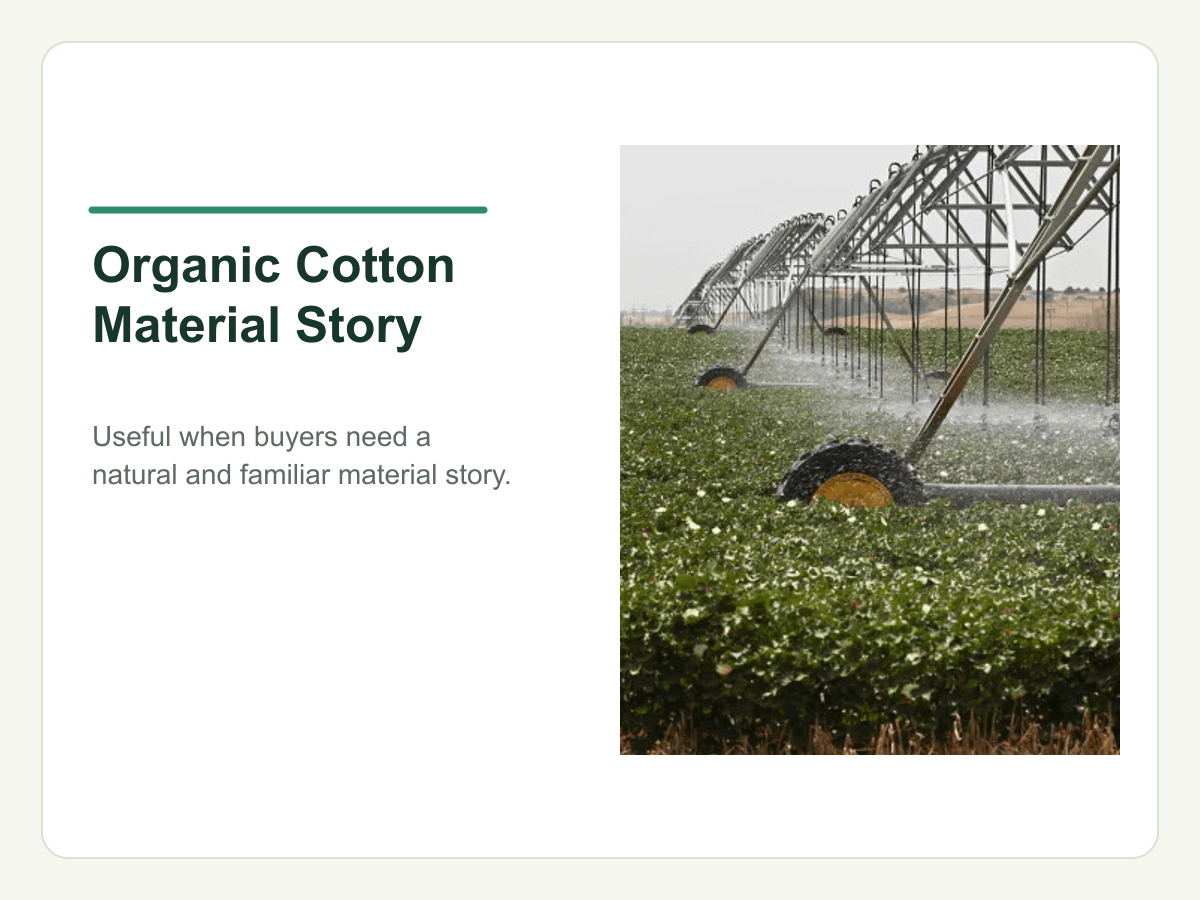
Organic cotton makes sense when the tote needs to support a clean, natural or wellness-oriented brand position. It is especially useful when the buyer wants a material story consumers can understand quickly, but still wants a soft and practical tote format.
I would not position organic cotton as the answer for every responsible-material tote project. It is a familiar material direction, and that familiarity is valuable for clean beauty and wellness brands. But from the factory side, the real decision should include use case, budget, logo artwork, certification requirement and timeline.
For example, a natural skincare brand planning a membership gift may benefit from organic cotton because the material language feels close to the brand. A low-budget event tote may be better served by recycled cotton blend. A full-color seasonal campaign artwork may be easier to handle with rPET.
How does organic cotton compare with recycled cotton, canvas, bamboo fiber and rPET?
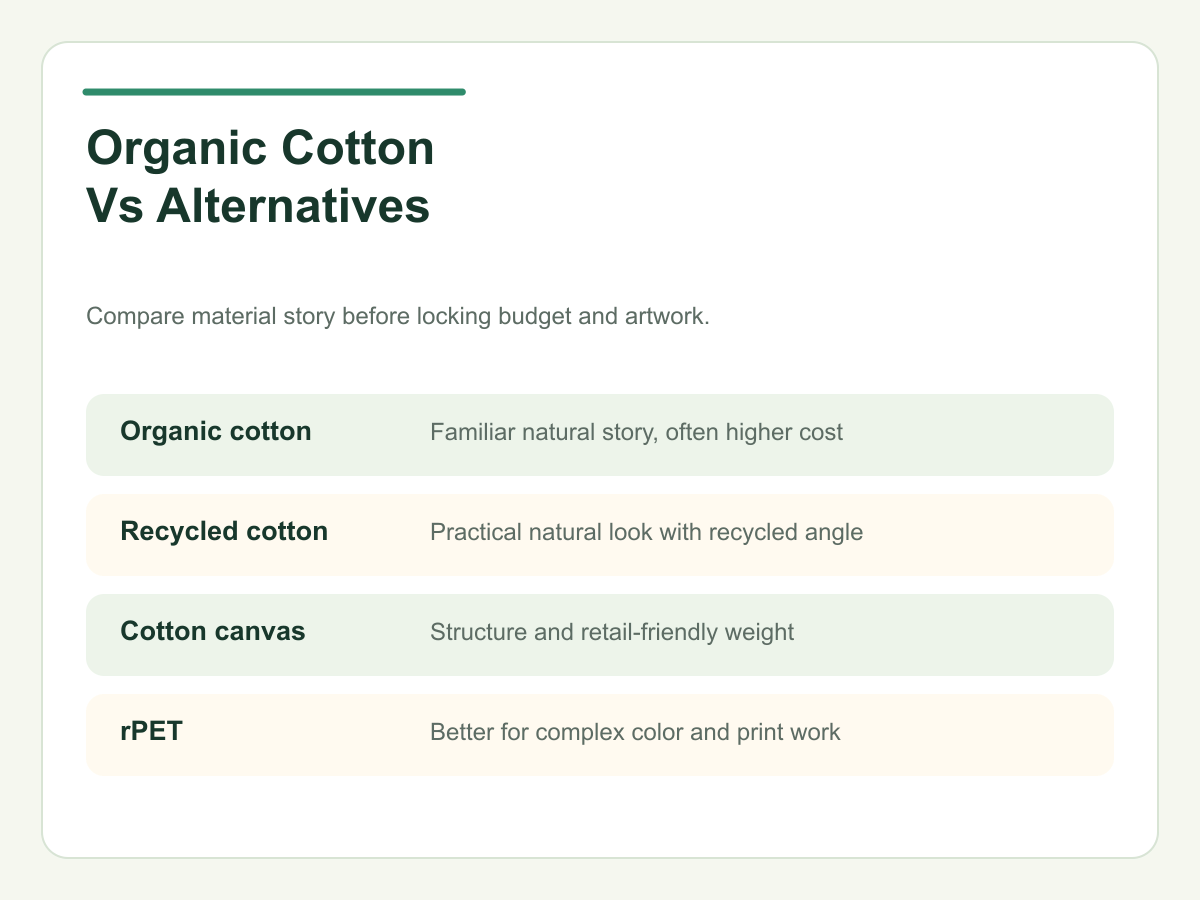
Organic cotton is easy for buyers and consumers to understand, while bamboo fiber can feel more differentiated, recycled cotton can be more cost practical, cotton canvas can add structure, and rPET is often stronger for complex full-color print artwork.
The difference is not only hand feel. In many projects, buyers first feel the difference through brand story, document expectations and pricing. Organic cotton and regular cotton canvas may look similar if the weave and weight are similar, but their claim and sourcing logic are different.
If a buyer asks whether organic cotton is better than bamboo fiber, I would not answer with a fixed ranking. Organic cotton is familiar. Bamboo fiber may feel more distinctive for wellness positioning. rPET can be more practical for full-surface artwork. Recycled cotton can help control cost while still supporting a recycled material story.
| Material direction | Better for | Watch-out | When to compare |
|---|---|---|---|
| Organic cotton | Clean beauty, spa, natural positioning | Higher cost and claim scope | When the brand needs a familiar natural story |
| Recycled cotton blend | Budget-conscious GWP | Composition varies by supplier | When budget is more sensitive |
| Cotton canvas | Structure and retail use | Canvas is a fabric structure, not an organic claim | When the tote needs more body |
| Bamboo fiber | Differentiated wellness story | Claim wording and material route need care | When organic cotton feels too familiar |
| rPET | Complex print, color artwork, campaign graphics | Less natural hand feel | When artwork matters more than cotton story |
Which beauty, wellness and hotel projects fit organic cotton?
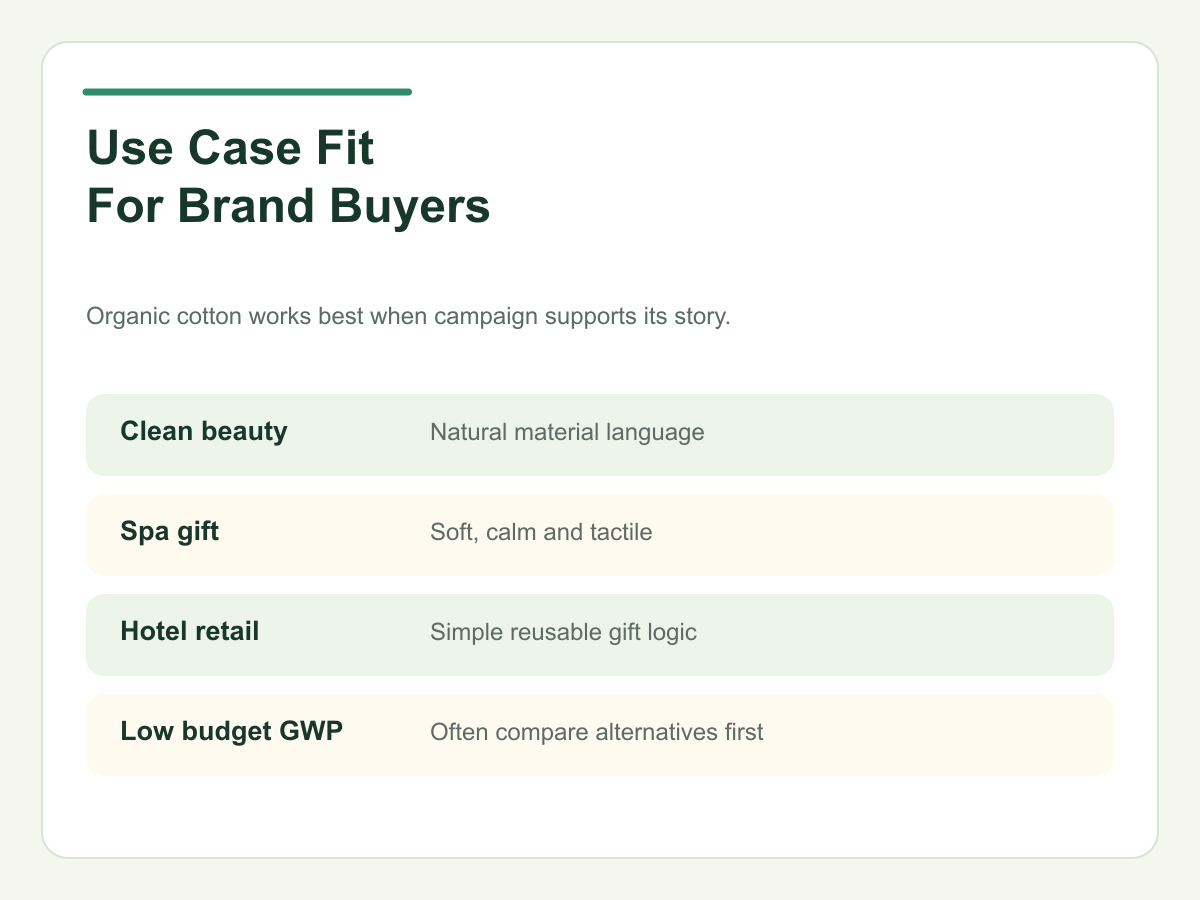
Organic cotton fits clean beauty launches, wellness membership gifts, spa gifts, hotel welcome or retail gifts and natural-positioned private label totes. It is less practical when the project is very low-budget, artwork-heavy or too urgent for material confirmation.
For beauty and wellness brands, organic cotton can support a calmer, softer and more natural presentation. This can work for skincare sets, spa gifts, clean beauty launches and membership programs. For hotel and spa projects, it can also work when the tote needs to feel more relaxed than a standard promotional bag.
For retail private label, organic cotton can be useful when the product itself is part of a natural lifestyle collection. But if the retail tote needs stronger structure, the buyer may still compare cotton canvas. If the tote needs bright artwork, the buyer may compare rPET.
| Use case | Organic cotton fit | Better alternative | Watch-out |
|---|---|---|---|
| Clean beauty launch | Strong | Bamboo fiber if differentiation matters | Check claim wording before sampling |
| Premium GWP | Good | rPET if artwork is complex | Confirm budget early |
| Hotel spa gift | Good | Cotton canvas if more structure is needed | Test the real gift contents |
| Low-budget event | Weak | Recycled cotton blend | Avoid over-specification |
| Full print tote | Usually weaker | rPET | Sample artwork on the real material |

Which logo processes work better on organic cotton totes?
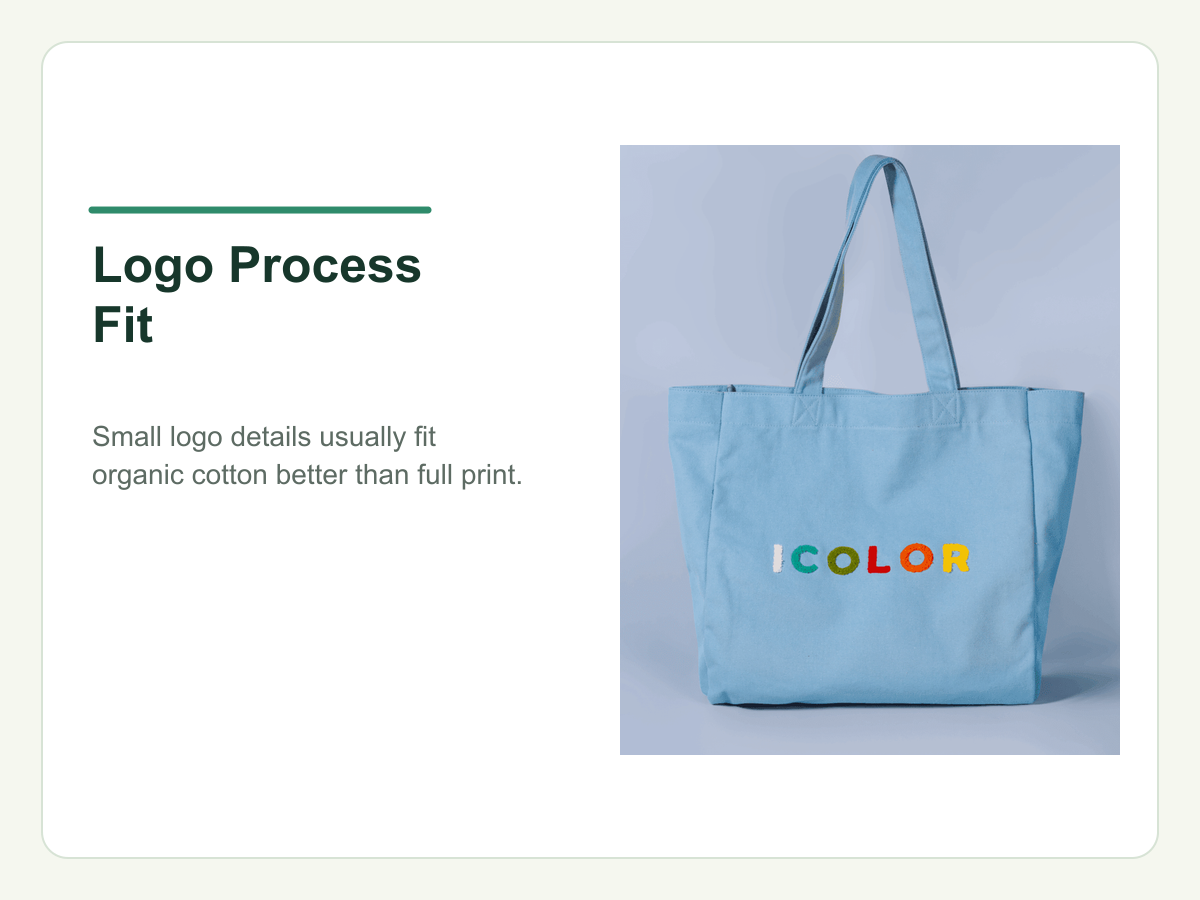
Organic cotton usually works well with simple screen print, embroidery, woven label and leather patch details. For multi-color gradients or full-surface artwork, rPET or another print-friendly material may be a more stable choice.
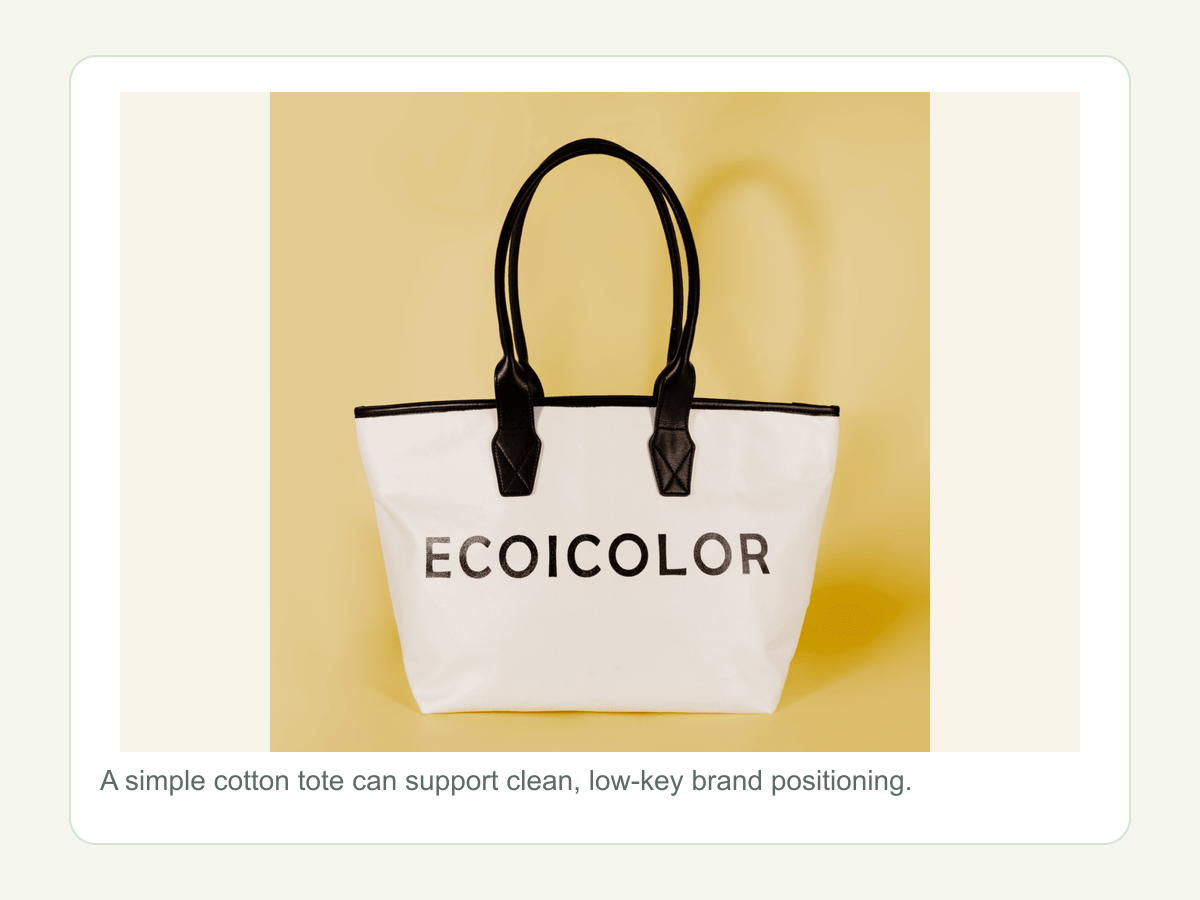
Organic cotton can look very strong with restrained branding. A small embroidery, woven label, leather patch or clean one-color screen print may support the natural feel better than a heavy artwork. The more complex the logo, the more important it is to sample before deciding.
Color also needs care. The base color, fiber texture and absorption of cotton-family materials can change how a Pantone color looks in real life. This is why I prefer physical sample approval instead of judging only by a screen mockup.
| Logo process | Fit on organic cotton | Confirm before sampling | Watch-out |
|---|---|---|---|
| Screen print | Good for simple logos | Pantone, logo size, placement | Fiber texture can affect color |
| Embroidery | Good for small premium logo | Thread color and backing | Thin fabric may wrinkle |
| Woven label | Good for low-key branding | Size, position, small text | Small text may lose clarity |
| Leather patch | Good for natural premium detail | Patch material and stitching | Can raise cost and positioning |
| Full-color print | Usually less stable than rPET | Physical artwork sample | Color and hand feel may change |
What affects MOQ, cost factors and timeline?
Organic cotton is usually not the lowest-cost tote material direction. Cost and timing depend on material availability, weight, dyeing, color, logo process, packaging, certification scope and order quantity. Our MOQ starts from 500 pcs per style.
Compared with rPET, recycled cotton blend or regular cotton canvas, organic cotton usually needs a more careful cost conversation. Custom color at 500 pcs may be possible only when supply chain conditions support it, and it may increase cost or lead time.
Sample timing is confirmed after the material, construction, logo method, artwork, packaging and approval scope are clear; the working schedule also depends on revision speed and current capacity. Bulk timing after sample approval depends on material availability, order quantity and process complexity.
What claims and documents should buyers confirm?
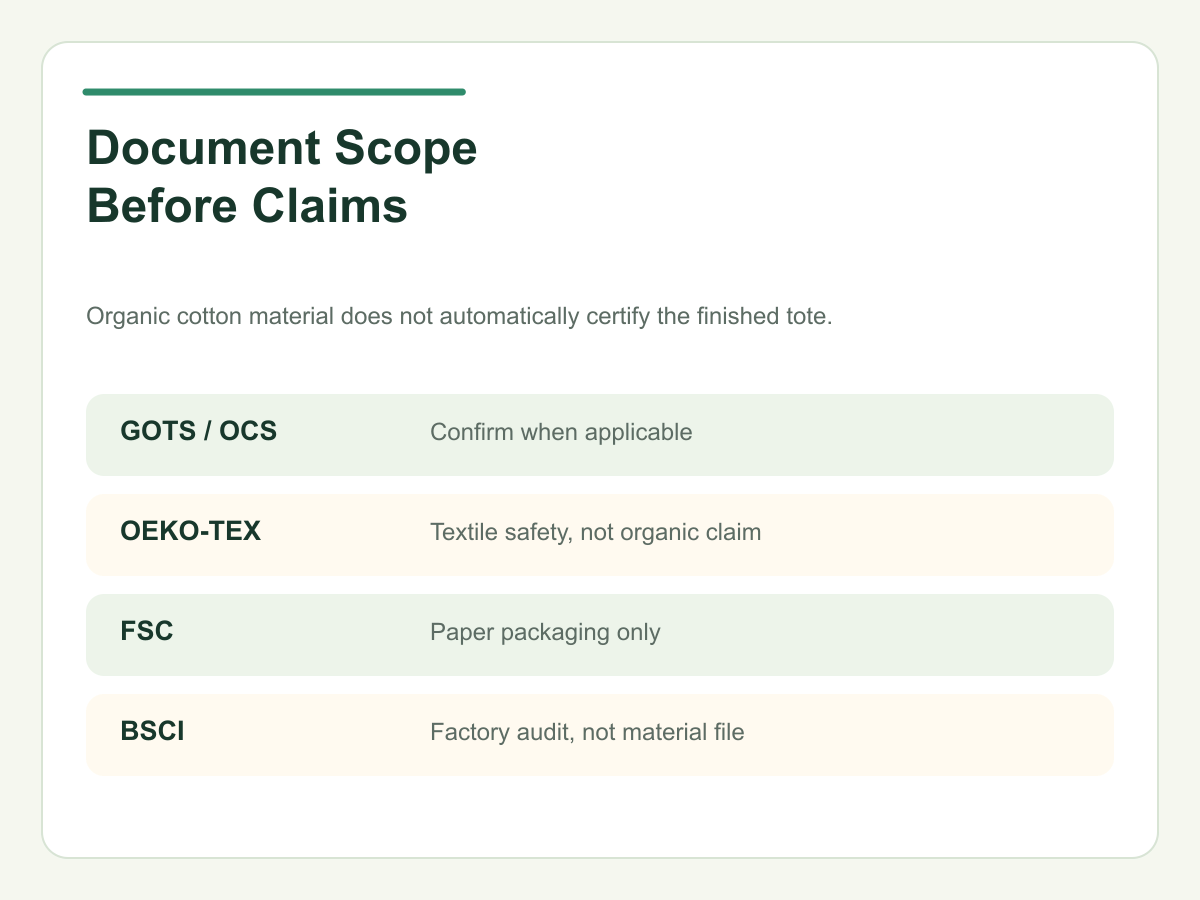
Organic cotton material does not automatically make the finished tote a certified organic product. Buyers should confirm whether the claim is about fiber content, certified material, certified chain of custody, finished product labeling or only a natural material direction.
This is the most important compliance point in this article. If the buyer only needs organic cotton material, the safer wording may be made with organic cotton material, with documents confirmed by material and order scope. If the buyer wants a certified finished product claim, then the supply chain and label scope need stricter review.
The Organic Content Standard1 and Global Organic Textile Standard2 are useful references, but the exact claim must match the project scope. Environmental marketing wording should also follow claim-substantiation principles such as the FTC Green Guides.3
For organic cotton, origin and license verification also matter. Organic agricultural rules such as USDA NOP or EU organic regulations do not automatically replace textile chain-of-custody standards for finished tote bags. Organic cotton supply can involve different origin markets, including India, China and Turkey, and the industry has seen public certification-fraud investigations. Before approving any finished-product claim, buyers should ask for the specific GOTS or OCS license number and verify the current certificate status on the official standard owner database.
Other documents may also matter. OEKO-TEX STANDARD 1004 relates to harmful substance testing, not an organic claim. FSC5 is usually relevant for paper packaging such as hangtags or paper cards. Some buyers also ask about factory social compliance frameworks such as amfori BSCI.6
| Claim wording | What it needs | Safer wording | Watch-out |
|---|---|---|---|
| Organic cotton material | Material proof and scope | Made with organic cotton material | Do not imply finished product certification |
| GOTS certified product | Certified chain and label grade | Use only when the scope matches | License and label rules matter |
| OCS claim | Chain of custody support | OCS documents when applicable | Not a general social or environmental proof |
| OEKO-TEX tested | Harmful substance testing | Tested for harmful substances | Not an organic material claim |
| FSC packaging | Paper packaging proof | FSC paper hangtag or card | Not a fabric certification |
How should organic cotton samples be checked?
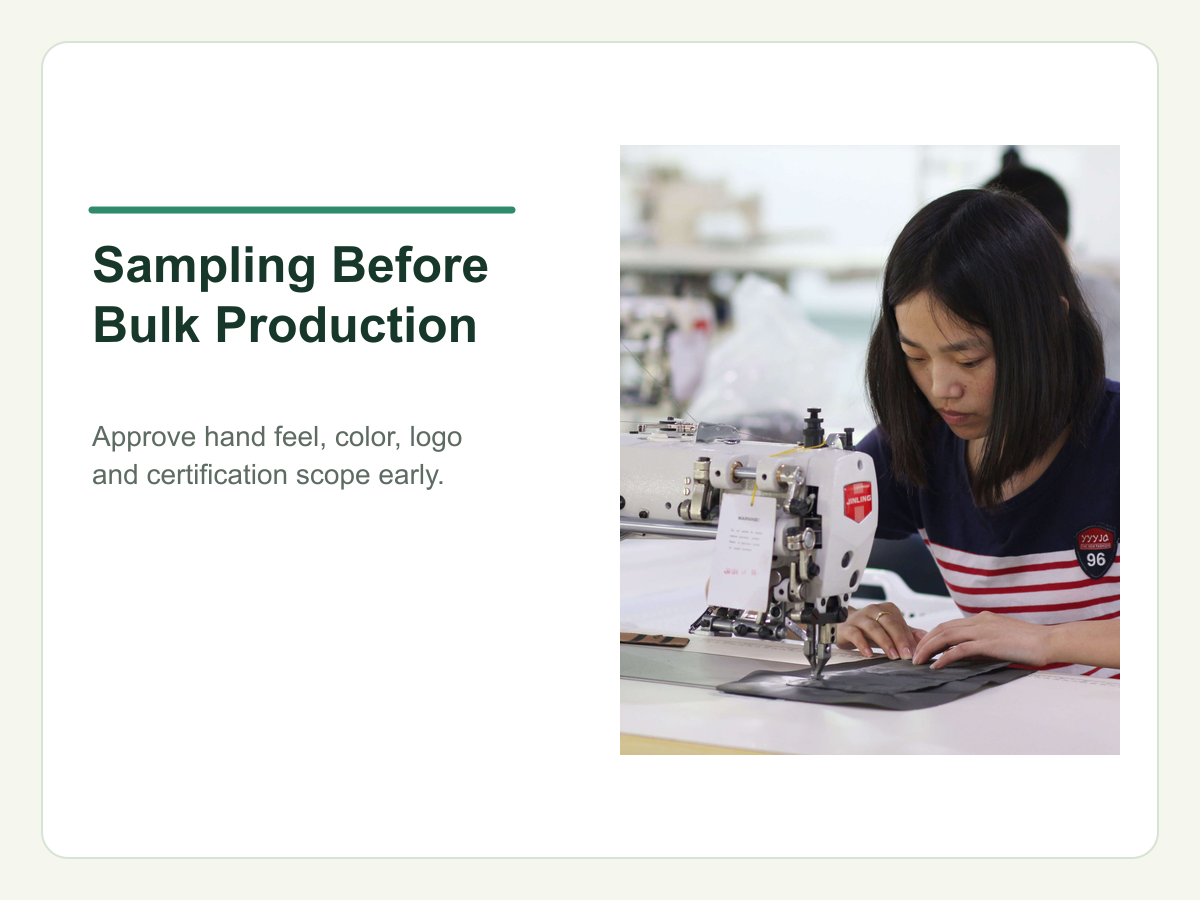
Organic cotton samples should be checked by hand feel, fabric weight, structure, logo effect, color, stitching, packaging and document scope. The physical approved sample should guide the production standard, especially when the buyer cares about natural feel.
Organic cotton is often chosen for how it feels as much as what it says. That means a photo is not enough. The buyer should touch the sample, check whether it feels too soft or too thin, test the actual product fit and approve the logo result on the real material.
If the tote is for a clean beauty kit, spa set or hotel gift, I would also test the contents inside the bag. A tote may look good on a table but still fail if bottles, boxes or amenity items do not sit properly.
What mistakes should buyers avoid?
The common mistake is choosing organic cotton because the word sounds right, then discovering later that budget, artwork, hand feel, certification scope or timeline does not fit the project. The material should be selected after the campaign use and claim needs are clear.
Many customers first like organic cotton because it is easy to understand. But once the project reaches real development, budget, print effect and certification scope often make them compare recycled cotton, cotton canvas, bamboo fiber or rPET.
Another mistake is assuming organic cotton automatically makes the whole product a broad environmental claim. A tote still includes sewing, logo process, packaging, labels, shipping and possible accessories. If the claim is too broad, the buyer may create avoidable compliance risk.
Factory-Side Checks Before an Organic Cotton Tote Sample
This is a factory-side sample workflow, not a completed customer case or endorsement. Before sampling, confirm the material claim and available evidence, then review the actual construction and handfeel instead of relying on the word "organic" alone.
- Confirm the material claim, supplier route and available evidence before public wording is approved.
- Check the actual weave, weight, construction and handfeel against the intended retail or GWP use.
- Test the logo method on the selected fabric surface, including small text, line detail and color result.
- Approve physical color and packaging references rather than using screen images as the production standard.
- Keep the final approved sample as the production reference before bulk release.
What should buyers send before asking for a quote?
For an organic cotton tote quote, buyers should send the use case, quantity, size, material direction, logo file, preferred logo method, packaging direction, certification requirement, launch date and shipping destination.
If you are not sure whether organic cotton is the right direction, send the budget range, brand positioning, logo artwork and launch date first. We can help compare organic cotton with recycled cotton, cotton canvas, bamboo fiber and rPET before sampling.
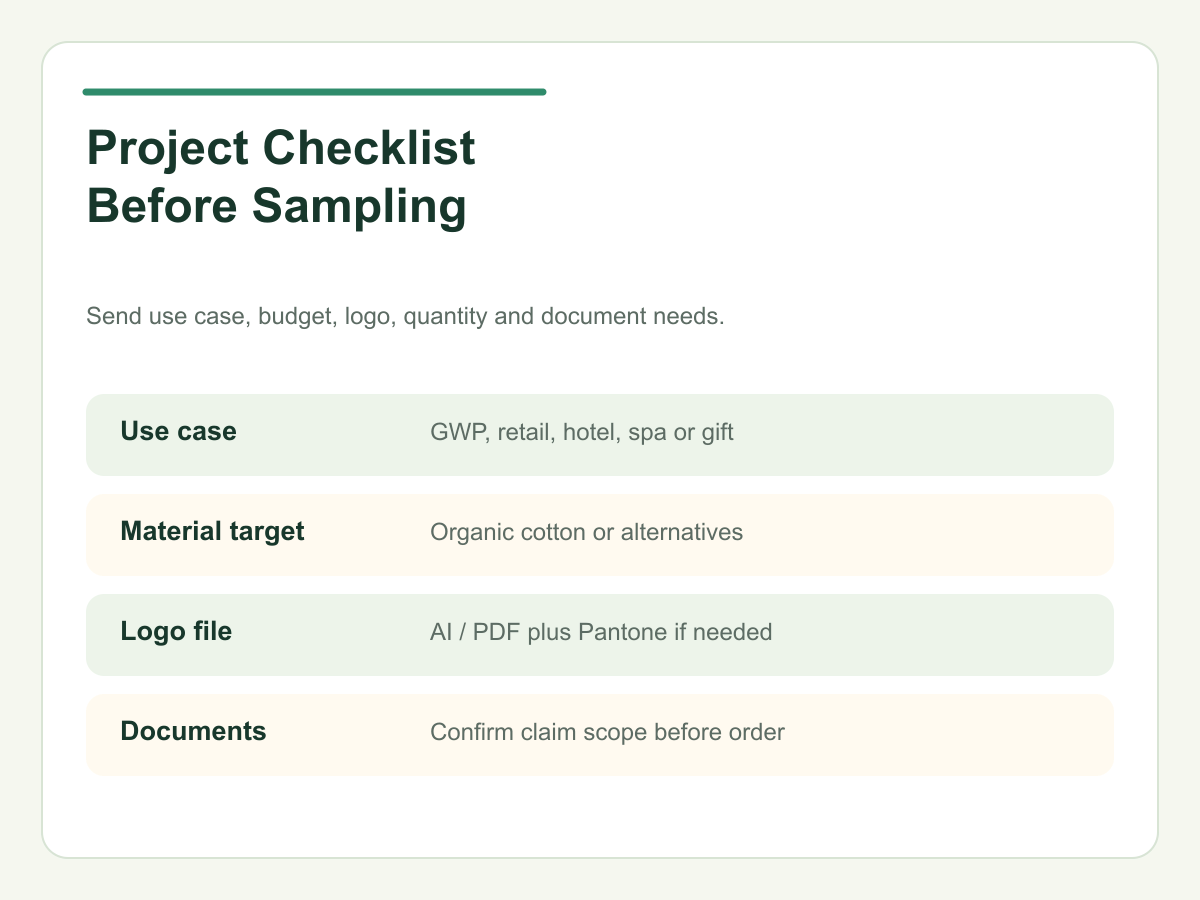
Organic Cotton Tote Project Checklist Before Sampling
- Use case: clean beauty launch, spa gift, hotel retail, premium GWP or private label retail.
- Quantity and colorways: MOQ starts from 500 pcs per style.
- Material direction: organic cotton, cotton canvas, recycled cotton, bamboo fiber or rPET comparison.
- Logo file: AI, EPS or PDF, plus Pantone if brand color matters.
- Logo process: screen print, embroidery, woven label, patch or another method.
- Packaging: FSC paper hangtag, paper card, recycled-content polybag, belly band or bulk packing.
- Documents: GOTS, OCS, OEKO-TEX, BSCI or FSC packaging when applicable.
- Timeline: sample deadline, launch date and shipping destination.
Less suitable fit for this organic cotton tote route
This organic cotton tote route is less suitable for single-piece gifts, lowest-price-only orders, very urgent artwork-heavy projects, or buyers who want broad organic claims without checking document scope and physical samples.
Ecoicolortote is usually not the right fit for orders below 500 pcs per style without a clear brand project context, buyers who only ask for the lowest price while expecting certified organic material scope, or projects that want broad environmental claims without checking documents. This route works better when the buyer has a real clean beauty, wellness, spa, hotel or GWP project and accepts sample-first review for hand feel, color, logo and packaging.
Send your use case, quantity, budget direction, logo file, packaging needs, certification requirements and launch date. We can help compare organic cotton with recycled cotton, cotton canvas, bamboo fiber and rPET before sampling. Contact Ecoicolortote.
FAQ: Organic cotton tote bags
Is organic cotton always the best material for clean beauty tote bags?
No. Organic cotton is familiar and natural-feeling, but the better material depends on budget, artwork, hand feel, document scope and launch timing. Bamboo fiber, recycled cotton, cotton canvas or rPET may fit better in some projects, especially when the campaign needs stronger differentiation, lower cost, more structure or complex artwork.
Can we call the finished tote bag certified organic?
Only when the certification scope supports that claim. If only the material is organic cotton, safer wording may be made with organic cotton material, with certification documents confirmed by project and order scope. A certified finished-product claim needs the supply chain, label rules and document trail to match the actual tote.
What is the MOQ for organic cotton tote bags?
Ecoicolortote's general MOQ starts from 500 pcs per style. Final feasibility depends on material availability, color, logo process, packaging and document requirements. If the buyer needs custom color, special weight, certified chain-of-custody documents or multiple colorways, MOQ and lead time should be checked before sampling and order approval carefully enough.
Which logo processes work well on organic cotton?
Simple screen print, embroidery, woven labels and leather-look patches can work well on organic cotton when the artwork is clean and the fabric weight supports the process. Full-color gradients or all-over artwork may be less stable than on rPET, so buyers should approve a physical logo sample before bulk production.
Which certification evidence should buyers check?
Buyers should check whether the claim needs OCS, GOTS, OEKO-TEX, FSC paper packaging, BSCI-related audit information or another buyer-specific document. Each document answers a different question. Organic cotton evidence should match the material and order scope, while FSC usually applies to paper packaging, not the tote fabric itself or product material.
What should be included in the RFQ?
The RFQ should include use case, quantity, size, material direction, logo file, preferred logo method, packaging direction, certification requirement, launch date and shipping destination. If the buyer is still comparing organic cotton with recycled cotton, bamboo fiber, canvas or rPET, they should share budget and brand positioning first too early.
What mistake causes the most rework?
The biggest mistake is choosing organic cotton because the word sounds right, then checking budget, artwork, hand feel, certification scope and timeline too late. Rework also happens when buyers approve from photos only. The physical sample should confirm fabric feel, weight, logo effect, product fit and packaging before bulk production.
Trademark and certification note
OCS, GOTS, OEKO-TEX, FSC, amfori BSCI and FTC references are included for buyer education and scope discussion only. They are owned by their respective organizations. Any organic cotton, certified product, chain-of-custody, textile safety, paper packaging, audit or environmental marketing claim should be checked against the actual material, supply chain, factory route, packaging, order scope and buyer requirement before it is used in product labels, hangtags or campaign copy.