Zoe Yu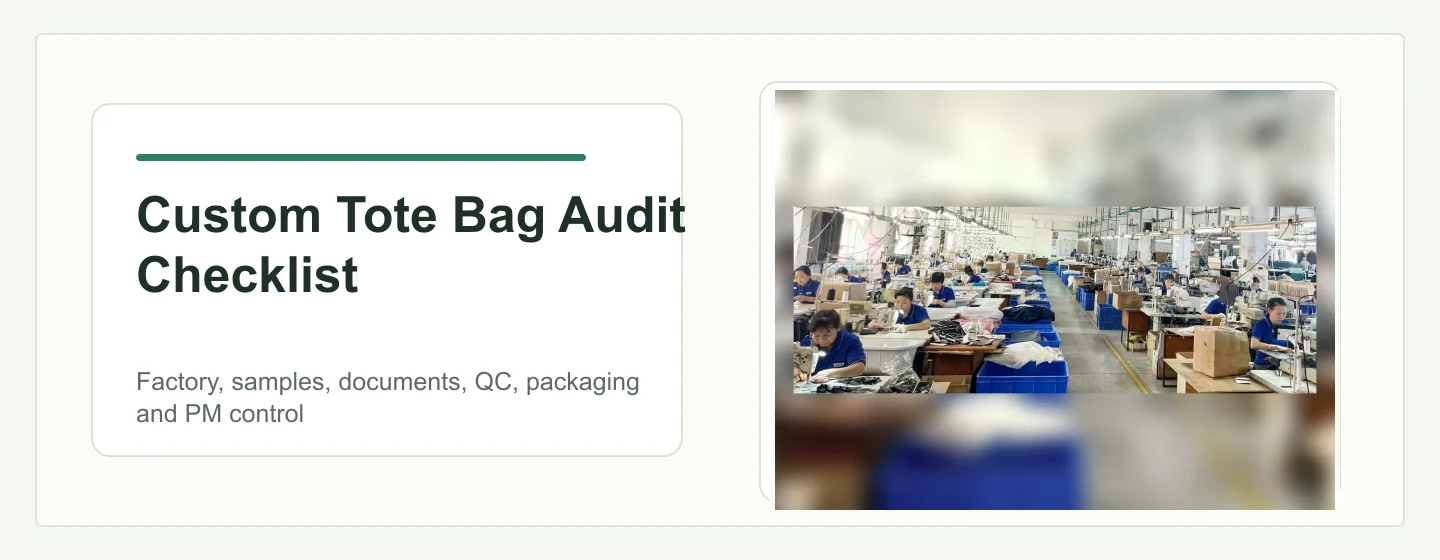
A custom tote bag supplier audit checklist should not stop at one certificate or one low quote. For brand procurement teams, the stronger audit route is to check factory basis, RFQ readiness, material evidence, sample control, QC process, packaging execution, document scope, communication ownership and delivery risk before approving bulk production.
Ecoicolortote is a better fit for MOQ 500+ custom tote bag projects where the buyer wants a practical supplier review before sampling or bulk approval. If your team is comparing factories, trading companies or supplier quotes, send us the project brief and audit questions first. We can help identify which risks belong to the bag specification, which belong to documentation, and which belong to supplier execution.
Buyer Summary
- Best for: procurement teams, sourcing teams and brand managers buying custom tote bags from 500 pcs per style for retail, GWP, hotel, event or private label projects.
- Main decision: do not audit only price or one certificate; audit production basis, sample control, document scope, QC method, packaging execution and accountable communication.
- Factory-side note: many tote bag supplier problems come from incomplete standards, late document requests, unclear packaging files or missing sample approval records.
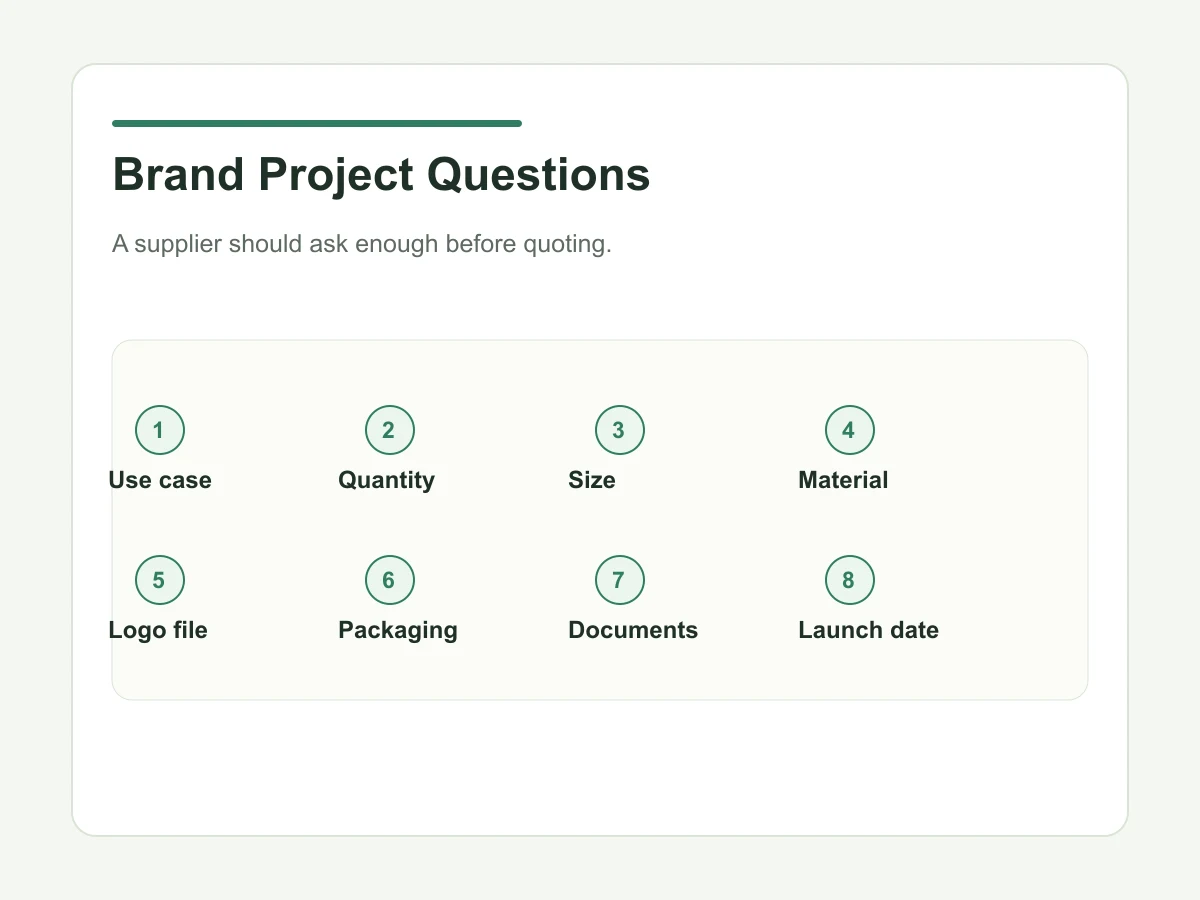
- What to prepare: use case, quantity, size, material direction, logo file, packaging needs, document requirements, target date, shipment country and any retailer or brand audit rules.
What should buyers confirm before using a custom tote bag supplier audit checklist?
Before auditing a tote bag supplier, buyers should confirm the real project scope: use case, MOQ, size, material, logo process, packaging, document needs, sample route, inspection expectations, target delivery date and shipment destination.
A supplier cannot be audited fairly if the buyer has not defined what the order needs to achieve. A simple event tote, a beauty GWP tote, a retail private label tote and a hotel welcome tote may all require different audit checks. The checklist should match the project, not a generic factory template.
For first review, procurement teams should ask whether the supplier can explain the production basis, material options, sample approval flow, packaging handling, QC records, document scope and delivery responsibility clearly. A confident answer should include process and evidence, not only sales language.
This supplier audit checklist focuses on supplier capability and risk evidence before approval. Our custom tote supplier quote comparison guide helps buyers compare quote scope, while the custom tote bag RFQ checklist helps buyers prepare the information needed for a useful quotation.
If the buyer is still missing quantity, size, material direction, logo file or packaging needs, start with the RFQ checklist. If the buyer already has several quotes, use the quote comparison guide. If the buyer is deciding whether a supplier is mature enough for brand production, use this audit checklist.
For broader supplier qualification, the tote bag manufacturer vetting checklist can support early screening. This page goes deeper into audit evidence for custom tote bag projects where samples, packaging, documents and bulk production control matter.
What should procurement teams audit first?
Procurement teams should first check whether the supplier has real production basis, factory audit direction, video audit possibility, export project management ability and a clear owner for the order.
A brand buyer should understand who will control production. A supplier can be factory-based, trade-based or somewhere in between. The practical question is not only what the supplier calls itself, but whether it can show production control, sample control, quality records and export communication ability.
BSCI or other factory audit information can be a useful first layer of screening, especially for beauty, retail, hotel and promotional projects. amfori BSCI audit request guidance1 is widely used in social compliance and supply chain review, but it should be read together with the real order scope.
How should procurement teams audit RFQ readiness?
RFQ readiness should be audited by checking whether use case, quantity, size, material, logo, packaging, documents, target date and destination are clear enough for a meaningful quotation and sample plan.
For procurement review, the key question is whether the project scope is complete enough for sampling and bulk control. A quote without RFQ details is usually not an audit-ready standard. It may look fast, but it can hide material substitutions, missing packaging, incomplete labels or weak delivery assumptions.
A procurement team should check whether the project scope is clear enough to control a GWP tote, retail tote, event tote or hotel welcome tote. Each use case may need different material, packaging, label and document checks. For example, a retail tote may need barcode and carton labels, while a hotel tote may need property allocation and replenishment planning.
How should material and certification evidence be audited?
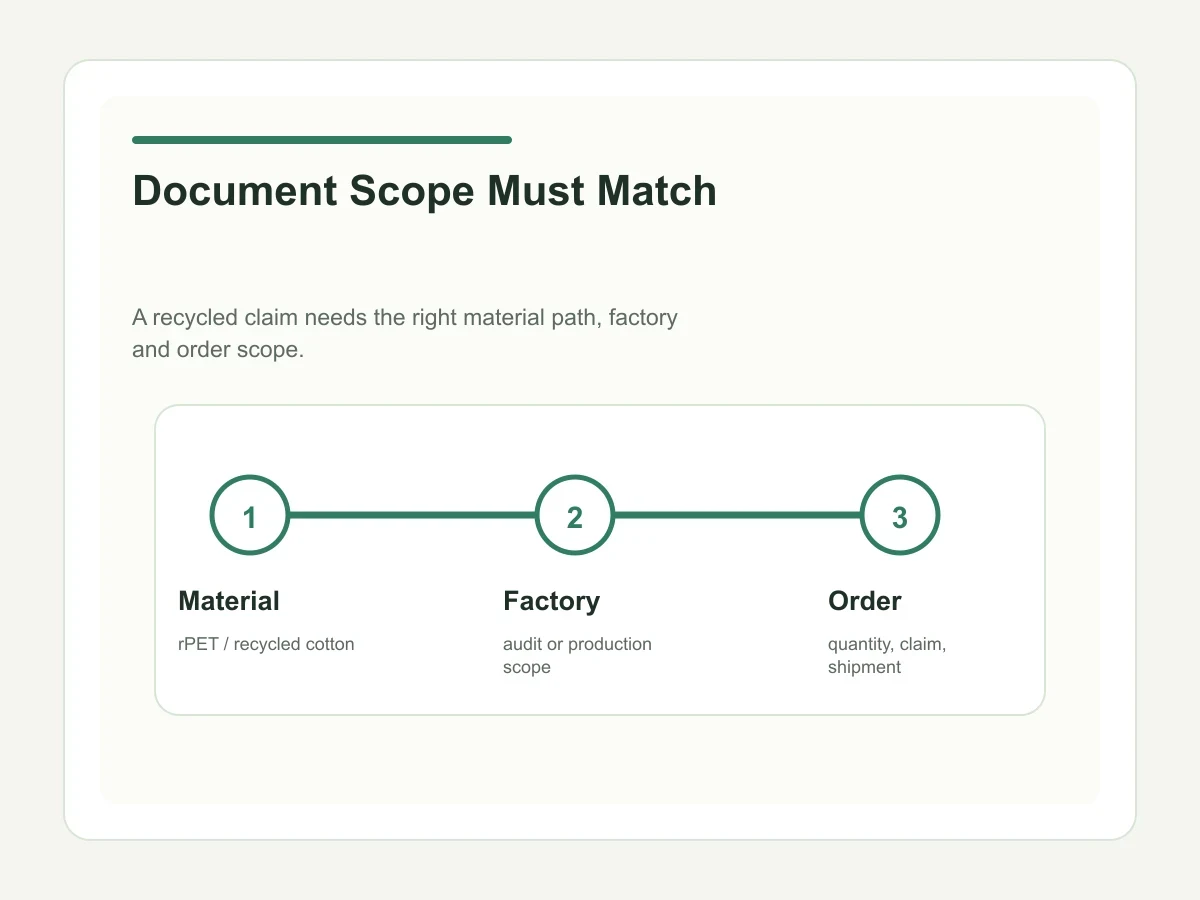
Material audit should look at swatches, color cards, responsible-material options, substitution ability and document scope. Certification evidence should match the material, supplier route, order scope and claim wording.
A material library is useful only when the supplier can help buyers match material to budget, use case, logo method, packaging plan and document requirement. For recycled or natural claims, the buyer should confirm claim wording and supporting evidence before placing the order.
GRS, OEKO-TEX, FSC and BSCI should be discussed carefully. Documents are available when applicable and subject to material, factory and order scope. GRS relates to recycled material scope; OEKO-TEX STANDARD 100 relates to harmful-substance testing and textile safety; FSC usually applies to paper packaging, not tote fabric.
Global Recycled Standard2, OEKO-TEX STANDARD 1003, FSC paper and packaging4 and the FTC Green Guides5 can help buyers frame document and claim questions.
Why should sample control be part of supplier audit?
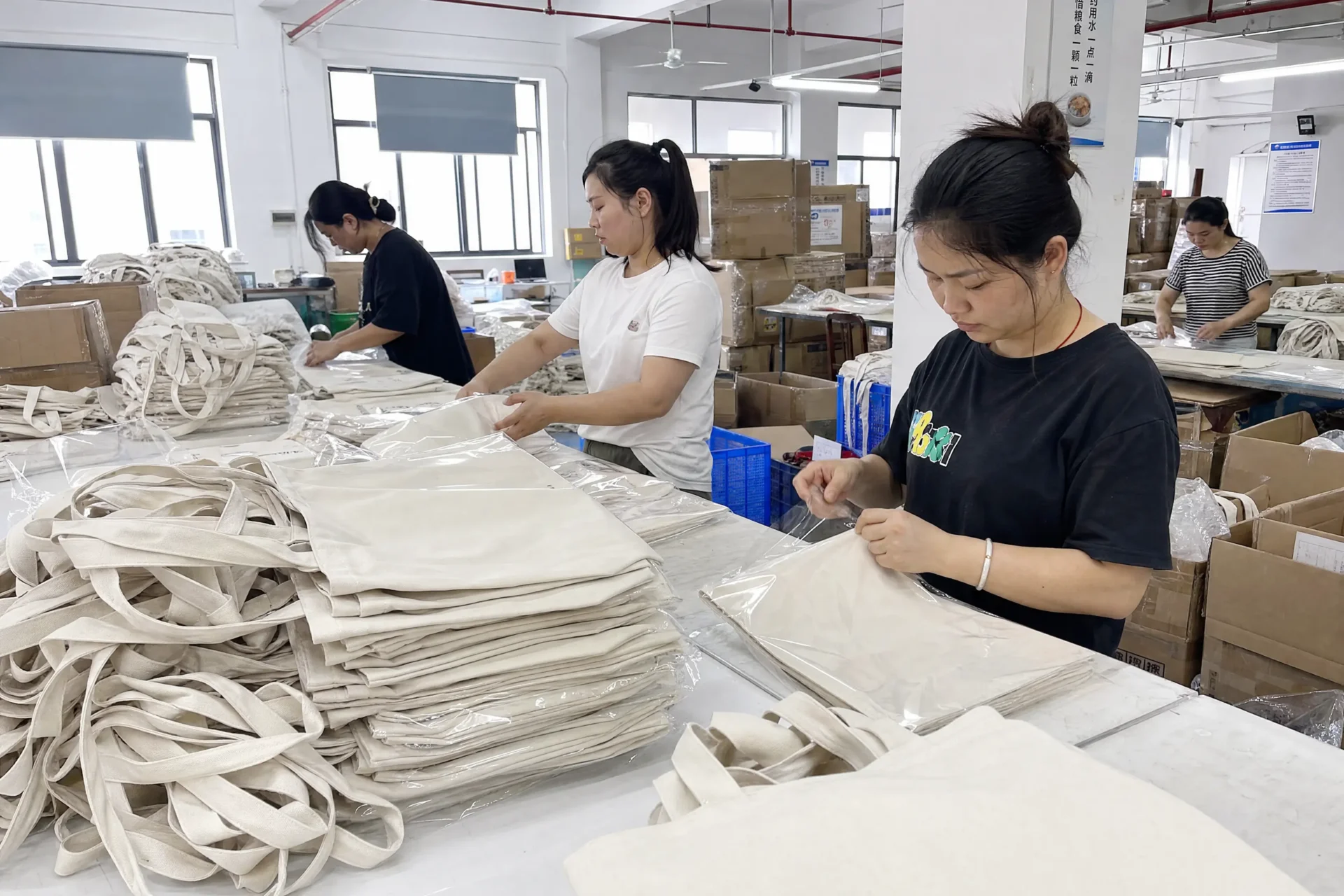
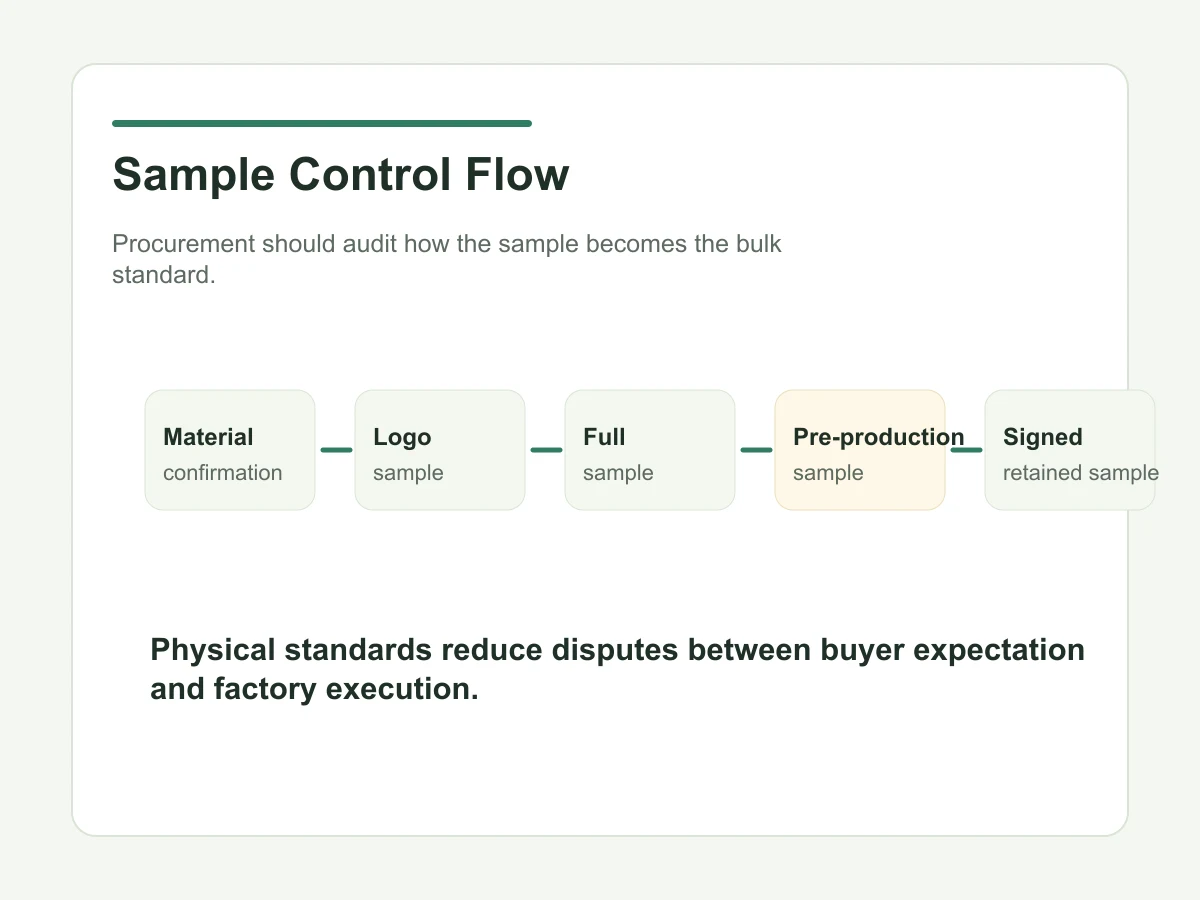
Sample control is one of the strongest signs of supplier maturity. Procurement teams should ask how the supplier confirms material, logo sample, full sample, pre-production sample, signed sample and retained reference.
Sample details matter most when the tote is brand-sensitive. Material handfeel, fabric weight, color, logo scale, stitching, handle strength, packaging and label position should not be approved only from a mockup. A supplier should be able to explain which sample becomes the production standard and how that standard is shared with production and QC teams.
We have seen projects where the buyer did not require a physical final confirmation sample and relied only on photos. When bulk goods arrived, the buyer questioned color, handfeel and other details. That is difficult for both sides because photos cannot represent all material and structure details.
We have also seen how small internal reference errors can create trouble. If the factory floor does not receive one complete signed standard, a missing note or unclear reference can cause confusion. A professional supplier should keep signed samples, retained samples, photos and production sheets aligned.
What QC process should a tote bag supplier have?
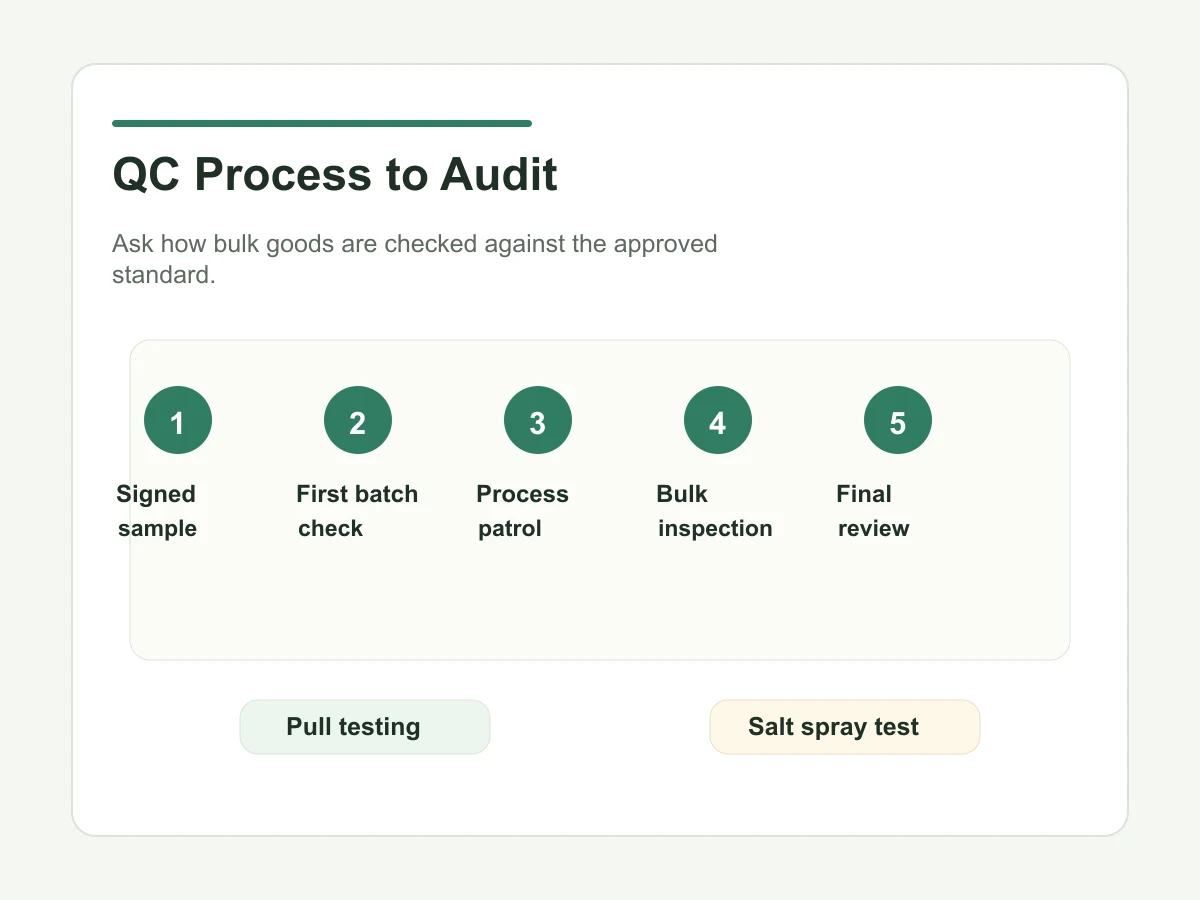
QC audit should check how the supplier turns the signed sample into production standards, how first pieces are checked, how process inspection works, how bulk goods are inspected and who makes the final review.
A useful QC process can include signed sample reference, first batch check, process patrol, bulk inspection and final review by the responsible person. For items that need it, handle pull testing and metal salt spray testing can also be part of the internal check. Third-party inspection support is another useful audit question.
Procurement teams should be careful with decorative QC language. A supplier may say it has inspection, but the buyer should ask what is checked, when it is checked, which standard is used and how deviations are recorded. We avoid writing a specific AQL value unless the order is actually managed under that agreed standard.
How should packaging and label execution be audited?
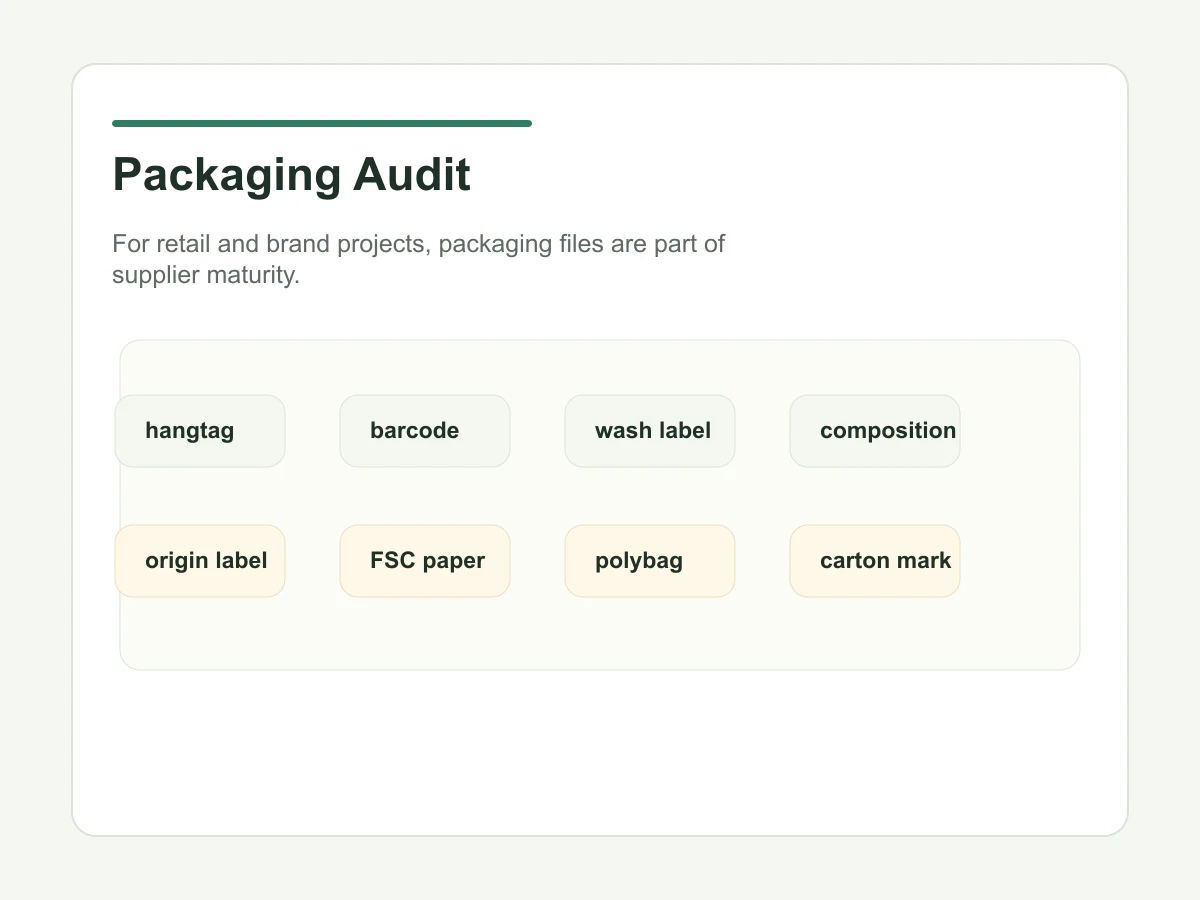
For retail, private label and brand projects, packaging audit should include hangtags, barcodes, wash labels, composition labels, country-of-origin labels, FSC paper, recycled-content polybags and carton marks.
Packaging ability is a sign of supplier maturity for private label and retail programs. If the supplier only understands sewing but not hangtags, barcode mapping, label copy or carton marks, the buyer may face late-stage mistakes. Packaging files are usually safest when confirmed before order placement or during the sample stage.
Late barcode, hangtag or FSC paper requirements can change cost and timing. For retail identification, GS1 General Specifications6 can help frame barcode discussions, while the exact label format should follow the buyer or retailer requirement.
Why does communication accountability matter?
One accountable Sales or PM can reduce information loss across material, sample, logo process, packaging, documents and timeline. For brand projects, communication control is close to production control.
When too many people pass the project between departments, details can get lost: sample confirmation points, material standards, logo process, packaging version, document requirements and delivery timing. A procurement team should ask how the supplier records confirmation points, production sheets, sample photos, packaging lists and document lists.
For brand projects, communication ability is almost as important as production ability. A supplier may have machines, but if nobody owns the project details, the buyer still carries risk. The stronger audit question is not only "Can you make it?" but also "Who tracks every confirmed detail until shipment?"
How should MOQ and lead time fit be checked?
Commercial fit should be checked before deep audit. Ecoicolortote projects usually start from MOQ 500 pcs per style, and sample timing depends on process complexity, material availability, packaging scope and approval speed.
Sample timing is confirmed after the material, construction, logo method, artwork, packaging and approval scope are clear; the working schedule also depends on revision speed and current capacity. Bulk production timing should be confirmed after sample approval and depends on quantity, material availability, logo process, packaging and delivery requirements.
Brand projects, retail programs and campaign orders need a clearer audit standard than personal orders or price-only inquiries. Serious audit work makes sense when the buyer has a real campaign, retail program or brand use case that needs sample control and production accountability.
What audit checklist should procurement teams use?
A practical audit checklist should cover factory basis, project questions, material files, sample control, QC method, packaging execution, communication ownership, timeline fit and document scope.
The checklist below is designed for custom tote bag projects rather than generic factory screening. It can be used before RFQ approval, before sample approval or before bulk order placement.
| Audit dimension | What procurement should check | Pass standard | Audit risk signal |
|---|---|---|---|
| Factory basis | Production basis, factory audit direction and video audit possibility | The supplier can explain who controls production and how the buyer can verify it. | Only shows a certificate but cannot explain production control. |
| Project understanding | Use case, quantity, size, material, logo, packaging, files and timeline questions | The RFQ scope is complete enough for quotation and sampling review. | Quotation created before key scope details are confirmed. |
| Materials | Swatches, color cards, responsible-material options and substitutions | Material suggestions match budget, brand position, logo method and use case. | Material differences are not explained. |
| Documents | BSCI, GRS, OEKO-TEX, FSC packaging and test files when applicable | Files are matched to material, factory, order scope and claim wording. | Generic certificate screenshots with no scope explanation. |
| Samples | Material confirmation, logo sample, full sample, pre-production sample and signed sample | The approved sample becomes the physical production standard. | Photo-only approval for a brand-sensitive order. |
| QC | First batch check, process patrol, bulk inspection, final review and testing ability | QC checks bulk goods against the signed sample and production sheet. | Decorative QC wording with no execution method. |
| Packaging | Hangtags, barcodes, labels, FSC paper, polybags and carton marks | Packaging files are confirmed before order or during sample stage. | Packaging is discussed only after bulk goods are ready. |
| Communication | One accountable PM, confirmation records and document list | One owner tracks details from RFQ to shipment. | Multiple handoffs with unclear responsibility. |
Who We Do Not Take On
Ecoicolortote is not the right fit for projects with no clear RFQ scope, no defined audit standard, no sample approval plan or a lowest-price-only approach that ignores material, QC and packaging risk.
- Projects with no clear size, material, logo, packaging or document requirement.
- Buyers who want to skip sample confirmation for brand-sensitive orders.
- Projects with no defined audit standard for material, QC or packaging.
- Buyers who only audit price, not capability, evidence or accountability.
What should be included in supplier audit questions before RFQ approval?
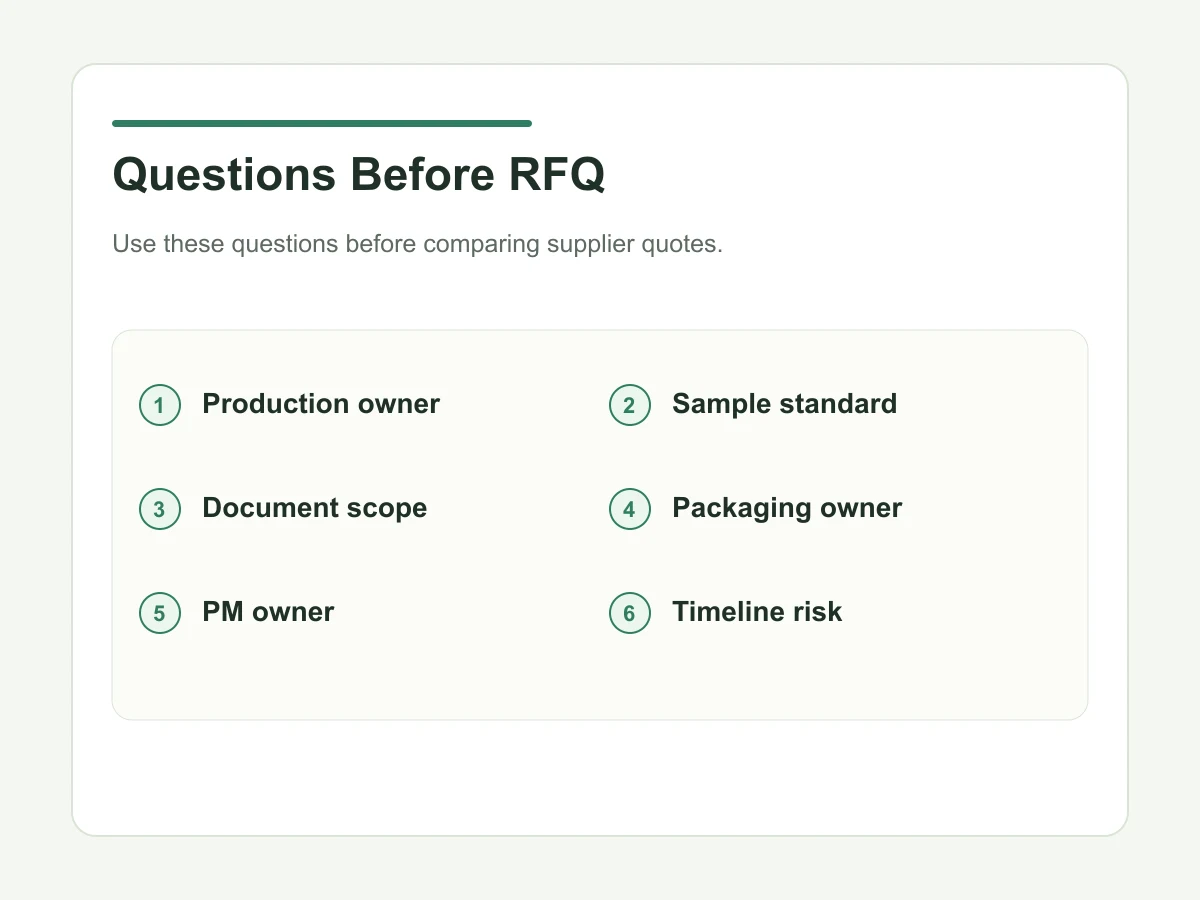
The strongest RFQ-stage audit questions ask how the supplier will control material, sample, logo, packaging, documents, QC, communication and delivery for this specific order.
- What RFQ information must be complete before quoting?
- Which approved sample becomes the bulk production standard?
- How do you record material, logo, packaging and document confirmations?
- Which documents apply to this material, factory and order scope?
- How do you check the first batch and bulk goods?
- How are packaging files, barcode labels and carton marks confirmed?
- Who is responsible for communication from sample to shipment?
Send your project use, quantity, material direction, logo file, packaging needs, document requirements and launch date. Contact Ecoicolortote for supplier audit support.
FAQ: Custom tote bag supplier audit checklist
What should buyers confirm before using a custom tote bag supplier audit checklist?
Buyers should confirm use case, quantity, size, material direction, logo file, packaging needs, document requirements, target date and shipment country. Without that project scope, supplier audit results can be too generic.
What sample details matter most in supplier audit?
Material, fabric weight, color, logo size, logo process, stitching, handle strength, packaging, label placement and the approved pre-production sample matter most because they become the bulk production reference.
What MOQ and lead time should be checked during audit?
Check whether the supplier can support the requested quantity, version count, sample timing, packaging timing and delivery window. Ecoicolortote is usually a better fit for MOQ 500+ projects with a clear brand brief.
Which material or certification evidence should buyers review?
Review material swatches, color references, recycled or organic claim evidence, OEKO-TEX or other testing documents when applicable, FSC paper scope for packaging and factory audit information such as BSCI when required.
What should be included in the RFQ before supplier approval?
The RFQ should include quantity, size, material direction, logo file, artwork position, packaging, labels, document needs, target delivery date, shipment destination and any retailer or brand audit rules.
What mistake causes the most rework?
The most common mistake is approving a supplier or quote before sample standards, packaging files, label details and document scope are confirmed. This often creates late cost changes or sample revisions.
When should buyers contact Ecoicolortote?
Contact Ecoicolortote before sampling if your team needs to review supplier capability, quote scope, material evidence, sample route, packaging details or production risk for an MOQ 500+ custom tote bag project.