Zoe Yu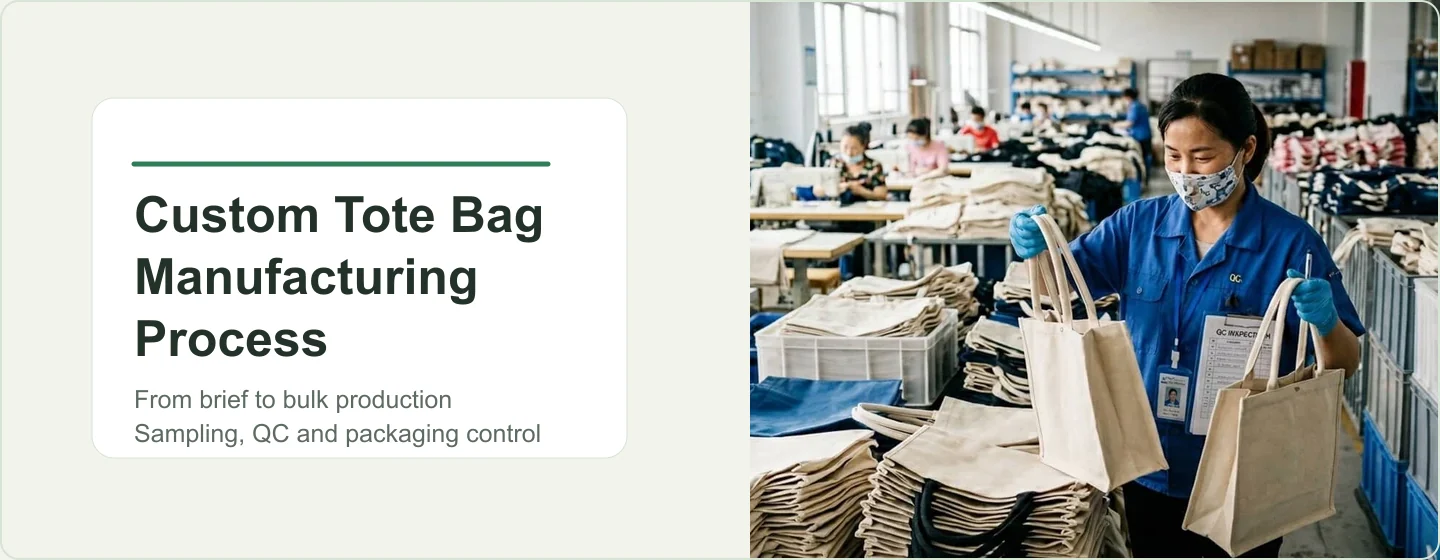
The custom tote bag manufacturing process is not only cutting fabric and sewing handles. For brand buyers, the safer route is to control each step from brief review, sampling, cutting, logo process and sewing to inspection, packing and delivery handoff.
TL;DR: A reliable custom tote bag manufacturing process starts before cutting. Buyers should confirm the RFQ brief, material direction, artwork, logo process, packaging, document scope, sample approval route, QC checkpoints and delivery handoff before bulk starts. The approved physical pre-production sample should become the production standard for cutting, logo process, sewing, inspection and packing.
From our factory side, the two most important words are standard sample. Once the buyer approves the physical pre-production sample, that sample becomes the reference for material, size, handfeel, logo effect, sewing details and packaging. Without that standard, production teams and buyers may be looking at different expectations.
The same production-control logic applies to customized tote bag projects, private label tote programs, retail bags, hotel welcome totes, event totes and GWP campaigns. If your team is preparing production from MOQ 500+ and needs to check the route before sampling, send us the brief first.
Buyer Summary
- Best for: brand buyers, sourcing teams and procurement teams preparing custom tote bag production from 500 pcs per style.
- Main decision: confirm the production standard through material swatches, logo artwork, sample approval, packaging files and QC requirements before bulk starts.
- Factory-side note: the approved pre-production sample should become the physical standard for cutting, logo process, sewing, inspection and packing.
- What to prepare: use case, size, material, color, logo file, Pantone reference, quantity, packaging, document needs, sample deadline and delivery destination.
Best fit for this manufacturing process guide
This guide is best for brand buyers, sourcing teams and procurement teams preparing MOQ 500+ custom tote bag production for GWP campaigns, retail launches, hotel welcome gifts, event merchandise or private label tote programs. It is especially useful when the buyer already has a working brief and needs to understand how material approval, sample confirmation, cutting, logo process, sewing, QC, packaging and shipment handoff fit together. The strongest fit is a team that can share use case, size, material direction, logo file, packaging files, document needs, target approval date and delivery destination before bulk production is scheduled.
What should buyers confirm before sourcing custom tote bag manufacturing process?
Buyers should confirm the brief, material direction, size, artwork, logo process, packaging, document needs, sample approval route, target delivery date and shipment destination before custom tote bag production starts.
A realistic custom tote bag manufacturing process usually moves from buyer brief, design drawing, material confirmation and sample approval to pre-production sample, bulk cutting, logo process, sewing, in-line QC, final inspection, packaging and shipment confirmation.
The process starts before the factory touches fabric. The buyer brief tells us the use case, size, material direction, logo process, packaging needs and timeline. From there, the factory can check whether the project is a GWP tote, retail tote, hotel welcome bag, event bag or private label product.
Once the scope is clear, the factory prepares a quotation, layout direction and sampling plan. The approved sample then becomes the reference for bulk production. If the project has a special material, lining, zipper, hardware, patch, embroidery, heat transfer or retail packaging, each detail should be included in the production file.
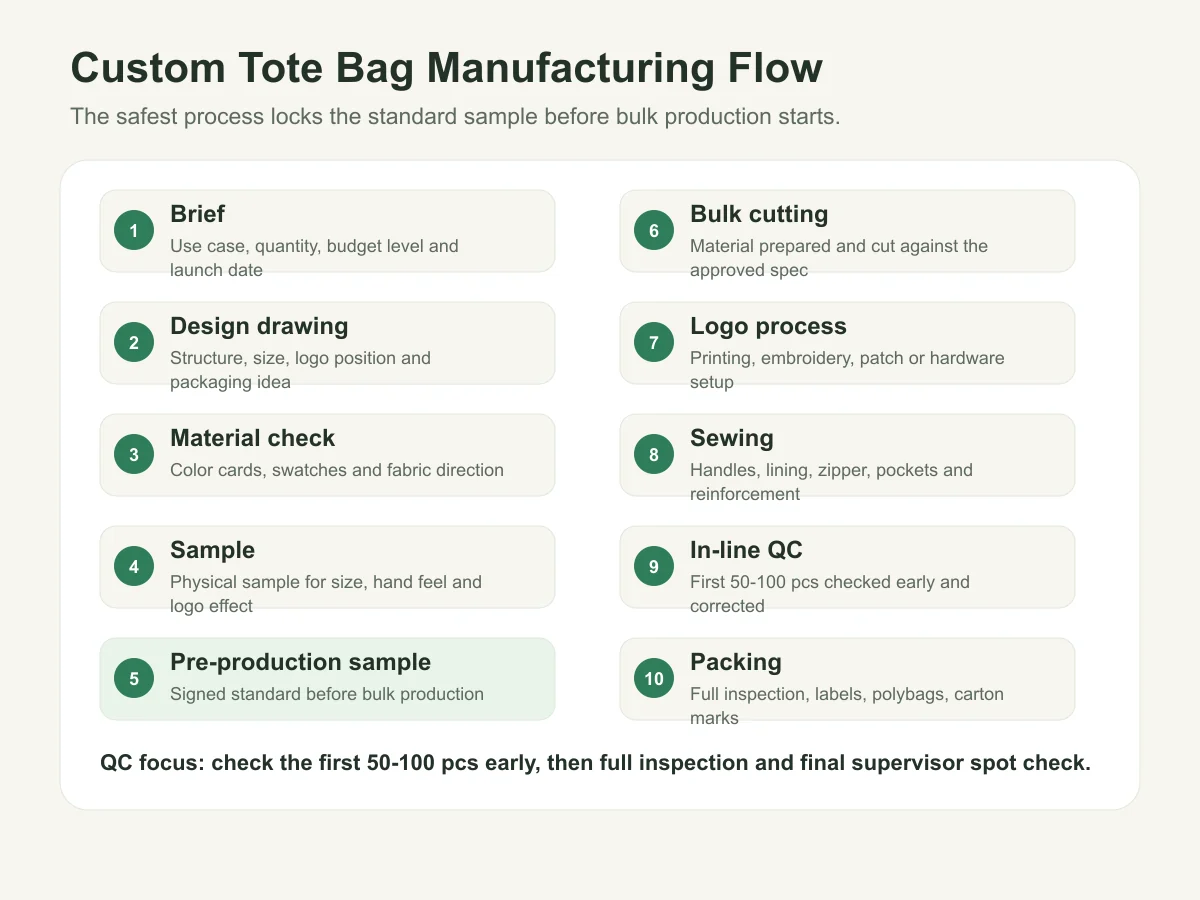
This manufacturing process guide explains how an approved brief becomes a sample, how the sample becomes a bulk production standard, and how the factory controls cutting, logo process, sewing, inspection, packing and delivery handoff.
If your team is still preparing the first quote request, the custom tote bag RFQ checklist is the better starting point. If your team is comparing suppliers before order confirmation, the supplier audit checklist is more useful.
If the concern is why two unit prices differ, use the custom tote bag cost breakdown article. This page focuses on production control after the project has a working brief and is moving toward sampling or bulk approval.
What are the factory-side control points?
Factory-side control points turn a custom tote idea into a repeatable production standard. The key controls are buyer brief, material confirmation, pre-production sample, cutting, logo process, sewing, in-line QC, final inspection, packing approval and shipment confirmation.
Each control point should answer one practical question: what standard is the factory following? For material, the standard may be an approved swatch. For logo work, it may be a Pantone reference, artwork file and logo sample. For sewing, it may be the signed pre-production sample and size tolerance. For packaging, it may be the approved hangtag, barcode label, carton mark and packing method.
When these standards are missing or unclear, even a simple tote can create disputes. When they are clear, the factory team can check bulk goods against a real reference instead of guessing from emails.
| Control point | What should be confirmed | Risk if unclear |
|---|---|---|
| Buyer brief | Use case, size, material, logo, quantity and timeline | Quote and sample route may change later |
| Material approval | Swatch, color, texture, thickness and document scope | Handfeel or claim expectation may not match bulk |
| Logo process | Artwork, Pantone, size, placement and method | Color, edge clarity or placement may shift |
| Pre-production sample | Final physical sample for bulk reference | Workshop may not have one clear standard |
| Packaging | Hangtag, label, polybag, carton mark and packing method | Late packaging changes can delay shipment |
What should be included in the RFQ?
A production-ready RFQ should include use case, size, material direction, color, artwork, Pantone reference, logo process, packaging, labels, quantity, target timeline, shipment needs and any document requirements.
A complete brief reduces sample revisions. For example, a beauty GWP tote may need to fit a product set and match a seasonal campaign color. A retail tote may need barcode labels, hangtags and stronger stitching. A hotel welcome tote may need softer presentation, gift packing and delivery batch planning.
If the buyer is not sure about the exact tote size, send the product or gift box dimensions. If the material is not fixed, share the budget level, use case and brand positioning. If the logo process is not fixed, send the artwork file and desired visual effect so the factory can suggest screen printing, embroidery, woven label, patch, heat transfer or another process.

Which material or certification evidence should be checked?
Material approval should include color cards, swatches and physical samples when needed. Certification evidence should match the actual material, paper packaging, factory route, order scope and claim wording.
Photos are useful for communication, but they cannot fully show handfeel, thickness, texture or how the material changes under different light and angles. Material approval is especially important for rPET, recycled cotton, cotton canvas, organic cotton, bamboo fiber and vegan leather projects because the same color and logo process can behave differently on different surfaces.
If a recycled-content, organic, FSC packaging or textile safety claim is involved, buyers should confirm document expectations before the material is locked. Global Recycled Standard information1, OEKO-TEX STANDARD 1002 and FSC paper and packaging guidance3 are useful references for scope discussions.
What sample details matter most for custom tote bag manufacturing process?
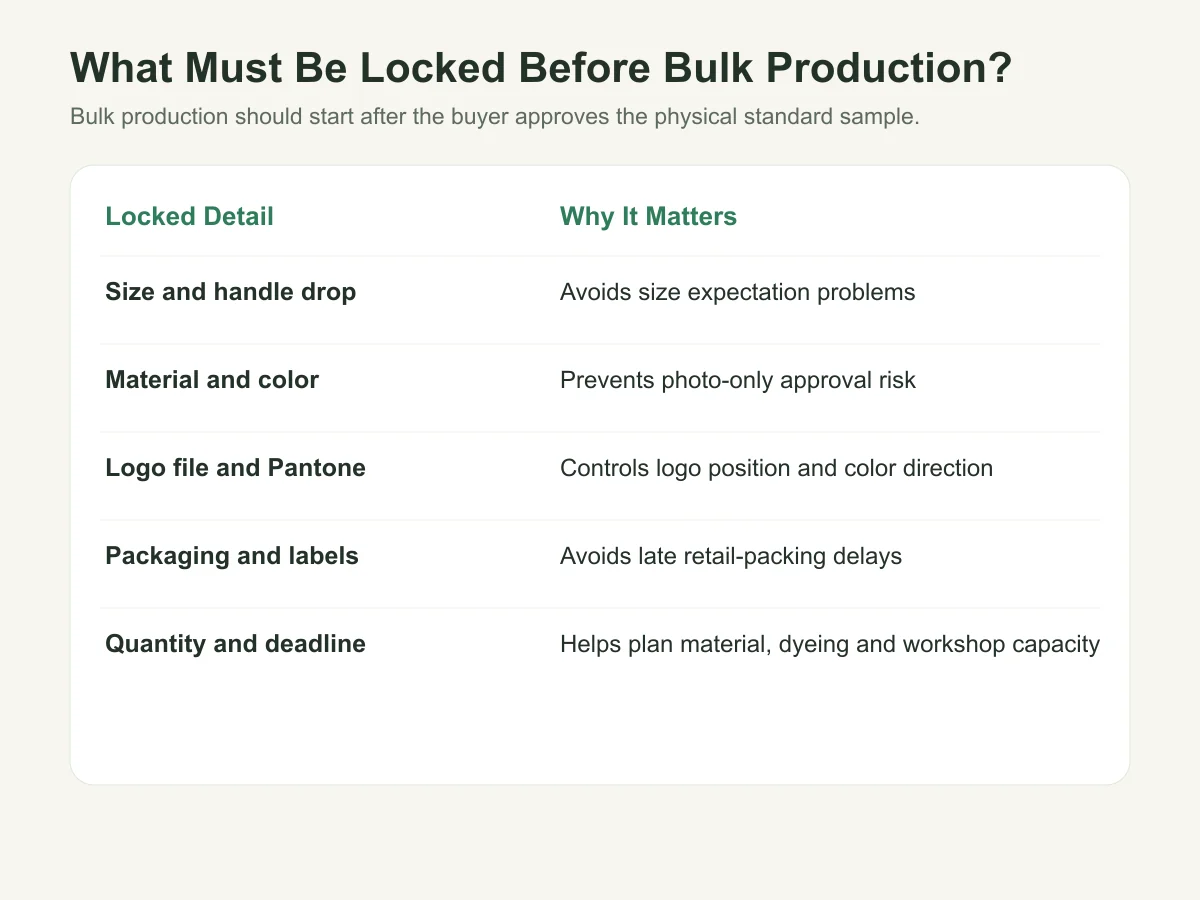
The pre-production sample should confirm size, material, color, handfeel, logo effect, sewing details, handle strength, structure, packaging and labels before bulk production starts.
The pre-production sample connects the buyer's approval with factory execution. It should show the same material, logo process, size, stitching, handle, lining, pocket, zipper, label and packaging standard that bulk production will follow.
For brand-sensitive projects, approving only screen mockups or photos is risky. A photo can help communication, but it cannot fully show material weight, touch, embroidery texture, heat transfer handfeel, patch depth or how the tote looks when packed. The approved physical sample should be retained by the factory as the production reference.
What happens when bulk production starts?
Bulk production starts after the standard sample is approved. The factory then prepares material, cutting, logo process, sewing, finishing and packing according to the production file.
After sample approval, the factory confirms material availability, cutting plan, production sheet and workshop arrangement. The cutting team follows the size and structure standard. The logo team checks artwork, placement and process requirements. The sewing team follows the sample, stitching details and reinforcement points.
For simple totes, bulk production may be straightforward. For complex tote bags with lining, zipper, inner pocket, hardware, vegan leather patch, metal plate, embroidery or all-over print, the factory should pay closer attention to process order and first-piece confirmation.
How does QC work during tote bag production?
QC should start from the signed standard sample. First-piece checks, in-line inspection, finished goods inspection and final spot checks help control bulk goods before shipment.
QC should not wait until the last carton is ready. It should start when the first pieces come off the line. Early checks help confirm size, logo placement, sewing, handle strength, lining, hardware and packaging details before the same issue repeats across the full order.
Depending on the project, buyers may request product photos, production videos, inspection reports or third-party inspection before shipment. For social compliance review, amfori BSCI-related information may also be discussed when relevant.4
| QC stage | What the factory checks | Buyer value |
|---|---|---|
| First-piece check | Size, logo, stitch, material direction and structure | Finds issues before mass repetition |
| In-line inspection | Sewing quality, handle, reinforcement and process consistency | Controls workshop execution during production |
| Finished goods inspection | Appearance, function, packing and quantity | Confirms goods before carton sealing |
| Final spot check | Bulk consistency against signed sample | Reduces shipment-stage surprises |
What MOQ and lead time should buyers expect for custom tote bag manufacturing process?
Ecoicolortote is usually a better fit for MOQ 500+ projects. Sample timing is confirmed after the material, construction, logo method, artwork, packaging and approval scope are clear; the working schedule also depends on revision speed and current capacity.
Bulk timing should be planned after sample approval and depends on material availability, order quantity, process complexity, packaging scope and seasonality. Timeline changes when the project includes custom material color, complex logo process, metal hardware, special packaging, barcode labels, certification documents or multiple colorways.
For retail launches, beauty GWP campaigns, hotel openings and event dates, the launch date should be shared in the first brief. If the date is fixed, the factory can help judge whether the sample, production, packaging and shipment plan is realistic.
How should packaging and shipment be controlled?
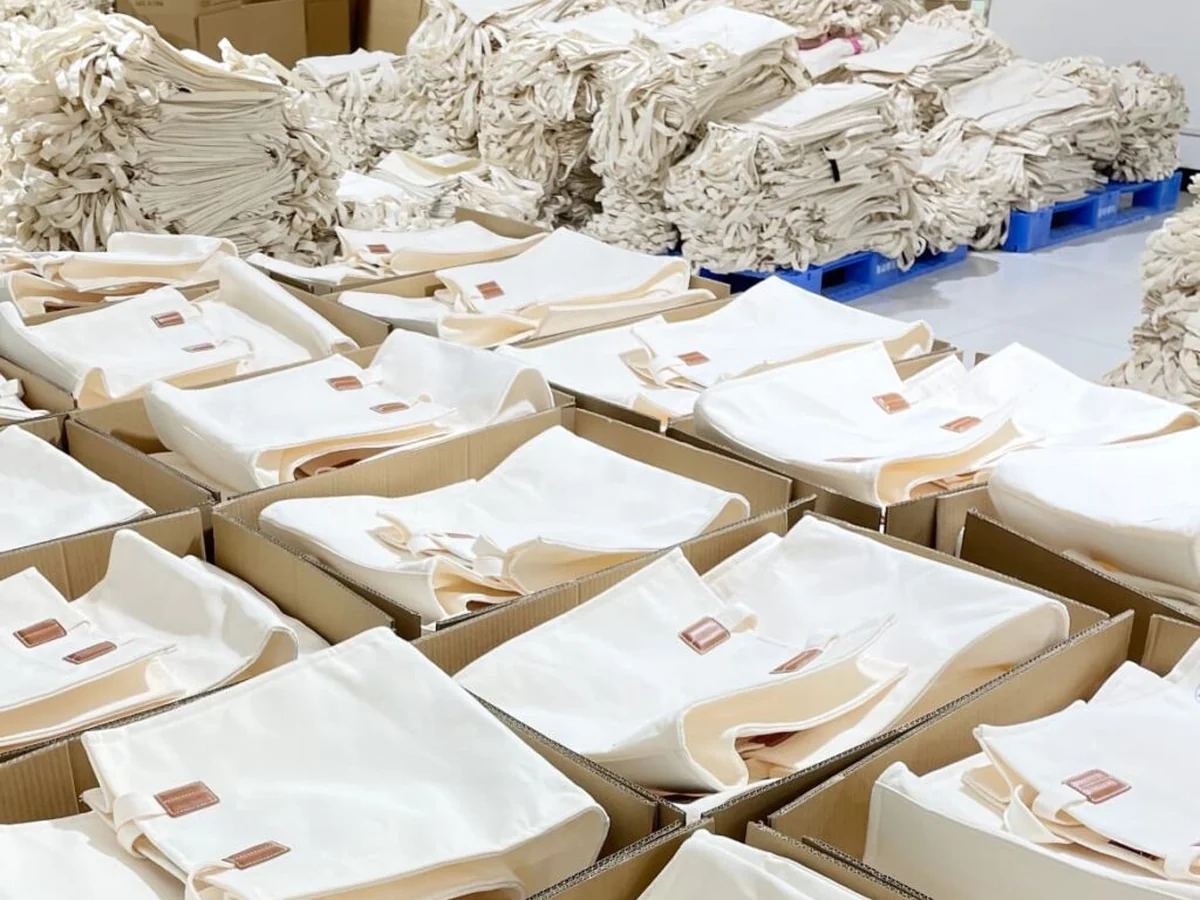
Packaging should be planned before production, especially for retail and private label projects. Hangtags, barcode stickers, wash labels, paper cards, belly bands, FSC kraft packaging, recycled-content polybags and carton marks can all affect packing control.
Packaging is part of the production standard. If hangtags, labels, barcode stickers or carton marks are added late, the order can be delayed even when the tote bag itself is ready. For Amazon, retail, hotel and gift projects, packing instructions should be reviewed before bulk packing starts.
For retail SKU planning, barcode requirements should also be clarified before packaging artwork is finalized. GS1 General Specifications6 are a useful reference when buyers need barcode identifiers for product packaging, labels or retail receiving.
For paper packaging claims, FSC scope should be used carefully because it applies to paper packaging and paper-based materials, not to the tote fabric itself. Environmental wording should be clear and supported, especially if the project uses recycled content or reduced-plastic packaging. The FTC Green Guides summary5 is a useful reference for claim wording.
What documents may buyers request during production?
Depending on the project, buyers may request BSCI-related factory audit information, GRS-related documents for recycled materials, OEKO-TEX when textile safety is required, FSC documents for paper packaging, and inspection photos, videos or third-party inspection support.
Document requests should be matched to the actual order scope. A recycled material document should match the material and supply chain being used. OEKO-TEX should be checked by textile product or component scope. FSC should be checked for paper packaging. Factory audit documents relate to the production site and audit scope.
If documents are required for internal procurement, retail compliance or market claims, buyers should mention them before material selection and quotation are finalized. Late document requests can change material choice, cost or production timing.
What mistake causes the most rework?
The most common mistake is treating sample approval as a small formality. In custom tote bag production, sample approval is the production lock.
Buyers should avoid confirming only by photos, changing specifications after sample approval, adding packaging late, underestimating custom material lead time and compressing production because feedback took too long. These issues can create risk even when the factory process is controlled.
Another common risk is approving unclear artwork. Logo files should be checked before sampling, especially if the design includes small text, Pantone colors, gradients, embroidery, heat transfer, woven labels, patches or metal plates.
- Do not approve only a computer mockup for a brand-sensitive order.
- Do not change material, color, logo size or packaging after the sample standard is locked unless the production file is updated.
- Do not add barcode labels, hangtags, FSC paper cards or carton marks after bulk packing has started.
- Do not assume every material behaves the same under the same logo process.
- Do not leave document requirements until the shipment stage.
Production Brief Checklist
A production brief should help the factory turn a buyer's idea into a controllable production standard. Buyers should prepare the use case, size, material, color, logo process, quantity, packaging, documents, sample approval needs and target delivery date.
| Brief item | What to send | Why it matters |
|---|---|---|
| Use case | GWP, retail, hotel welcome tote, event tote or private label SKU | Sets the quality, packaging and timeline logic |
| Size and structure | Width, height, gusset, handle drop, lining, zipper or pocket | Controls material usage and sewing standard |
| Material | rPET, recycled cotton, cotton canvas, organic cotton, bamboo fiber or other direction | Affects handfeel, cost, logo process and document scope |
| Logo | AI, EPS or editable PDF, Pantone, size, placement and process | Reduces sample revision risk |
| Packaging | Hangtag, barcode, label, polybag, carton mark and packing method | Prevents late packing delays |
| Documents | BSCI, GRS, OEKO-TEX, FSC packaging or testing needs | Helps confirm scope before order placement |
| Timeline | Sample deadline, approval date, launch date and destination | Lets the factory check whether the schedule is realistic |
Less suitable fit for this manufacturing route
This manufacturing route is less suitable for projects that skip physical sample approval, change key specifications after approval, or require document support without confirming document scope before order placement.
Ecoicolortote is usually not the right fit for orders below 500 pcs per style without an existing brand or campaign context, buyers who want to approve material-sensitive or logo-sensitive projects from photos only, or projects that change material, color, logo size, packaging or label files after the pre-production sample is already approved while still expecting the original production schedule. This route is stronger when the buyer wants one clear production standard that the sales team, factory floor, QC team and packing team can all follow.
Send your use case, quantity, size, material direction, logo file, packaging needs, document requirements and launch timeline. Ecoicolortote can help check the sample route, production control points and shipment readiness before bulk starts. Contact Ecoicolortote.
FAQ: Custom tote bag manufacturing process
What should buyers confirm before sourcing custom tote bag manufacturing process?
Buyers should confirm use case, quantity, size, material direction, logo file, Pantone reference, packaging, document needs, sample approval route, target delivery date and shipment destination. These details help the factory judge whether the quotation, sample route, bulk production schedule and packing method are realistic before material, cutting and logo work begin.
What sample details matter most for custom tote bag manufacturing process?
The physical pre-production sample should confirm size, material, color, handfeel, logo effect, sewing details, handle strength, packaging, labels and any lining, zipper, pocket or hardware details. It should represent the standard that QC will compare against during bulk production, not only a visual direction or early design reference for the buyer.
What MOQ and lead time should buyers expect for custom tote bag manufacturing process?
Ecoicolortote is usually a better fit for MOQ 500+ projects. Sample timing is confirmed after the material, construction, logo method, artwork, packaging and approval scope are clear; the working schedule also depends on revision speed and current capacity. Bulk lead time depends on material availability, order quantity, logo process, packaging scope, document needs and sample approval speed.
Which material or certification evidence should be checked?
Check material swatches, recycled or organic claim evidence, OEKO-TEX or other textile safety documents when applicable, FSC paper packaging scope and any factory audit or testing requirements. Evidence should match the actual material, packaging, factory route, order scope and claim wording, because a general supplier file may not apply to the final tote.
What should be included in the RFQ?
The RFQ should include use case, quantity, size, material, color, logo artwork, logo process, packaging, labels, documents, sample deadline, launch date and delivery destination. If the tote must hold real products, gift boxes, retail items or hotel welcome contents, buyers should also send product dimensions so the factory can check structure and capacity.
What mistake causes the most rework?
The biggest mistake is changing material, color, logo size, packaging or document requirements after the pre-production sample has already been approved. Late changes can force a new quote, revised production file, sample remake, artwork check, packaging update or schedule review, especially when the factory has already purchased material or started cutting.
When should buyers contact Ecoicolortote?
Contact Ecoicolortote before sampling if your team needs to review the production route, material evidence, sample approval plan, packaging files, QC checkpoints or delivery handoff for an MOQ 500+ project. The most useful brief includes use case, quantity, size, material direction, logo file, packaging needs, document requirements, destination and launch timing.
Trademark and certification note
GRS, OEKO-TEX, FSC, amfori BSCI and GS1 are referenced for buyer education and scope discussion only. They are owned by their respective organizations. Any certification, audit, barcode, recycled-content, textile safety, paper packaging or environmental claim should be checked against the actual material, factory, packaging, order scope and buyer requirement before it is used in purchase documents, packaging artwork or marketing copy.