Zoe Yu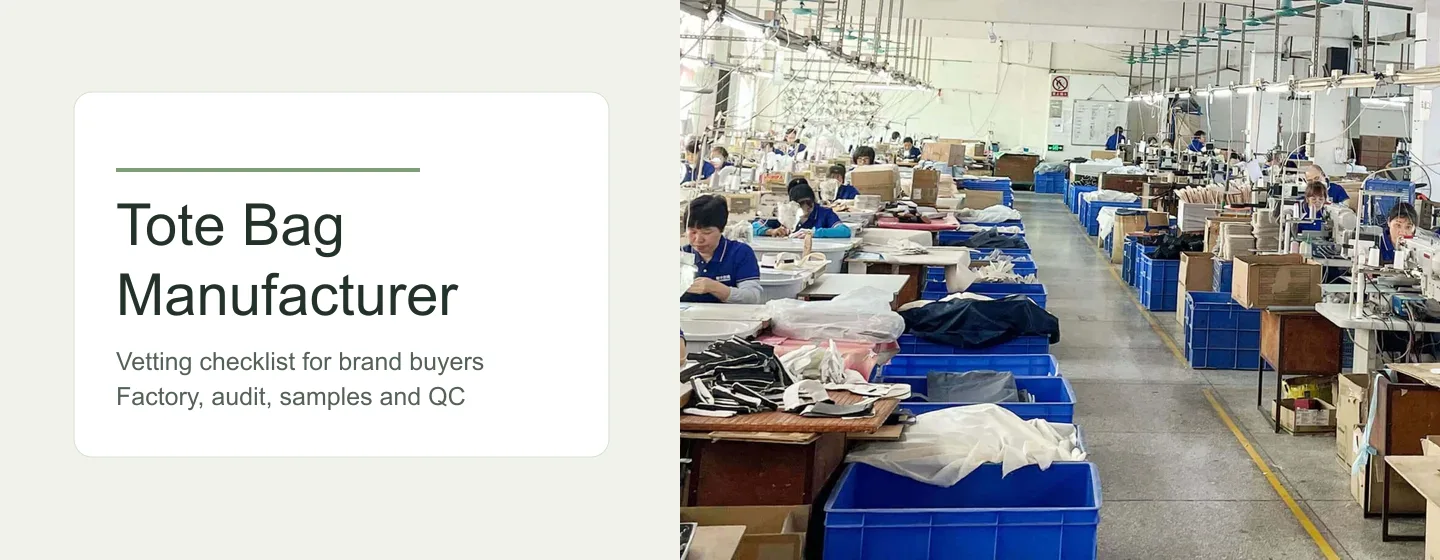
Buyer Summary
- Best for: beauty, wellness, DTC, retail, Amazon, hotel and event buyers comparing custom tote bag manufacturers before sampling or bulk orders.
- Main decision: a reliable tote bag manufacturer should show factory proof, relevant audit documents, sampling ability, material options, logo process capability, QC control and one accountable project owner.
- Factory-side note: the cheapest supplier is not always the safest choice if they cannot explain material, packaging, document scope, sample approval and bulk production risks.
- What to prepare: quantity, material direction, logo file, packaging needs, document requirements, launch date and target market before asking the supplier to confirm feasibility.
Choosing a tote bag manufacturer is not only about finding someone who can sew a bag. For brand buyers, the real question is whether the supplier has a real production base, relevant audit documents, a controlled sampling process, material options, QC discipline and one accountable person managing the project.
TL;DR: A reliable tote bag manufacturer should prove production control, not only offer a low price or fast reply. Before sampling, buyers should check factory proof, audit status, MOQ logic, material range, logo process capability, sample approval route, QC method, packaging support, document scope and one accountable project owner. The safest supplier is the one that can explain how the bag will move from brief to approved sample, bulk production, packing and shipment.
From our factory side, the first check is basic: is this supplier actually connected to production, and can they prove it? After that, buyers should review audit status, material capability, sample timing, logo process, packaging support and how the supplier handles changes before bulk production.
Ecoicolortote works with brand projects from 500 pcs per style. Our Dongguan factory operation has production space, verified factory information and video factory review available when needed. For brand buyers, the goal is to evaluate quality, design, document scope and project control before sampling or bulk order confirmation.
Best fit for this manufacturer vetting checklist
This checklist is best for beauty, wellness, DTC, retail, Amazon, hotel and event buyers comparing custom tote bag manufacturers before sampling or bulk order approval. It is especially useful for sourcing managers, founders, procurement teams and brand marketers who need to decide whether a supplier can handle MOQ 500+ projects with material selection, logo process, packaging, document requests and production follow-up. The strongest fit is a buyer who already has a quantity range, material direction, logo file, packaging expectation, destination market and launch date, because those details make factory capability easier to verify. It also fits teams that need one supplier owner for sample approval, QC records, label files and shipment coordination.
What Should Buyers Check First When Choosing a Tote Bag Manufacturer?
Brand buyers should first verify whether the supplier is connected to real production and whether basic audit documents are available. After that, they can compare MOQ, material options, sampling ability, complex logo processes, QC, packaging support, communication structure and delivery planning.
A polished website or fast reply is useful, but it does not prove manufacturing control. Before discussing complicated design details, buyers should ask for factory location, production photos or video, audit status, sample process and the person responsible for the project.
The first layer is factory proof and basic qualifications. For many brand buyers, a BSCI-related audit status is one of the first screening points because it shows the supplier has been reviewed through a recognized social compliance process. amfori BSCI audit request guidance1 is a useful reference for producer audit workflows.
When buyers also use Sedex or SMETA language in supplier onboarding, they should confirm whether the requested audit file matches the actual production site and review scope. Sedex SMETA audit guidance6 can help teams separate audit review from product material certification.
| Vetting area | What buyers should confirm | Why it matters |
|---|---|---|
| Factory identity and location | Factory address, production photos or video, team contact and production setup | Shows whether the supplier is connected to real manufacturing control |
| BSCI or audit status | Basic social compliance audit status or available audit documents | Helps brand buyers screen factory-level responsibility |
| Material sourcing ability | rPET, recycled cotton, organic cotton, bamboo fiber, canvas, vegan leather and packaging options | Prevents material choice from becoming a late-stage limitation |
| Sampling process | Design drawing, material confirmation, sample, revision and pre-production sample approval | Reduces risk before bulk production starts |
| Logo and accessory capability | Printing, embroidery, patches, metal plates, labels, trims and multi-process combinations | Shows whether the supplier can execute brand-level details |
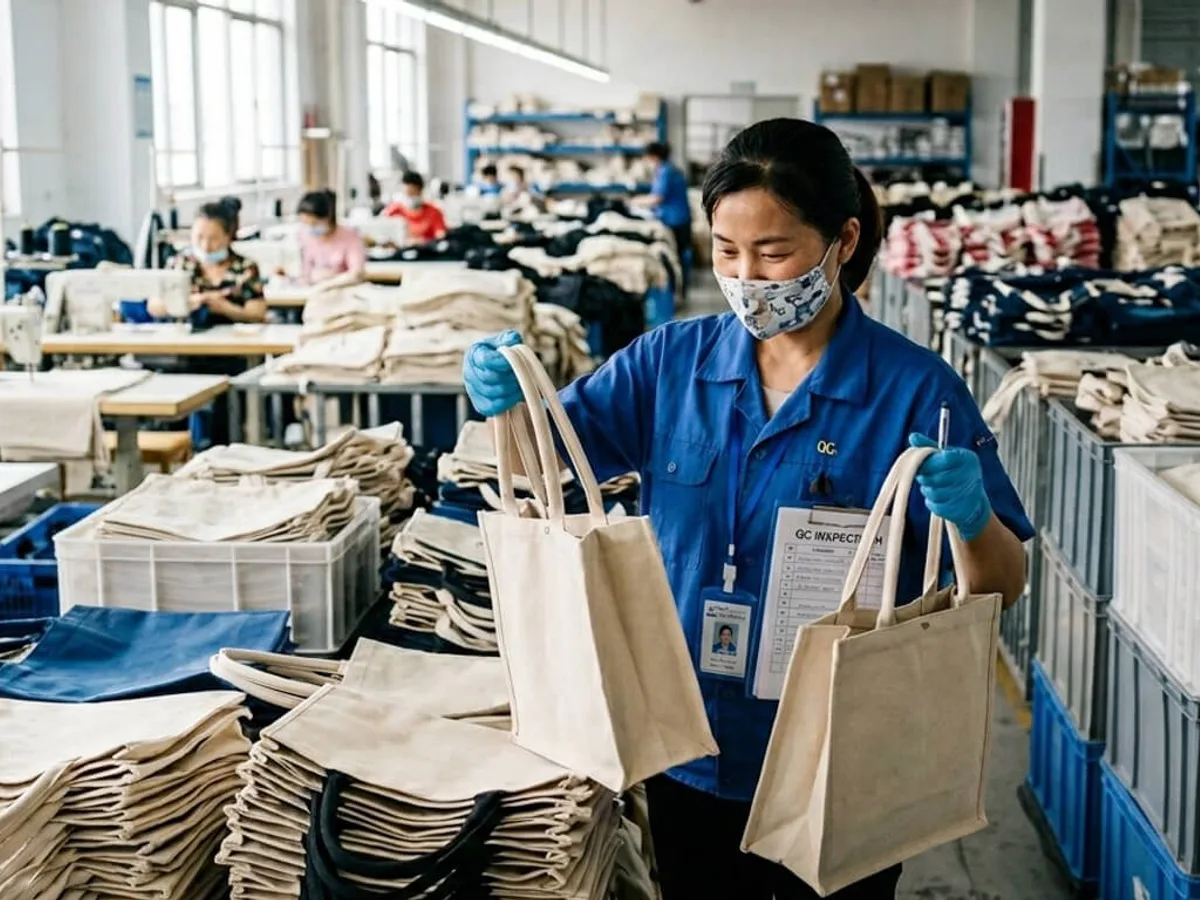
| QC before packing | Measurements, logo position, stitching, handles, labels, packaging and carton marks | Protects brand presentation at delivery |
| Packaging and label supply chain | Hangtags, barcode stickers, care labels, FSC paper cards and rPET polybags | Important for retail, GWP and welcome-kit projects |
| One accountable project owner | One sales or project manager following brief, sample, production and packaging | Reduces information loss across departments |
How Is This Manufacturer Vetting Checklist Different From the Audit and Manufacturing Process Guides?
This checklist helps buyers choose which tote bag manufacturer to work with. The supplier audit checklist goes deeper into procurement review, while the manufacturing process guide explains how production should be controlled after a supplier is selected.
If your team is comparing several suppliers before the first sample, this checklist helps frame the vetting decision. If procurement needs a broader factory, QC, packaging and document review, use the custom tote bag supplier audit checklist. If the order is already moving into sampling and bulk planning, use the custom tote bag manufacturing process guide.
The RFQ checklist is also different: it helps buyers prepare quote information. Manufacturer vetting is about supplier capability, accountability and production risk before the buyer chooses who should quote, sample or produce the project.
How Should Buyers Evaluate Factory vs Trading Company?
Buyers do not need to reject every trading structure, but they should know who controls production. A strong supplier should be transparent about factory location, production space, audit status, sampling workflow and who is responsible for translating buyer requirements into factory execution.
A trading company is not automatically bad, and a factory is not automatically good. The practical question is whether the supplier can prove production control, explain material and process choices, manage sampling, control QC and respond clearly when problems appear.
The risky situation is when the buyer cannot see who is actually making the product, who owns the sample standard, who checks production, and who answers when a detail changes. If the tote requires custom materials, complex logo work, labels, hangtags, packaging or certification documents, the supplier must be able to coordinate those details without losing information.
What Audit and Certification Documents Should Buyers Request?
Buyers should request documents based on the project scope: BSCI or social audit status for factory review, GRS-related documents for recycled materials, OEKO-TEX when textile safety is required, FSC for paper packaging, and factory videos or photos when remote vetting is needed.
Certification language must match the actual material, factory and order scope. If a buyer requests recycled material, the document path is different from a general factory audit. If the project includes paper hangtags or kraft packaging, packaging documents should be discussed separately.
For recycled material projects, Textile Exchange standards2 provide standards information including the Global Recycled Standard. For textile safety requirements, buyers may review OEKO-TEX STANDARD 1003. For paper cards, kraft packaging or related paper materials, FSC offers a paper and packaging certification route4.
Buyers do not need to ask for every document in every project. The better approach is to list the claim, market, product material and packaging, then ask which documents are applicable.
| Document type | When buyers may need it | What to check |
|---|---|---|
| BSCI or factory audit status | Factory social compliance review | Audit status should match the production factory being used |
| GRS-related documents | Recycled material projects such as rPET or recycled cotton | Documents should match material, order scope and supply chain path |
| OEKO-TEX | Textile safety requirements | Confirm whether the specific fabric or component is covered |
| FSC paper packaging | Hangtags, paper cards, kraft packaging or paper bands | Packaging certification should not be confused with fabric certification |
| Factory video or sample photos | Remote supplier vetting and internal buyer review | Use them as supporting evidence, not as a replacement for sample approval |
What MOQ and Sampling Ability Should a Tote Bag Manufacturer Support?
For brand projects, MOQ from 500 pcs per style is a workable starting point. Sample timing is confirmed after the material, construction, logo method, artwork, packaging and approval scope are clear; the working schedule also depends on revision speed and current capacity.
MOQ is not just a number. It is connected to material availability, colorways, logo process, trims, packaging, production setup and whether the buyer needs several styles. A supplier should explain what is possible at 500 pcs per style and what may require different planning.
Sampling ability matters because many problems are solved before bulk production. The real sample workflow should be: project brief, design drawing, material direction, sample, revision if needed, physical pre-production sample approval, then bulk production. Bulk should not start only from a digital image when the tote has material, size, logo or packaging risk.
How Do Material and Process Capabilities Affect Supplier Choice?
A tote bag manufacturer should be evaluated by whether it can match material, logo process and packaging to the buyer's project. A strong supplier can explain options across rPET, recycled cotton, organic cotton, bamboo fiber, canvas, vegan leather, printing, embroidery, labels, patches and hardware.
A basic tote and a brand-ready tote are not the same project. Brand buyers may need recycled or natural materials, custom-dyed fabric, embroidery, screen printing, heat transfer, woven labels, leather-look patches, metal plates, inner labels, hangtags, barcode stickers or rPET polybags.
Ecoicolortote supports many recycled and natural material directions, including rPET, organic cotton, recycled cotton, bamboo fiber and other responsible-material options. We also handle complex process combinations such as edge painting, glue work, multiple logo processes, multiple hardware pieces and embedded nameplates.
If your project is still at the material stage, start with our rPET recycled totes page. If the main concern is logo effect, compare the options in our logo process guide.
What QC Process Should Buyers Expect Before Bulk Shipment?
Buyers should expect QC to cover material, measurements, color, logo position, stitching, handle alignment, labels, packaging and final appearance. A physical pre-production sample is important because it becomes the reference standard for bulk production.
One real issue we have seen in the market is a project driven only by unit-cost comparison: print quality becomes weak, bag construction feels unstable, and handles may not align cleanly. That harms the final brand experience.
To reduce that risk, the buyer should ask how the supplier checks the bag before packing. At minimum, the supplier should confirm approved sample standard, measurement tolerance, logo placement, stitching quality, handle strength, color direction, packaging and carton marking.
If the product includes retail packaging, barcode stickers or hangtags, those details should be checked before packing too. GS1 General Specifications5 can be relevant for private label or retail tote projects.
Why Does One Project Owner Matter?
One accountable sales or project manager helps reduce information loss between buyer, design, sampling, production and packaging. This matters when the tote involves material selection, custom logo process, multiple trims, labels, packaging or certification documents.
Many project problems come from small details moving between too many people: one person confirms material, another discusses logo, another handles packaging, and production receives incomplete information. A single accountable project owner helps keep the brief connected.
At Ecoicolortote, one sales or project manager follows the project from early brief to sample and production coordination. For complex tote projects, that continuity can be more important than a fast first reply. The buyer needs someone who remembers why a material was chosen, what the approved logo position was, and which packaging version is final.
What Information Should Buyers Send for an RFQ?
A useful RFQ should include tote size, material direction, quantity, colorways, logo file, Pantone reference, logo process, packaging, certification or audit needs, target launch date and destination. Without these details, a supplier cannot quote responsibly.
If a buyer only asks "How much per bag?", our answer is usually that we need the design and project details first. Tote bag cost changes with size, material, quantity, logo process, lining, zipper, trims, packaging and documents. If the buyer has a target product position, we can also recommend material options based on that direction.
A strong RFQ helps the supplier respond with useful guidance instead of guessing. It also helps the buyer compare suppliers on the same specification rather than receiving unrelated quotes.
- Size and structure: flat, gusseted, lined, zipper, pocket or open top
- Material direction or target hand feel
- Quantity, colorways and style count
- Logo file, Pantone reference and preferred process
- Packaging, hangtag, label or barcode needs
- Audit or certification document needs
- Target launch date and shipping destination
What Supplier Red Flags Should Buyers Notice?
Buyers should pay attention when a supplier quotes without asking project details, cannot show factory proof, avoids document questions, skips physical sample approval, or promises every requirement without explaining the process. The issue is not speed; the issue is lack of verification.
A quick reply is good when it comes with the right questions. But if a supplier gives a final answer without checking size, material, logo artwork, color, packaging or quantity, the buyer should slow down and ask how the quote was built.
Another warning sign is when everything is promised but nothing is explained. A qualified supplier should be able to say what is straightforward, what needs sampling, what needs document confirmation, and what may change the timeline.
| Red flag | Why buyers should slow down |
|---|---|
| Gives a unit price before asking project details | The supplier may not understand size, material, logo process, packaging or document requirements. |
| Cannot explain MOQ by material, colorway or process | MOQ should connect to real production setup, not only a generic number. |
| Cannot provide factory proof or audit status when requested | Brand buyers need to know who controls production and whether basic vetting evidence is available. |
| Uses broad environmental claims without scope | Material and packaging claims should be supported by the right documents when required. |
| Avoids physical pre-production sample approval | Bulk production may not match buyer expectations for hand feel, size, structure or logo effect. |
| Cannot explain QC before packing | Finished goods should be checked against the approved sample before shipment. |
| Changes answers on packaging, labels or documents | Retail and private label details need stable coordination before bulk packing. |
| No clear project owner | Details can get lost between sales, design, sampling and production if ownership is unclear. |
Tote Bag Manufacturer Vetting Checklist
Before choosing a tote bag manufacturer, buyers should check factory proof, audit documents, MOQ logic, sampling process, material options, logo process capability, QC control, packaging support and project communication.
- Factory proof or clear production relationship
- BSCI, GRS, OEKO-TEX, FSC or other relevant document support
- MOQ from 500 pcs per style and colorway flexibility
- Sample timing and physical pre-production sample approval
- Material options: rPET, recycled cotton, organic cotton, canvas and others
- Logo process ability: printing, embroidery, heat transfer, woven label, debossing or metal plate
- Packaging support: hangtag, polybag, barcode, label and carton mark
- QC process before bulk packing and shipment
- One project owner for communication and follow-up
- Clear explanation of cost, timeline and risk factors
Less suitable fit for this manufacturer vetting route
This route is less suitable for buyers with no clear quantity, size, material, logo, packaging direction or launch timing, because supplier capability cannot be judged fairly without project scope.
It may also be less suitable for buyers who choose only by the lowest unit price, skip factory or sample verification, need environmental or recycled-content claims but refuse document-scope checking, or want to approve brand-sensitive orders without a physical pre-production sample. Ecoicolortote is a stronger fit for MOQ 500+ brand projects where the buyer wants a supplier that can explain material options, logo process, packaging, documents, QC and production follow-up before bulk work begins. Vetting works best when the buyer is willing to compare evidence, not only promises.
FAQ
What is the first thing to check when choosing a tote bag manufacturer?
First check whether the supplier is connected to real production and whether basic audit or factory verification documents are available. Then review sampling, materials, QC and project communication. A supplier should be able to explain factory location, production setup, sample approval route and who controls the project before the buyer compares detailed prices.
What MOQ should brand buyers expect?
For Ecoicolortote projects, MOQ starts from 500 pcs per style. Exact planning depends on material, colorways, process, packaging and whether the buyer needs multiple styles. If the buyer wants several colors, logo versions or packaging versions, MOQ should be discussed together with material availability, cutting efficiency and label control.
Should buyers request a physical sample?
Yes. A physical sample and pre-production sample approval help avoid misunderstandings in size, material, logo effect, structure and packaging before bulk production. For brand-sensitive retail, beauty, hotel or event projects, photo approval alone may miss handfeel, color, sewing, handle comfort, product fit and packaging details.
What documents should buyers request?
Common requests include BSCI or audit status, GRS-related material documents, OEKO-TEX where textile safety is required, FSC for paper packaging, factory video, material composition and testing reports when applicable. The right document depends on material, factory, packaging, order scope, claim wording and destination market, so documents should not be treated as interchangeable.
Can a factory help if the buyer does not have a complete design drawing?
Yes. An in-house design team can help prepare a design drawing for confirmation when the buyer has a clear brief, reference and brand requirements. The buyer should still provide quantity, size direction, material preference, logo file, packaging expectations and launch timing so the drawing reflects a manufacturable tote instead of only a visual idea.
Is a fast quote always a good sign?
A fast reply is helpful only when the supplier asks the right questions. If the quote is given without checking size, material, logo, quantity, packaging and timeline, the buyer should ask for clarification. Speed matters less than whether the supplier understands the real specification and can explain what is included in the price.
What red flags should buyers watch for when vetting tote bag suppliers?
Buyers should watch for unclear factory proof, vague document claims, quotes without project details, skipped sample approval, weak QC explanations, unstable packaging answers and no accountable project owner. These signs suggest the supplier may not control the full path from brief to sample, bulk production, packing and shipment.
Send your quantity, material direction, logo file, packaging needs, required documents and launch date. We can help check whether your project fits a custom tote production route from sampling to bulk production. Contact Ecoicolortote.
Trademark and certification note
BSCI, Sedex, SMETA, GRS, OEKO-TEX, ISO, FSC and other certification or audit names belong to their respective organizations. This article is a buyer-side sourcing guide and does not claim that every product, material, order or shipment automatically carries every listed certification. Buyers should confirm current document validity, certificate scope, material coverage and market requirements before finalizing quotation or bulk production.