Zoe Yu
From our factory side, a seasonal GWP tote campaign should be planned backward from the launch date, because material choice, sample approval, packaging files, document scope and bulk production all affect whether the gift arrives on time and matches the brand campaign.
Buyer Summary
- Suitable for: beauty and wellness brands planning seasonal GWP, holiday gifts, member gifts, travel campaigns and event giveaways from 500 pcs per style.
- Main decision: start from the campaign launch date, then protect time for material selection, samples, packaging files, documents and shipping.
- Factory-side note: many seasonal projects do not fail because the tote is hard to sew; they fail because confirmation, packaging or shipping time is compressed too late.
- What to prepare: launch date, budget direction, product set, logo file, seasonal theme, packaging direction, document needs and shipment destination.
Why should seasonal GWP tote campaigns be planned backward?
Seasonal GWP tote campaigns should be planned backward because launch date, shipping method, bulk production, pre-production approval, sample changes, packaging files and material confirmation all affect whether the gift reaches stores or campaign teams on time.
Role boundary: this guide owns the beauty / wellness Seasonal program calendar, campaign moments, version planning and file-readiness task. Use Seasonal GWP Totes for the Layer 2 campaign route and GWP Tote Bags for the broad commercial brief.
A seasonal GWP tote is not only a bag. It is part of a launch moment. For beauty and wellness brands, the tote may support Mother's Day, summer travel, holiday gift, New Year gift, member day or a skincare set promotion. If the tote arrives late, the campaign loses value even if the bag itself is well made.
| Seasonal window | Brief should start | Sample approval target | Launch watch-out |
|---|---|---|---|
| Spring / Mother's Day | 8-12 weeks before launch | Before paper card and hangtag files are locked | Soft color approval and gift presentation often take longer than expected. |
| Summer travel / resort | 8-12 weeks before launch | Before print artwork and material choice are finalized | Shipping buffer matters because travel campaigns often have fixed store dates. |
| Holiday / Christmas | 10-14 weeks before launch | Before peak-season production and packaging queues fill up | Paper packaging, internal approval and freight schedules are common bottlenecks. |
| Q1 / New Year / member day | 8-10 weeks before launch | Before SKU, colorway and quantity split are confirmed | Annual planning helps avoid treating every campaign as a new rush order. |
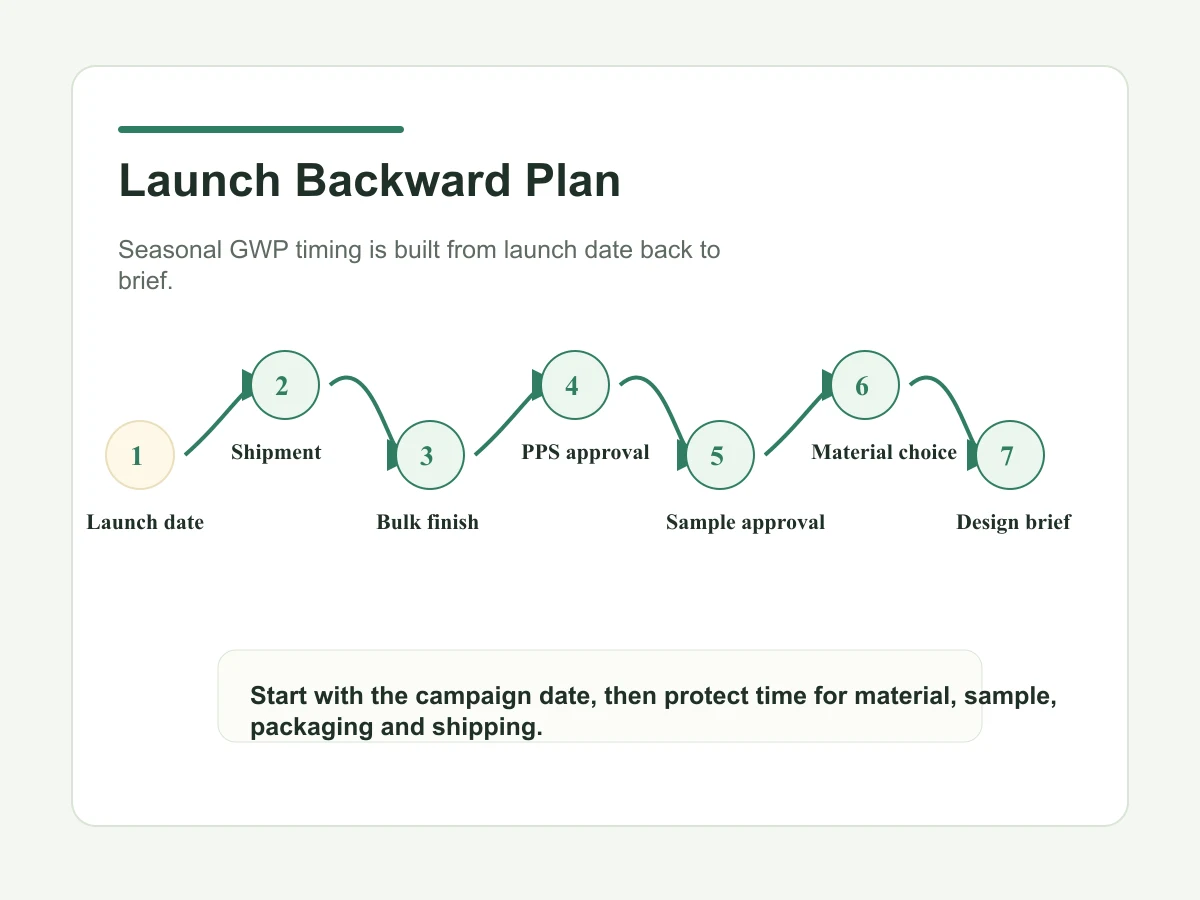
We see the biggest timing risks when the project starts with "Can you make this fast?" instead of "Here is the launch date, product set, budget direction and packaging plan." A factory can add people or speed up certain steps, but shipping, material dyeing, paper card printing and internal brand approval still need real time.
Which seasonal GWP moments should beauty brands plan for?
Beauty and wellness brands often plan GWP totes around Mother's Day, summer travel, holiday gifts, Christmas, New Year, member days, product launches and retail events. Each season changes material, color, packaging and use-case priorities.
For Mother's Day, the tote may need a softer visual direction and a gifting feel. For summer travel or resort campaigns, lightweight material and easier-care surfaces may matter more. For holiday and Christmas gift sets, packaging, metallic details, woven labels or embroidery may become more important if the budget allows.
For DTC, retail and hotel programs, seasonal logic also applies, but the main question is still the same: what is the campaign moment, what goes inside the tote, and how will the customer receive it?
How early should a beauty GWP tote project start?
For seasonal GWP tote projects, 8-12 weeks is a safer planning window. Simple projects may move faster, but custom materials, complex printing, paper cards, hangtags, gift packaging, internal approvals and shipping can quickly compress the schedule.
Sample timing is confirmed after the material, construction, logo method, artwork, packaging and approval scope are clear; the working schedule also depends on revision speed and current capacity. Bulk production should be confirmed after sample approval and depends on quantity, material availability and process complexity.
Material standards can also affect time. If the brand needs an exact seasonal color, custom material may need more time. If the schedule is too tight, the buyer may need to accept an available close color instead of custom dyeing. That can save time, but it may not match the brand color as closely.
Shipping is another risk buyers often underestimate. Factory production can sometimes be supported with extra labor, but sea freight schedules can shift. If the launch window is too tight, the project may end up using more expensive air freight just to reach the campaign date.
How should materials match the seasonal campaign?
Material should match campaign type, budget, brand positioning, logo artwork, packaging and document needs. rPET and recycled cotton blend often fit cost-sensitive GWP projects, while organic cotton, cotton canvas and bamboo fiber can support natural or wellness positioning.
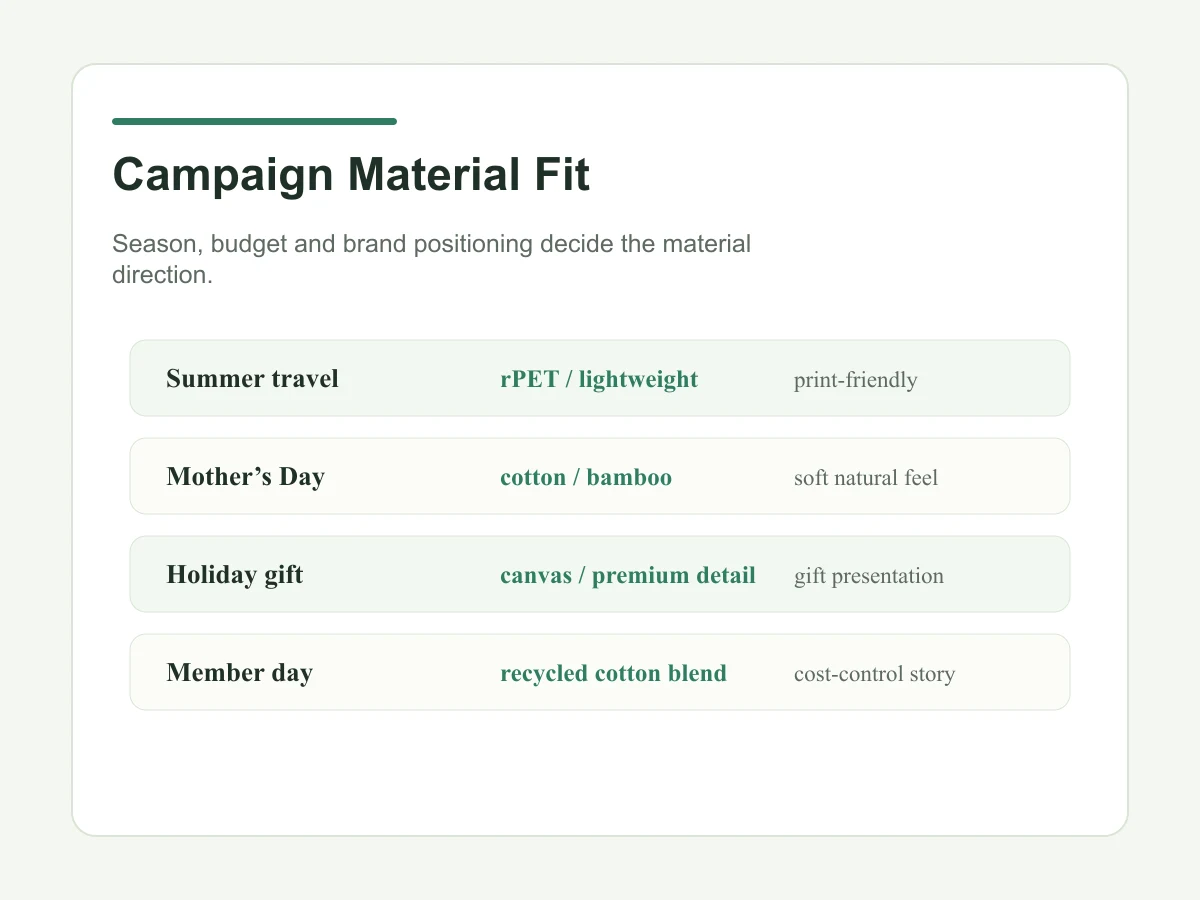
For budget-sensitive seasonal GWP projects, rPET or recycled cotton blend are often practical options. rPET can be especially useful for colorful prints, travel themes and lightweight campaign bags. Recycled cotton blend can support a recycled story while keeping the project more cost controlled.
If the brand direction is clean beauty, natural beauty or wellness, cotton canvas, organic cotton and bamboo fiber may fit the positioning better. Bamboo fiber can be a strong optional material for natural positioning when the brand wants a clearer story than a basic canvas tote.
Recycled and natural material claims should be supported carefully. Textile standards can help buyers frame recycled or natural material scope, but claims should still match the actual material and order scope. Global Recycled Standard - Textile Standards1
How should seasonal logo and design details be planned?
Seasonal GWP totes may use only the brand logo, or combine brand logo with campaign artwork, seasonal slogan or full-print pattern. The logo method should be chosen after checking material, artwork complexity, budget and timeline.
For multi-color, full-print or gradient seasonal artwork, rPET and print-friendly materials are often easier to manage than cotton canvas. If the buyer wants a more elevated feel, embroidery, woven label, metal plate, leather patch or debossing can be considered, but the right answer depends on material and budget.
Complex processes can affect both sample timing and bulk timing. This is why the campaign theme, logo file and material direction should be discussed before the final quotation. If the customer does not have a finished layout, our team can help with basic layout, mockup direction and material suggestions.
When should packaging and retail files be confirmed?
Packaging files should be confirmed during sample stage or before order placement when they affect campaign presentation. Seasonal GWP packaging may include FSC kraft hangtags, paper cards, belly bands, recycled-content polybags, gift boxes, barcodes or country labels.
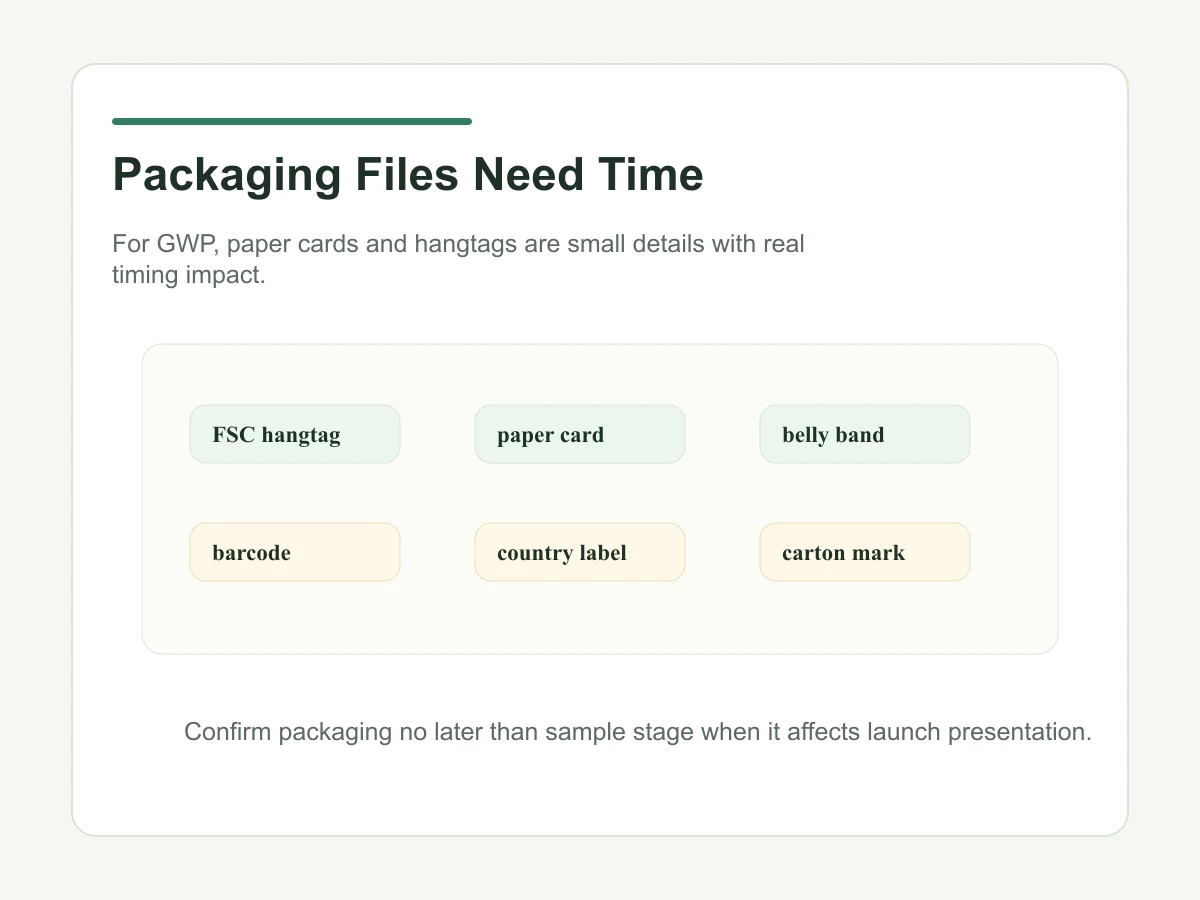
Beauty GWP packaging usually works well when it is simple but still has a sense of ceremony. A paper card, belly band or FSC kraft hangtag can make the tote feel more complete without making the packaging too heavy.
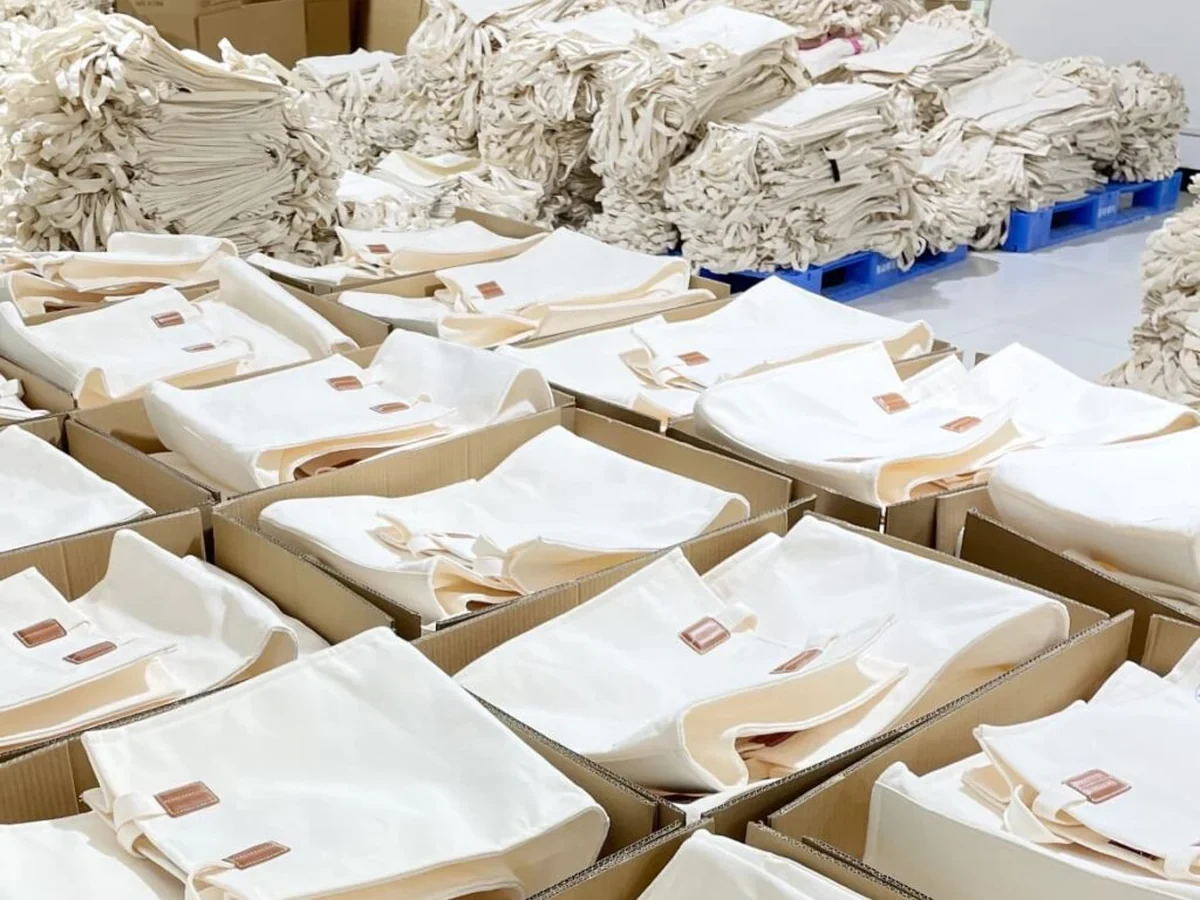
FSC is normally relevant to paper packaging, paper cards and hangtags, not the tote fabric itself. FSC paper and packaging2 If recycled-content polybags or no-plastic-filling preferences are part of the campaign, they should be discussed early so packaging, carton and shipment details stay aligned.
What documents should be checked before ordering?
Seasonal GWP projects may need BSCI, GRS, OEKO-TEX, FSC packaging, testing reports, material composition or country-of-origin documents. These should be confirmed before ordering, especially when the campaign uses recycled, organic or environmental claim wording.
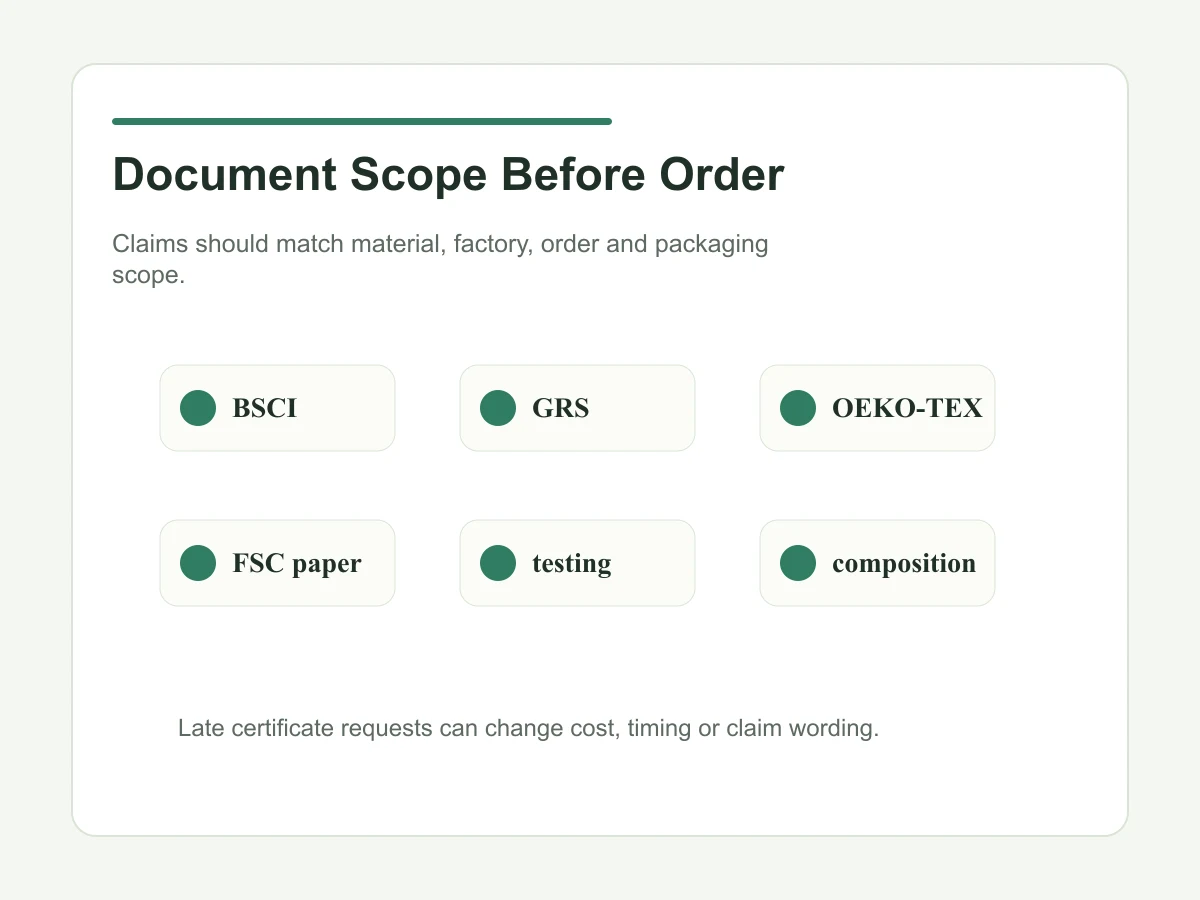
OEKO-TEX STANDARD 100 is related to harmful-substance testing and textile safety, not automatically a recycled material claim. OEKO-TEX STANDARD 1003 Environmental wording should also be specific and supported by suitable evidence. FTC Green Guides summary4
If the buyer asks for certificates after bulk production is already moving, cost and timing can change. Some files may be available from existing material records, while order-specific proof may need extra preparation or cost. BSCI is also a factory social-compliance discussion, not a fabric certificate. amfori BSCI5 It is much safer to confirm document scope before order placement.
How should MOQ, colorways and quantities be planned?
Our MOQ starts from 500 pcs per style. Two colorways can usually be discussed within a 500 pcs project depending on material and process, while multiple markets, store groups or campaign batches should be estimated early.
Seasonal GWP programs often involve multiple stores, markets or campaign waves. If the brand has several launch windows, it is better to estimate the total quantity early instead of treating every batch as a last-minute new order.
If the brand runs seasonal GWP campaigns several times per year, an annual campaign calendar can help. It allows the factory to suggest shared materials, reusable standards, packaging file management and more realistic production planning.
What mistakes delay seasonal GWP tote campaigns?
The most common mistakes are starting too late, choosing material only from photos, confirming packaging too late, not testing product fit, adding certificates after order placement, delaying internal approvals and underestimating shipping time.
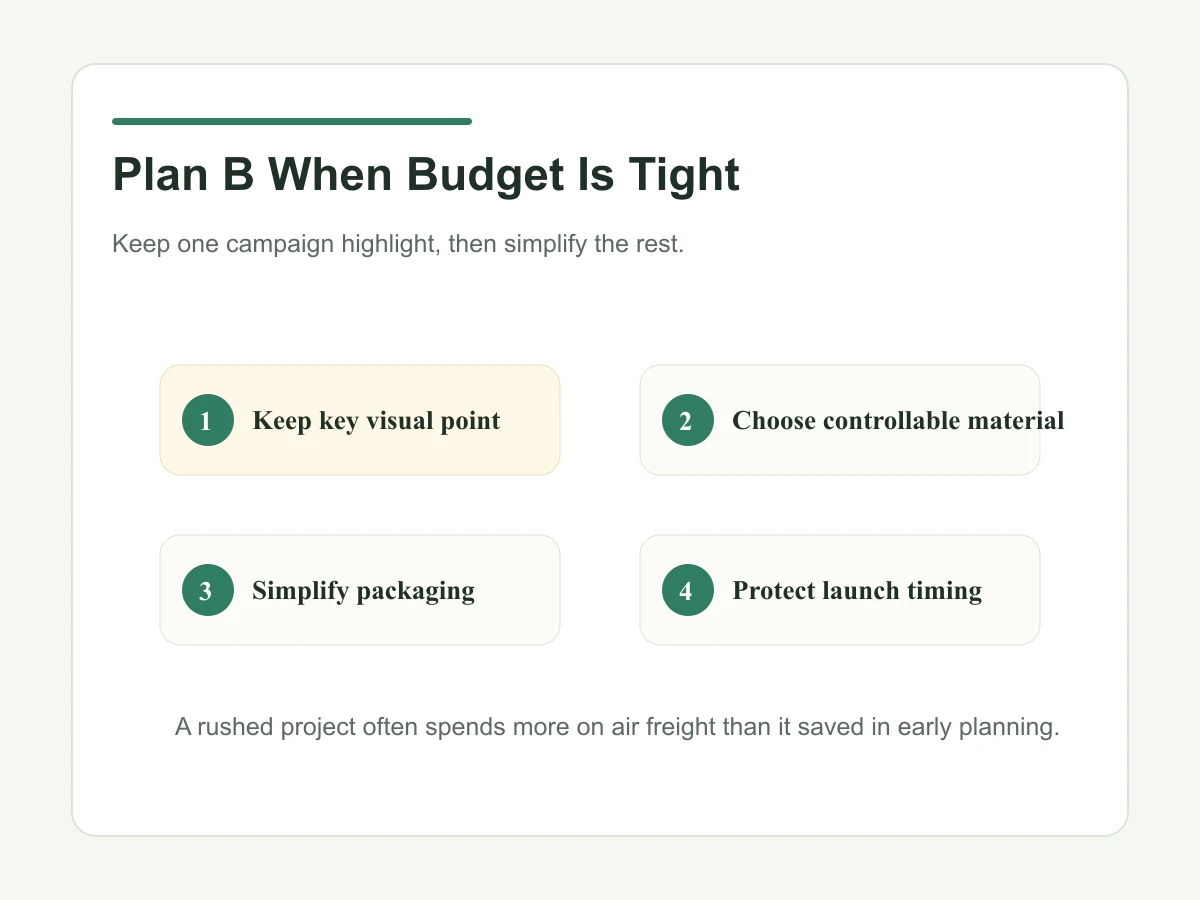
The most serious timing problem is often not sewing. It is late confirmation. If the buyer starts too late, the project may need to compromise on material color, choose a simpler structure, reduce packaging complexity or pay for air freight.
We also see projects where the buyer loves a special material at first, but the budget does not match. In that case, it is better to tell the factory the budget and campaign use early. Then we can suggest a Plan B, such as keeping one premium visual detail while using a more controllable material or simpler packaging.
For GWP projects, paper cards and hangtags are easy to underestimate. They feel like small accessories, but file approval, printing and version control can affect timing. Confirm them early.
What planning checklist should beauty buyers use?
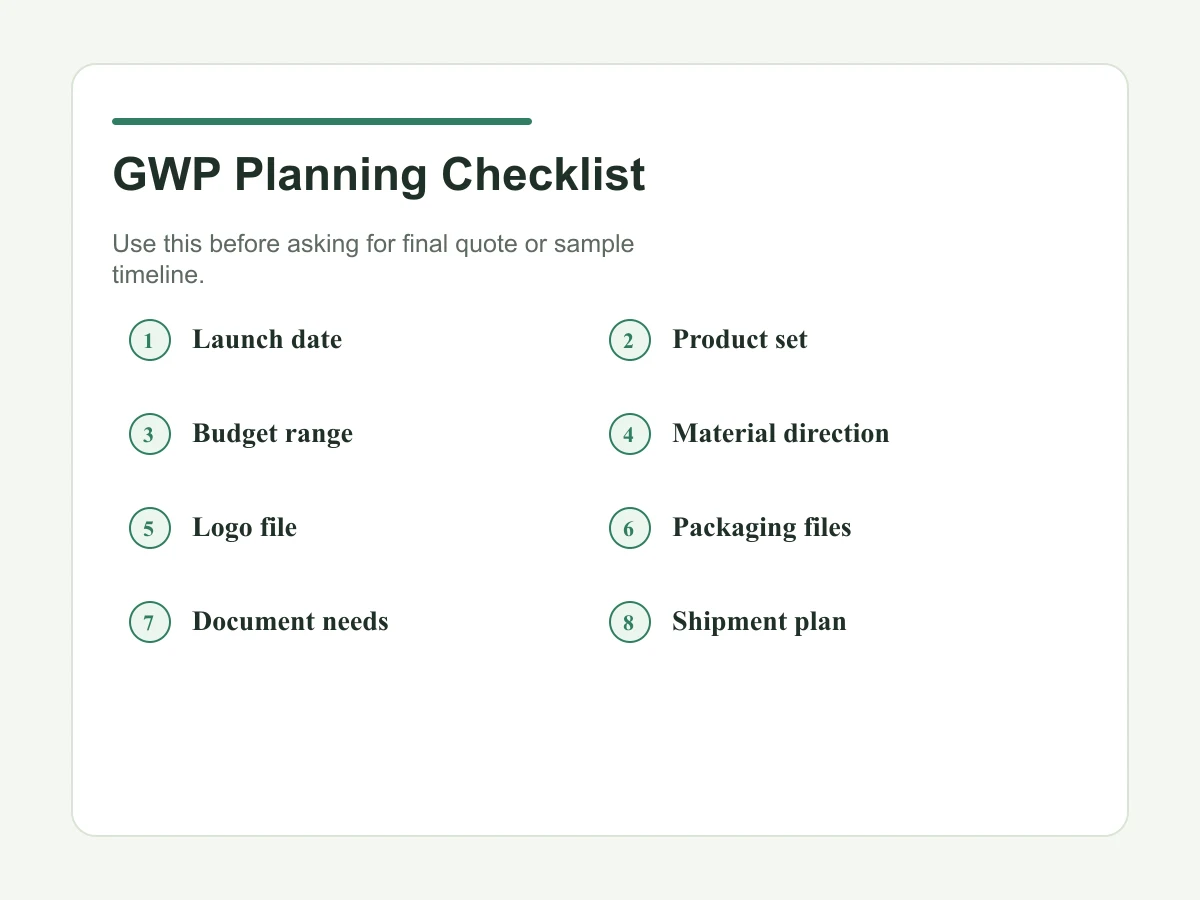
A seasonal GWP tote checklist should include launch date, product set, budget direction, material direction, logo file, campaign artwork, packaging files, document requirements, approval owner, shipment destination and backup plan.
| Campaign type | Suggested material direction | Packaging idea | Timeline watch-out |
|---|---|---|---|
| Mother's Day / soft gifting | Cotton canvas, organic cotton, bamboo fiber option | FSC hangtag, soft paper card, simple belly band | Color and gift presentation approval |
| Summer travel / resort | rPET, lightweight fabric, print-friendly material | Recycled-content polybag or simple paper card | Shipping buffer and print sample approval |
| Holiday / Christmas gift | Canvas, rPET print, premium detail when budget allows | Paper card, gift sleeve, hangtag, carton planning | Peak season production and packaging lead time |
| Member day / loyalty gift | Recycled cotton blend, rPET or brand-positioned material | Cost-controlled hangtag or belly band | Quantity estimate across stores or markets |
Who We Don't Take On
- Projects below 500 pcs per style without an existing brand context.
- Buyers who start a seasonal GWP project too late but expect no material, packaging or shipping compromise.
- Projects with no launch date, no product set and no packaging direction.
- Buyers who only compare unit price without planning sample, document or shipment risk.
Seasonal GWP Tote Planning Checklist
- Campaign launch date and target delivery date
- Product set, bottle height, box size or gift contents
- Budget direction and material preference
- Logo file, seasonal artwork and Pantone reference
- Packaging files, paper card, hangtag, barcode and carton mark
- GRS, OEKO-TEX, FSC packaging or testing document needs
- Approval owner and internal review deadline
- Shipping destination and backup transport plan
FAQ
How early should a beauty brand start a seasonal GWP tote project?
For most seasonal GWP tote projects, 8-12 weeks is a safer planning window. More complex materials, packaging or approval steps may need earlier planning.
What material is suitable for summer travel GWP totes?
rPET and lightweight print-friendly materials are often useful for summer travel themes, especially when the campaign needs colorful graphics or easier-care surfaces.
Should packaging be confirmed before sample approval?
If packaging affects presentation, barcode, paper card, hangtag or shipping, it should be discussed during sample stage or before order placement.
Can 500 pcs be split into two colors?
Two colorways can usually be discussed within a 500 pcs project depending on material availability, process setup and the final design.
What slows down seasonal GWP tote projects?
Common delays come from material customization, color confirmation, sample changes, paper packaging, internal brand approval, certificate requests, peak season production and shipping uncertainty.
Plan Your Seasonal GWP Tote Campaign
If you have a launch date, budget direction, product set, logo file and packaging idea, send them to Ecoicolortote. We can help reverse-plan material choice, sample approval, packaging files, document scope and bulk production timing.
Sources
- Global Recycled Standard - Textile Standards↩
- FSC paper and packaging↩
- OEKO-TEX STANDARD 100↩
- FTC Green Guides summary↩
- amfori BSCI↩
Planning note: These countdown windows are buyer-side planning buffers, not supplier lead-time promises; confirm the working schedule from the live project scope and current capacity.