Zoe Yu
Custom tote bag MOQ and lead time are not only factory numbers. For brand buyers, they depend on style, color, material, logo process, packaging, sample approval, document requirements and delivery window. A 500 pcs project can be simple and realistic, or overloaded and risky.
Ecoicolortote is a better fit for brand buyers planning custom tote bag projects from MOQ 500 pcs per style, including custom logo tote bags and canvas tote bag programs. If you are not sure whether your quantity, timeline or specification is realistic, send your MOQ and lead-time brief before sampling.
Buyer Summary
- Best for: brand buyers checking custom tote bag MOQ, sample timing and lead-time feasibility before RFQ.
- Main decision: MOQ and lead time should be judged by style, quantity per version, material route, logo process, packaging scope and delivery deadline, not by total quantity only.
- Factory-side note: lead time should start after final artwork, material, packaging and sample approval are confirmed, not after the first inquiry.
- What to prepare: quantity, style count, colors, size, material direction, logo file, packaging requirements, target delivery date and shipping destination.
What should buyers know about custom tote bag MOQ and lead time?
Ecoicolortote custom tote bag projects start from MOQ 500 pcs per style. A practical 500 pcs setup is usually one size, one to two colors, one main logo process and basic packaging.
The more colors, SKU versions, packaging items, labels or document requirements a buyer adds, the more the timeline and quote scope need to be reviewed before sampling. Sample time is different from bulk production time. MOQ also becomes harder when one order is split into too many colors, SKU versions or retailer versions.
The safest first RFQ is simple and specific: one tote style, target quantity, material direction, logo route, packaging expectation and required arrival date. From there, the factory can explain whether the setup is straightforward or needs simplification.
How is this different from the MOQ planning guide?
This MOQ and lead-time guide explains the basic rules buyers need before quotation: MOQ 500 pcs per style, sample timing, production timing, and common factors that affect feasibility. Our tote bag MOQ planning guide goes deeper into samples, versions, packing, split delivery and execution planning.
When the first question is “Can this quantity and timeline work?”, this MOQ guide gives the basic feasibility check. When the project already has several versions, labels, packaging routes, split delivery or a fixed launch window, the planning guide can support the execution review.
Where do brand buyers usually get stuck on MOQ and lead time?
MOQ and timeline problems show up most often when the project has a fixed launch date, several versions, retail labels or seasonal delivery pressure.
The same 500 pcs quantity can be straightforward for one project and complicated for another. Beauty GWP projects often have retailer windows and pack-out timing. Retail programs may need barcodes, hangtags and repeatable SKU records. Hotel and event projects may need carton labels, destination splits and fixed receiving dates.
| Project type | MOQ / lead-time pressure | Planning focus |
|---|---|---|
| Beauty GWP | Launch date, retailer window, pack-out and product fit | Approve product capacity, packaging and retailer labels early. |
| Retail / private label | SKU map, colors, barcode, hangtag and repeat-order consistency | Keep construction stable and define label system before sampling. |
| Hotel welcome tote | Multi-property allocation, replenishment and carton labeling | Confirm destination split and delivery calendar early. |
| Event / conference tote | Fixed event date and sponsor or version changes | Freeze artwork and packing plan backward from the event date. |
| Seasonal gift | Holiday cutoff, packaging paper, gift assembly and approval timing | Plan from launch date and simplify versions if time is tight. |
What do buyers often misunderstand about MOQ and lead time?
The most common misunderstanding is thinking MOQ 500 pcs means any number of colors, graphics, labels and packaging versions can be added without consequence.
MOQ is not just total quantity. It is also how the quantity is split across styles, colors, materials, trims and packaging versions. Five colors at 500 pcs may create inefficient split quantities and more sampling checks. Paper cards, hangtags and barcode stickers added late can reset artwork and approval timing.
- Sample time does not include bulk production, packing, inspection or shipping.
- Digital mockups do not prove material handfeel, color, logo scale or packaging fit.
- “ASAP” is not enough; the factory needs a target delivery date and destination.
- Changing material, logo, size or packaging after approval can move the whole schedule.
What is a realistic MOQ 500 pcs setup?
At MOQ 500 pcs per style, the most practical configuration is one size, one to two colors, one main logo or artwork process and basic packaging.
This is not because more options are impossible. It is because each extra version adds sampling, material, label, packing and production-management risk. MOQ or unit cost can rise when the project includes custom dyed material, special fabric, complex logo process, metal plate, patch, embroidery, retail packaging, multi-version labels, carton labels or document-heavy requirements.
| 500 pcs request | Usually realistic? | Factory-side comment |
|---|---|---|
| 1 size + 1 color + 1 logo process | Usually realistic | Good route for first-time brand projects and cleaner timeline control. |
| 1 size + 2 colors + same logo process | Often discussable | Keep each color quantity reasonable and avoid extra packaging versions. |
| 3-5 colors at 500 pcs total | Needs review | Split quantities may be too low and color/material management becomes less efficient. |
| Multiple retailer versions | Needs simplification | Use same bag body and vary barcode, hangtag, insert or small label when possible. |
| Custom material + complex logo + retail packaging | High-risk at rush timing | Material, artwork and packaging lead time need separate review. |
How should buyers understand sample time and lead time?
Sample time and bulk production timeline should be separated. Lead time should be counted from final confirmed files and approved sample, not from the first email.
Sample timing is confirmed after the material, construction, logo method, artwork, packaging and approval scope are clear; the working schedule also depends on revision speed and current capacity.
Bulk production timing should not be written as an absolute promise before RFQ. After sample approval, production timing depends on quantity, material availability, packaging details, logo process complexity, document requirements and delivery plan.
| Timeline item | What it means | Common risk |
|---|---|---|
| Initial RFQ review | Factory checks quantity, style, material, logo, packaging and date | Buyer sends only a picture without size, quantity or deadline. |
| Sample making | Physical sample or pre-production route is created for review | Artwork, color or packaging files are not final. |
| Sample approval | Buyer confirms material, size, color, logo, packaging and standard | Approval is delayed by internal team review. |
| Bulk production | Confirmed specification enters material, production and packing plan | Late changes reset production schedule. |
| Packing and delivery | Labels, cartons, split shipment and shipping route are arranged | Destination or carton labeling changes late. |
Which factors can extend custom tote bag lead time?
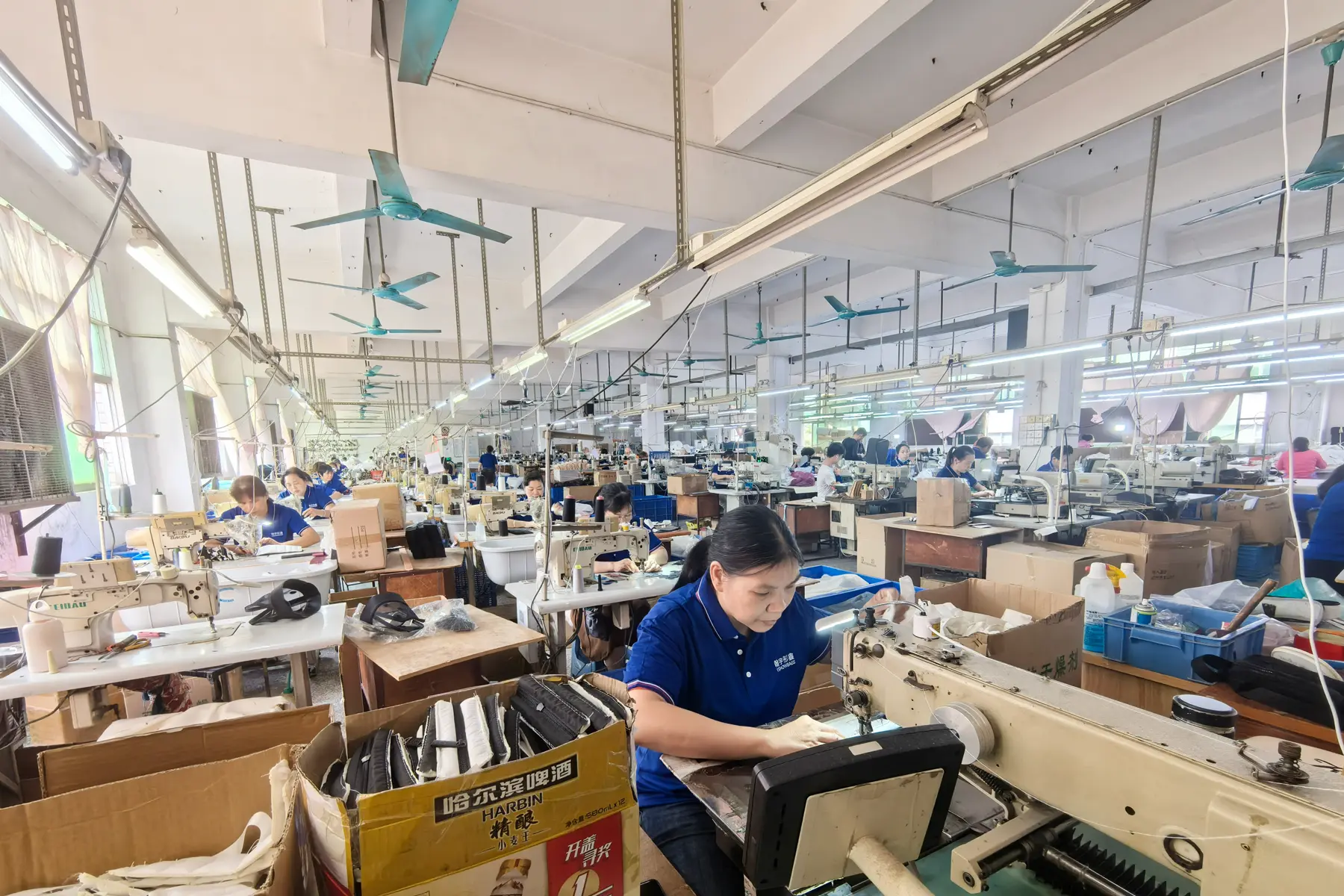
Lead time gets longer when the project includes custom dyed materials, complex artwork, several logo processes, packaging paper, retailer labels, set assembly, special testing, document support, holiday peaks or split delivery.
Some of these can be managed. Others cannot be compressed without adding risk. For color-sensitive projects, buyers should confirm color standards and swatches early. Pantone color systems1 are useful for communication, but material, dyeing and surface texture still need physical review.
| Factor | Why it extends time | How to reduce risk |
|---|---|---|
| Custom dyed material | Color development and material availability need confirmation | Use available material color where timing is tight. |
| Complex artwork | Heat transfer, embroidery or multi-process artwork needs test and sample approval | Choose one main process or simplify fine details. |
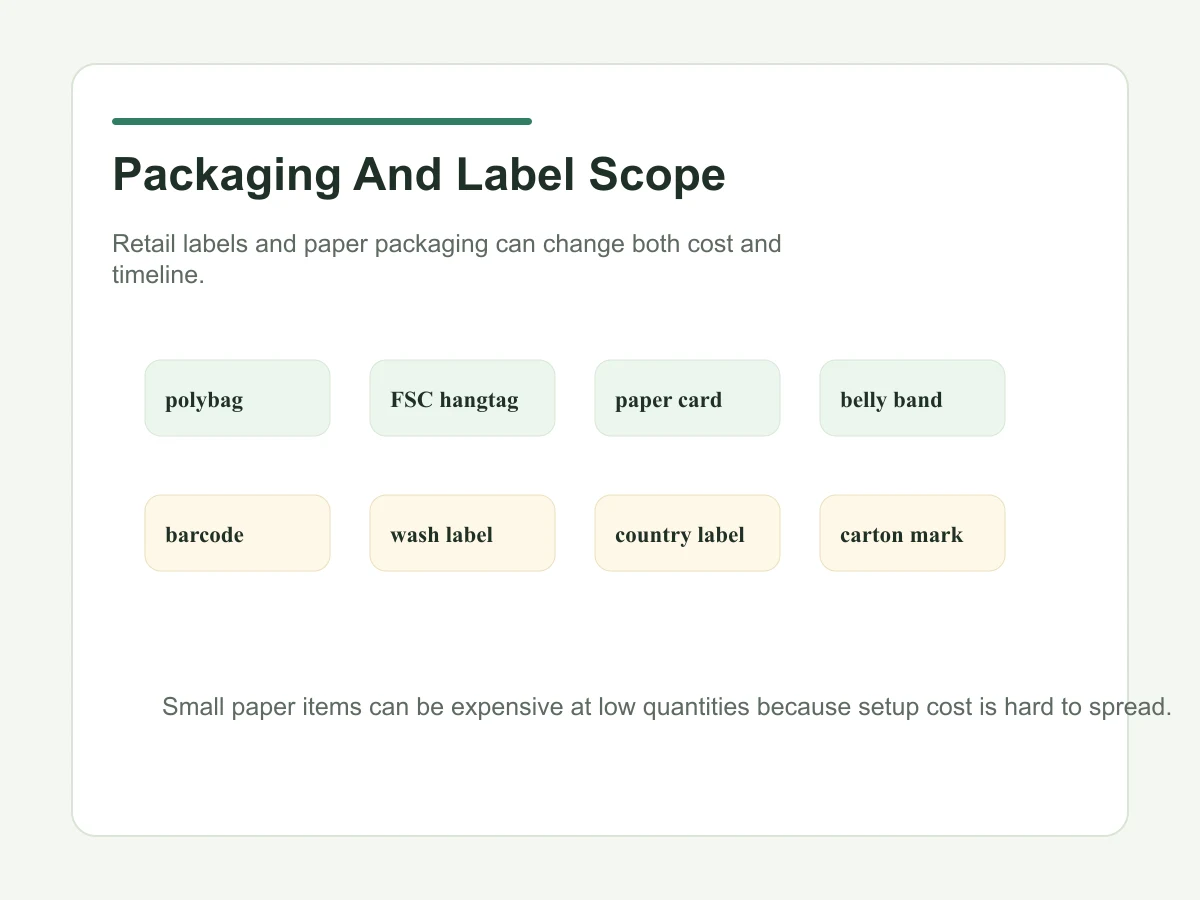
| Retail packaging | Paper cards, hangtags, barcode and carton marks add artwork and approval steps | Confirm packaging before sampling. |
| Multiple SKUs | Labels, barcodes and color/version mapping need checking | Keep the bag body consistent and vary small labels or inserts. |
| Holiday season | Shipping windows and internal approvals become less flexible | Plan backward from launch date and avoid late changes. |
How should buyers plan colors, SKU versions and packaging?
When quantity is not large but versions are many, use one shared bag body and place differences in hangtag, barcode, insert, carton label or small woven label where possible.
Version planning is where many timelines quietly break. A buyer may ask for 500 pcs and assume it is one simple order, but the real specification may be five colors, three retailer labels, two paper cards and a carton split by destination.
Retail barcode and identification systems should be planned before packing. GS1 General Specifications2 are a useful reference when buyers need barcode and retail-label coordination.
| Version element | Confirm before sampling? | Why |
|---|---|---|
| Colors | Yes | Color split affects material plan and sample review. |
| SKU / barcode | Yes | Wrong mapping can create retail receiving problems. |
| Hangtag / paper card | Yes | Paper printing and attachment method need artwork approval. |
| Carton label | Before packing | Destination split and retailer requirements affect packing. |
| Document requirement | At RFQ stage | Late certification or testing needs can change route and timing. |
How should project size change the MOQ route?
A 500 pcs GWP order, a 1,000 pcs hotel welcome tote order and a 3,000 pcs event tote order should not be managed with the same version logic.
Larger projects often have more room for packaging detail, carton split and artwork refinement. Smaller projects need stricter control over colors, SKUs and special trims. For private label and retail programs, also check whether the project should be connected to repeat-order planning.
| Project scale | Practical route | Common boundary |
|---|---|---|
| 500 pcs | One style, one to two colors, one main logo process, basic packaging | Too many colors or packaging versions can make the order inefficient. |
| 1,000 pcs | More room for two colors, retail label planning or property split | Files and labels still need to be frozen before sample approval. |
| 3,000 pcs | Better fit for event artwork, carton planning and delivery schedule control | Late sponsor artwork or venue changes can still create risk. |
| 5,000 pcs+ | More appropriate for campaign-scale artwork, repeatable packing and split delivery | Material availability, QC checkpoints and delivery calendar must be mapped. |
What should be confirmed during sample approval?
Sample approval should confirm size, material, color, logo process, logo placement, packaging, labels, capacity and overall look.
If a project has complex process, retail labels, strict color, multiple SKUs or a fixed launch window, a pre-production sample is strongly recommended. An approved sample should become the bulk production reference. Our custom tote bag sample evaluation guide explains sample review details.
For textile safety or restricted substance discussions, OEKO-TEX STANDARD 1003 may be relevant, depending on the material and order scope. It should not be confused with recycled or organic material claims.
What MOQ and lead-time details should buyers send in the RFQ?
The fastest useful MOQ and timeline review needs the information that affects production planning: quantity, versions, size, material, logo process, packaging and delivery.
- Quantity: total quantity and quantity per style, color or SKU.
- Version count: number of colors, artwork versions, retailer versions and labels.
- Size and material: target dimensions, material direction and any custom color need.
- Logo process: screen print, heat transfer, embroidery, patch, woven label or mixed process.
- Packaging: polybag, hangtag, paper card, barcode, carton label, gift set or assembly.
- Delivery: target delivery date, destination and whether split shipment is needed.
For environmental or recycled wording, buyers should match claims with supporting evidence. The FTC Green Guides summary4 is a useful reference for environmental marketing claims.
What can be estimated publicly, and what must be confirmed during RFQ?
A planning guide can explain normal ranges and risk factors, but exact timing depends on real artwork, materials, packaging, files, sample approval, production queue and delivery destination.
| Can be discussed publicly | Must be confirmed during RFQ | Why |
|---|---|---|
| MOQ starts from 500 pcs per style. | Whether the requested color/SKU split is realistic. | MOQ depends on how the order is divided. |
| Sample timing is confirmed after the material, construction, logo method, artwork, packaging and approval scope are clear; the working schedule also depends on revision speed and current capacity. | Actual sample time for the specific artwork and material. | Complex processes and packaging can change the route. |
| More versions usually add complexity. | Whether versions can share one bag body and differ by label or insert. | Version design can reduce or increase production risk. |
| Packaging can affect timeline. | Exact paper card, hangtag, barcode and carton label requirements. | Packaging files often need buyer or retailer approval. |
| Delivery date matters. | Final shipping method, destination and receiving deadline. | Production date and delivery-to-warehouse date are different. |
How should urgent orders be evaluated?
Urgent and fast delivery should be translated into checkable information: quantity, version count, material, logo process, packaging, destination and simplification options.
| Urgent request | Risk level | Better route |
|---|---|---|
| 1 color, available material, basic logo, basic packaging | Lower | Review artwork and sample route quickly. |
| 2 colors, same logo, simple packaging | Moderate | Confirm color split and sample schedule first. |
| 5 colors, complex logo, retail packaging, 2-week delivery | High | Simplify colors, process or packaging before sampling. |
| Holiday gift with paper cards and split delivery | High | Plan backward from shipping cutoff and freeze files early. |
| Retailer checklist added after sample approval | High | Recheck material, labels and document requirements before bulk. |
How do shipping terms and destination affect the delivery schedule?
Production lead time and delivery-to-warehouse timing are different. Delivery depends on destination, shipment method, customs documents, carton labeling and trade terms.
For international projects, buyers may use ICC Incoterms rules5 to define delivery responsibilities, but the practical shipping plan still needs to be discussed for each order.
| Delivery variable | Why it matters | Buyer should confirm |
|---|---|---|
| Destination country | Transit time, documents and receiving requirements differ by market. | Final ship-to country and receiving deadline. |
| Shipment method | Air, sea, express or forwarder pickup affects cost and timing. | Whether speed or cost is more important. |
| Incoterms | Defines responsibility points, but not every practical handling detail. | Which term the buyer expects and who controls freight. |
| Carton labels | Retailer, event or hotel receiving may require specific marks. | Label format, PO number, SKU and destination split. |
| Split delivery | Multiple locations need carton sorting and quantity allocation. | Location list and quantity per location before packing. |
How do packaging and document requirements affect timing?
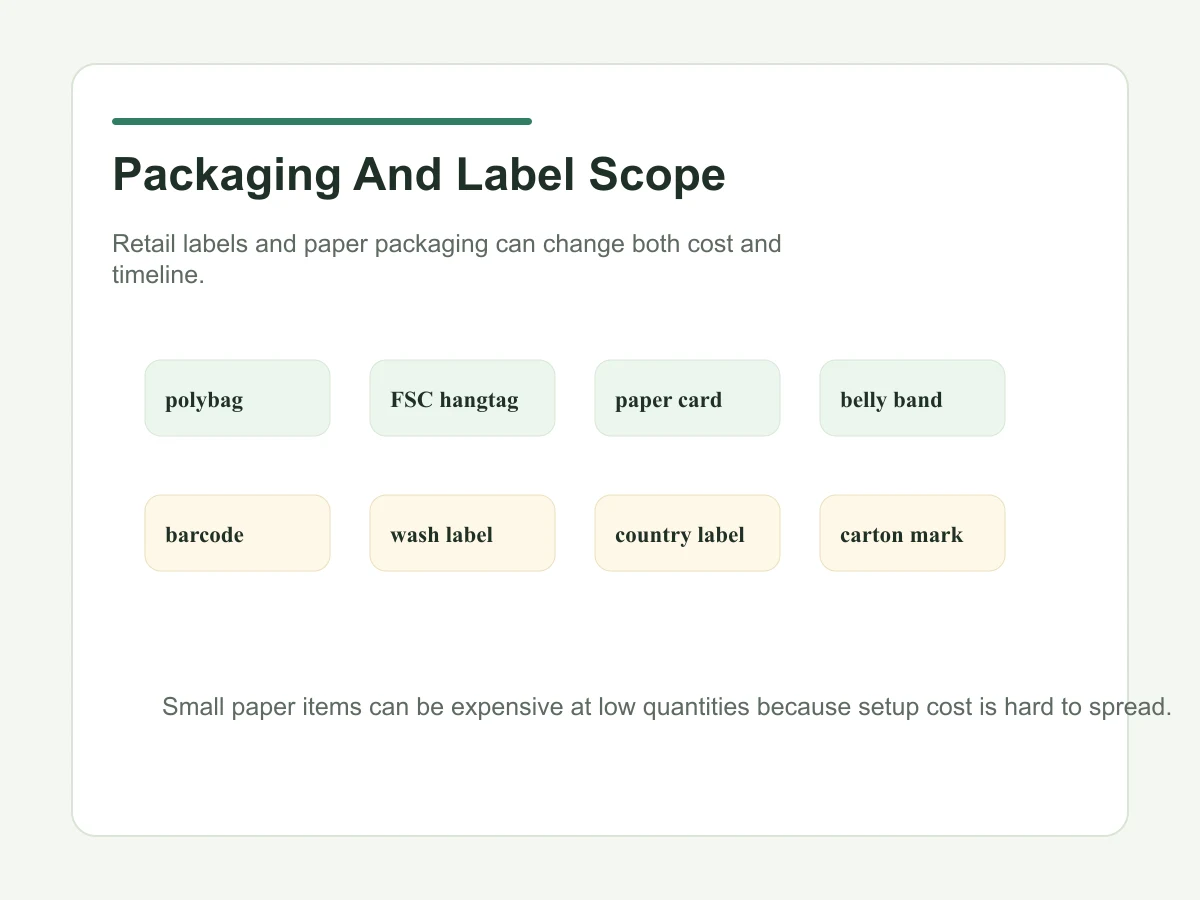
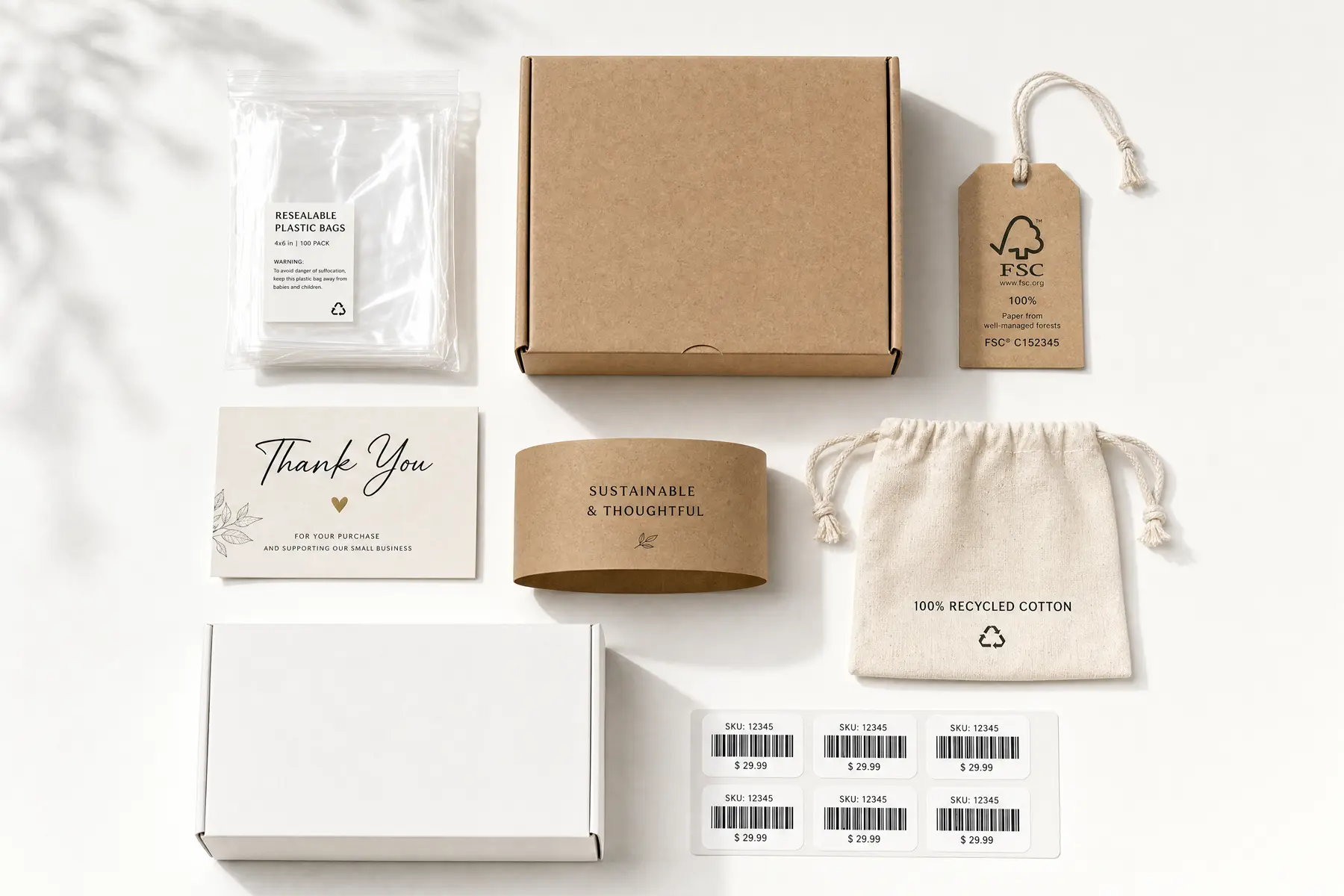
Packaging and document requirements can affect both MOQ planning and lead time, especially when hangtags, paper cards, barcodes, carton labels, recycled claims or paper packaging claims are involved.
For paper cards and hangtags, FSC paper and packaging6 may be relevant to packaging claims, not to the tote fabric itself. If the project uses recycled content claims, Textile Exchange standards7 should be checked against the actual material and supply-chain scope.
Who We Do Not Take On
Ecoicolortote is not the best fit for very small quantities, last-minute rush orders with many versions, lowest-price-only requests, or projects that want complex logo, retail packaging, documents and two-week delivery at the same time.
We are better suited for MOQ 500+ brand projects where the buyer can plan sample approval and delivery window with enough information.
FAQ: Custom tote bag MOQ and lead time
Does MOQ 500 pcs mean I can split into many colors?
Not automatically. Two colors may be discussable when each color quantity is reasonable and the rest of the specification stays simple. Three to five colors at 500 pcs total usually need review because split quantities, material handling and sample checks become less efficient.
Can production lead time be counted from my first inquiry?
No. Lead time should be counted after final artwork, material direction, packaging details and sample approval are confirmed. The first inquiry starts discussion, not production.
What is the safest way to reduce lead-time risk?
Use available materials, reduce version count, freeze artwork early, confirm packaging before sampling and avoid late retailer labels or document requirements.
Can Ecoicolortote help if I only know the delivery date?
Yes. Send quantity, colors, material direction, artwork, packaging needs, target delivery date and destination. We can check whether the timeline is realistic and what needs simplification.
What usually makes MOQ 500 pcs harder to manage?
MOQ 500 pcs becomes harder when the order is split into too many colors, SKU versions, retailer labels, packaging versions or logo processes. The total quantity may look simple, but each split adds material, sample, packing and QC work.
Should packaging and barcode files be ready before sample approval?
Yes. Hangtags, paper cards, barcodes, carton labels and retail packing instructions can affect cost, sample route, carton planning and final packing. They should be confirmed before the project moves too far into bulk production.
How is this page different from the MOQ planning guide?
This page gives the first feasibility check for MOQ, sample timing and lead-time risk. The MOQ planning guide goes deeper into version control, sample planning, packing, split delivery and execution after the buyer already has a more detailed project brief.
Share your quantity, colors, SKU versions, artwork, packaging needs, target delivery date and shipping destination. Contact Ecoicolortote.