Zoe Yu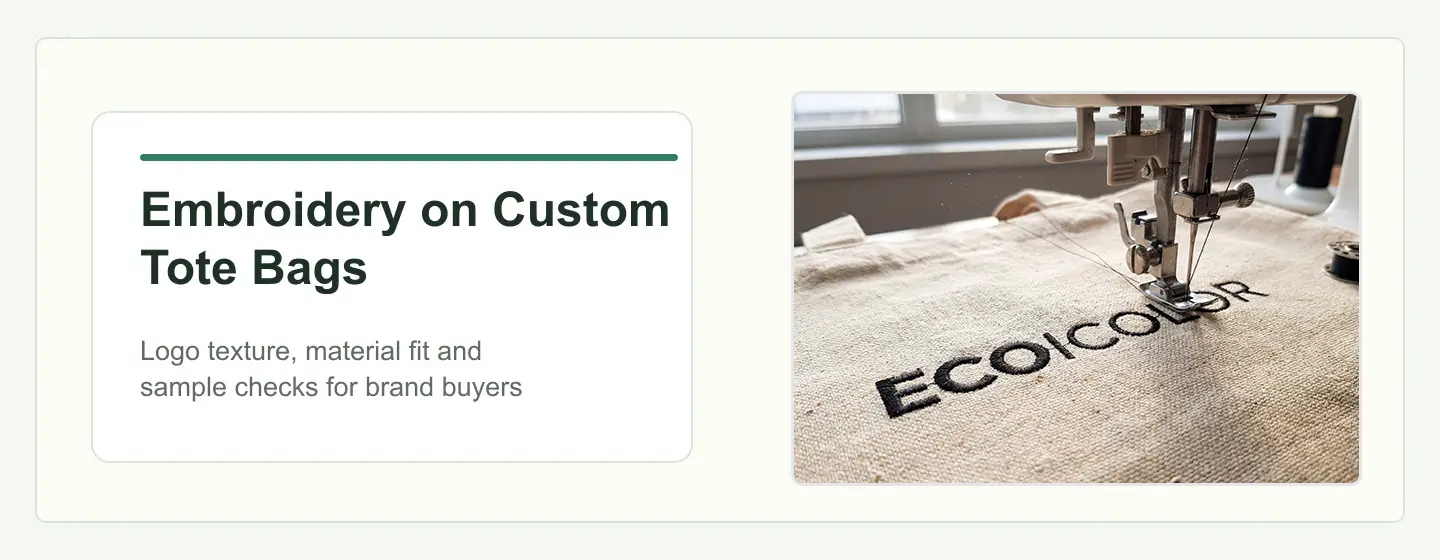
This embroidery tote logo brief helps buyers prepare artwork scale, thread colors, fabric support, backing, placement and sample checks before a commercial embroidered-tote RFQ. It supports the money page rather than replacing it.
From our factory side, embroidery is not automatically better than printing. It works well when the brand wants a tactile logo and when the artwork is simple enough to stitch cleanly. If the logo has gradients, photo effects, very small text or too many colors, another logo route may protect the result better.
Ecoicolortote is a better fit for MOQ 500+ brand projects where buyers can share editable artwork, material direction, logo size, placement, thread color direction, packaging needs and launch timing. Buyers can review our customization options, private label totes and custom logo totes before deciding whether embroidery is the right logo route.
Buyer Summary
- Use this guide for: artwork simplification, thread color, finished logo size, fabric support, backing and sample approval.
- Commercial owner: quantity, supplier fit, wholesale sourcing and the final RFQ belong to the Custom Embroidered Tote Bags page.
- Comparison owner: screen printing versus embroidery belongs to the dedicated comparison guide.
- What to prepare: editable logo file, finished size, tote material, thread direction, placement, version count, packaging and required arrival window.
What belongs in an embroidery tote logo brief?
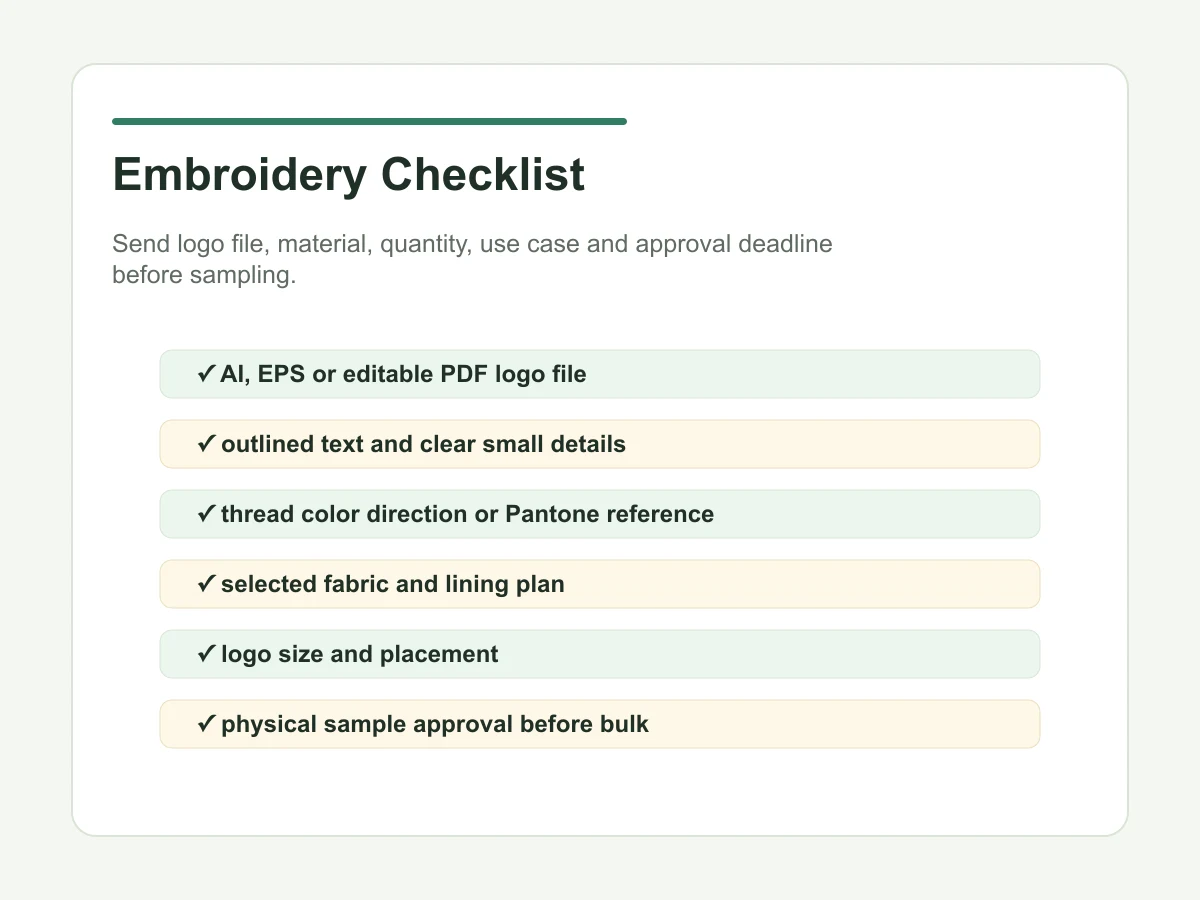
Send the editable logo, finished embroidery size, tote material, thread direction, placement, backing or lining plan, artwork versions and physical sample acceptance points.
This page prepares the stitch and sample decision. When the buyer is ready to confirm quantity, supplier fit and quotation scope, continue to the Custom Embroidered Tote Bags commercial owner.
This embroidery guide focuses on thread color, stitch area, logo detail, backing, sample approval and bulk tolerance. Broader logo pages compare multiple methods, while this page helps buyers decide whether embroidery itself is suitable for a custom tote bag project.
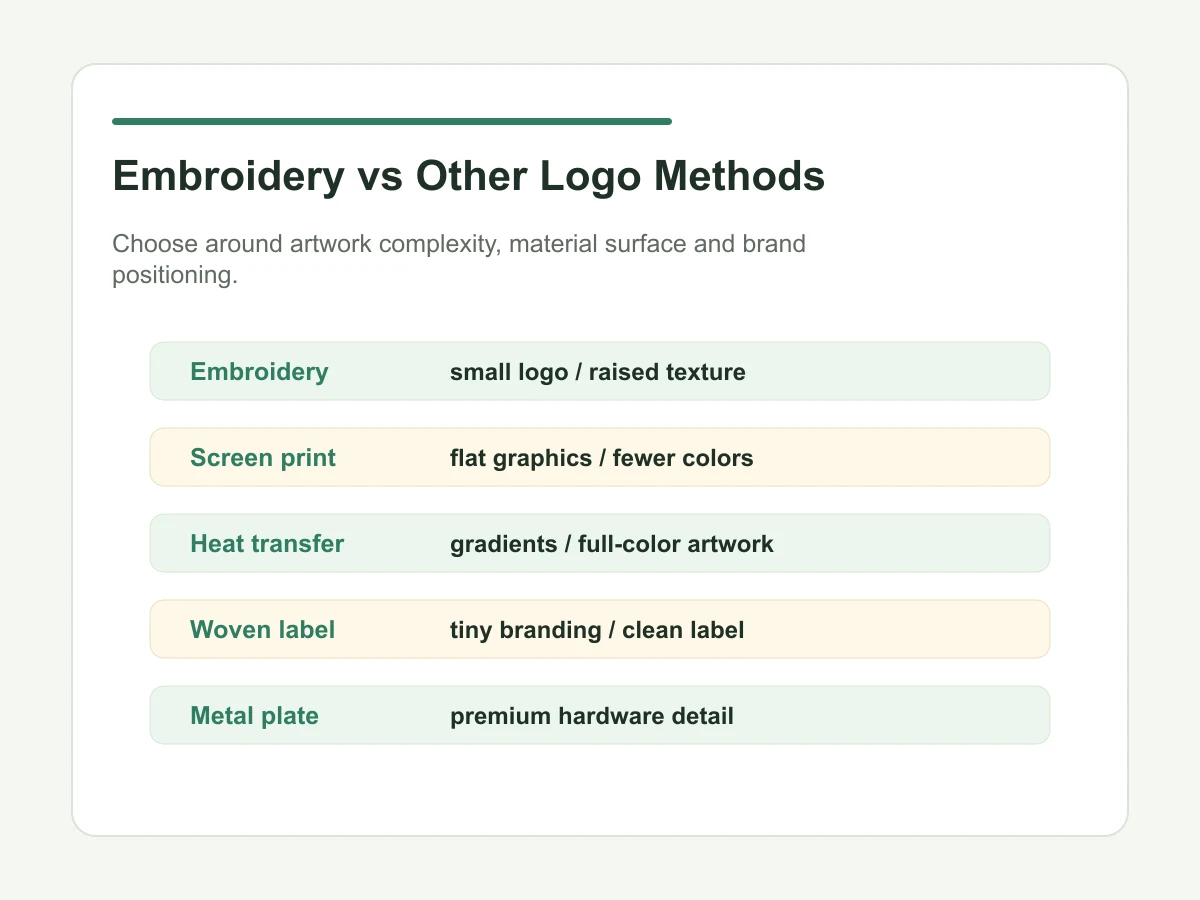
If your team is comparing embroidery with screen printing, use the screen printing vs embroidery guide. If the artwork has full-color gradients or complex campaign art, review heat transfer printing. If the main issue is artwork format, use the logo file requirements guide.
This page stays focused on embroidery feasibility: what can be stitched, what should be simplified, what material can hold the thread, and what the physical sample must prove.
When should brand buyers use embroidery on custom tote bags?
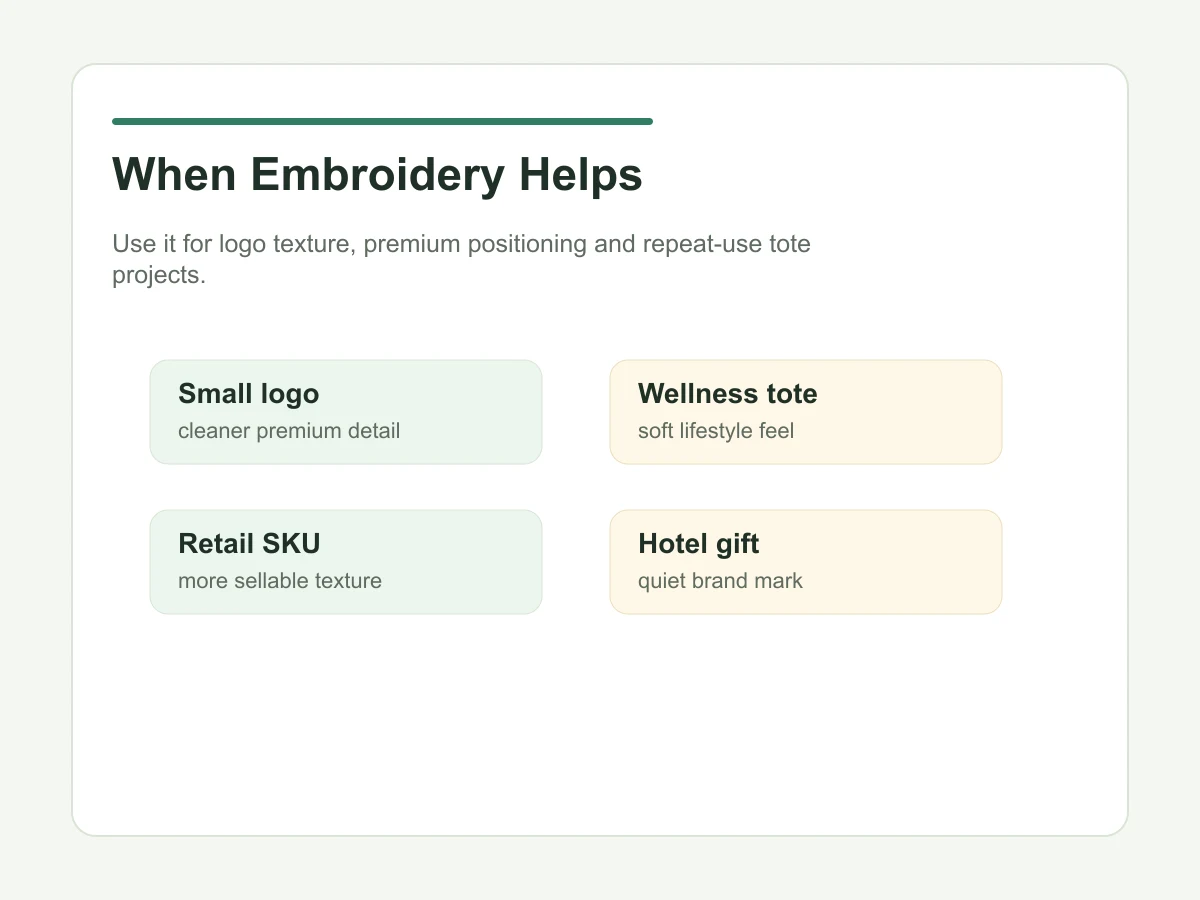
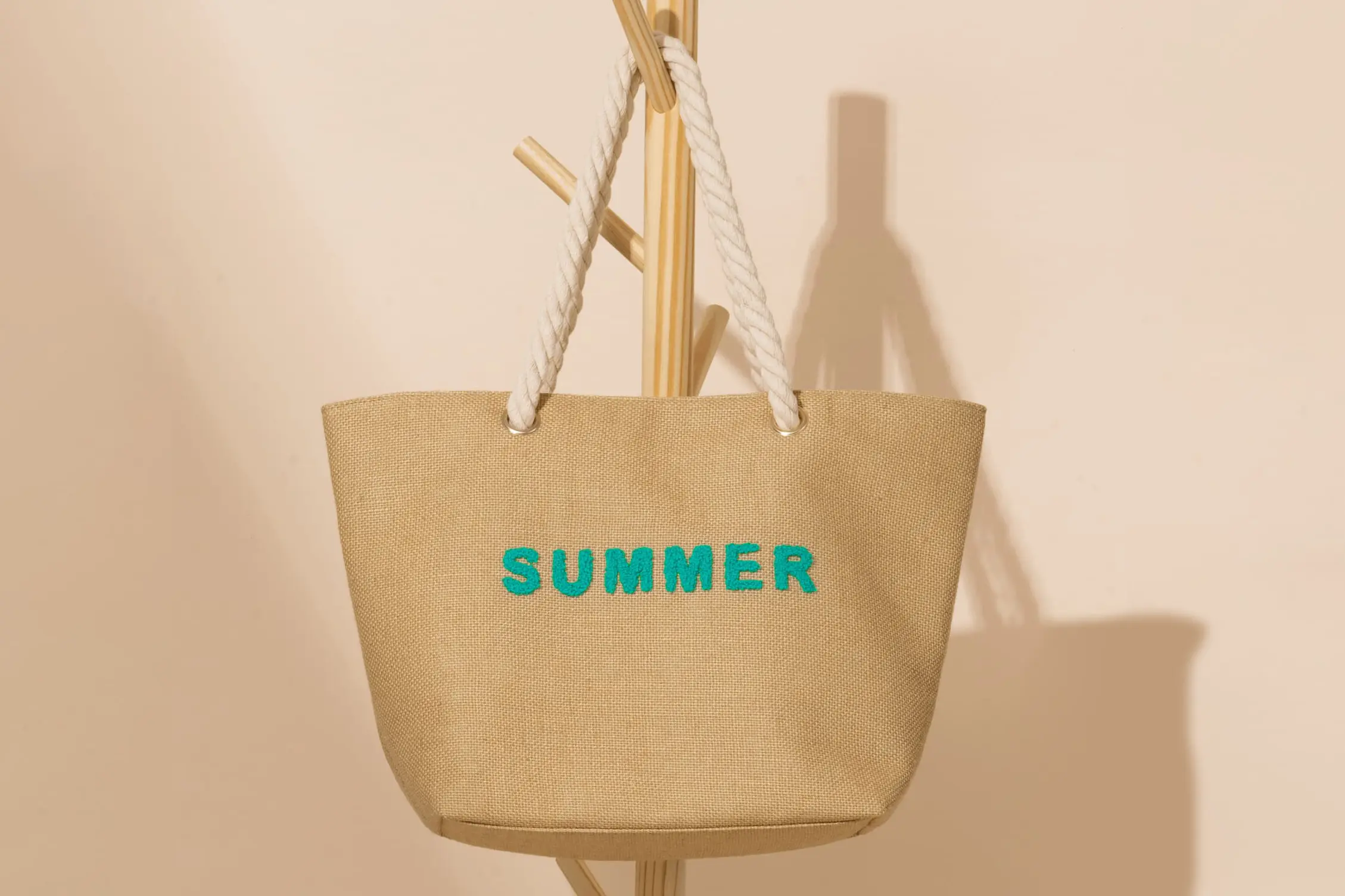
Embroidery is usually a good route when the buyer wants a small, clean logo with raised texture, quiet premium tone or lifestyle positioning. It works especially well for retail, wellness, hotel and reusable tote programs when the fabric is stable enough.
Beauty and wellness brands may use embroidery for clean lifestyle gifts, member gifts or reusable tote programs. Retail and private label buyers may use it when the tote needs to feel more like a product than a giveaway. Hotel welcome totes can use embroidery too, although screen printing, debossing or woven labels may be more practical depending on budget and tone.
Which logos are not suitable for embroidery?
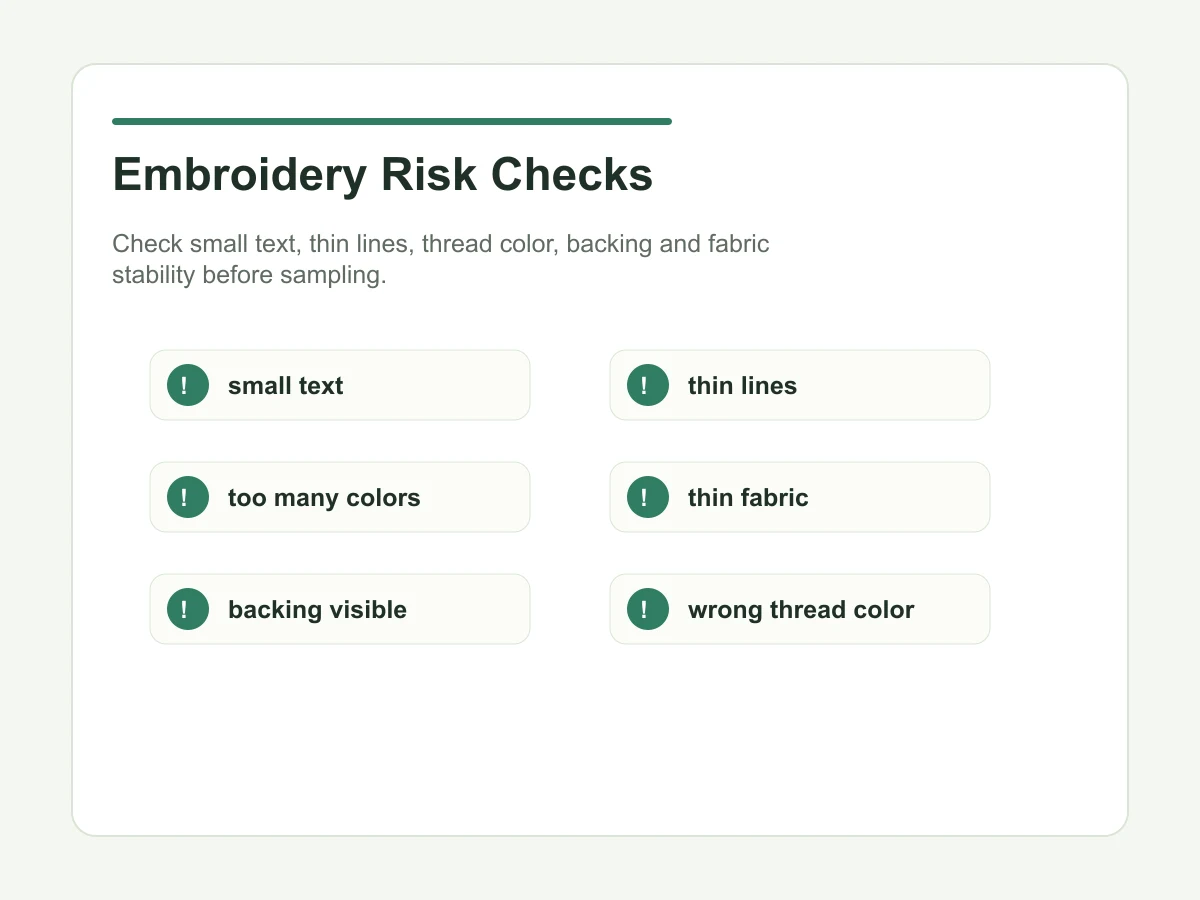
Embroidery is usually not the best choice for complex gradients, photo-style artwork, very small text, thin lines or too many colors. These logos may need screen printing, heat transfer, woven label or a split-process solution.
A logo can be beautiful on screen and still be difficult to stitch. Small letters may lose clarity. Thin lines may become uneven. A gradient or photo-style image may not translate well into thread. Multi-color embroidery is possible, but more colors and more stitches usually add cost and production time.
If a logo is too complex, we may suggest changing the process rather than forcing embroidery. For example, a large campaign graphic may work better with heat transfer, while a small brand mark may work better as embroidery or a woven label.
Which tote bag materials work better with embroidery?
Stable fabrics such as cotton canvas, firmer recycled cotton and organic cotton usually work better with embroidery. Thin, soft or unstable materials may wrinkle unless backing, lining, smaller logo size or another process is used.
Cotton canvas and stable cotton-family fabrics are often easier for embroidery because the surface can support stitches. rPET can also be embroidered, but the thickness and surface stability should be checked. Vegan leather can be embroidered in some projects, but debossing, metal plates or patches are often more common for a premium leather-look finish.
If a material is too thin or soft, embroidery may cause puckering. Backing or lining can help, but it should be planned before sampling. If there is no lining, the back side of the embroidery also needs attention so the bag still looks clean. For textile safety discussions, OEKO-TEX STANDARD 1001 may be relevant depending on material and order scope.
Which quantity and schedule inputs should buyers confirm before sampling?
Ecoicolortote is generally a better fit for MOQ 500+ brand projects, but no generic day range should replace the current quotation and approval plan.
Sampling and bulk timing depend on artwork complexity, finished stitch size, thread colors, material stability, placement, version count, lining or backing, labels, packaging, quantity, destination and required arrival window. Confirm those inputs first, then record the project-specific schedule in the quotation.
What logo files and thread colors should buyers provide?
Buyers should provide AI, EPS or editable PDF logo files with outlined text, plus Pantone references or thread color direction. Embroidery thread may be close to Pantone, but physical thread and sample approval are still needed.
Production-ready logo files reduce risk before sampling. Fonts should be outlined so text does not change when the file is opened by another computer. Vector artwork is safer for scalable logos and clean edges. If the buyer only sends a low-resolution JPG or PNG, it can be used for discussion, but it should not be treated as final production artwork.
Thread colors are usually selected from available thread cards. For brand color work, buyers should confirm real thread color and stitch effect through a sample, not only a digital mockup. Pantone color systems2 can help with color communication, but the physical thread sample is the practical approval standard.
What sample details matter most for embroidery custom tote bags?
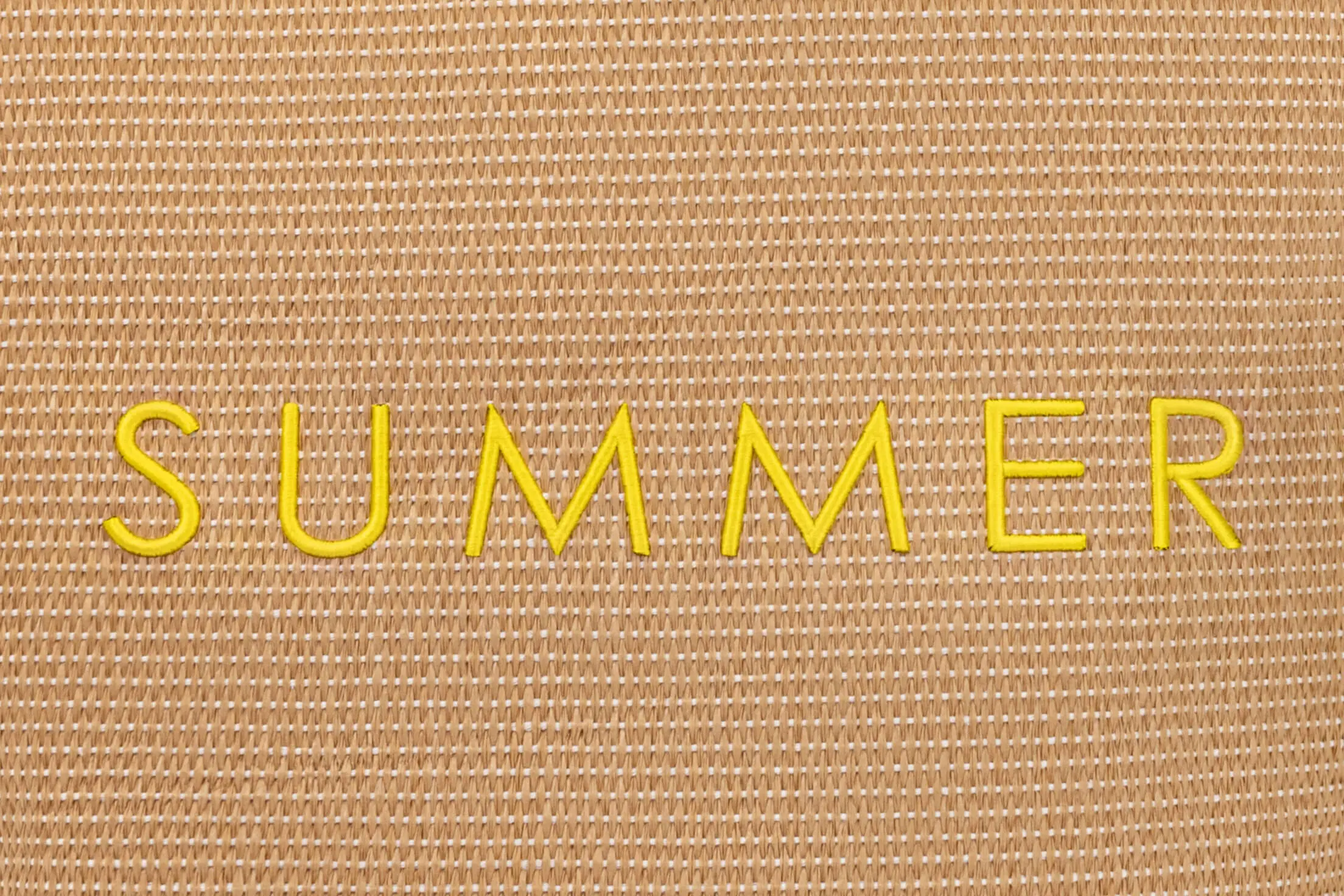
Buyers should check thread color, logo position, logo size, stitch density, edge clarity, fabric puckering, backing, back-side finish and how the embroidered logo looks with the full tote structure.
The most common embroidery issues are not always visible in a flat mockup. A tote bag can wrinkle around the embroidered area. The back side may look unfinished if there is no lining. Small text may look less clean than expected. This is why physical sample approval is important.
Before bulk production, the approved pre-production sample should become the standard. Internally, a signed sample, photos and production instruction help the workshop follow the same logo position, thread color, backing method and overall finish. For factory-side review, amfori BSCI audit guidance3 can be part of supplier audit discussions when required.
Where should buyers compare embroidery with screen printing?
This page does not own the broad method-comparison query.
Use the screen printing vs embroidery comparison guide for flat graphics, stitch texture, full-color routes, artwork limits and sample trade-offs. Return here when embroidery has already been selected and the open task is the stitch brief.
What mistake causes the most rework?
The biggest embroidery mistake is forcing an unsuitable logo into thread work, then judging the result only from a mockup. Complex logos, tiny text, unstable fabrics and skipped sample approval are common causes of rework.
Many embroidery problems do not happen because the factory cannot embroider. They happen because the logo itself is not suitable for embroidery, but the project still tries to force it. That can make both the effect and the budget less ideal.
If the buyer wants a premium look with a limited budget, we may suggest keeping one small embroidered logo and simplifying the rest of the project. This can protect the brand feeling without turning the whole tote into an expensive or risky embroidery project.
What should be included in the RFQ?
An embroidery RFQ should include logo file, thread color direction, material choice, logo size, placement, quantity, use case, lining or backing plan, packaging needs, sample deadline and launch timeline.
| Embroidery item | What to send | Why it matters | Common risk |
|---|---|---|---|
| Logo file | AI, EPS or editable PDF with outlined text | Prevents font and shape changes | Low-resolution JPG causes unclear edges |
| Thread color | Pantone direction or approved thread reference | Controls brand color expectation | Thread color may only be close |
| Material | Fabric type, thickness and lining plan | Affects puckering and back-side finish | Thin fabric wrinkles around embroidery |
| Logo size | Width, height and placement | Controls stitch density and cost | Small text loses clarity |
| Approval | Physical sample and pre-production sample | Sets the bulk production standard | Mockup looks better than real stitch effect |
Who We Do Not Take On
Ecoicolortote is not the right fit for orders below 500 pcs per style without an existing brand project context, or for buyers who expect embroidery to reproduce gradients, photos or tiny text without sample approval.
We are a stronger fit when the buyer shares artwork, material, use case, quantity and sample timeline clearly enough for embroidery feasibility review.
Send the logo file, finished size, thread direction, material, placement and sample acceptance points. For the commercial supplier and quantity RFQ, continue to the Custom Embroidered Tote Bags owner page. Contact Ecoicolortote.
FAQ: Embroidery custom tote bags
What should buyers confirm before sourcing embroidery custom tote bags?
Buyers should confirm logo file, thread color direction, material, logo size, placement, backing or lining plan, quantity, packaging needs, sample deadline and launch timeline.
What sample details matter most for embroidery custom tote bags?
Thread color, stitch density, edge clarity, logo position, fabric puckering, backing, back-side finish and full tote appearance should be checked in the physical sample.
Which quantity and schedule inputs belong in the embroidery brief?
Ecoicolortote is generally a better fit for MOQ 500+ projects. Send the artwork versions, material, stitch size, thread colors, packaging, quantity, destination and required arrival window so the quotation can carry a project-specific schedule.
Which material or certification evidence should be checked?
Check fabric stability, backing or lining needs, material composition, textile safety requirements and any buyer-side document scope that applies to the actual order.
What should be included in the RFQ?
The RFQ should include editable logo file, thread color direction, tote material, logo size, placement, quantity, packaging needs, sample deadline and launch timeline.
What mistake causes the most rework?
The biggest mistake is forcing a complex logo, tiny text or unstable fabric into embroidery without physical sample approval. Mockups cannot prove stitch quality.
When should buyers contact Ecoicolortote?
Contact Ecoicolortote before sampling if your team needs help deciding whether embroidery, printing, heat transfer, woven label or another logo method is best for an MOQ 500+ tote project.