Zoe Yu
From our factory side, a GWP tote bag is not just a free bag. For beauty and wellness brands, it is a campaign gift that needs the right material, size, logo method, packaging, document scope and launch timeline to support the brand experience.
This page explains GWP meaning and basic planning questions. For custom GWP tote manufacturing, use GWP Tote Bags. If the primary brief is a skincare, spa or beauty product-set tote, use Wellness & Beauty Totes.
Quick Summary: A GWP tote bag is a gift-with-purchase tote used to support a beauty, wellness or retail campaign. Strong projects start from the product set, launch date, MOQ, size, material direction, logo file, packaging, document scope and shipping destination. Ecoicolortote is a better fit for MOQ 500+ brand projects where the buyer accepts sample-first planning and wants the tote to improve the campaign gift experience.
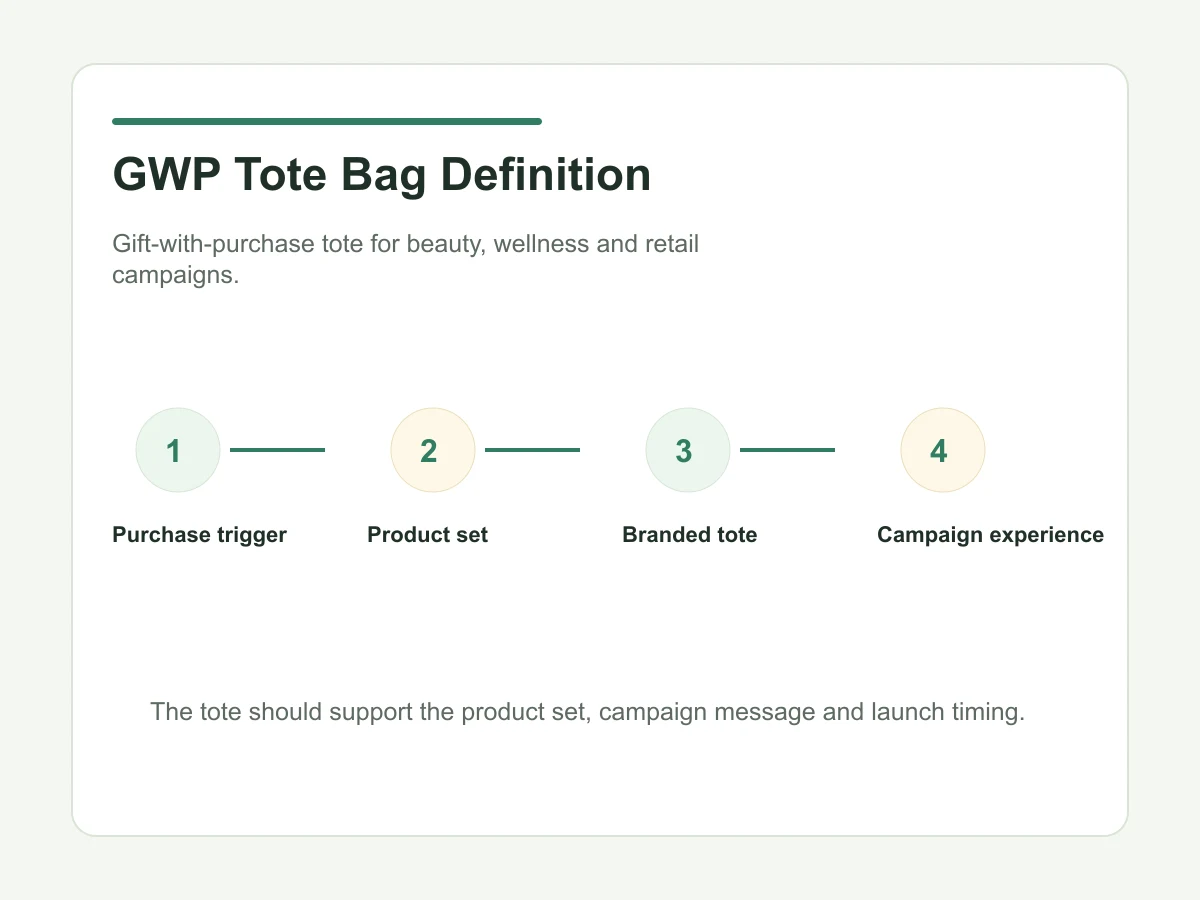
GWP means gift with purchase. In practice, a GWP tote bag is a branded tote used when customers buy a beauty, wellness or retail product set. Sometimes the products are packed inside the tote. Sometimes the tote is given separately as the gift. Either way, the tote has to match the product combination, campaign message and buyer expectations.
Buyer Summary
- Best for: beauty and wellness brand buyers planning GWP tote bags from 500 pcs per style.
- Main decision: whether the tote fits the product set, campaign timing, packaging and brand position.
- Factory-side note: the most important planning fields are product capacity, material direction, logo method, packaging, document scope and launch date.
- What to prepare: activity date, product set, quantity, size or capacity need, logo file, packaging requirement, document scope and shipping destination.
If you are sourcing GWP tote bags, turn the meaning search into an RFQ
A GWP tote bag becomes a sourcing project when the buyer has quantity, contents, material route, logo method, packing, launch window and delivery market. If you are preparing a beauty, retail or wellness GWP program, use the sourcing pages below instead of staying at the definition stage.
Best fit for this GWP tote bag guide
This guide is best for beauty, wellness, DTC, retail and gift-program buyers planning MOQ 500+ GWP tote bags for product launches, holiday sets, travel kits, member rewards, store openings or limited campaign bundles. It is especially useful when the buyer already has a product set, campaign date, brand position, packaging idea or material direction, but still needs to decide whether the tote should be simple, recycled, natural, premium, foldable, product-fit driven or retail-ready. The strongest fit is a buyer who can share launch timing, product dimensions, quantity, logo file, packaging needs, document scope and destination before sampling.
What is a GWP tote bag?
A GWP tote bag is a gift-with-purchase tote used as a branded gift when customers buy a beauty, wellness or retail product set. It should carry products, support the campaign and reinforce brand experience.
For beauty brands, a GWP tote often appears in holiday gift sets, member gifts, travel kits, new product launches, store openings or limited campaign sets. It can hold skincare bottles, sample kits, fragrance, body care or a full gift box.
From a sourcing point of view, the tote is part of the campaign. That means the buyer should not decide it only by unit price. Material, size, logo method, packaging, document scope and launch timing all affect whether the gift feels consistent with the brand.
How is a GWP tote different from a promotional tote?
A GWP tote is usually more brand-sensitive than a basic promotional tote because it is tied to a product set, retail moment, customer reward or campaign launch. Packaging, product fit and presentation matter more.
A basic promotional tote may only need a low-cost material and logo. A beauty GWP tote needs to feel aligned with the product and brand. The color should work with the product packaging. The logo should look intentional. The tote should fit the products without looking too empty or too tight.
This is why we usually ask what the tote will hold before making a material or size suggestion. A small skincare set, travel set and premium holiday box may all need different structures.
| Point to compare | GWP tote bag | Basic promotional tote |
|---|---|---|
| Main role | Supports a product set, campaign gift or customer reward | Usually carries a simple logo for broad distribution |
| Planning focus | Product fit, brand feel, packaging, document scope and launch timing | Basic size, material and logo placement |
| Packaging | Often needs hangtag, paper card, belly band or clean individual packing | Often simple bulk or individual packing |
| Common risk | Starting too late and missing product capacity, packaging or claim details | Comparing only unit price without checking quality standard |
When do beauty and wellness brands use GWP tote bags?
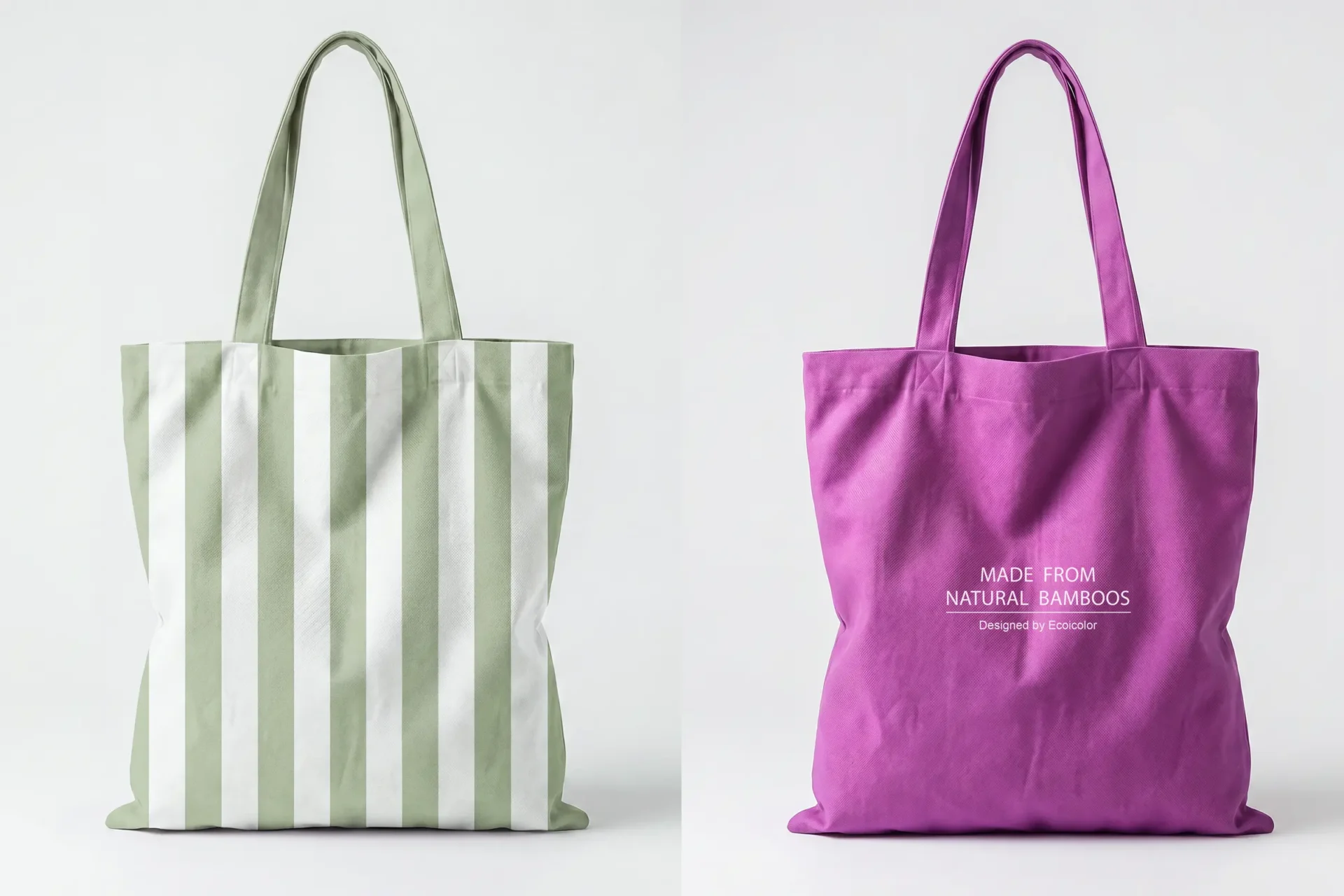
Beauty and wellness brands often use GWP tote bags for holiday gifts, Mother’s Day campaigns, summer travel sets, member rewards, opening events, limited-edition bundles, wellness kits and retail promotion sets.
Seasonal campaigns need more planning than many buyers expect. Summer travel GWP may need lighter materials or a more practical structure. Holiday gift sets may need stronger gift presentation, hangtags, paper cards or a more premium logo detail.
DTC and retail brands may also use GWP totes for subscription box add-ons, limited collaborations or store launch gifts. The logic is similar: the tote should make the product set feel more valuable, not like an afterthought.
What materials work for GWP tote bags?
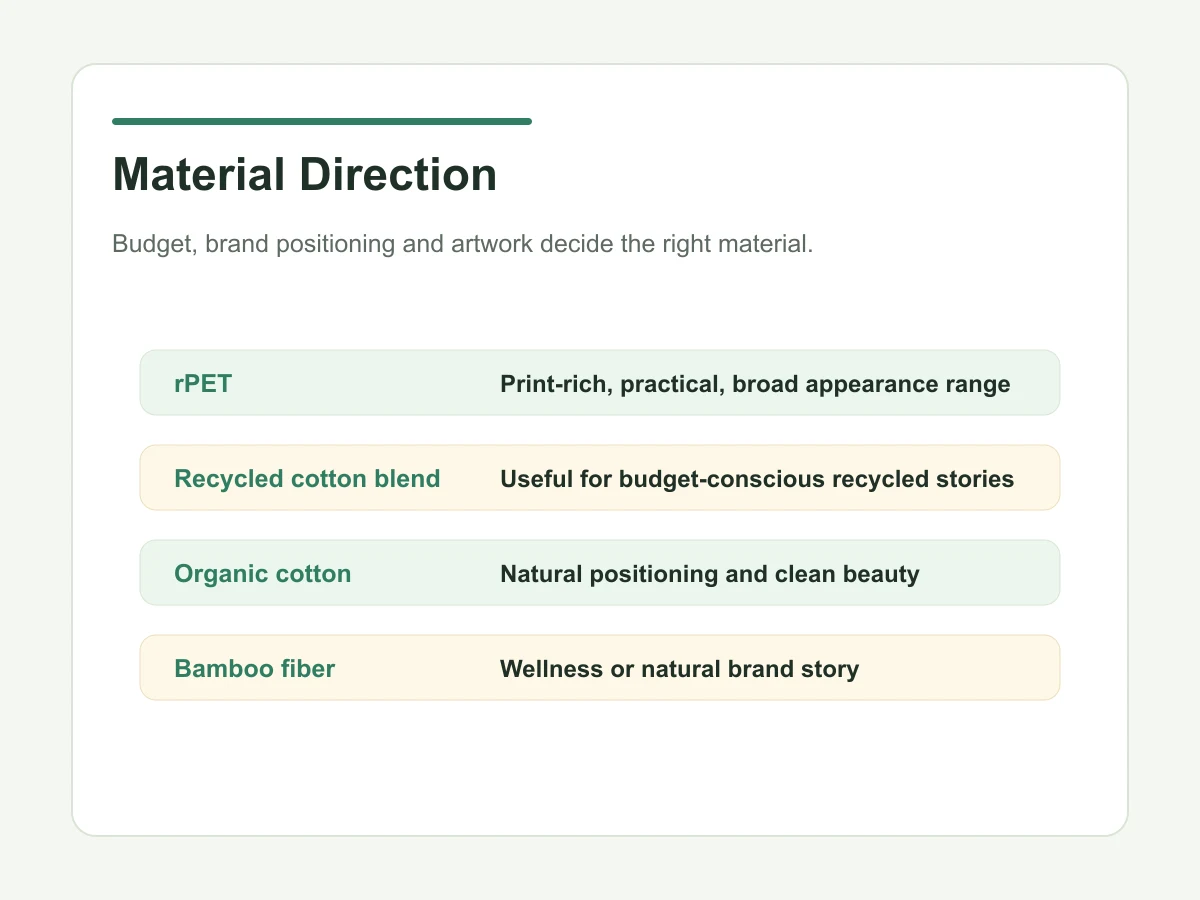
Common GWP tote materials include rPET, recycled cotton blend, cotton canvas, organic cotton and bamboo fiber. The right choice depends on budget, brand positioning, artwork, packaging and document requirements.
If budget is limited but the brand wants a recycled direction, we often start with rPET or recycled cotton blend. rPET is useful when the artwork has many colors, full-surface patterns or a more print-heavy design. Recycled cotton blend can be practical for simpler GWP projects with a recycled material story.
If the brand positioning is clean beauty, natural, organic or wellness, organic cotton, bamboo fiber or cotton canvas may fit better. The choice should match the brand story, not only the material name. Textile Standards publishes the Global Recycled Standard for recycled content and chain-of-custody requirements1, which is useful when buyers discuss material claims.
What size and structure should a GWP tote have?
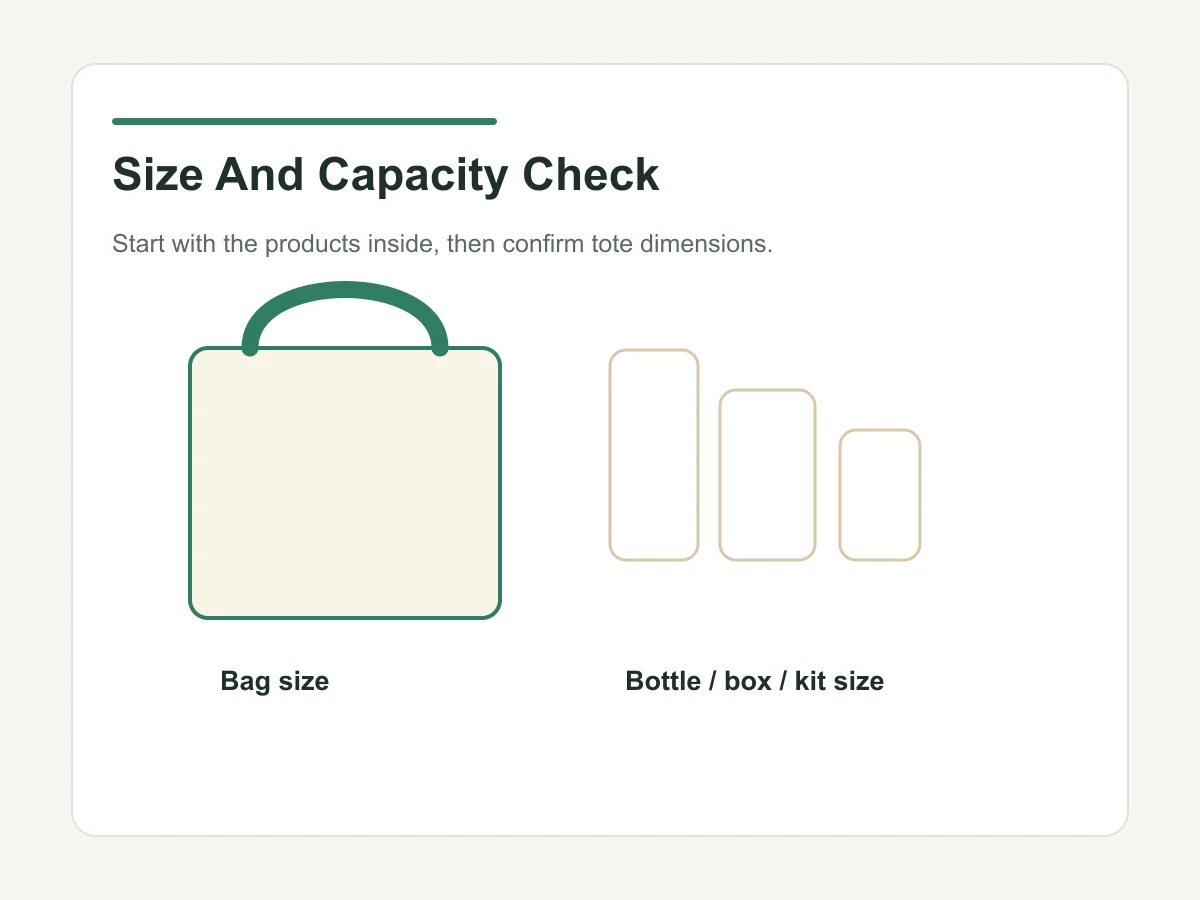
GWP tote bags are often small to medium sized, but the correct size should start from the products inside. Bottle height, gift box size, gusset, handle drop and product fit should be confirmed before sampling.
For beauty GWP, buyers should not only ask for a small tote. The factory needs to know whether the tote will hold skincare bottles, makeup sets, body care, perfume, travel-size products or a gift box. A bottom gusset is especially important when bottles or boxes need to stand inside.
Hand carry is common for smaller GWP totes, but shoulder carry can work for larger gift sets or lifestyle positioning. The use case should decide the handle drop.
Which logo methods are common for GWP totes?
Common logo methods for GWP tote bags include screen printing, heat transfer, embroidery, woven label, leather patch and metal plate. The right method depends on artwork complexity, material, budget and brand effect.
For many GWP projects, screen printing and heat transfer are practical choices. If the artwork is multicolor, gradient or full-surface, heat transfer or digital print logic may be more suitable. If the brand wants a more premium touch, embroidery, woven label, leather patch or a small metal plate can be considered.
When budget is limited but the brand still wants a better visual effect, we usually suggest keeping one strong detail, such as a cleaner logo method or better packaging, then simplifying other parts.
What packaging should buyers plan?
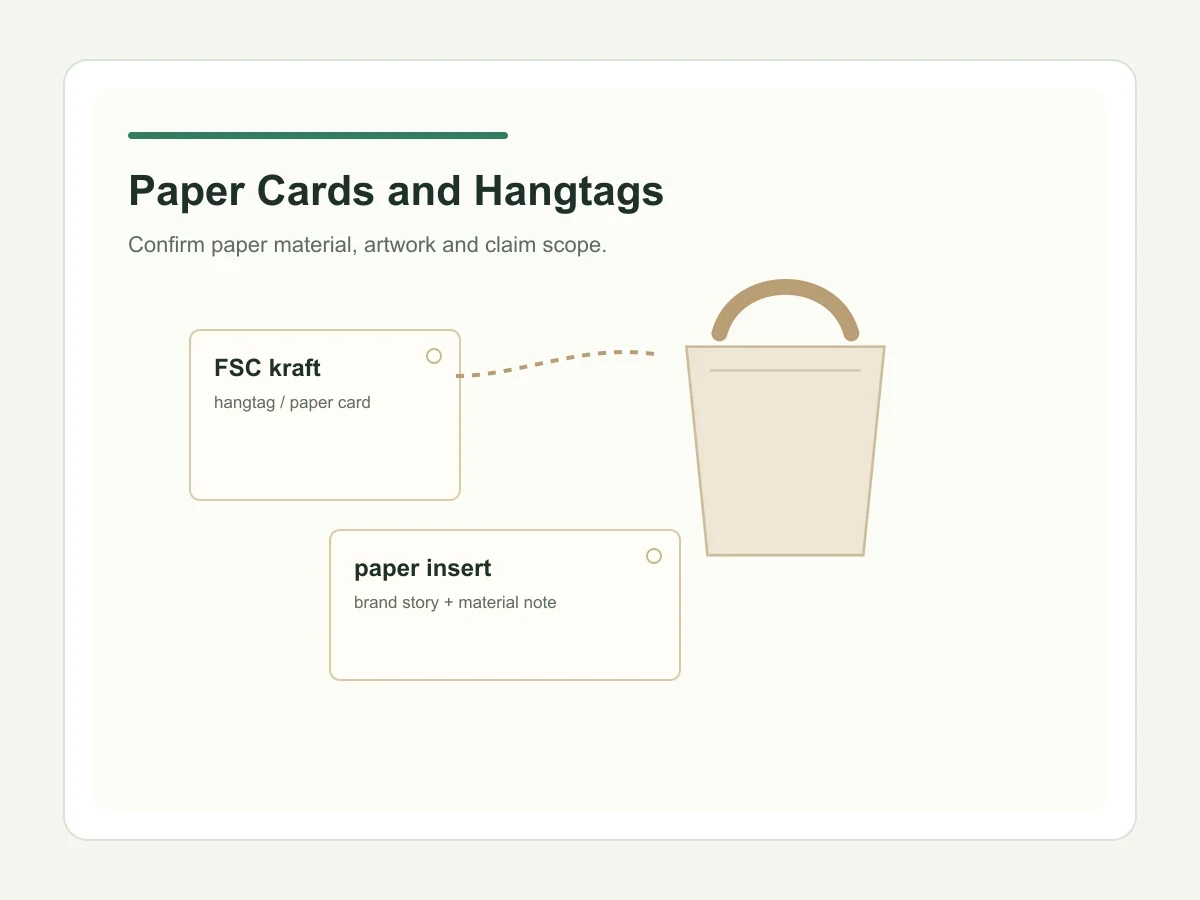
GWP tote packaging can include polybag, recycled-content polybag, FSC hangtag, paper card, belly band or other simple retail-style packaging. It should be simple, clean and consistent with the campaign.
For beauty GWP, packaging is usually not as heavy as a retail box, but it still matters. A hangtag, paper card or belly band can make the gift feel more intentional. If the brand uses FSC paper packaging or paper labels, FSC paper and packaging guidance should apply to the packaging scope2, not the fabric itself.
Small paper cards or hangtags can become expensive at lower quantities because of setup and printing costs. Barcode, paper card, composition label, country-of-origin label and carton mark requirements should be discussed before order approval.
How should buyers plan MOQ, samples and timeline?
Ecoicolortote MOQ starts from 500 pcs per style. Two colorways can often be discussed within a 500 pcs project, depending on material and process. Sample timing is confirmed after the material, construction, logo method, artwork, packaging and approval scope are clear; the working schedule also depends on revision speed and current capacity.
Sample timing is confirmed after the material, construction, logo method, artwork, packaging and approval scope are clear; the working schedule also depends on revision speed and current capacity. For projects combining two processes, sample timing should be confirmed after the material, artwork, process compatibility, packaging scope, revision count and current capacity are reviewed. Bulk production timing should be planned after sample approval and depends on quantity, material availability, process complexity and packaging.
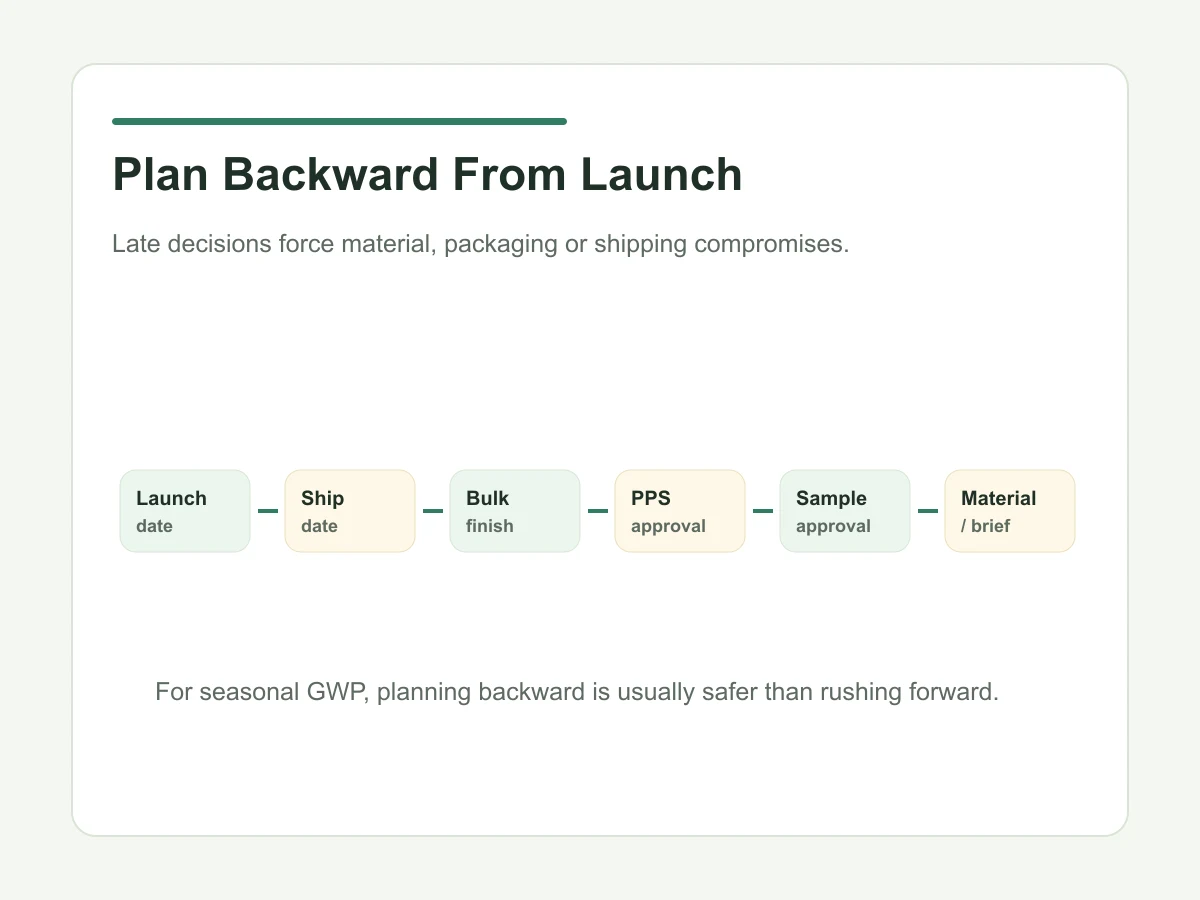
For seasonal GWP, the safest approach is to plan backward from the launch date. If timing is too tight, the buyer may have to accept available material colors instead of custom color matching, simplify the structure, or use more expensive shipping.
What documents and claims should be confirmed?
Common GWP tote documents include BSCI, GRS, OEKO-TEX, FSC packaging files, material composition and testing reports when needed. Claims should match material, factory, order scope and packaging scope.
amfori BSCI is related to factory social compliance and management practices3, not the tote material itself. OEKO-TEX STANDARD 100 is related to harmful-substance testing and textile safety4, not a recycled claim by itself.
If the brand wants recycled, organic or environmental wording on packaging or marketing, the document requirement should be discussed before sampling and order approval. The FTC Green Guides summary is a useful reference for environmental marketing claims and qualified language5.
What mistakes should buyers avoid?
The most common GWP tote mistakes are starting too late, only comparing price, not testing product capacity, adding packaging late, confirming files late and choosing material only from photos.
Many GWP problems do not happen because the tote cannot be made. They happen because product capacity, packaging and timeline were not planned early enough. If the project starts too late, buyers may have to compromise on material color, choose available stock, simplify the structure or pay for faster shipping.
We have also seen projects where the product size was not shared early, so the first sample did not fit the real product set. For beauty GWP, this should be avoided by sharing bottle size, box size or actual product samples before finalizing the tote size.
Recent Portugal GWP inquiry: what made the brief commercially useful
A Portugal-based beauty group asked for quotations at 10,000 and 15,000 units for a summer 2027 gift-with-purchase program, with sea delivery to Lisbon. The buyer wanted personalized bags and was also reviewing related beach bags and accessories.
Useful information already in the inquiry
The two quantity levels, GWP use case, target season, sea-freight route and Lisbon destination gave the factory a real commercial frame. Those fields are more useful than a general request for the lowest tote price because they help the supplier review material, sampling, packing and delivery timing together.
Details still needed before a firm quote
The next review still needed the tote size, material direction, logo artwork, packaging scope and exact required delivery date. These details determine whether the 10,000-unit and 15,000-unit options can share the same material and production route.
Factory-side lesson
A strong GWP inquiry does not need every specification on day one, but it should identify the campaign, quantity range, delivery market and launch window. The supplier can then ask one focused round of questions instead of sending unrelated bag options.
This section records an inquiry-stage brief only. It does not claim a quotation outcome, confirmed order or campaign result.
Review the GWP tote sourcing route or send quantity, product set, launch timing and delivery market for RFQ review.
Less suitable fit for this GWP tote route
This GWP tote route is less suitable for single-piece gifts, personal tote orders, lowest-price-only sourcing, or projects that skip product-fit checks, sample approval and document scope while still expecting no campaign risk.
Ecoicolortote is usually not the right fit for orders below 500 pcs per style without an existing brand or campaign context, buyers who only ask for the lowest bag price without sharing product set, launch date or packaging needs, or projects that need recycled, organic or FSC claims but will not confirm document scope before order. This route is stronger for brand buyers who have a real launch window and accept sample-first planning.
What brief should buyers send for a GWP tote?
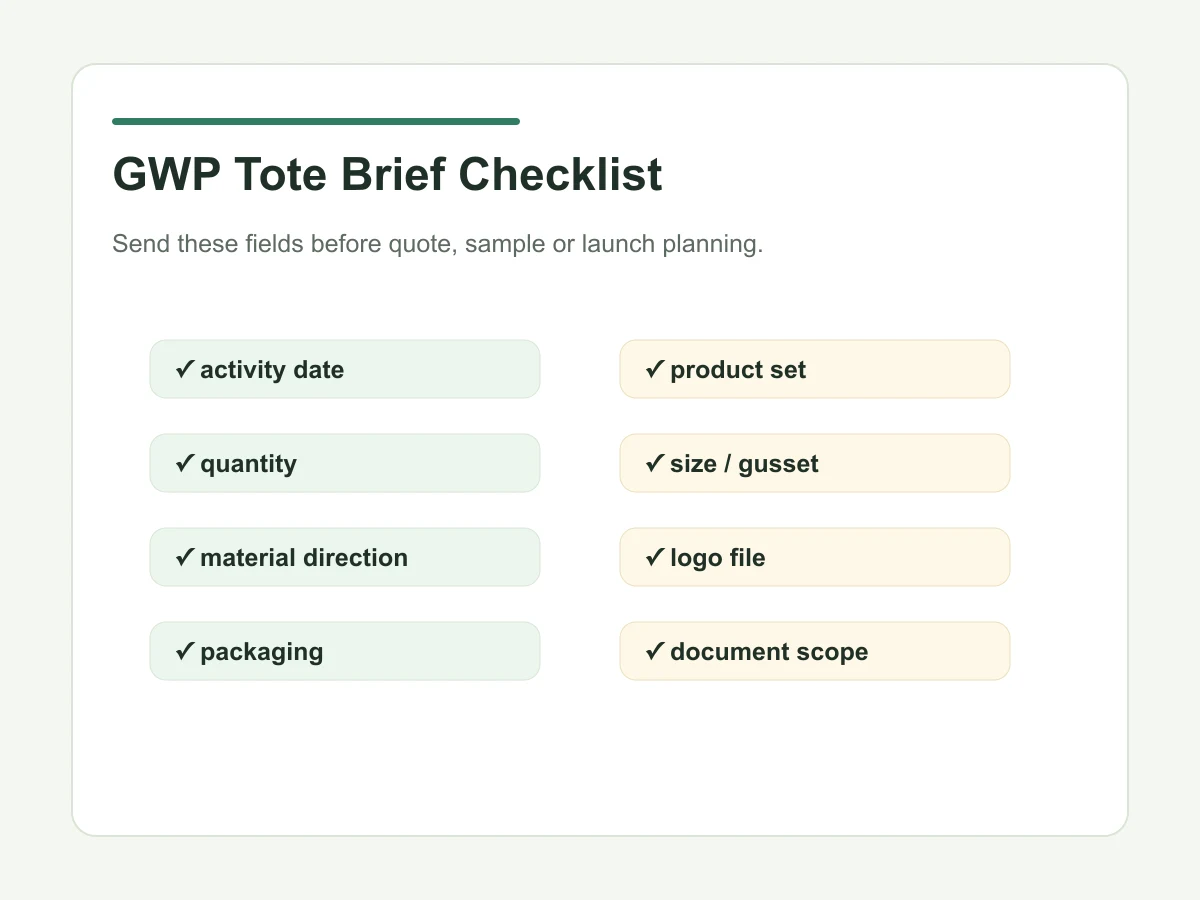
A useful GWP tote brief should include activity date, product set, quantity, size or capacity need, material direction, logo file, packaging requirement, document scope and shipping destination.
| GWP use case | Suggested material direction | Packaging idea | Watch-out |
|---|---|---|---|
| Holiday beauty gift | rPET, cotton canvas, organic cotton or bamboo fiber depending on positioning | Hangtag, paper card or belly band | Plan packaging files early. |
| Summer travel set | rPET or lightweight recycled material | Simple recycled-content packing or paper band | Confirm bottle and pouch fit. |
| Clean beauty / wellness gift | Organic cotton, bamboo fiber or cotton canvas | FSC kraft hangtag or paper card | Confirm material story and document scope. |
| Budget-conscious GWP | rPET or recycled cotton blend | Simple but clean packaging | Keep one strong brand detail instead of adding every feature. |
GWP Tote Bag Brief Checklist
- Activity date or target launch date
- Quantity and colorway plan
- Product set or gift box size to fit inside
- Preferred material direction and brand positioning
- Logo file, Pantone reference and preferred logo method
- Packaging requirement such as hangtag, paper card or belly band
- Document or claim requirement such as GRS, OEKO-TEX or FSC packaging
- Shipping destination and target delivery date
Send your activity date, product set, quantity, size or capacity need, material direction, logo file, packaging requirement, document scope and shipping destination. We can help reverse-plan material, sample timing and bulk production before the campaign becomes urgent. Contact Ecoicolortote.
FAQ: What is a GWP tote bag?
What is a GWP tote bag?
A GWP tote bag is a gift-with-purchase tote used as a branded gift when customers buy a beauty, wellness or retail product set. It supports campaign experience, product presentation and brand recall. For factory planning, the tote should be judged by product fit, material, logo method, packaging, document scope and launch timing.
What material is commonly used for beauty GWP tote bags?
Beauty GWP tote bags often use rPET, recycled cotton blend, cotton canvas, organic cotton or bamboo fiber, depending on budget, brand positioning, logo artwork, packaging and document requirements. The best material is not always the most expensive one; it should match the product set, campaign story, logo process and sample approval target.
What information should buyers send before quoting a GWP tote bag?
Buyers should send activity date, quantity, products to fit inside, size direction, material direction, logo file, packaging requirement, document scope and shipping destination before requesting a quote or sample timeline. Product dimensions are especially useful because they help the factory judge gusset, handle drop, capacity, product presentation and packing method early.
What MOQ and lead time should buyers expect for a GWP tote bag?
Ecoicolortote is usually a better fit for MOQ 500+ GWP tote projects. Sample timing is confirmed after the material, construction, logo method, artwork, packaging and approval scope are clear; the working schedule also depends on revision speed and current capacity. Bulk timing should be planned after sample approval and checked against the launch date, shipping destination and campaign window.
Which material or certification evidence should be checked?
Buyers should check whether recycled, organic, textile safety, factory audit or FSC paper packaging evidence matches the actual tote material, factory route, packaging and claim wording. GRS, OEKO-TEX, FSC and BSCI-related documents answer different questions, so they should not be treated as interchangeable proof for the whole project or campaign.
What mistake causes the most rework in GWP tote projects?
The biggest rework risk is starting with only a logo and target price, then adding product-fit, packaging, document or launch-date requirements after sampling starts. Late changes can affect size, material, logo method, hangtags, carton marks, sample timing, bulk schedule and freight planning, especially when the campaign date is already fixed.
When should buyers contact Ecoicolortote?
Contact Ecoicolortote before sampling if your team is planning an MOQ 500+ GWP tote bag for a beauty, wellness, DTC or retail campaign. The most useful brief includes activity date, product set, quantity, size or capacity need, material direction, logo file, packaging requirement, document scope, shipping destination and launch timing.
Trademark and certification note
GRS, FSC, amfori BSCI, OEKO-TEX and FTC references are included for buyer education and scope discussion only. They are owned by their respective organizations. Any recycled-content, organic, textile safety, paper packaging, audit or environmental marketing claim should be checked against the actual material, packaging, order scope, supplier route and buyer requirement before it is used in purchase documents, hangtags or campaign copy.