Zoe Yu
GWP tote bag cost, MOQ and timeline planning for beauty brands should not start from unit price alone. A workable campaign plan depends on target quantity, launch date, product fit, material choice, logo process, packaging scope, document needs and sample approval timing.
TL;DR: Beauty GWP tote planning should start with the campaign goal, gift value, target quantity, product fit, material direction, logo process, packaging, document needs and launch date. Ecoicolortote projects usually start from MOQ 500 pcs per style, and two colorways may be discussed when production setup allows. Cost and lead time can change quickly if pack-out, purchase threshold, hangtags, barcode labels, recycled claims or sample approval requirements are confirmed late.
For beauty, skincare, fragrance, personal care and wellness brands, a tote that looks simple on a mood board can change cost and lead time once the buyer confirms fabric weight, lining, zipper, hardware, logo detail, packaging, certification requirements and delivery market.
Ecoicolortote is a better fit for MOQ 500+ brand projects where the buyer can share campaign context, product dimensions, material direction, artwork, packaging needs and required documents. If your team is preparing a beauty gift-with-purchase program, you can review our beauty GWP tote bags, GWP brand totes and wellness and beauty totes before sending the project brief.
Buyer Summary
- Best for: beauty, skincare, fragrance, personal care and wellness brands planning custom GWP tote bags from 500 pcs per style.
- Main decision: GWP tote cost, MOQ and timeline should be planned around campaign date, material choice, logo process, packaging and document requirements, not only unit price.
- Factory-side note: sampling, packaging files, certification documents and buyer approval speed can affect whether a seasonal GWP campaign stays on schedule.
- What to prepare: target quantity, campaign date, product-fit requirement, material direction, logo artwork, packaging needs, destination market and required documents.
What should beauty brand buyers know before sourcing GWP tote bags?
Beauty brand buyers should plan GWP tote bags around campaign goal, launch date, target quantity, product fit, material direction, logo process, packaging and document requirements. For Ecoicolortote projects, MOQ starts from 500 pcs per style, and two colorways can be discussed depending on production setup.
For most beauty GWP projects, we prefer to confirm the brief, material direction and logo process before giving a final quote. A supplier can estimate quickly, but accurate cost and timeline depend on final specifications. If your team is still choosing between rPET, recycled cotton, canvas, organic cotton or a premium leather-look material, start with a sourcing discussion before locking the design.
If your campaign includes recycled materials, ask early which documents apply to the actual material and supplier scope. Textile Standards publishes the Global Recycled Standard for recycled-content and chain-of-custody requirements1.
| Buyer type | GWP tote use case | Key concerns |
|---|---|---|
| Beauty brands | Seasonal gift-with-purchase campaign | Premium look, campaign date, packaging, MOQ and product fit. |
| Skincare brands | Product set gift bag or launch gift | Clean material, soft handfeel, bottle fit and color approval. |
| Fragrance brands | Limited-edition gift tote | Brand tone, logo effect, premium finishing and presentation. |
| Wellness and spa brands | Member gift or treatment package | Natural material story, calm design, reusable quality and careful claim wording. |
| Personal care brands | New product launch gift or retail promotion | Cost control, stable supply, fast sample approval and packaging consistency. |
Best fit for this GWP tote planning guide
This guide is best for beauty, skincare, fragrance, personal care and wellness brand teams planning MOQ 500+ gift-with-purchase tote campaigns. It is especially useful for marketing managers, sourcing teams, retail activation teams and founders who need to connect gift value, product fit, campaign timing, material story, logo effect and packaging before asking for a final quote. It also fits buyers preparing seasonal launch gifts, threshold gifts, holiday kits, spa retail gifts or limited promotional sets where sample approval, packaging files and document scope need to be checked before the campaign date becomes tight. The strongest fit is a team that needs one practical plan for MOQ, sampling, pack-out, carton timing and buyer-side approval.
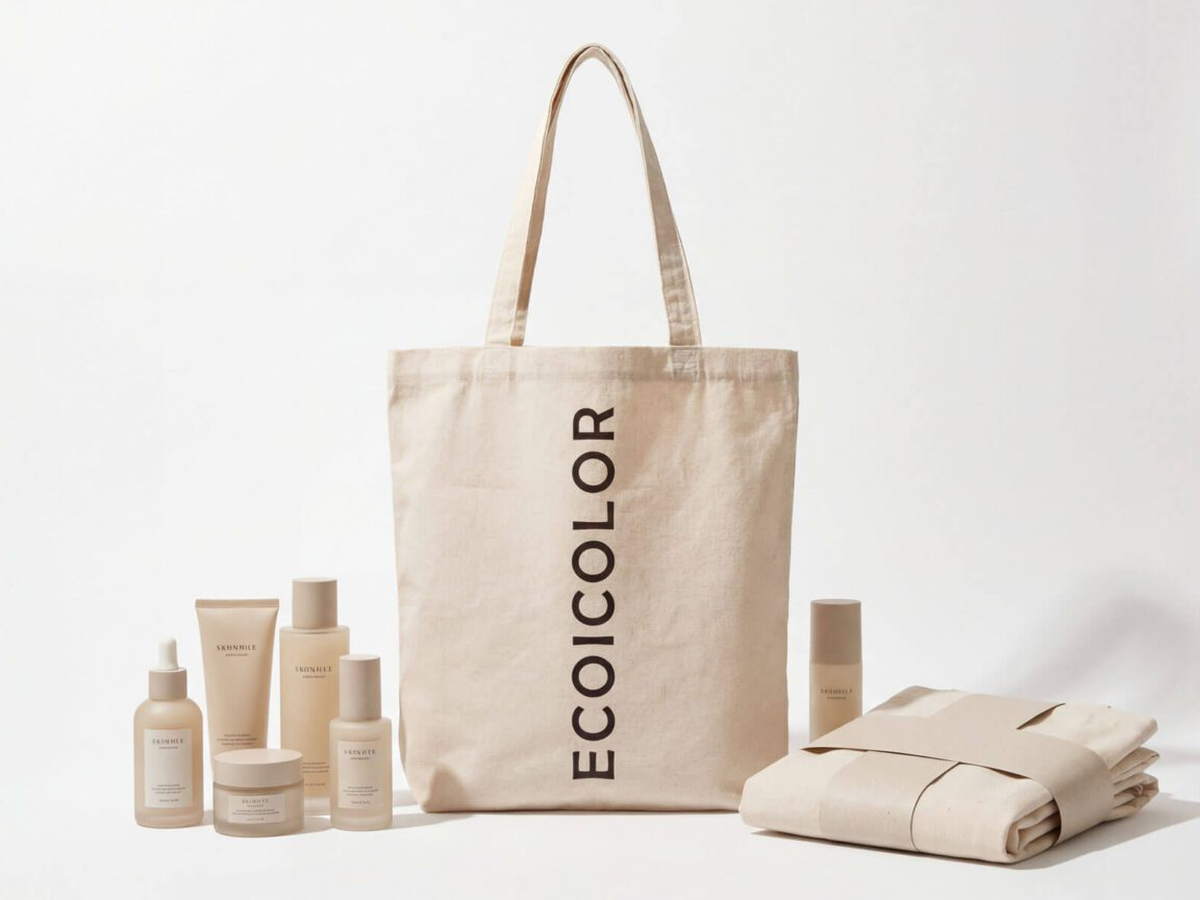
This page focuses on GWP tote cost, MOQ and timeline planning for beauty campaigns. Product pages show available tote routes, while material pages compare fabrics. This guide helps buyers connect campaign deadline, budget, sample approval and production risk before asking for a final quote.
If your team already knows it needs a beauty gift tote, the beauty GWP tote bags page is the closer product entrance. If your team is comparing broader promotional and retail programs, use the GWP brand totes category. If your project is more spa, wellness, resort or self-care oriented, the wellness and beauty totes page may be a better fit.
This article stays focused on cost drivers, MOQ split, sample timing, production lead time, packaging, documents and RFQ preparation. It should help beauty teams avoid comparing quotes that are based on different specifications.
How much do custom GWP tote bags cost?
Custom GWP tote bag cost should not be judged by one fixed price range. The final cost depends on quantity, material, size, fabric weight, logo process, lining, zipper, hardware, packaging, certification requirements and shipping destination.
Beauty brands often start with a target budget, and that is useful. From a factory side, we still need project details to turn that budget into a workable bag. A small rPET tote with one-color printing is a different project from a lined canvas tote with zipper, woven label, metal plate and custom packaging.
If your procurement team is comparing custom tote bag manufacturers, ask each supplier to quote the same structure, material, logo process and packaging method. Otherwise, a lower unit price may simply mean the supplier quoted a lighter fabric, simpler construction or less controlled packing plan.
The most useful first question is not "What is your cheapest tote bag?" It is: what tote structure can meet the campaign goal, brand positioning and target budget without creating production risk?
What is the MOQ for beauty GWP tote bags?
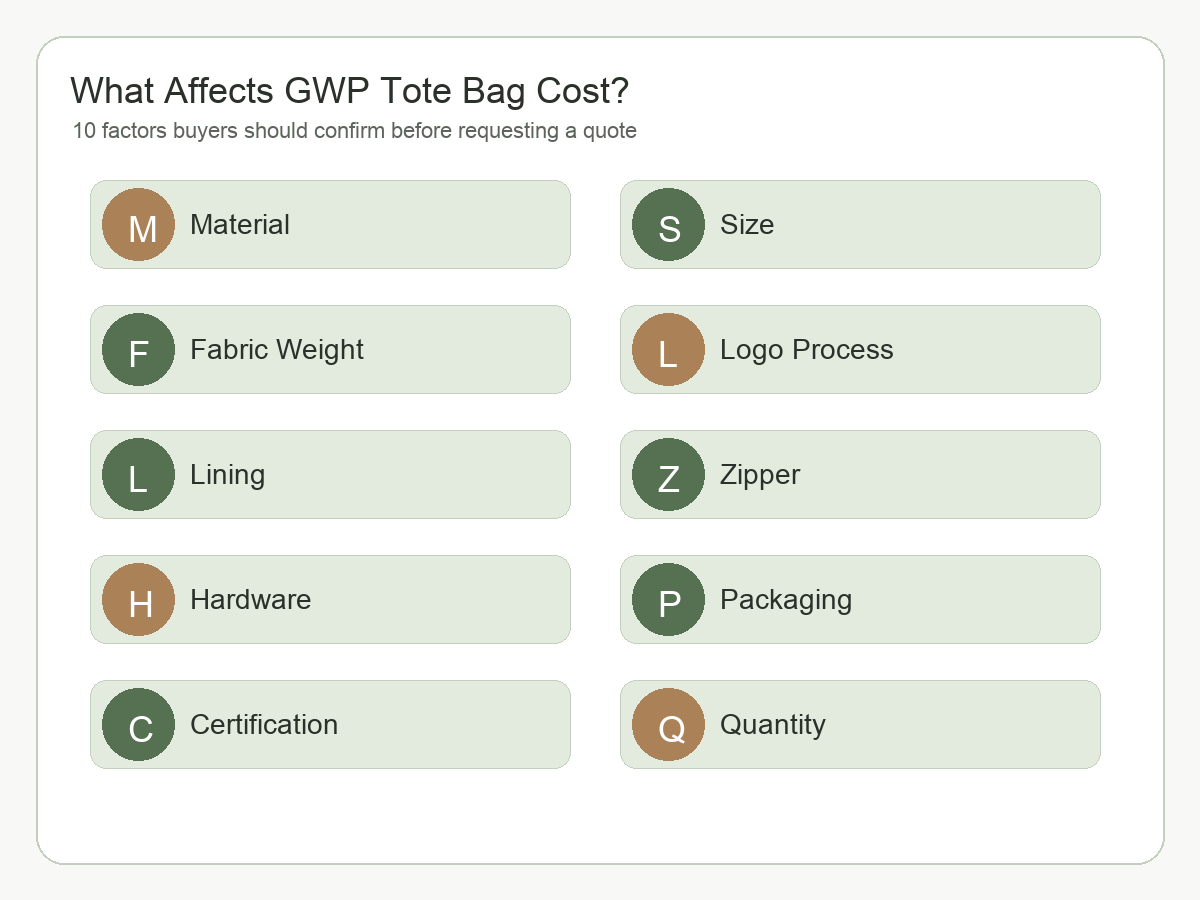
Ecoicolortote custom GWP tote projects start from MOQ 500 pcs per style. Two colorways can be discussed within the same project, depending on material availability, logo process, cutting efficiency and production setup.
MOQ is connected to material sourcing, cutting, printing setup, sewing efficiency, packaging preparation and quality control. A simple tote in available material is easier to manage at a smaller project size than a custom-dyed, lined, multi-process design.
For beauty brands, MOQ 500 can be useful because it allows a campaign team to test a seasonal gift-with-purchase idea without committing to a very large production run. It also gives the factory enough quantity to control consistency better than a very small batch.
If your team wants two colors within 500 pcs, send the desired color split early. For example, 250 pcs in soft beige and 250 pcs in sage green may be possible in some setups, but fabric availability, print setup and cutting plan need to be checked before confirmation.
What factors affect the price of a GWP tote bag?
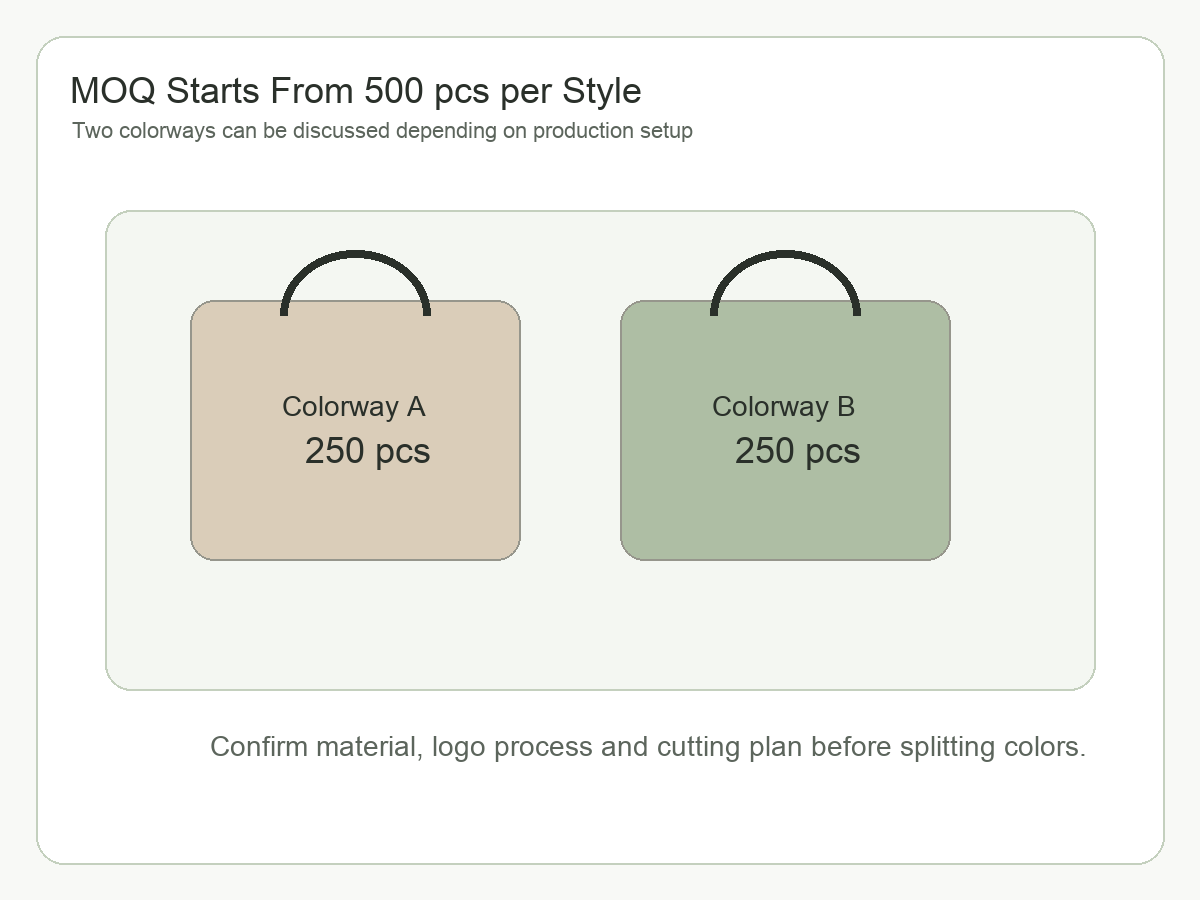
The biggest cost drivers are material, size, fabric weight, logo process, lining, zipper, hardware, packaging, certification requirements and order quantity. A buyer can reduce cost by simplifying structure, choosing efficient materials, limiting unnecessary trims and confirming approvals early.
| Cost factor | How it affects price | What buyers should decide early |
|---|---|---|
| Material | rPET, recycled cotton, canvas, organic cotton and leather-look materials have different cost levels. | Desired material story, handfeel and budget. |
| Size | Larger bags use more fabric and may change carton volume. | Product fit, gift set size and reuse goal. |
| Fabric weight | Heavier GSM or oz can feel more premium but costs more. | Whether the bag needs structure or lightness. |
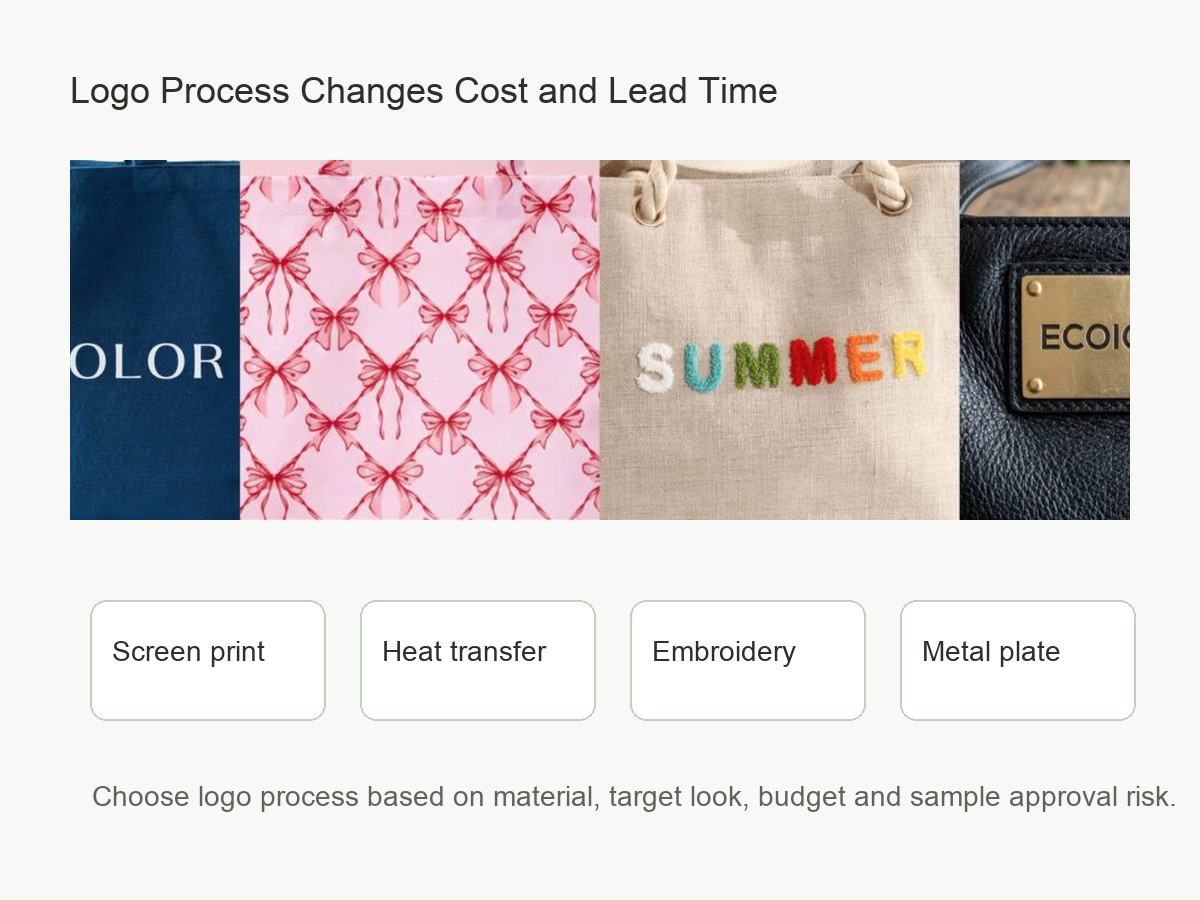
| Logo process | Screen print, embroidery, heat transfer, woven label and metal plate have different setup costs. | Logo file, Pantone reference and desired finish. |
| Lining or closure | Lining, zipper, snap or flap adds material, labor and QC checks. | Whether the function improves the campaign value. |
| Packaging | Hangtags, belly bands, barcode stickers and paper cards change setup and packing time. | Retail, counter display, subscription box or bulk delivery needs. |
| Documents | Certified material, testing or audit support may affect sourcing and timing. | GRS, OEKO-TEX, FSC packaging, audit or buyer-specific document scope. |
| Quantity | Higher quantities can improve unit cost by spreading setup work. | Test campaign, seasonal campaign or recurring program. |
If your brand already has a target unit budget, share it with the supplier. In quotation review, that budget helps us suggest where to simplify and where not to compromise. For example, simplifying the logo process may save more than reducing the bag size by a small amount.
Which materials are most cost-effective for beauty GWP totes?
For budget-sensitive beauty GWP tote bags, rPET and recycled cotton are often practical starting points. rPET can support recycled-content positioning and printed artwork, while recycled cotton can offer a softer natural look at a competitive cost. Premium projects may use canvas, organic cotton or leather-look materials.
Beauty brands usually choose materials based on four questions: whether the material fits the brand story, whether it feels right for the gift value, whether it supports the logo process, and whether the required documents can be provided when applicable.
| Material | Best for | Cost direction | Watch-outs |
|---|---|---|---|
| rPET | Beauty GWP, recycled-content story and smooth printing. | Often practical for many GWP programs. | Confirm recycled claim scope and material availability. |
| Recycled cotton | Natural look, soft handfeel and budget-conscious campaigns. | Often practical for simple tote structures. | Color consistency, lint and composition should be checked. |
| Cotton canvas | Structured bags, retail-like feel and reusable designs. | Can be higher depending on weight. | Heavier fabric increases material and shipping weight. |
| Organic cotton | Natural premium positioning. | Usually higher than recycled cotton. | Certification scope should be confirmed early. |
| Leather-look or vegan leather | Premium gift and luxury-feel projects. | Usually higher. | Requires careful sampling, edge finishing and QC. |
For environmental wording, keep the claim specific. The FTC Green Guides summary explains that environmental marketing claims should be clear, truthful and properly qualified2.
How long does sampling take for custom GWP tote bags?
Sample timing is confirmed after the material, construction, logo method, artwork, packaging and approval scope are clear; the working schedule also depends on revision speed and current capacity.
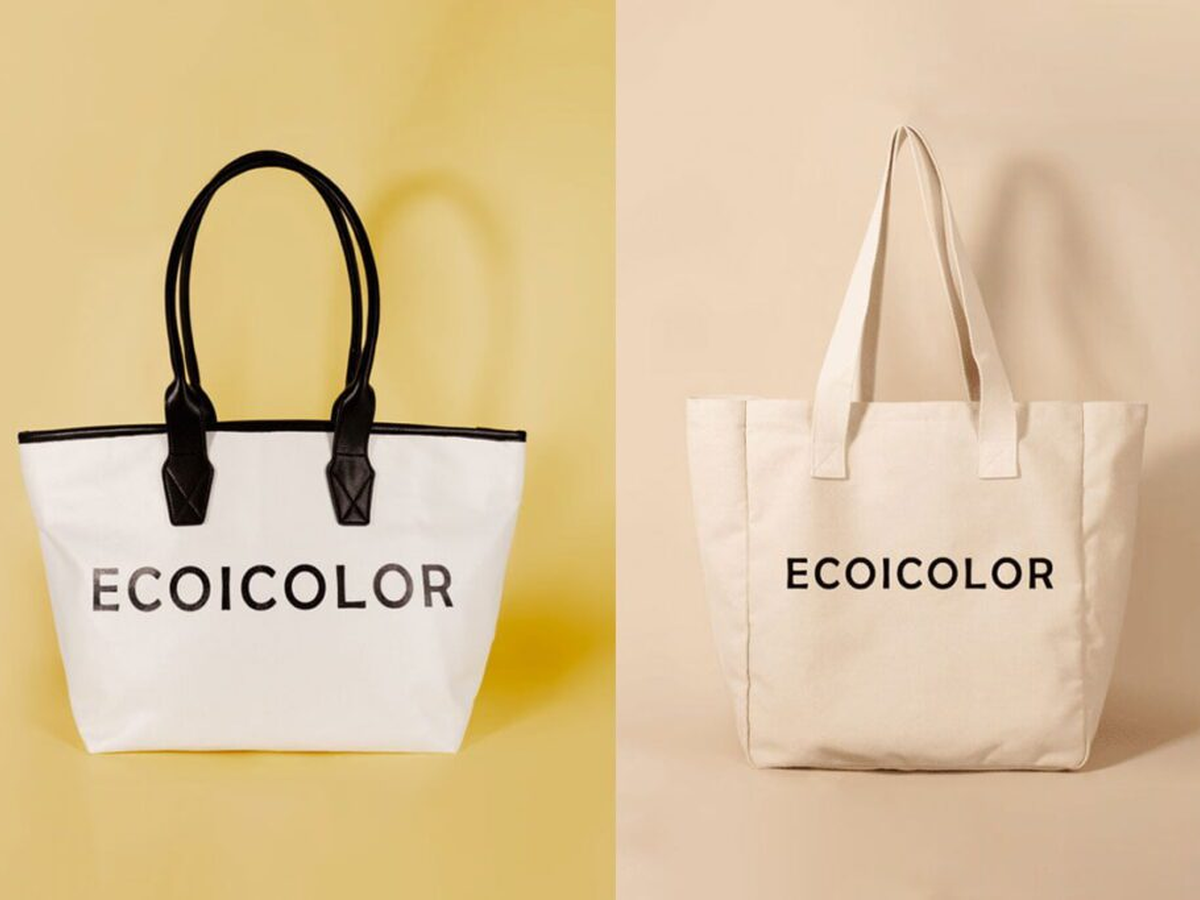
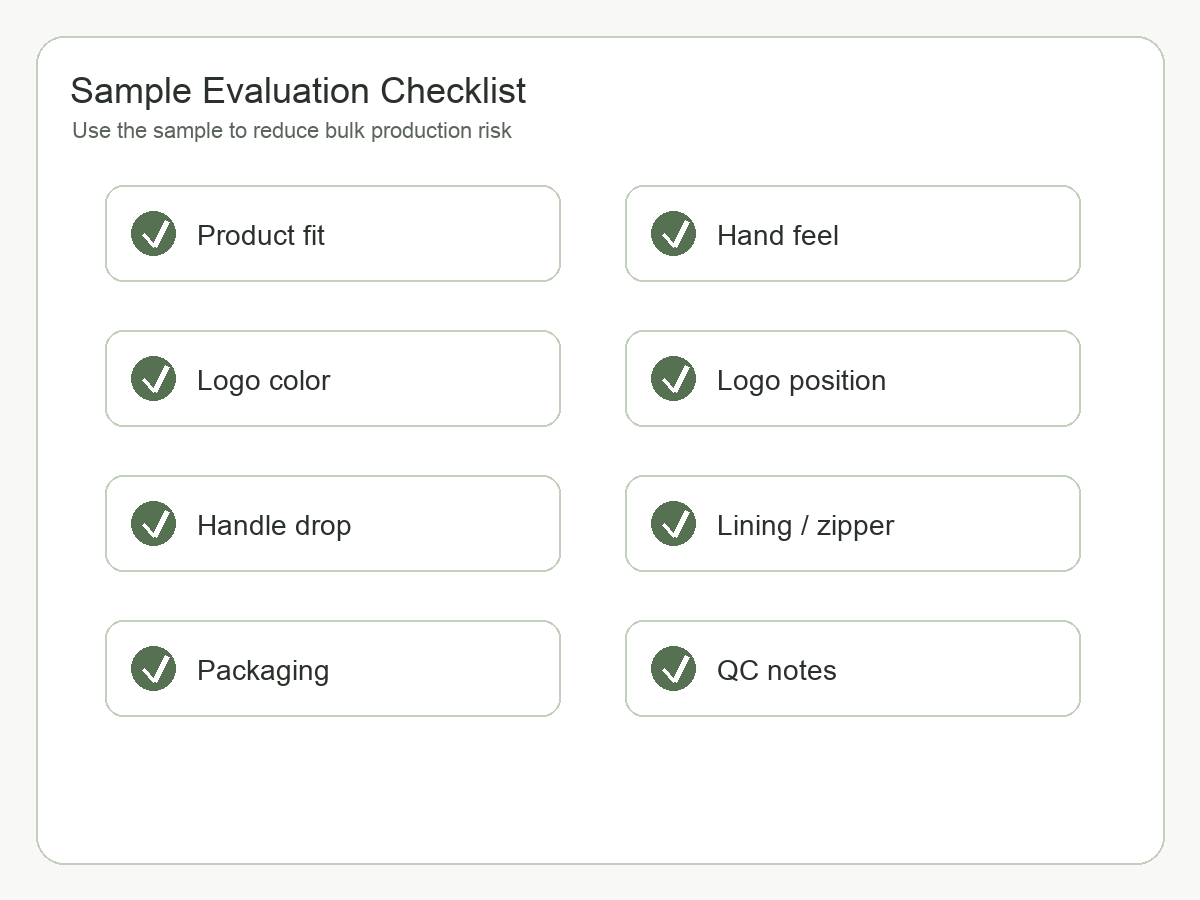
Sampling is where beauty teams confirm handfeel, color, structure, logo position, product fit and packaging direction. This is also the stage where unclear design choices become visible. A rushed sample can create bigger delays later if the bulk order starts with unclear approvals.
- Does the tote fit the actual beauty products?
- Does the bag look good when carried and when displayed?
- Does the logo color match the approved reference?
- Does the material feel aligned with the brand?
- Are zipper, lining, handle drop and trims correct?
- Is the packaging method suitable for the campaign channel?
How long does bulk production take after sample approval?
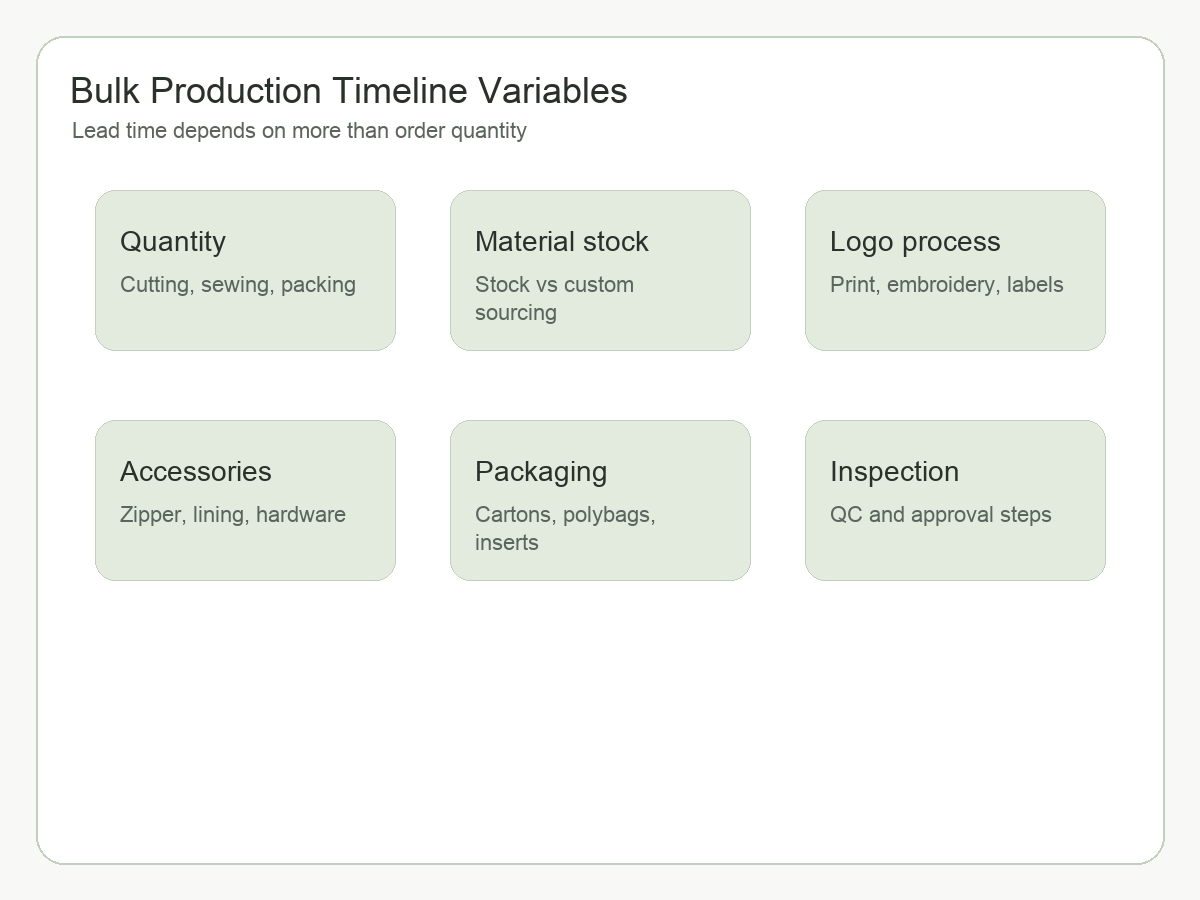
Bulk lead time should be confirmed after sample approval. It depends on order quantity, material availability, fabric weight, logo process, accessories, packaging, inspection requirements and seasonal factory capacity.
A useful production timeline starts only after the buyer approves the final sample, artwork, material, color, packaging and order quantity. If any of these details remain open, the factory may need to pause material purchasing or production preparation.
| Timeline factor | Why it matters |
|---|---|
| Order quantity | Larger orders need more cutting, sewing, QC and packing time. |
| Material stock | Stock material is faster than custom sourcing or custom dyeing. |
| Logo process | Embroidery, heat transfer, woven labels and metal plates require different preparation. |
| Accessories | Zippers, hardware, lining and trims add sourcing and QC steps. |
| Packaging | Custom cartons, paper cards, hangtags or retail inserts add preparation time. |
| Inspection | Brand-level QC, AQL inspection or third-party checks should be scheduled. |
| Seasonality | Holiday campaigns and peak production periods need earlier planning. |
How should beauty brands plan a GWP tote campaign timeline?
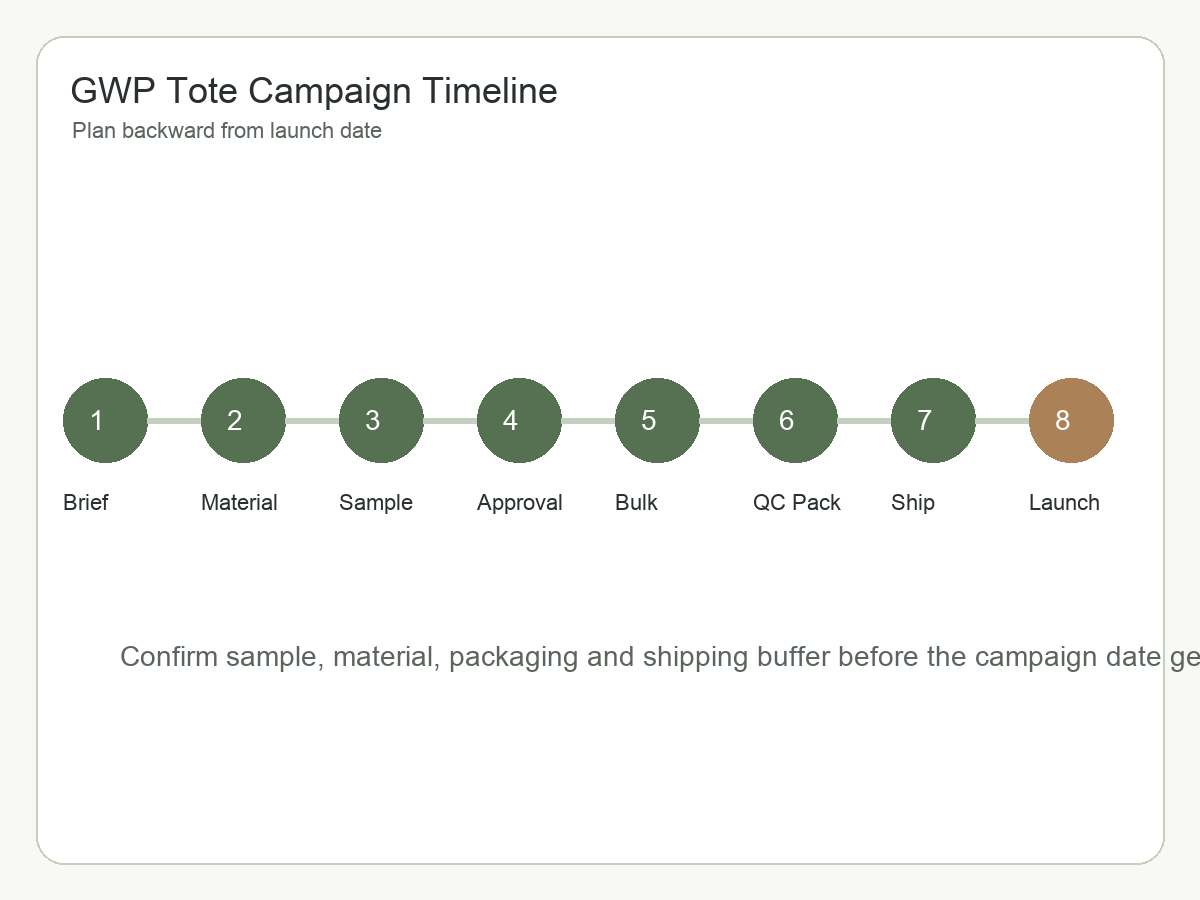
Beauty brands should plan backward from the launch date and leave time for brief review, material selection, sampling, approval, bulk production, inspection, packing and shipping. The earlier the team confirms material, color and logo process, the lower the risk near launch.
| Stage | What happens | Buyer action |
|---|---|---|
| Launch date | Campaign goes live in retail, online or gift set channel. | Confirm must-arrive date. |
| Shipping buffer | Goods move to warehouse, distributor or campaign location. | Choose shipping method and destination. |
| QC and packing | Finished totes are inspected and packed. | Confirm carton marks and packaging. |
| Bulk production | Cutting, printing, sewing, finishing and packing. | Avoid late design changes. |
| Sample approval | Buyer approves material, logo, structure and packaging. | Sign off sample details in writing. |
| Sampling | Factory makes physical sample. | Review handfeel, size, color and product fit. |
| Material and process decision | Supplier confirms workable options. | Choose material, color, logo method and packaging. |
| Project brief | Buyer sends initial requirements. | Share quantity, budget, launch date and artwork. |
If the campaign has a holiday or seasonal deadline, add more buffer. Holiday GWP projects often involve brand team, procurement, packaging, compliance, retail team and sometimes regional distributors. Approval rounds often take longer than the physical sample itself.
What packaging options should beauty brands consider?
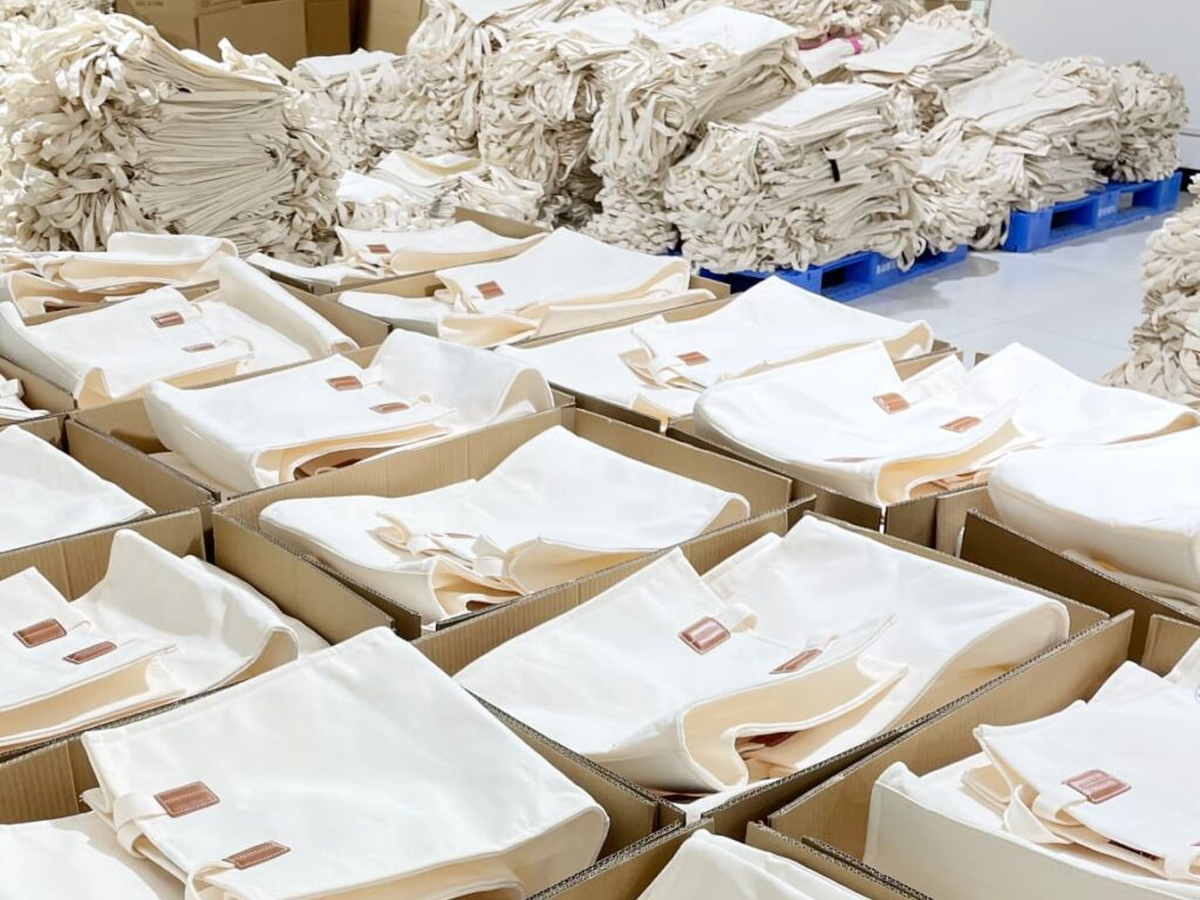
Packaging affects both cost and brand perception. Beauty brands can consider FSC paper hangtags, kraft paper cards, recycled-content polybags, reduced-plastic packing, barcode labels, belly bands and carton marks depending on retail channel, warehouse requirements and claim scope.
Packaging is often treated as a final detail, but it can affect lead time, carton size, presentation and compliance language. In beauty GWP projects, packaging should be discussed together with tote structure. If the tote will be delivered as part of a gift set, the packing method should protect the bag without making the whole project feel over-packaged.
FSC paper and packaging guidance applies to paper packaging scope3, such as hangtags, paper cards and cartons, not to tote fabric itself. If a retail program needs barcodes, GS1 General Specifications define identification and barcode standards used by many retail and logistics systems4.
What certifications or documents should buyers ask for?
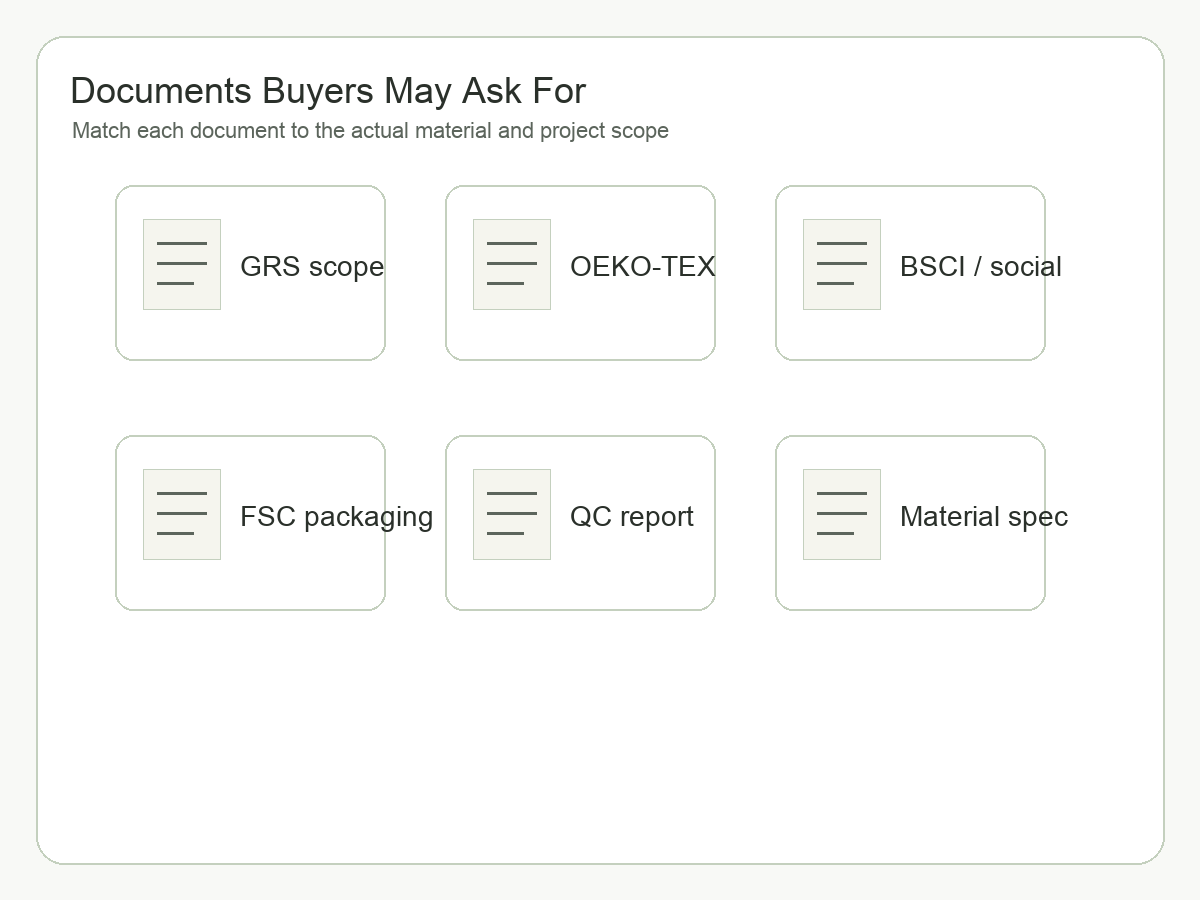
Beauty buyers should ask for documents that match the material and project scope, such as recycled-material documentation, OEKO-TEX where textile safety is relevant, social-compliance information for factory review and FSC-related documents for paper packaging when applicable.
Certification language should be specific. A safer question is not "Are all your bags certified?" It is: which documents apply to this material, this factory scope and this project requirement?
| Document type | When it may matter | Buyer question |
|---|---|---|
| GRS-related documentation | rPET or recycled material projects. | Does the material and supplier scope support the claim? |
| OEKO-TEX documentation | Textile safety requirements. | Is the material or component covered when applicable? |
| BSCI or social compliance | Factory audit, supplier onboarding or procurement review. | Can the factory provide relevant social-compliance information? |
| FSC-related packaging documents | Kraft paper, hangtags, paper cards or cartons. | Does the packaging support the claim the brand wants to make? |
| QC or inspection records | Bulk production approval. | What inspection steps are used before shipment? |
OEKO-TEX STANDARD 100 is related to harmful-substance testing for textile products and components5. amfori BSCI audit guidance explains producer audit request workflows6, not material content.
What should you prepare before asking for a quote?
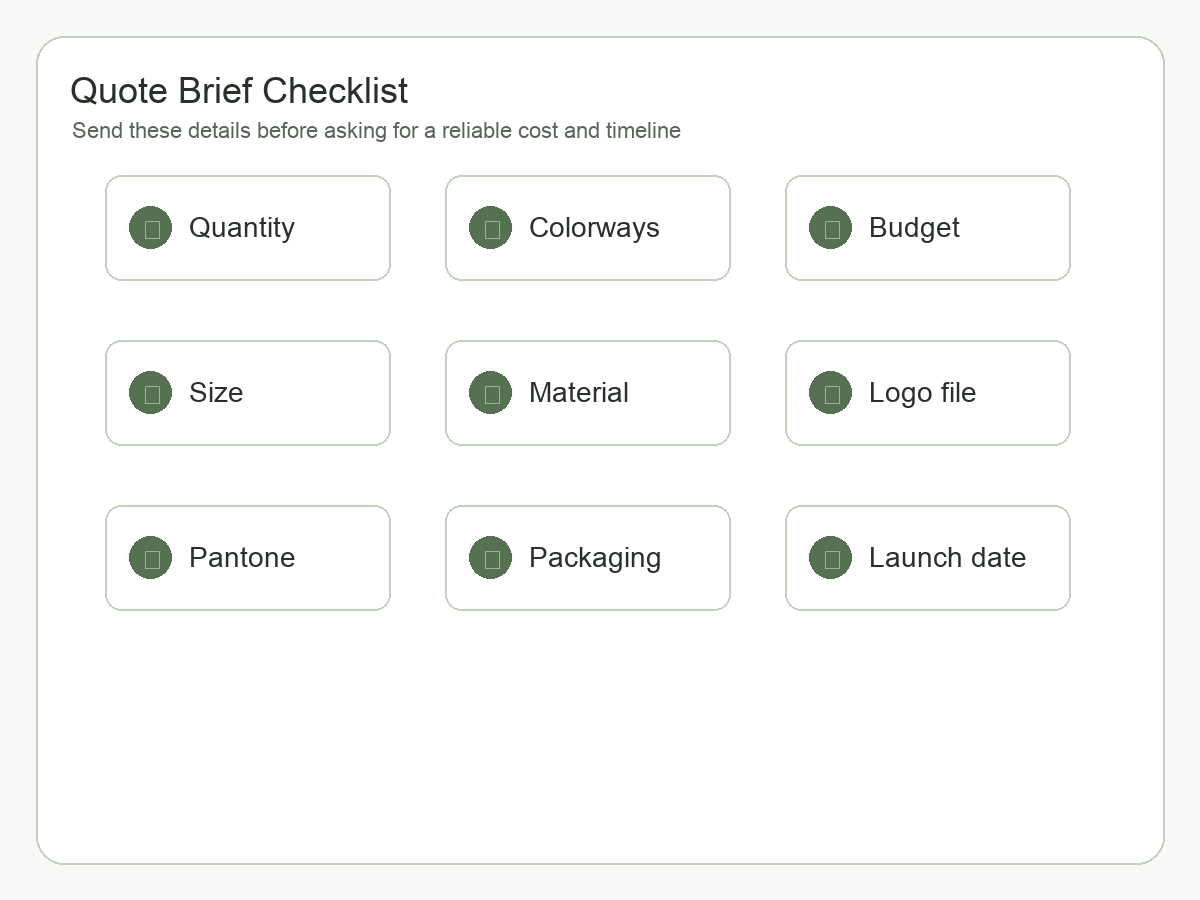
To get a useful quote, prepare quantity, colorways, target budget, bag size, material direction, logo file, Pantone references, packaging requirements, certification needs, destination market and launch date.
Without these details, a supplier can only give a rough estimate, not a reliable campaign plan. If your company has an internal vendor onboarding process, include the required supplier documents in the first RFQ so the factory can check whether the project is workable before sample revisions begin.
| Brief item | Why the supplier needs it |
|---|---|
| Target quantity | Confirms MOQ, production setup and cost direction. |
| Colorways | Helps evaluate whether two colors can be discussed within the project. |
| Target unit budget | Guides material and construction suggestions. |
| Bag size or product dimensions | Confirms fit and fabric consumption. |
| Material direction | Affects cost, handfeel, claim wording and document needs. |
| Logo file and Pantone reference | Needed for printing, embroidery, label or hardware planning. |
| Packaging method | Affects cost, packing time and carton planning. |
| Document requirements | Determines file review before sampling and order approval. |
| Target launch date | Helps build the project timeline backward. |
For brand color planning, Pantone explains how its color systems support color communication7, but the final standard should still be checked on the actual fabric and logo process.
What should be in a GWP tote campaign brief?
Before asking for a GWP tote quote, beauty brand buyers should prepare the campaign date, target quantity, tote size, material direction, logo artwork, packaging needs, destination market and required documents.
- Target quantity per style and colorway.
- Campaign type: seasonal GWP, product launch, membership gift or retail promotion.
- Target launch date or in-store date.
- Products or gift set the tote needs to carry.
- Preferred material: rPET, recycled cotton, organic cotton, canvas or other route.
- Logo artwork and Pantone color references.
- Packaging needs: hangtag, belly band, polybag, barcode sticker or gift-ready packing.
- Required documents: GRS, OEKO-TEX, BSCI, FSC packaging or testing reports.
- Shipping destination and delivery deadline.
How can Ecoicolortote support a beauty GWP tote project?
Ecoicolortote supports beauty, skincare and wellness brand buyers with tote material selection, sampling, logo process recommendations, production follow-up, QC and packaging coordination. MOQ starts from 500 pcs per style, and documentation can be discussed when applicable to the material and project scope.
For GWP campaigns, our role is not only sewing bags. We help brand buyers make production decisions before cost and timeline become a problem.
- rPET, recycled cotton, canvas and other material suggestions.
- Sample planning based on logo process complexity.
- Pantone and brand color discussion.
- Structure suggestions for product fit.
- Paper packaging, hangtag, barcode label and reduced-plastic packing coordination.
- Document coordination when applicable.
- One Sales / PM contact for project follow-up.
Beauty GWP cost, MOQ and timeline checklist
This is a planning checklist, not a customer case or buyer testimonial. A useful quote requires the same scope across suppliers.
- Program: campaign date, gift role, purchase threshold and destination market.
- Quantity: units per style, color and artwork version.
- Product fit: contents, dimensions, filled weight and desired pack-out.
- Specification: material route, construction, logo method, labels and packaging.
- Evidence: exact recycled, textile or paper-document scope required for the selected route.
- Timeline: sample approval, bulk window, inspection, packing and shipping basis.
Use Wellness & Beauty Totes for the commercial product route. Keep the comparison here focused on quote variables rather than an invented project result.
Less suitable fit for this GWP tote route
This route is less suitable for buyers who need a very small personal order, cannot confirm campaign timing, or only want the lowest possible unit price without defining material, logo, packaging and document scope.
It may also be less suitable for projects below MOQ 500 pcs per style, campaigns that require many colorways and complex trims on rush timing, or teams that want to skip sample or pre-production approval for a brand-sensitive GWP. A cost-aware GWP tote can still look strong when the brief is clear. The risk appears when gift value, product fit, packaging, launch date and approval owner are unclear, because every late decision can change cost and timeline.
Send your campaign date, target quantity, product-fit requirement, material direction, logo artwork, packaging needs and required documents. We can help check whether your MOQ, cost direction and timeline are realistic before sampling. Contact Ecoicolortote.
FAQ: GWP tote bag cost, MOQ and timeline
What should buyers confirm before sourcing GWP tote bags for beauty brands?
Buyers should confirm campaign date, target quantity, product fit, size, material direction, logo artwork, packaging needs, destination market and required documents before asking for a final quote. These details define whether the tote is a simple gift carrier, a retail-ready promotion item or a more premium launch gift.
What sample details matter most for beauty GWP tote bags?
Check material handfeel, product fit, logo color, logo placement, handle comfort, lining or closure details, packaging method and the approved pre-production sample standard. Beauty teams should place the actual product set inside the sample because bottle height, box depth and gift presentation can change the right size.
What MOQ and lead time should buyers expect for GWP tote bag projects?
Ecoicolortote starts from MOQ 500 pcs per style. Sample timing is confirmed after the material, construction, logo method, artwork, packaging and approval scope are clear; the working schedule also depends on revision speed and current capacity. Bulk lead time should be confirmed after sample approval, final artwork, packaging files, document needs and color split are locked.
Which material or certification evidence should be checked?
Check material composition, recycled or organic claim scope, OEKO-TEX where textile safety is relevant, FSC paper packaging scope, audit information and any buyer-specific document checklist. Evidence should match the selected fabric, packaging and order scope, especially if the brand plans to print claim wording on hangtags or campaign pages.
What should be included in the RFQ?
The RFQ should include quantity, color split, budget direction, tote size, product dimensions, material direction, logo file, Pantone reference, packaging, documents, destination and launch date. If the buyer has a purchase-threshold plan or store allocation, that should be shared early because it may affect pack-out and carton sorting.
What mistake causes the most rework?
The biggest mistake is adding packaging, document requirements, color changes or logo changes after the sample route is already locked. Late changes can require new quotes and samples. Beauty GWP projects are especially sensitive because launch dates, retail windows and campaign assets often leave little room for repeated sample revisions.
When should buyers contact Ecoicolortote?
Contact Ecoicolortote when your MOQ 500+ beauty, skincare or wellness GWP project needs help checking cost direction, MOQ split, material, packaging and campaign timeline before sampling. The most useful brief includes campaign date, quantity, product dimensions, artwork, packaging needs, destination and required documents.
Trademark and certification note
BSCI, Sedex, SMETA, GRS, OEKO-TEX, ISO, FSC and other certification or audit names belong to their respective organizations. This article is a buyer-side sourcing guide and does not claim that every product, material, order or shipment automatically carries every listed certification. Buyers should confirm current document validity, certificate scope, material coverage and market requirements before finalizing quotation or bulk production.
Sources
- Global Recycled Standard - recycled-content and chain-of-custody reference↩
- FTC Green Guides summary - environmental marketing claims↩
- FSC paper and packaging↩
- GS1 General Specifications - barcode and identification standards↩
- OEKO-TEX STANDARD 100 - textile product safety reference↩
- amfori BSCI audit guidance - producer audit requests↩
- Pantone color systems explained↩