Zoe Yu
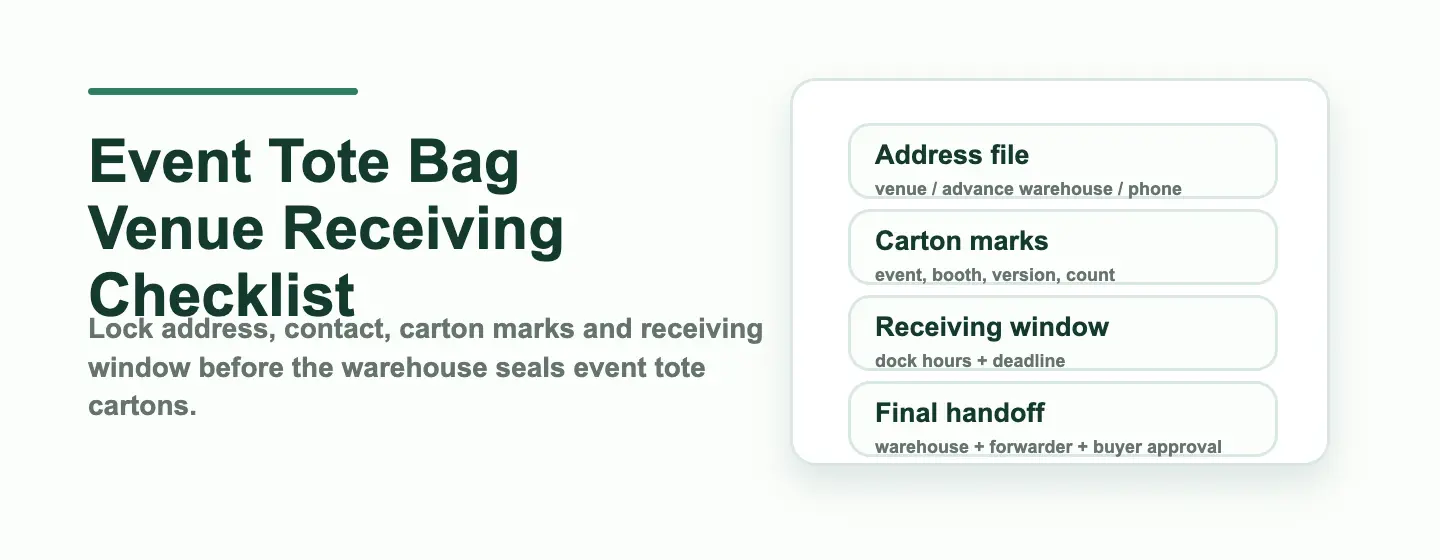
 Event tote bag venue receiving checklists help brand buyers turn fixed event dates, venue delivery rules, carton marks, contact details and packaging files into one factory-ready handoff. For MOQ 500+ custom event tote orders, receiving information should be treated as part of the production brief, not as a last-minute shipping note.
Buyer Summary
- Best for: event managers, brand campaign teams, sponsor coordinators, event agencies and B2B buyers ordering custom event totes from 500 pcs per style.
- Main decision: confirm delivery point, contact chain, receiving window, carton mark rule, packaging file, version quantities and final address list before cartons are sealed.
- Factory-side note: venue receiving details affect warehouse allocation, carton relabeling, packing lists, shipment booking and event-day handoff, so they should be reviewed before final packing.
- What to prepare: event name, venue or warehouse address, booth or room reference, delivery contact, receiving hours, packing method, carton mark format, version split and deadline.
Quick answer for venue receiving
For event tote bag orders of MOQ 500+, buyers should send the venue address, receiving contact, carton mark rule, receiving window, booth or room reference, packaging file and final address list before cartons are sealed.
The tote may be ready, but delivery can still fail when the address file arrives late, the dock contact is missing, the venue requires an appointment or carton marks do not match the booth team's setup plan. A complete receiving file reduces warehouse rework and keeps the shipment connected to the event schedule.
How is this different from trade show packing and multi-city delivery topics?
This venue receiving checklist is narrower than a full event tote delivery strategy. The custom conference tote bags product page covers the main event tote sourcing route. The conference tote planning article focuses on sponsor pack-out and event check-in. The trade show tote packing list article focuses on what goes inside exhibitor tote kits.
This article focuses on one practical handoff: how the buyer gives the factory, warehouse, forwarder and venue a receiving file that can be used before cartons are sealed. If the project ships to several cities or countries, the buyer needs a wider split-shipment plan. If the project ships to one venue, advance warehouse, booth builder or campaign location, this checklist is the right RFQ support route.
Why venue receiving details should arrive before packing
Event tote orders usually have fixed dates, so the receiving file should be locked while the warehouse can still allocate cartons, print labels and separate versions calmly.
The tote may be ready, but delivery can still fail when the address file arrives late, the dock contact is missing, the venue requires an appointment or carton marks do not match the booth team's receiving plan. Once cartons are sealed, every change becomes warehouse work: reopen cartons, split quantities, relabel boxes, rebuild packing lists or ask the forwarder to update booking information.
Ecoicolortote sees the same pattern in multi-destination projects: customers sometimes provide detailed address and packing information too late, then the warehouse and shipping team must redistribute goods under pressure. The lesson transfers directly to event venue receiving. A factory can handle complexity more calmly when the buyer provides complete delivery information before packing starts.
What should be inside an event tote venue receiving checklist?
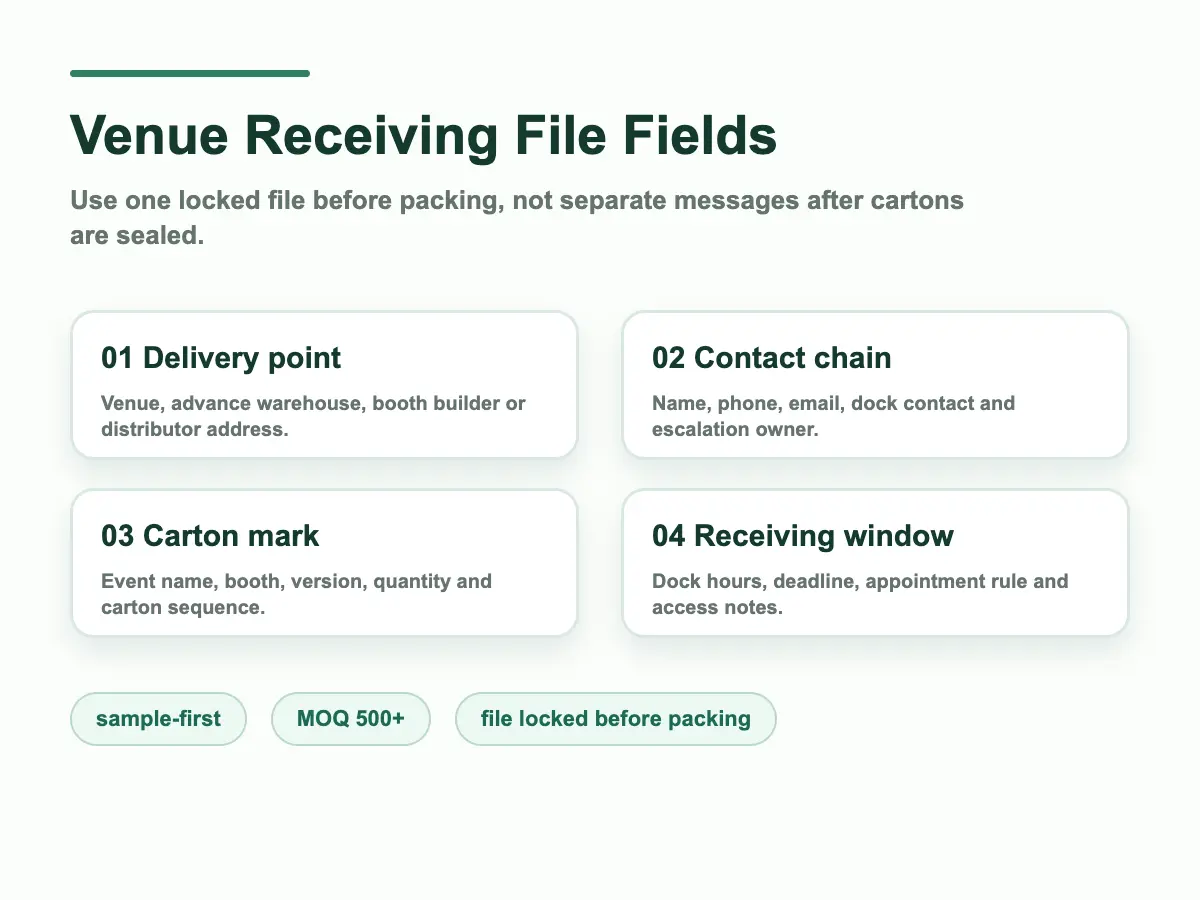
The receiving checklist should be a single locked file, not scattered across email fragments, chat screenshots and separate buyer notes.
| Receiving field | Why it matters | What to send |
|---|---|---|
| Delivery point | Prevents goods going to an office instead of the venue warehouse | Venue, advance warehouse, booth builder, hotel, distributor or 3PL address |
| Contact chain | Gives forwarder and warehouse a person to call | Name, phone, email, company, dock contact and escalation owner |
| Receiving window | Controls appointment timing and missed-delivery risk | Dock hours, deadline, appointment rule, weekend rule and access notes |
| Carton mark | Helps event staff separate versions quickly | Event name, booth or room, version, quantity, carton sequence and total cartons |
For carton and logistics label planning, GS1 logistic label guidance explains how transport labels identify logistics units1. Event buyers do not need to copy every logistics standard into a tote brief, but they should understand why carton-level identification matters when goods move through warehouses and venues.
How should buyers prepare the address and contact file?
The address file should show the final delivery point, alternate receiving point, contact owner, receiving hours and reference numbers required by the venue or forwarder.
Many event programs use an advance warehouse, booth builder, hotel storage room, distributor office or campaign agency address instead of direct venue delivery. The file should include company name, street address, city, postal code, country, phone number, contact person, receiving hours, required appointment process and any reference number the venue or forwarder needs.
For cross-border shipments, Incoterms discussions help buyer and supplier define responsibility, cost and risk transfer. ICC Incoterms rules provide common trade terms for shipment responsibility2, but they do not replace local receiving instructions. A buyer can agree on shipment terms and still miss delivery if the venue contact, dock appointment or booth reference is incomplete.
What packaging information should be locked before shipment?
Packaging information should be available before the factory starts final packing, especially when the venue team needs quick carton opening, version separation or room-level allocation.
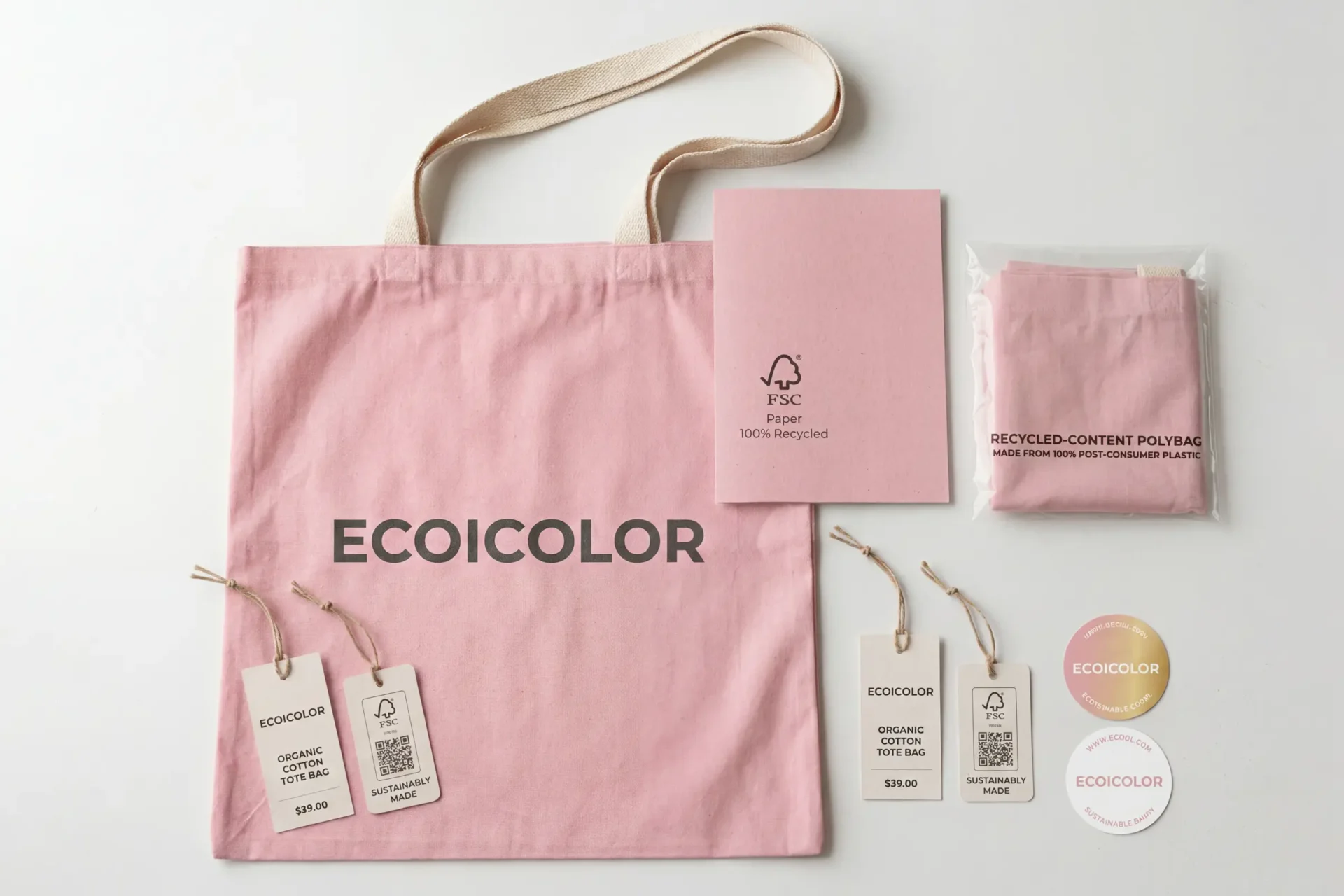
Buyers should confirm whether each tote ships flat, folded, sleeved, polybagged, carton-packed, kitted with inserts or separated by version. If a venue team must open cartons quickly, the carton mark and inner packing should match the event handoff plan. If the event has VIP, staff, sponsor or attendee versions, the warehouse should not discover that split after packing is complete.
Artwork and claim files should also be tied to the receiving file. Pantone color references can support consistent logo approval across sample and bulk review5. Textile Exchange standards should be checked against the actual material and document scope6 before any event handout uses recycled or material claim language.
For buyers planning the packaging route, Ecoicolortote already has practical references on custom tote bag packaging options and retail-ready tote bag packaging and labeling. The venue receiving checklist should pull those details into one delivery file, especially when cartons need version names, booth numbers, barcode labels or room-level allocation.

How should carton marks be written for venue receiving?
Carton marks should be simple enough for warehouse teams and event staff to read quickly, while still showing event name, destination, version and carton sequence.
A practical mark can include event name, buyer name, destination, booth or room, tote version, quantity per carton, carton number, total cartons, gross weight and any appointment reference. When one order has several versions, each version should be separated before the cartons are sealed.
International packaging symbols can reduce confusion when cartons need orientation, handling or moisture protection. ISO 780 covers pictorial marking for handling packaged goods3. For event totes, the key is not to overload cartons with symbols; the key is to make event, version and receiving information visible enough that the on-site team does not need to open every carton.
When should venue receiving details be sent?
The buyer should send the first receiving draft during quotation, update it before sample approval and lock it before final packing.
Sample timing is confirmed after the material, construction, logo method, artwork, packaging and approval scope are clear; the working schedule also depends on revision speed and current capacity. Bulk production timing is confirmed after sample approval, based on material availability, process complexity, quantity, packaging, delivery plan and current capacity. The receiving file should not wait until the last week because the warehouse may need to allocate cartons, print labels, split versions or confirm a forwarder handoff.
If a buyer needs inspection before shipment, the inspection plan should also match the event deadline. ISO 2859-1 is commonly referenced for sampling procedures in inspection discussions4. The buyer should still define the practical tote checklist: material, logo, stitching, handle strength, carton marks, quantity and packaging condition.

Best fit for this venue receiving route
This route is best for event managers, conference operations teams, brand campaign buyers, sponsor coordinators, event agencies, 3PL planners and B2B marketing teams ordering MOQ 500+ custom tote bags for a fixed venue or campaign handoff. It fits projects with a clear launch date, named brand, approved artwork owner, sample-first workflow, receiving deadline, contact chain and carton-level allocation rule.
Less suitable fit for this venue receiving route
This route is less suitable for single-piece gifts, personal shopping bags, blank stock tote requests, lowest-price-only inquiries, events with no sample time, buyers with no confirmed brand owner, or projects where the receiving address is unknown until after production. It is also not enough for complex multi-country rollouts. Those projects need a broader split-shipment plan with separate address files, version quantities, customs documents and delivery owners for each destination, plus earlier warehouse coordination.

Venue receiving control note
Before the shipment plan is approved, confirm the venue or warehouse contact, full address, receiving hours, appointment or reference number, carton labels, carton count and fallback delivery contact. These are RFQ and logistics fields; they are not a guarantee that a venue will accept an unbooked delivery.

What should buyers send before requesting a venue-ready tote quote?
Send one RFQ file with event name, quantity, delivery country, venue or warehouse address, receiving deadline, contact person, phone number, booth or room reference, packaging method, carton mark rule, version quantities, logo file, material preference, sample approval owner and inspection requirement. Buyers can combine this with custom tote bag sample evaluation and the custom tote bag RFQ checklist before production starts.
For event tote sourcing, start with custom conference tote bags. For sponsor pack-out planning, review conference tote bag planning. When the receiving file is ready, send it through the Ecoicolortote contact page.
FAQ: event tote venue receiving
What is an event tote venue receiving checklist?
An event tote venue receiving checklist is the file that tells the supplier, warehouse, forwarder and buyer where the goods go, who receives them, when they can arrive, how cartons should be marked and how quantities should be split. It connects tote production to event operations before cartons are sealed, so the order is not treated as a simple shipment after production ends.
When should the receiving file be sent to the supplier?
The first receiving draft should be sent during quotation, then updated before sample approval and locked before final packing. Waiting until shipment week creates unnecessary risk because the warehouse may need to reopen cartons, separate versions, print new marks or ask the forwarder to revise booking information after the packed goods are already staged.
What details are most often missing from event tote receiving files?
The most common missing details are delivery contact, phone number, dock appointment rule, booth or room reference, carton mark format, quantity split by version and final packaging method. Buyers often send the logo and quantity first, but the receiving details decide whether the goods can be handled smoothly on site without urgent calls.
How should carton marks be written for venue delivery?
Carton marks should include event name, buyer or campaign name, destination, booth or room reference, tote version, quantity per carton, carton number and total carton count. If a project has VIP, staff, sponsor or visitor versions, each carton group should be separated and labeled before sealing so event staff do not need to open every carton.
Can Ecoicolortote help if the address changes after packing?
Ecoicolortote can help review the change, but late address changes may require warehouse rework, relabeling or revised shipping documents. The safest approach is to send a complete receiving file before packing starts, then treat later changes as exceptions that need written confirmation from the buyer, forwarder and receiving contact before release.
How long should buyers allow for event tote production?
Sample timing is confirmed after the material, construction, logo method, artwork, packaging and approval scope are clear; the working schedule also depends on revision speed and current capacity. Bulk production timing is confirmed after sample approval, based on material availability, process complexity, quantity, packaging, delivery plan and current capacity. Event buyers should add buffer for carton marking, inspection, freight booking, receiving appointments and possible venue rules before the event date.
Is this checklist only for conferences?
No. The same receiving logic can support brand activations, trade shows, university events, corporate onboarding, retail launch events, nonprofit campaigns and partner gifts. The key is whether the tote order has a fixed handoff point, delivery deadline, contact chain and carton-level allocation requirement that must be understood before goods leave the factory.
Buyer verification links
For trust review, start with the Ecoicolortote company and factory overview, then use the materials hub to compare fabric and claim scope. If the project direction is clear, the related conference and event tote product page gives the commercial route for the next RFQ step.
Start your event tote venue receiving review
Send Ecoicolortote your event name, quantity, delivery point, receiving contact, carton mark rule, version split, packaging method, logo file, sample deadline and delivery date. The team can review whether the brief is ready for quotation, sample approval, production and venue shipment.