Zoe Yu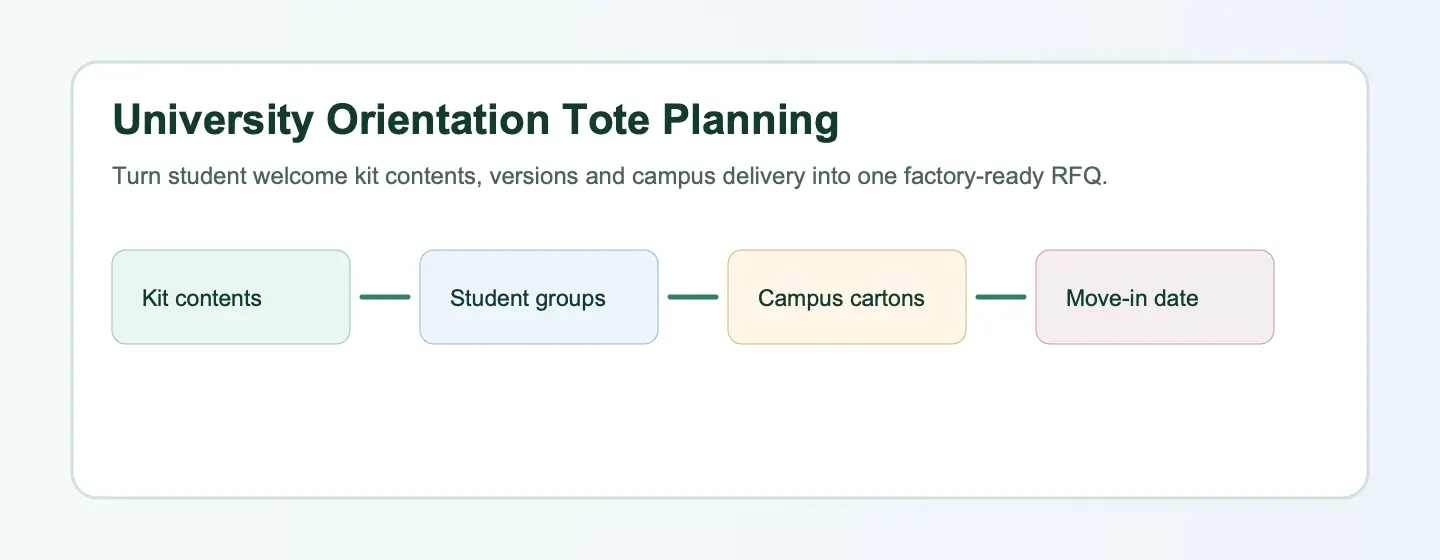
Buyer Summary
For MOQ 500+ university orientation tote bags, buyers should define student group versions, kit contents, logo files, campus delivery point, reserve stock, carton labels and sample approval before bulk packing. Ecoicolortote has GWP tote pack-out experience rather than a named university orientation case, so this route adapts proven gift campaign workflow to student welcome kits, campus events and enrollment marketing programs.
Quick answer for university orientation tote planning
For student welcome kits, start with the kit matrix rather than the bag style alone. Confirm student groups, kit contents, logo files, campus receiving points, carton labels, reserve stock and sample approval before bulk packing. This keeps procurement, student affairs, admissions, bookstore and warehouse teams working from the same file.
How is this different from conference tote and brand campaign pages?
University orientation tote bags are related to event totes, but the buyer task is different. The custom conference tote bags product page covers attendee bags and event RFQs. The conference tote planning article covers sponsor pack-out and venue delivery. The custom tote bags for brand campaigns page covers broader marketing uses. Orientation totes focus on student group versions, campus handoff, welcome-kit contents, move-in timing and reserve stock for late registration.
If the buyer is planning a general conference giveaway, start with the conference product route. If the buyer needs a student welcome kit for first-year, graduate, international or staff programs, use this route to prepare a sharper RFQ.
Why orientation tote planning should start with the welcome kit
A university orientation tote is not only a blank campus bag. It often carries printed guides, maps, coupons, department inserts, lanyards, notebooks, sponsor cards, campus resource sheets or retail partner items. The tote must fit those contents, look aligned with the school identity and arrive before student check-in. If contents, versions or delivery points arrive late, the warehouse may need to reopen cartons or rebuild pack-out instructions.
Ecoicolortote does not have a named university orientation tote customer case that can be cited. The useful experience comes from GWP tote pack-out: matching contents, logo files, sample approval, packaging and carton details before bulk production. That same workflow helps campus teams avoid last-minute confusion around versions, inserts and move-in dates.
What should be inside an orientation tote kit matrix?
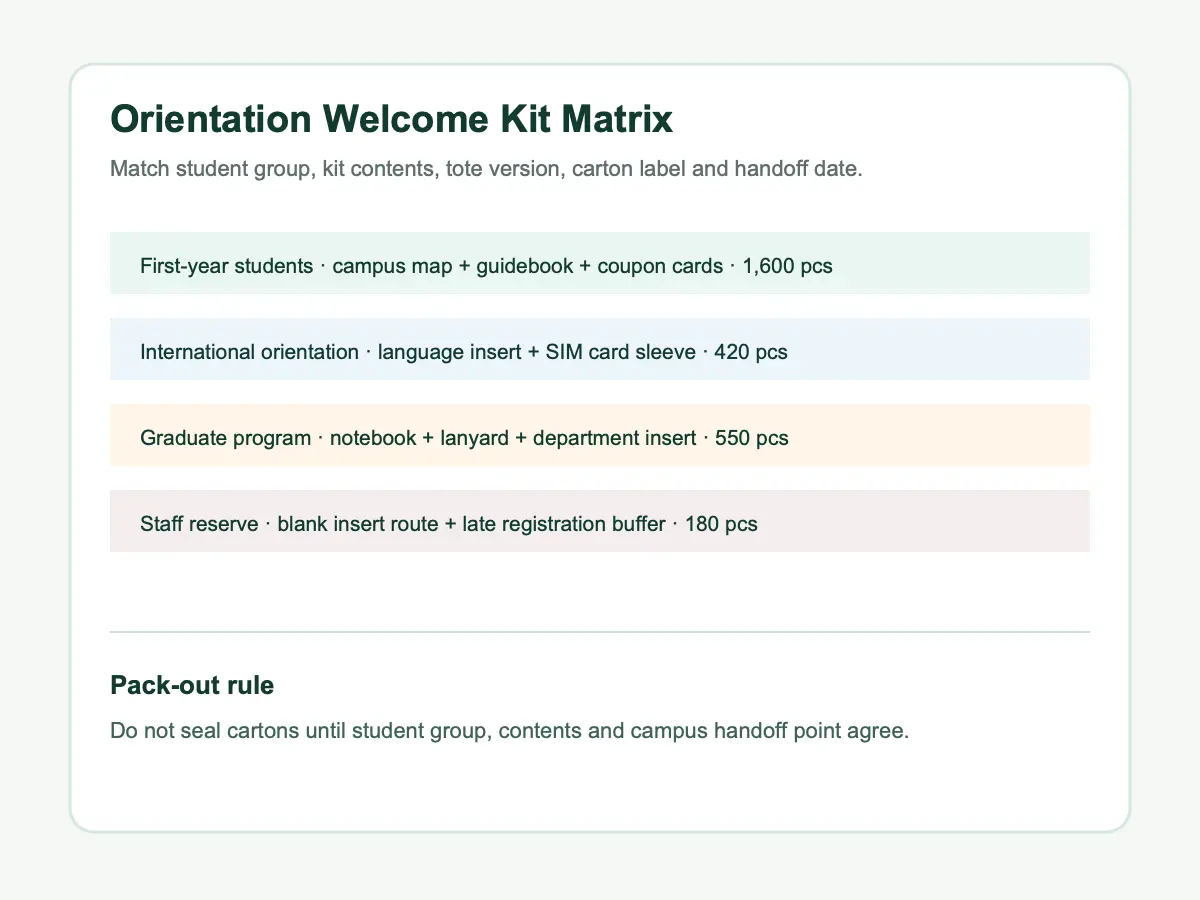
The kit matrix should show every student group, tote version, quantity, contents list, insert language, logo owner, carton mark, campus delivery point and reserve stock rule. The goal is to make the project readable for procurement, student affairs, admissions, the supplier, warehouse and campus receiving team. A single total quantity is not enough when different groups receive different inserts or pickup locations.
| Kit field | Why it matters | What to send |
|---|---|---|
| Student group | Controls version and contents | First-year, transfer, international, graduate, staff or family program |
| Contents list | Controls tote size and packed shape | Guidebook, map, lanyard, notebook, coupon card, insert or sample item |
| Campus handoff | Prevents late receiving confusion | Residence hall, check-in desk, department office, bookstore or event hall |
| Reserve stock | Supports late registration and damaged kits | Reserve quantity, storage owner, release rule and carton name |
For carton and logistics labels, GS1 logistic label guidance explains how logistics units can be identified during movement1. Campus projects do not need complex logistics labels for every carton, but group and location names should be clear enough for receiving teams.
How should buyers check contents fit?
Contents fit should be reviewed before the buyer approves tote size. A guidebook may bend in a narrow bag, a notebook may make the tote lean, a lanyard may tangle with inserts, and a retail coupon packet may cover the logo if placed incorrectly. Buyers should send item dimensions, weight, quantity per kit and whether the factory packs contents or only supplies empty totes.
Buyers can use custom tote bag sample evaluation to review filled samples. If the program includes sponsor cards or bookstore coupons, GS1 barcode standards help frame barcode and identification discussions2, especially when leftover stock later moves into a campus store or department inventory.
How should student group versions be controlled?
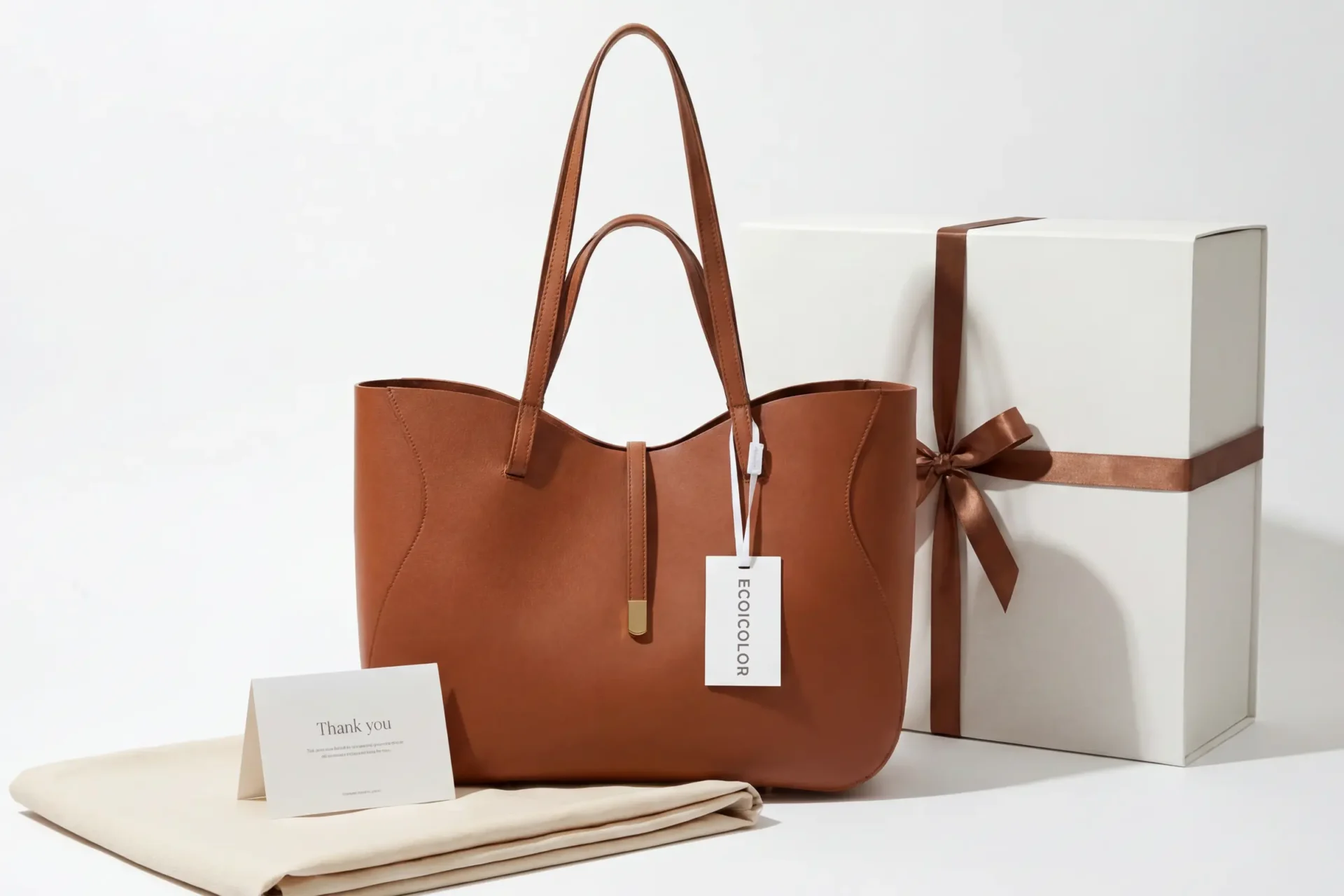
Orientation programs often have several versions: first-year students, transfer students, international students, graduate students, families, staff, volunteers or department-specific groups. Each version should use the same name across artwork, kit matrix, sample photo, packing list and carton label. If the tote body is the same but the inserts change, the version name still matters because the warehouse must pack and label the right carton group.
If different versions use different colors or school marks, Pantone color references can help keep color approval consistent across sample and bulk review6. Buyers should still approve the actual sample photo or physical sample because fabric texture, logo method and lighting can affect final appearance.
What should buyers confirm about school logo files?
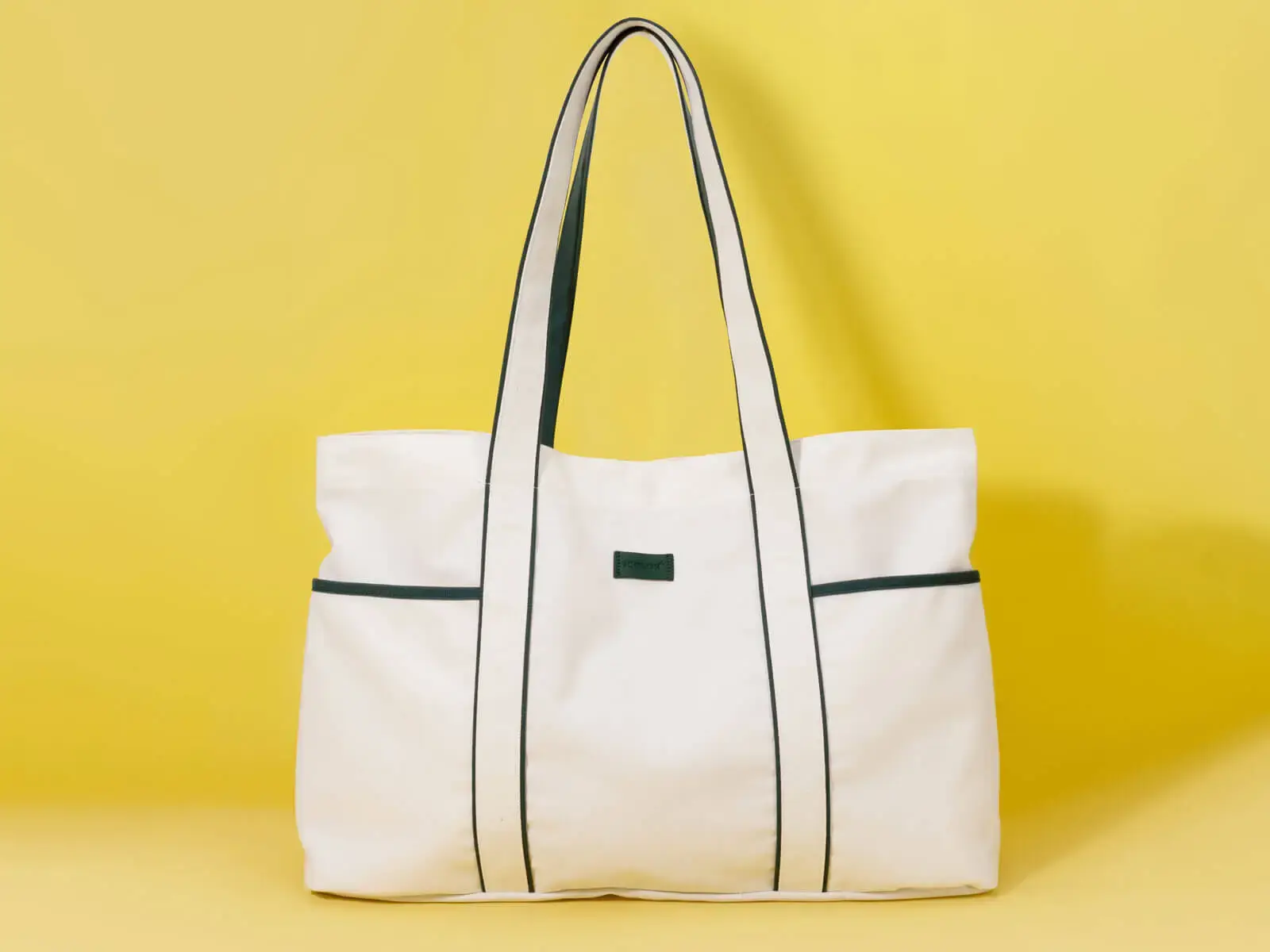
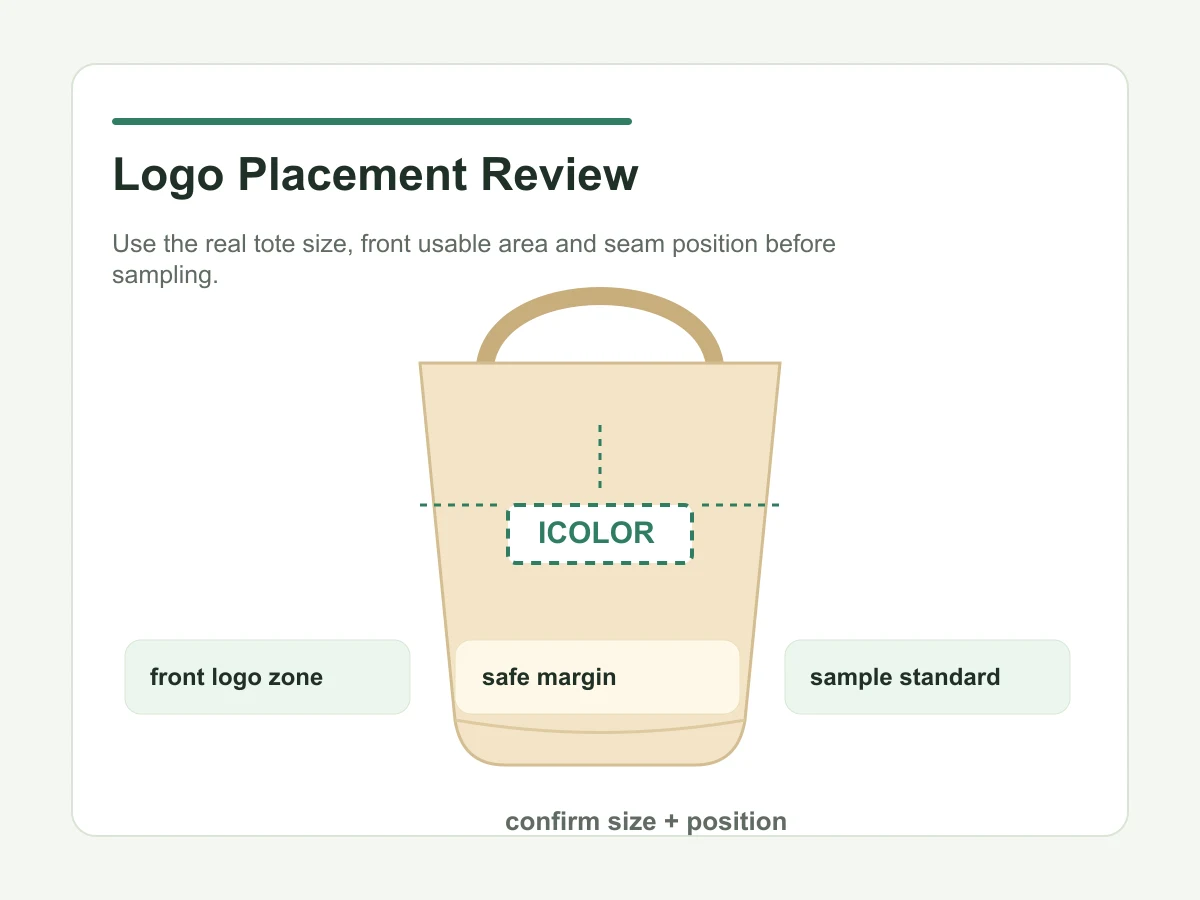
Logo approval should include final vector artwork, color reference, print size, placement, approval owner and whether school marks can be adjusted for production. If the orientation tote uses a school crest, department mark, sponsor logo or QR code, the buyer should clarify which marks are approved for external production and which files are old versions. The supplier should not guess from mixed email attachments.
For artwork preparation, review logo file requirements for custom tote bags and logo placement on custom tote bags. If buyers are choosing between print methods, screen printing vs embroidery for tote bags explains common tradeoffs before sampling.
How should campus delivery and carton marks be planned?
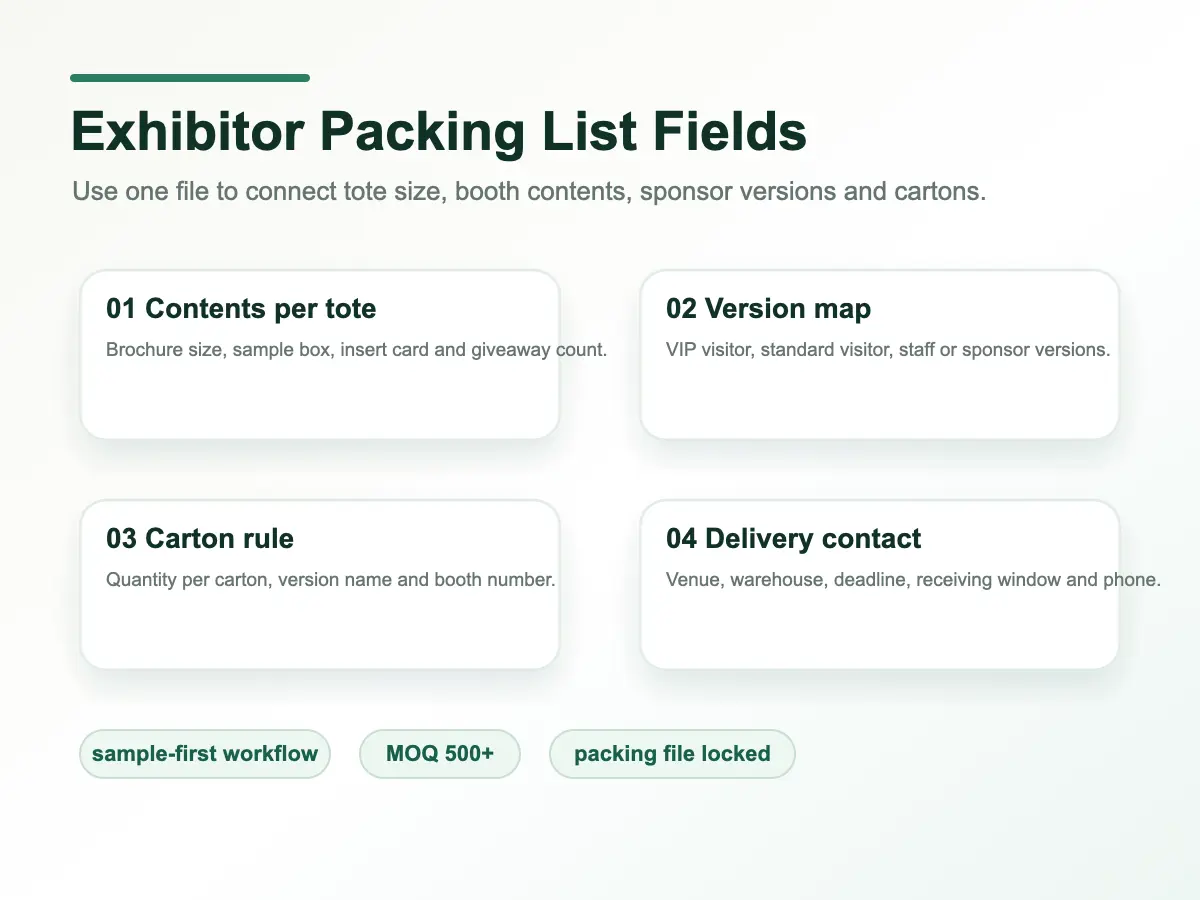
Campus delivery should be locked before final packing. A university may need cartons sent to a central receiving dock, student center, residence hall, bookstore, department office, event hall or off-campus warehouse. Carton marks should include school program name, student group, version, quantity per carton, carton number, total cartons, delivery contact and handoff date. Late address changes can force relabeling and warehouse rework.
Shipment terms should be agreed separately from campus receiving instructions. ICC Incoterms rules provide common language for shipment responsibility3, but they do not tell the campus team which cartons belong at which check-in desk. For handling marks, ISO 780 covers pictorial marking for handling packaged goods4.
When should orientation tote details be locked?
Send the first kit matrix during quotation, update contents before sample approval, and freeze carton split before final packing. Sample timing is confirmed after the material, construction, logo method, artwork, packaging and approval scope are clear; the working schedule also depends on revision speed and current capacity. Bulk production timing is confirmed after sample approval, based on material availability, process complexity, quantity, packaging, delivery plan and current capacity. Campus buyers should add buffer for school approval cycles, move-in dates, freight booking, carton labels and late registration reserve stock.
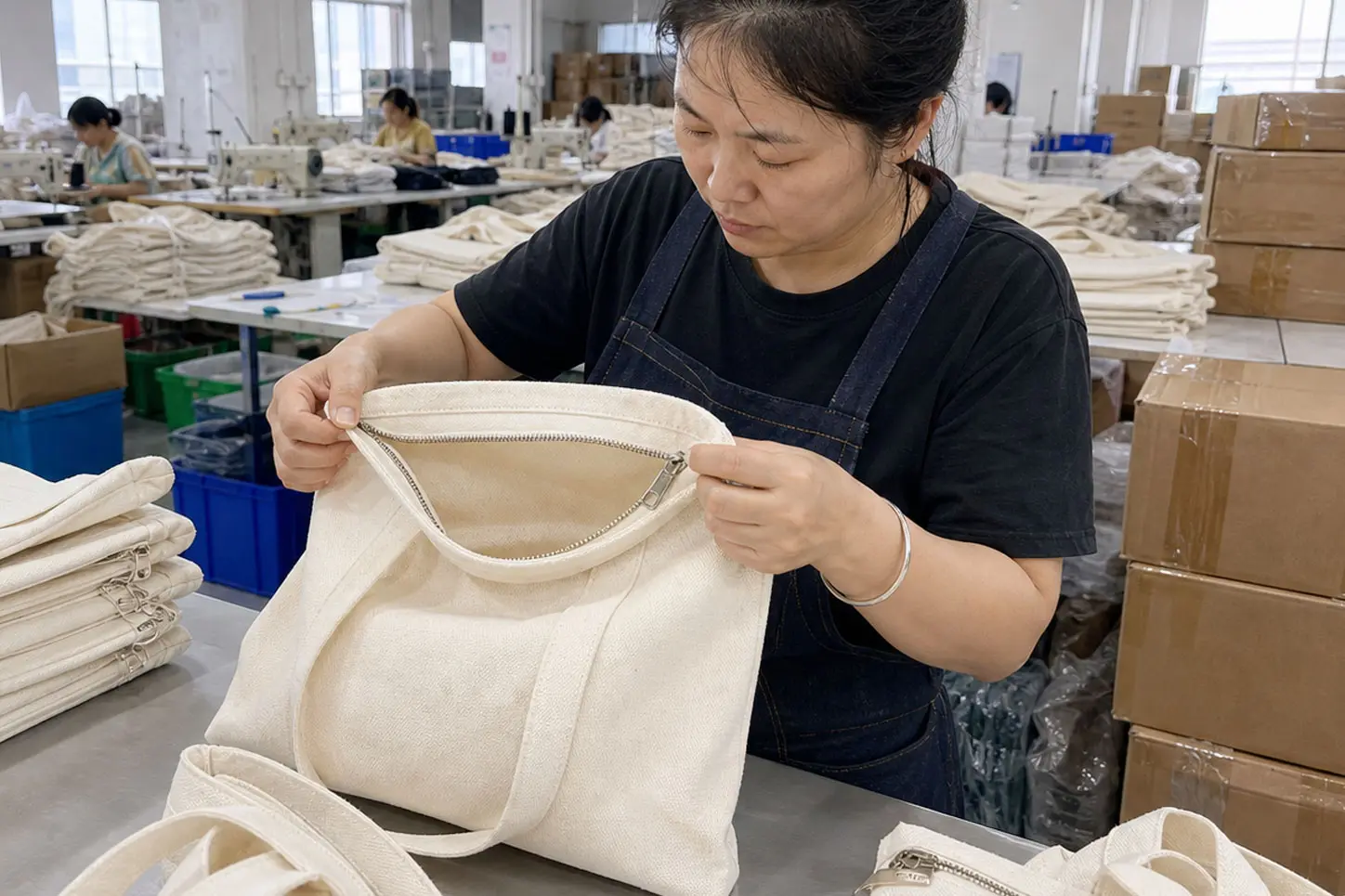
If inspection is required before shipment, ISO 2859-1 sampling procedures are commonly referenced for inspection discussions5. The practical orientation tote checklist should still cover fabric, logo, stitching, handle strength, version labels, packed condition and carton quantity.

Best fit for this university orientation tote route
This route is best for university procurement teams, student affairs coordinators, enrollment marketing teams, campus event planners, orientation program managers, bookstore operations teams, education marketing agencies and GWP buyers adapting pack-out workflows to student welcome kits. It fits MOQ 500+ projects with a named institution, fixed orientation date, student group versions, approved school artwork, sample-first workflow, contents list, campus handoff point and reserve stock rule. It is especially useful when first-year, transfer, international, graduate or staff groups receive different inserts, and when cartons must be separated before move-in or check-in week. It also fits campus teams that need one approval file shared by procurement, admissions, student affairs, bookstore and supplier contacts.
Less suitable fit for this university orientation tote route
This route is less suitable for one-off personal school gifts, blank campus bookstore shopping bags, lowest-price-only quote requests, urgent orientation orders with no sample time, or buyers who cannot confirm school artwork and delivery details before packing. It is also too narrow for projects where the main issue is a full multi-country shipment plan or complex customs paperwork. Those files should be solved before the orientation kit matrix is released.
What should buyers send before requesting an orientation tote quote?
Send one RFQ file with school or program name, total quantity, student group split, orientation date, delivery market, campus receiving point, contents list, item dimensions, material preference, logo file, print method, color reference, sample approval owner, packaging method, carton mark rule, reserve stock quantity and inspection requirement. If the tote is part of a larger student welcome kit, specify whether Ecoicolortote supplies only the bag or supports packing details for inserted items.
For base event sourcing, review custom conference tote bags. For packaging decisions, review custom tote bag packaging options. When the kit matrix is ready, send it through the Ecoicolortote contact page.
FAQ: university orientation tote bags
What is a university orientation tote bag?
A university orientation tote bag is a custom tote used to hold student welcome kit contents such as guidebooks, campus maps, lanyards, department inserts, sponsor cards, coupons or event materials. For B2B buyers, the key is not only the bag style but also student group versions, pack-out, carton labels and campus handoff timing.
What should buyers include in an orientation tote RFQ?
Buyers should include total quantity, student group split, orientation date, delivery market, tote size target, contents list, item dimensions, school logo file, color reference, packaging method, carton mark rule, campus receiving point and sample approval owner. These details help the supplier quote the right tote structure and avoid late packing changes.
Can Ecoicolortote use GWP experience for orientation totes?
Yes, the workflow can transfer when the project needs contents fit, version control, sample approval, packaging and carton labels. Ecoicolortote has GWP tote pack-out experience rather than a named university orientation tote case, so buyers should treat the examples here as practical planning guidance instead of a claim about a specific university client.
How should student group versions be handled?
Each student group should have one clear version name across artwork files, kit matrix, sample photos, packing list and carton labels. First-year, transfer, international, graduate, staff or family versions may share the same tote body, but different inserts or quantities still need separate packing and carton instructions.
How long do orientation tote samples and bulk production take?
Sample timing is confirmed after the material, construction, logo method, artwork, packaging and approval scope are clear; the working schedule also depends on revision speed and current capacity. Bulk production timing is confirmed after sample approval, based on material availability, process complexity, quantity, packaging, delivery plan and current capacity. Campus buyers should add buffer for school approval cycles, move-in deadlines, carton labels and freight booking.
Are sample fees refundable for university orientation totes?
For qualified bulk orders of 1,000 pieces or more, standard sample fees can normally be credited or refunded against the order value. Buyers should confirm before sample work starts because special molds, hardware plates, trim tooling, unusual packaging, repeated sample changes or school-specific accessories may not be refundable.
How can buyers reduce campus delivery mistakes?
Buyers can reduce delivery mistakes by locking the campus receiving point, contact person, delivery window, carton mark format, student group version names and reserve stock carton labels before final packing. If those details arrive after cartons are sealed, the warehouse may need to reopen goods, relabel cartons or rebuild the packing list.
Sourcing reference links
For a faster sourcing decision, buyers can check who Ecoicolortote is, review the material routes available for custom tote projects, and compare this request with the conference and event tote product page. This keeps the inquiry focused on a real B2B project instead of a generic tote question.
Sources
- GS1. Logistic Label Guideline. https://www.gs1.org/standards/gs1-logistic-label-guideline/1-3 ↩
- GS1. Barcode standards. https://www.gs1.org/standards/barcodes ↩
- International Chamber of Commerce. Incoterms rules. https://iccwbo.org/business-solutions/incoterms-rules/ ↩
- ISO. ISO 780 packaging pictorial marking for handling of goods. https://www.iso.org/standard/87246.html ↩
- ISO. ISO 2859-1 sampling procedures for inspection by attributes. https://www.iso.org/standard/85464.html ↩
- Pantone. Color systems for design and production reference. https://www.pantone.com/ ↩