Zoe Yu
 Roadshow tote bag inventory planning helps brand campaign teams turn one total tote order into a city-by-city allocation file. For MOQ 500+ roadshow tote programs, buyers should plan inventory by city, event date, tote version, reserve stock, carton label and reorder trigger before bulk packing starts.
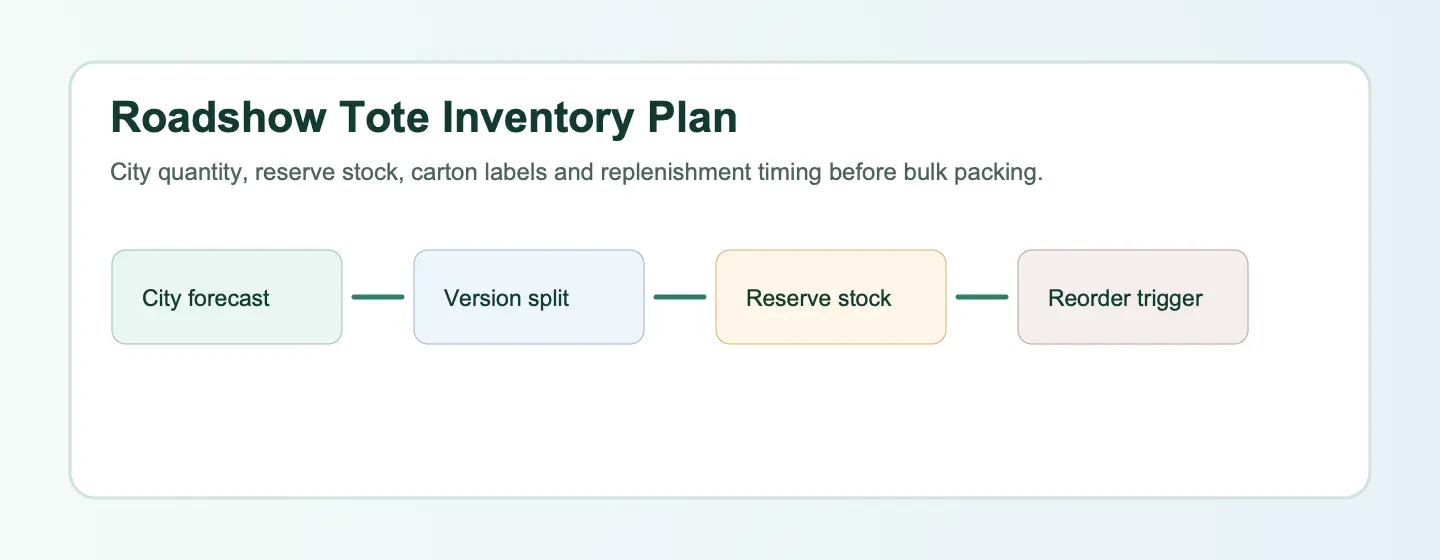
Buyer Summary
- Best for: brand campaign managers, field marketing teams, retail activation teams, regional roadshow planners and B2B buyers planning custom tote bags for several campaign stops.
- Main decision: lock city allocation, version quantity, reserve stock, carton marks, packaging method, delivery sequence and leftover stock rules before cartons are sealed.
- Factory-side note: Ecoicolortote has GWP tote workflow experience rather than a named roadshow tote case, so this route adapts gift campaign quantity control to multi-stop marketing campaigns.
- What to prepare: city list, event dates, expected audience, tote version names, quantity by stop, reserve rule, sample approval owner, carton label rule and receiving deadline.
Quick answer for roadshow tote inventory planning
For MOQ 500+ roadshow tote bag programs, buyers should plan inventory by city, event date, tote version, reserve stock, carton label and reorder trigger before bulk packing.
A roadshow tote program can fail even when the tote itself is correct. One city may run out of bags, another may hold unused stock, VIP versions may mix with standard attendee versions, or the team may discover too late that carton labels do not match the event calendar.
How is this different from conference tote and reorder planning pages?
Roadshow tote inventory planning sits between event tote sourcing and reorder planning. The custom conference tote bags product page covers attendee bags, registration programs and event RFQs. The conference tote planning article covers sponsor pack-out and event delivery. The retail tote bag reorder planning article covers repeat ordering across a season.
Roadshow inventory planning is narrower: it allocates one campaign batch across several stops before the first carton leaves the factory. If the buyer needs a single conference bag, start with the conference product route. If the buyer already has a campaign and needs city-by-city quantity control, use this roadshow route before packing and freight booking.
Why roadshow tote inventory should be planned before packing
Once cartons are sealed, every inventory change becomes warehouse work: reopen, recount, relabel, split, repack or update the packing list.
Ecoicolortote has experience with GWP tote workflows where quantity, contents, version names and packaging details need to match before sample and bulk release. That logic transfers to roadshow campaigns because the operational question is similar: how many totes should be packed for each stop, which version belongs there, and how much reserve stock should remain available.
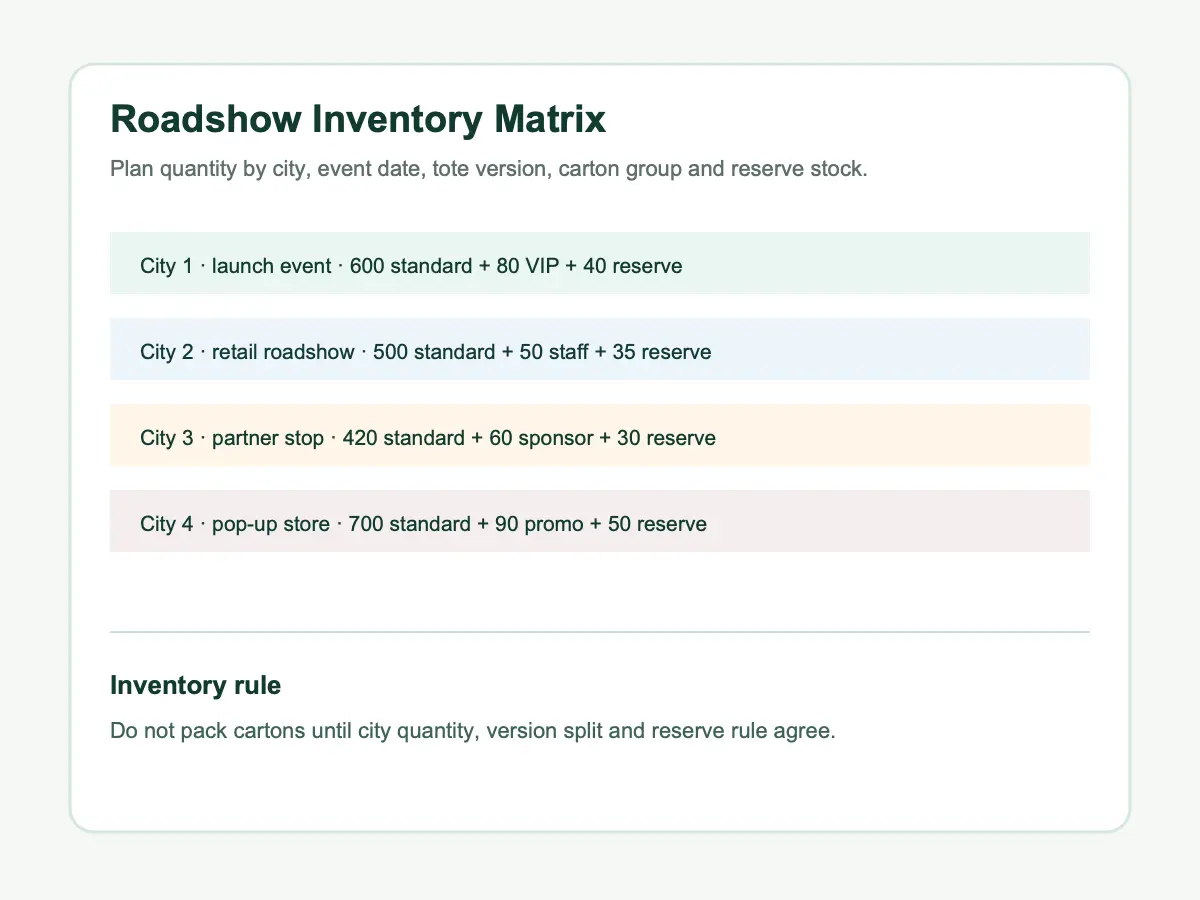
What should be inside a roadshow tote inventory matrix?
The inventory matrix should be the source of truth for the campaign, not a rough internal estimate that changes after packing starts.
| Inventory field | Why it matters | What to send |
|---|---|---|
| City and date | Controls packing priority and delivery timing | Roadshow stop, event date, handoff deadline and receiving point |
| Version quantity | Prevents VIP, staff or standard tote mix-ups | Quantity by tote version, language, market or sponsor group |
| Reserve stock | Protects against demand changes and sample damage | Reserve percentage, owner, storage point and release rule |
| Carton group | Helps warehouse ship the right stock first | Carton mark, carton count, version name and city code |
For carton and logistics labels, GS1 logistic label guidance explains how logistics units can be identified during movement1. Roadshow buyers do not need a complex label standard for every tote project, but carton-level city and version names should be clear.
How should buyers forecast quantity by city?
Start with expected foot traffic, invite list, staff count, VIP appointments, partner allocation, press kits, retailer meetings and leftover policy.
Then separate demand into hard quantity and flexible reserve. A city with a major launch event may need more reserve stock than a smaller partner meeting. A pop-up retail stop may need barcode or hangtag control if leftover totes move into store inventory. Forecasting should happen before quotation is finalized because extra versions, split cartons, hangtags and repacking can affect cost, sample review and production planning.
For broader project pricing, buyers can review custom tote bag MOQ and sample lead time and custom tote bag quote scope and cost drivers.
How should tote versions be controlled across a roadshow?
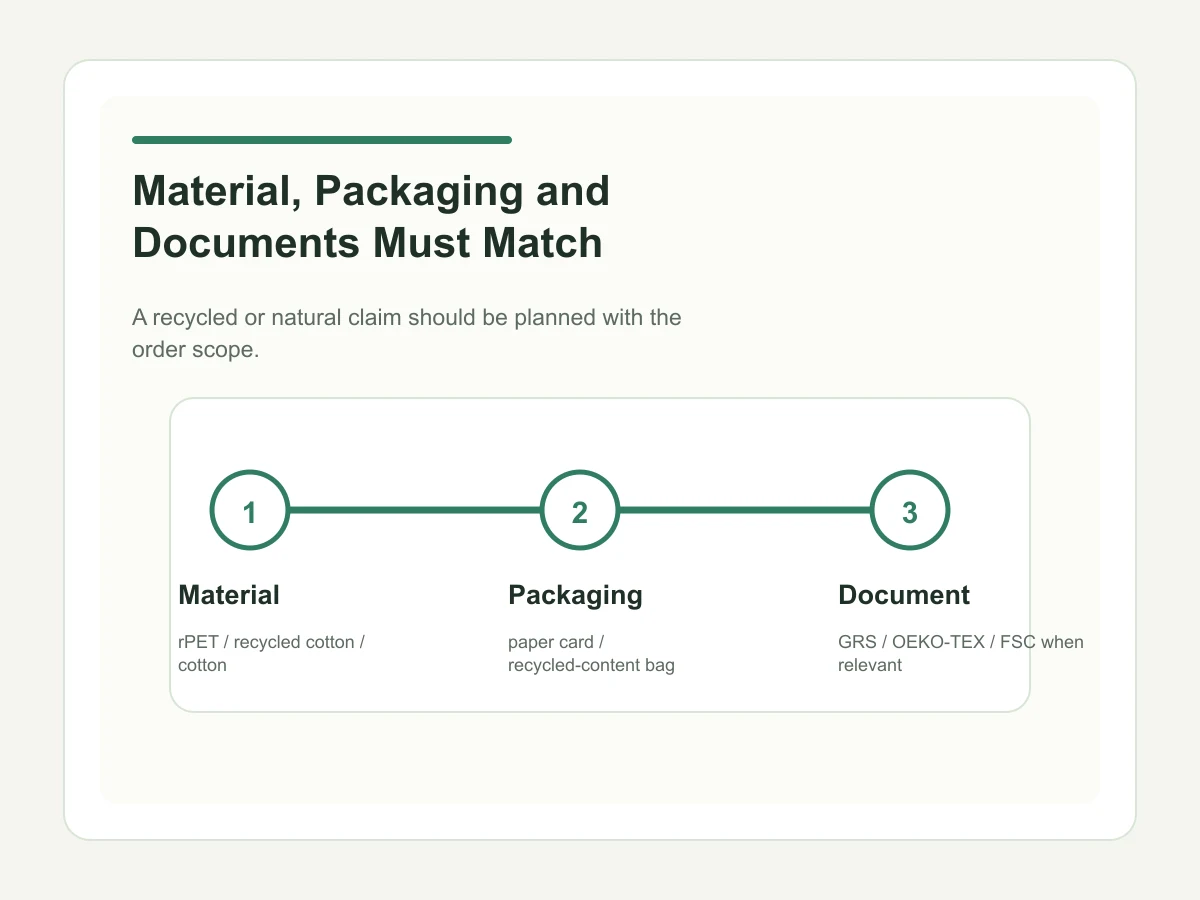
Each roadshow version should have one name across the artwork file, sample approval file, inventory matrix, carton label and packing list.
Roadshow campaigns may include standard attendee totes, VIP totes, staff totes, partner totes, retailer totes, media totes or market-language versions. If the same tote body uses different inserts or hangtags, the matrix should still show that split so the warehouse can pack correctly.
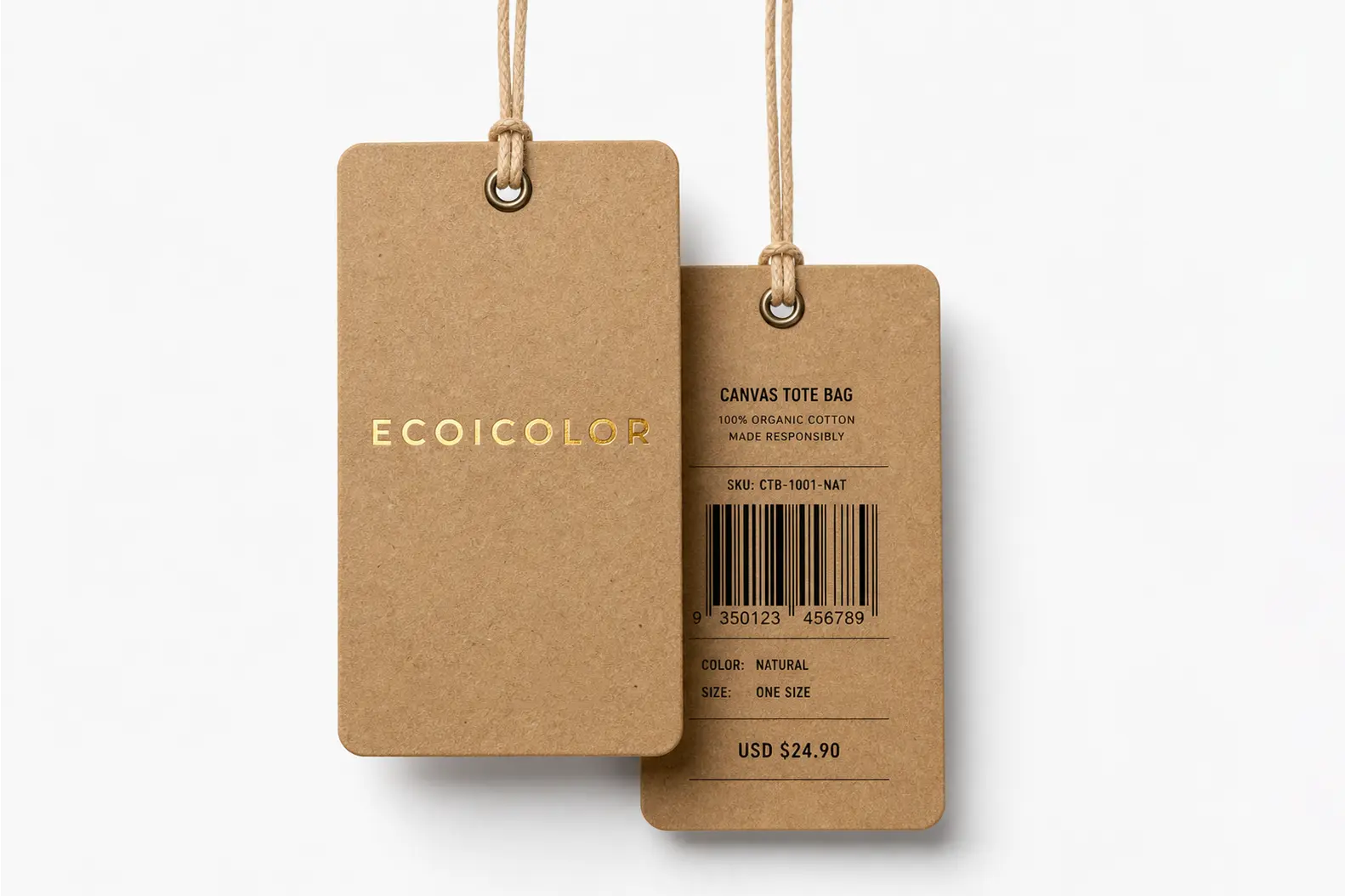
For barcode or identification discussions, GS1 barcode standards help frame product identification and scanning conversations2. If roadshow leftovers may enter retail, store stock or sample tracking, barcode and hangtag files should be controlled before packing. If each city uses a different campaign color or sponsor accent, Pantone color references can help align artwork approval across versions6.
How much reserve stock should buyers plan?
Reserve stock depends on audience uncertainty, campaign importance, shipping risk, city sequence, repacking time and whether unused totes can be reused later.
A practical reserve may be held centrally, sent with each city shipment, or split between first stops and later stops. The wrong reserve rule creates two opposite problems: one city runs short while another city carries dead stock. Reserve planning should also consider shipment responsibility. ICC Incoterms rules provide common language for shipment responsibility3, but they do not decide how many totes should be held back for demand changes. The buyer should define that rule in the inventory matrix.
How should carton labels support roadshow inventory?
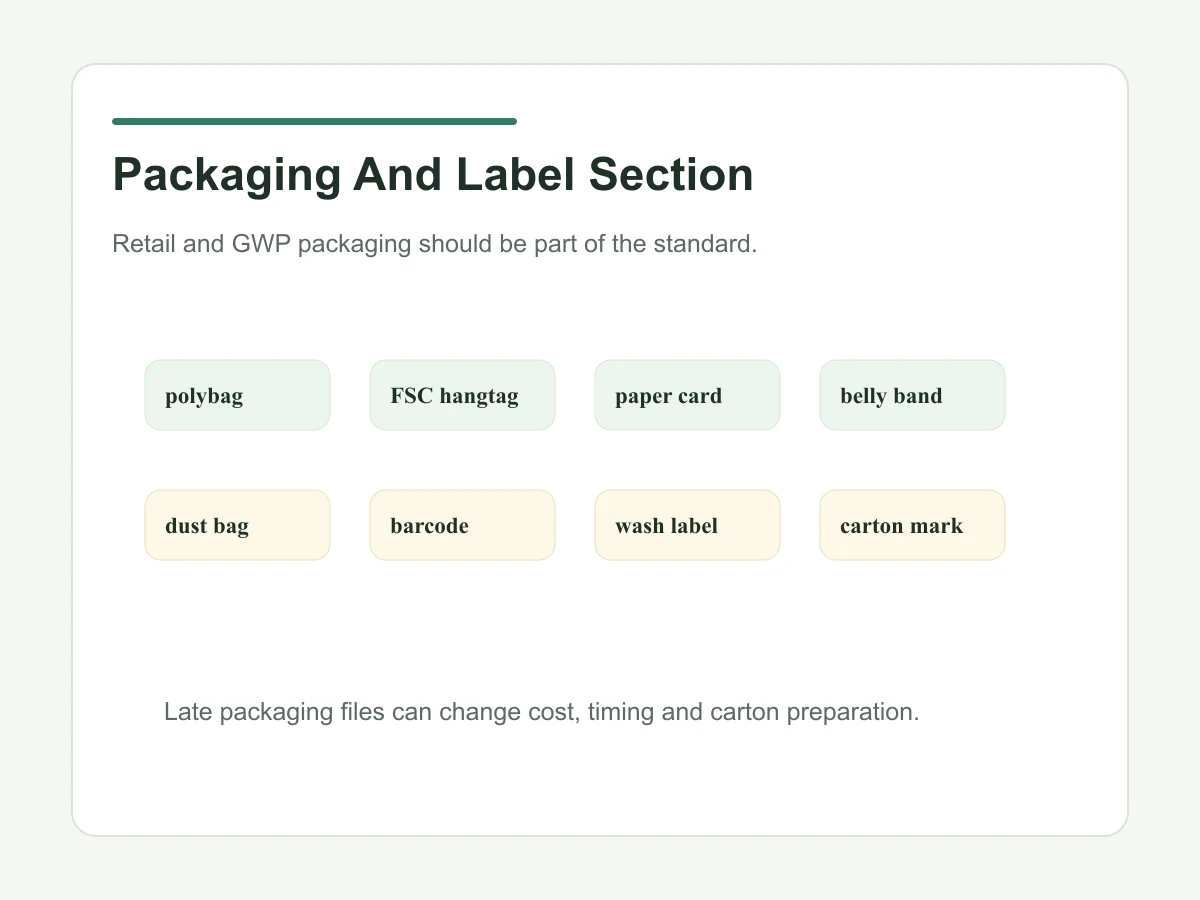
Carton labels should let the warehouse and campaign team identify city, version and release order quickly.
A practical mark may include campaign name, city code, event date, tote version, quantity per carton, carton number, total carton count, reserve status and receiving contact. If roadshow stops are close together, carton sequence matters because the wrong cartons shipped first can leave the next city short. For handling marks, ISO 780 covers pictorial marking for handling packaged goods4. For roadshow totes, the most important practical mark is still clear city and version identification.
Buyers can also review retail-ready tote bag packaging and label systems before final packing.
When should roadshow inventory be locked?
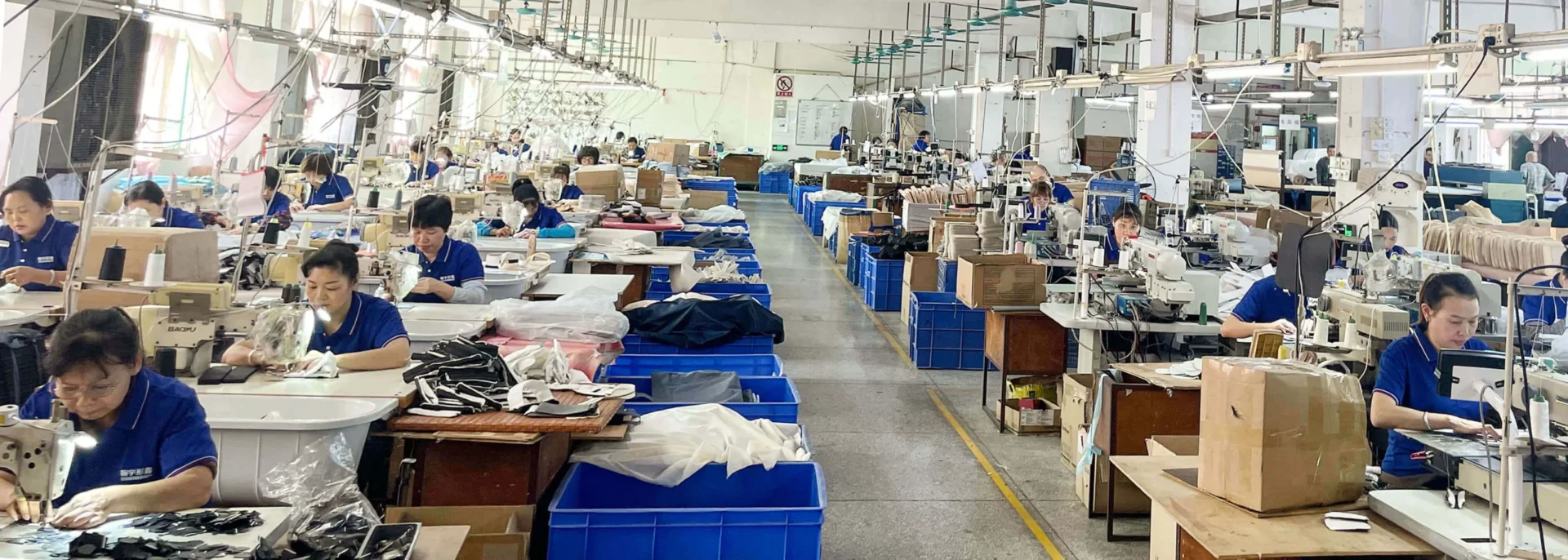
Send the first city forecast during quotation, update version quantity before sample approval, and freeze carton split before final packing.
Sample timing is confirmed after the material, construction, logo method, artwork, packaging and approval scope are clear; the working schedule also depends on revision speed and current capacity. Bulk production timing is confirmed after sample approval, based on material availability, process complexity, quantity, packaging, delivery plan and current capacity. Inventory changes after packing may require recounting, relabeling or rebuilding the packing list. If inspection is needed before shipment, ISO 2859-1 sampling procedures are commonly referenced for inspection discussions5The roadshow checklist should still define practical tote checks: logo, material, stitching, handle strength, version labels, carton count and packed condition.

Best fit for this roadshow inventory planning route
This route is best for brand campaign managers, field marketing teams, regional event planners, retail activation teams, pop-up store operators, B2B roadshow coordinators, GWP buyers adapting gift workflows to tours, and procurement teams ordering MOQ 500+ custom tote bags for multiple campaign stops. It fits projects with a named brand, launch window, city list, sample-first workflow, version quantity split, reserve stock rule and final packing owner.
Less suitable fit for this roadshow inventory planning route
This route is less suitable for blank stock tote requests, single-piece gifts, personal shopping bags, lowest-price-only inquiries, projects with no brand owner, or events with no time for sample and packing review. It is also too narrow for buyers whose main challenge is artwork approval, venue receiving or customs paperwork. Those projects should solve the blocking file first, then bring inventory planning into the final RFQ pack.
Roadshow inventory control note
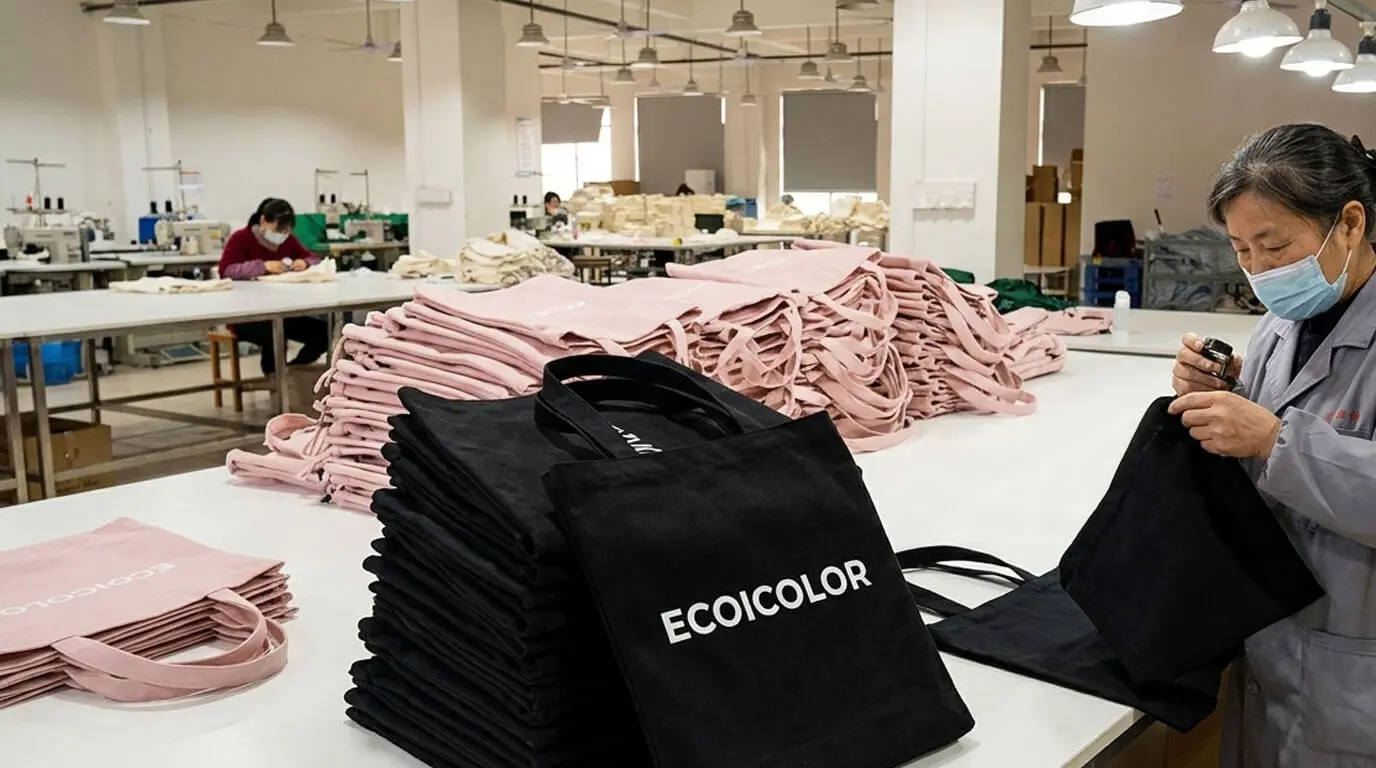
Set the event sequence, quantity per stop, replenishment buffer, return route and carton identification before bulk packing. Keep the buffer as a planning field, not a universal percentage.
What should buyers send before requesting a roadshow tote quote?
Send one RFQ file with campaign name, total quantity, city list, event dates, expected audience, tote version names, quantity by city, reserve stock rule, material preference, logo file, sample approval owner, packaging method, carton mark rule, delivery market and receiving deadline. If leftover stock may enter retail, include barcode, hangtag or store allocation requirements before sample work starts.
For the base event route, review custom conference tote bags. For broader campaign sourcing, review custom tote bags for brand campaigns. For packaging decisions, review custom tote bag packaging options. When the inventory matrix is ready, send it through the Ecoicolortote contact page.
FAQ: roadshow tote bag inventory planning
What is roadshow tote bag inventory planning?
Roadshow tote bag inventory planning is the process of assigning tote quantities by city, date, version, reserve stock and carton group before production packing. It turns one total order quantity into a usable campaign file so the factory, warehouse, buyer and field team know which totes go to each stop and which quantities are held back.
What should buyers include in a roadshow tote inventory matrix?
Buyers should include city, event date, delivery point, expected audience, tote version, quantity, reserve stock, carton mark, packing method, owner for changes and leftover stock rule. The matrix should use the same version names as artwork files, sample photos, packing lists and carton labels so warehouse teams do not guess.
Can Ecoicolortote use GWP experience for roadshow tote planning?
Yes, the workflow can transfer when the issue is quantity control, version split, sample approval, packaging and shipment preparation. Ecoicolortote has GWP tote experience rather than a named roadshow tote customer case, so buyers should treat the examples here as practical planning guidance instead of a claim about a specific roadshow client.
How much reserve stock should a roadshow campaign plan?
There is no fixed percentage that fits every campaign. Reserve stock depends on audience uncertainty, city sequence, shipment risk, campaign importance, storage location and whether unused totes can move to later stops. Buyers should define the reserve owner and release rule before cartons are packed, labeled and released for shipment.
When should roadshow quantities be locked?
The first forecast should be sent during quotation, version quantity should be updated before sample approval, and final carton split should be locked before final packing. Changes after packing may require recounting, relabeling, rebuilding packing lists or adjusting shipment timing, so late changes should be approved in writing by one owner.
How long do sampling and bulk production take?
Sample timing is confirmed after the material, construction, logo method, artwork, packaging and approval scope are clear; the working schedule also depends on revision speed and current capacity. Bulk production timing is confirmed after sample approval, based on material availability, process complexity, quantity, packaging, delivery plan and current capacity. Roadshow buyers should add buffer for version labels, carton marks, reserve stock, early warehouse work and delivery scheduling between campaign stops.
Are sample fees refundable for roadshow tote projects?
For qualified bulk orders of 1,000 pieces or more, standard sample fees can normally be credited or refunded against the order value. Buyers should confirm before sample work starts because special molds, hardware plates, trim tooling, unusual packaging, repeated sample changes or campaign-specific accessories may not be refundable in every case.
RFQ trust check
A stronger brief should connect the product idea with supplier context. Review Ecoicolortote's factory and team information, confirm possible fabric directions through the materials hub, and match the project to the conference and event tote product page before asking for sample timing.
Start your roadshow tote inventory review
Send Ecoicolortote your campaign name, city list, event dates, quantity by stop, tote version names, reserve stock rule, material direction, logo files, packaging method, carton mark rule, delivery market and sample deadline. The team can review whether the file is ready for quotation, sample approval, production and packing.